
Main Courses
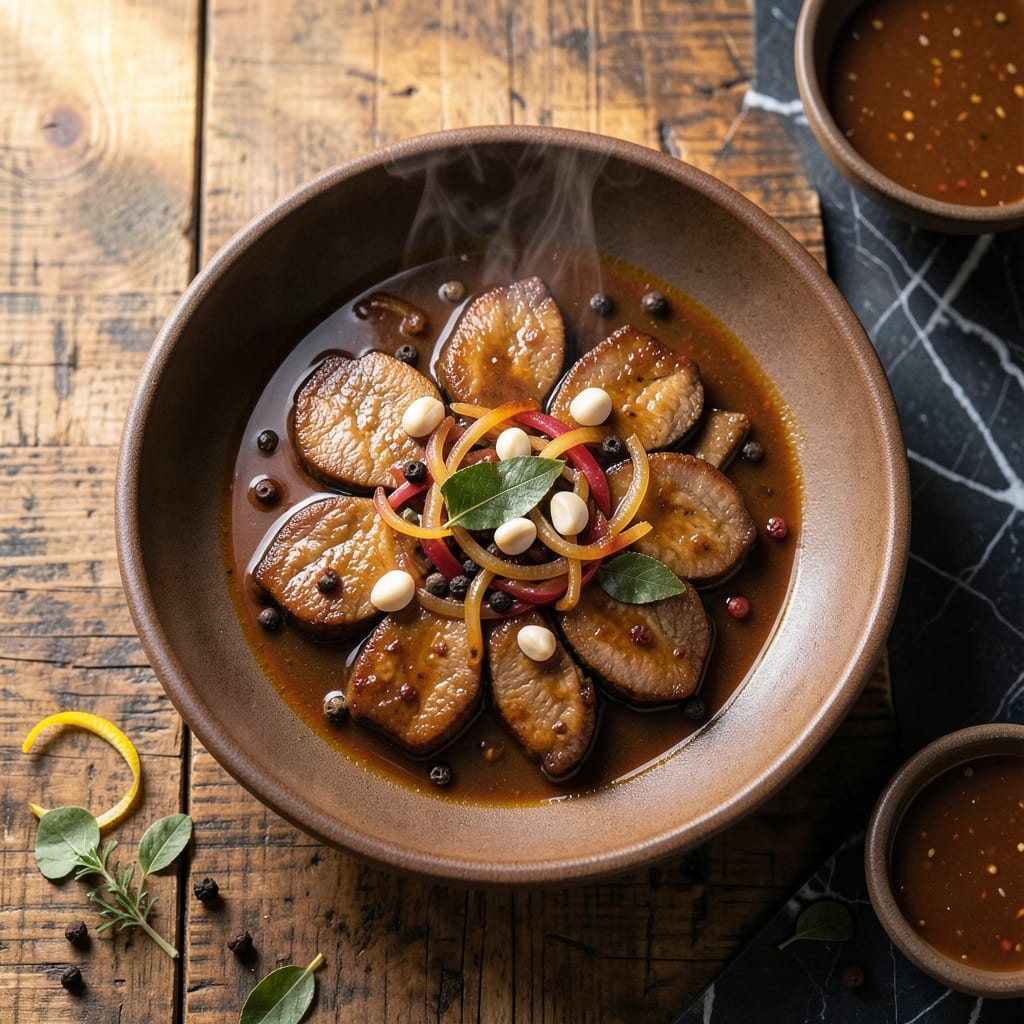
This adobo pork liver recipe brings authentic Filipino flavors to your kitchen with its perfect balance of tangy vinegar and rich soy sauce.
I developed this method during my years working with heritage pork, adapting traditional adobo techniques to highlight liver's unique texture. The key is marinating for at least 2 hours to let the bold flavors penetrate deeply.
You'll achieve tender liver pieces in a glossy, savory sauce that's both tangy and slightly sweet. The aroma alone will transport you to a Manila kitchen.
Serve with steamed rice to soak up every drop of the incredible sauce. This dish proves offal can be just as delicious as any prime cut.
Ingredients for adobo pork liver
Authentic Filipino flavors start with fresh liver and bold pantry staples. Tangy, rich, and deeply satisfying.
| Ingredient | Amount | Notes |
|---|---|---|
| Pork Liver 🥩 | 1 ½ lb | Trimmed, cut into bite-sized pieces |
| White Vinegar 💧 | ¾ cup | Cane vinegar preferred for authenticity |
| Soy Sauce 🫒 | ½ cup | Filipino brands like Silver Swan recommended |
| Garlic Cloves 🧄 | 8 cloves | Peeled, smashed, minced |
| Yellow Onion 🧅 | 1 whole | Medium-sized, thinly sliced |
| Bay Leaves 🍃 | 3 pieces | Dried, whole leaves |
| Black Peppercorns 🌶️ | 1 tsp | Whole or freshly ground |
| Brown Sugar 🍚 | 2 tbsp | Light or dark, for balance |
| Water 💧 | 1 cup | For marinade consistency |
| Vegetable Oil 🫒 | 2 tbsp | For searing liver |
| Green Onions 🌱 | 4 whole | Thinly sliced for garnish |
| Steamed Rice 🍚 | 4 cups | Cooked, for serving |
The liver is everything here. Look for fresh, vibrant pork liver at Asian markets or butcher shops—avoid anything with a dull color or strong odor. Heritage pork liver (if you can find it) has a cleaner taste. For the vinegar, Datu Puti cane vinegar is the gold standard, but any white vinegar works. Soy sauce should be Filipino—Silver Swan or UFC are reliable brands.
No Filipino soy sauce? Low-sodium soy sauce plus a pinch of sugar gets you close. Skip the bay leaves? Oregano at half the amount adds depth. Brown sugar can be swapped for coconut sugar (same quantity). The vinegar is non-negotiable though—it’s what gives adobo that signature tang. If you’re sensitive to acidity, apple cider vinegar is a milder but acceptable substitute.
Marinate the liver for at least 2 hours—overnight is even better. Cooked adobo keeps 4-5 days in the fridge and freezes beautifully for 3 months. The sauce thickens as it cools, so reheat gently with a splash of water.
Why You'll Love This Recipe
- One-Pot Wonder: I toss everything in a pan—liver, vinegar, soy sauce, garlic—and it’s done in 20 minutes. No fuss, no extra dishes.
- Tangy Depth: The vinegar and soy sauce balance the liver’s richness, with garlic and onion adding layers that’ll have you licking the plate.
- Feeds the Family: It’s a hit with both kids and adults, and I double the batch for leftovers—tastes even better the next day.
- Budget Hero: Pork liver is affordable, and this recipe stretches it into a hearty meal with ingredients I always have on hand.
Step-by-step instructions for adobo pork liver
Here's the method I use every time for that perfect balance of tangy and rich flavors.
Marinate the Pork Liver
In a large bowl, combine the 1.5 lb pork liver with 0.75 cup white vinegar, 0.5 cup soy sauce, minced 8 cloves garlic cloves, thinly sliced 1 whole yellow onion, 3 pieces bay leaves, 1 tsp black peppercorns, and 2 tbsp brown sugar.
Pour in the 1 cup water and mix everything gently to ensure the liver is fully coated. Cover and let it marinate in the refrigerator for at least 1 hour—I prefer 2-3 hours for deeper flavor penetration. You’ll notice the vinegar start to mellow the liver’s strong flavor while the soy sauce adds depth.
Sear the Liver to Perfection
Heat 2 tbsp vegetable oil in a large skillet over medium-high heat. Once the oil shimmers, remove the liver from the marinade (reserve the marinade) and carefully add it to the skillet in a single layer. Sear for 2-3 minutes per side until the edges turn lightly browned.
The liver should be just cooked through but still tender—overcooking will make it tough. You’ll see the color change from deep red to a lighter, opaque shade when it’s ready. Transfer the seared liver to a plate and set it aside.
Reduce the Marinade into a Sauce
Pour the reserved marinade into the same skillet and bring it to a boil over medium heat. Reduce the heat to low and let it simmer for 8-10 minutes until the liquid reduces by about half. Stir occasionally to prevent sticking.
As the sauce thickens, it should coat the back of a spoon. The vinegar will mellow into a tangy, savory glaze that ties everything together. If it reduces too quickly, add a splash of water to adjust the consistency.
Finish and Garnish
Return the seared liver to the skillet and spoon the reduced sauce over it. Let it simmer for an additional 2-3 minutes to allow the liver to soak up the flavors. Taste and adjust seasoning if needed—sometimes I add a pinch more brown sugar for balance.
Slice the 4 whole green onions thinly and sprinkle them over the dish as a fresh, vibrant garnish. The green onions add a bright contrast to the rich, tangy sauce. Serve immediately over 4 cups steamed rice to soak up every last drop of the delicious adobo sauce.
Pro Tips For Making Adobo Pork Liver
- Soak the Liver: Let the pork liver sit in milk or vinegar for 15-20 minutes before cooking to soften the texture and remove any bitterness—I learned this the hard way after my first few attempts turned out tough.
- Balance the Vinegar: Add the white vinegar last and taste as you go; too much too soon can make the sauce harsh, and you can’t take it out once it’s in.
- Don’t Overcook: Pork liver turns rubbery fast, so pull it off the heat when it’s just firm to the touch—about 3-4 minutes in the sauce is plenty.
- Bloom the Garlic: Cook the minced garlic in oil for 30 seconds until fragrant before adding the liver, but resist the urge to let it brown or it’ll turn bitter and overpower the dish.
Troubleshooting great adobo pork liver
Liver Too Tough
Overcooked liver is the most common issue. Remember, it cooks faster than other meats—sear for only 2-3 minutes per side on medium-high heat. Pull it when it's still slightly pink inside; it'll finish cooking in the sauce. I learned this the hard way during my Charleston apprenticeship. 🌡️
Sauce Too Sour
If your adobo is too tart, balance it with 1 tsp brown sugar at a time until it mellows. The vinegar needs time to cook down—simmer the sauce for the full 8-10 minutes. Datu Puti vinegar is less harsh than generic white vinegar.
Sauce Too Thin
Patience is key. Let the marinade reduce uncovered on medium heat until it coats a spoon. If you're in a rush, mix 1 tsp cornstarch with 1 tbsp water and stir it in. But honestly, the slow reduction develops the best flavor.
Liver Absorbs Too Much Vinegar
Marinate no longer than 3 hours—any more and the vinegar can make the liver mushy. Use a glass or ceramic bowl; metal can react with the acid. I always set a timer to avoid over-marinating, especially with heritage pork liver from my farm.
Bay Leaves Overpowering
Remove the 3 bay leaves after reducing the sauce. If you accidentally left them in, fish them out before serving. Fresh bay leaves can be stronger—stick to dried for this recipe. The flavor should be subtle, not medicinal.
Sauce Breaking
If your sauce separates, it's likely the heat was too high. Lower to medium-low and whisk vigorously. A splash of water can help recombine it. This happens more with Silver Swan soy sauce because of its higher protein content. 💡
Nutrition facts
Frequently asked questions
Can I use chicken liver instead of pork?
Yes, chicken liver works well as a substitute. Reduce the cooking time to 1-2 minutes per side since it cooks faster. The flavor will be slightly milder but still delicious.
Why does the vinegar need to be cane vinegar?
Cane vinegar has a milder, slightly sweeter taste that balances the dish perfectly. Regular white vinegar can be too harsh. If unavailable, add 1 tsp sugar to mellow the acidity.
How do I know when the liver is cooked safely?
The liver should reach an internal temperature of 160°F. Look for a color change from deep red to light brown. Overcooking makes it tough, so pull it off heat just before it reaches full doneness.
Can I make this dish ahead of time?
The flavors deepen if made a day ahead. Store in an airtight container in the fridge for up to 4 days. Reheat gently on low heat to preserve texture.