
Main Courses
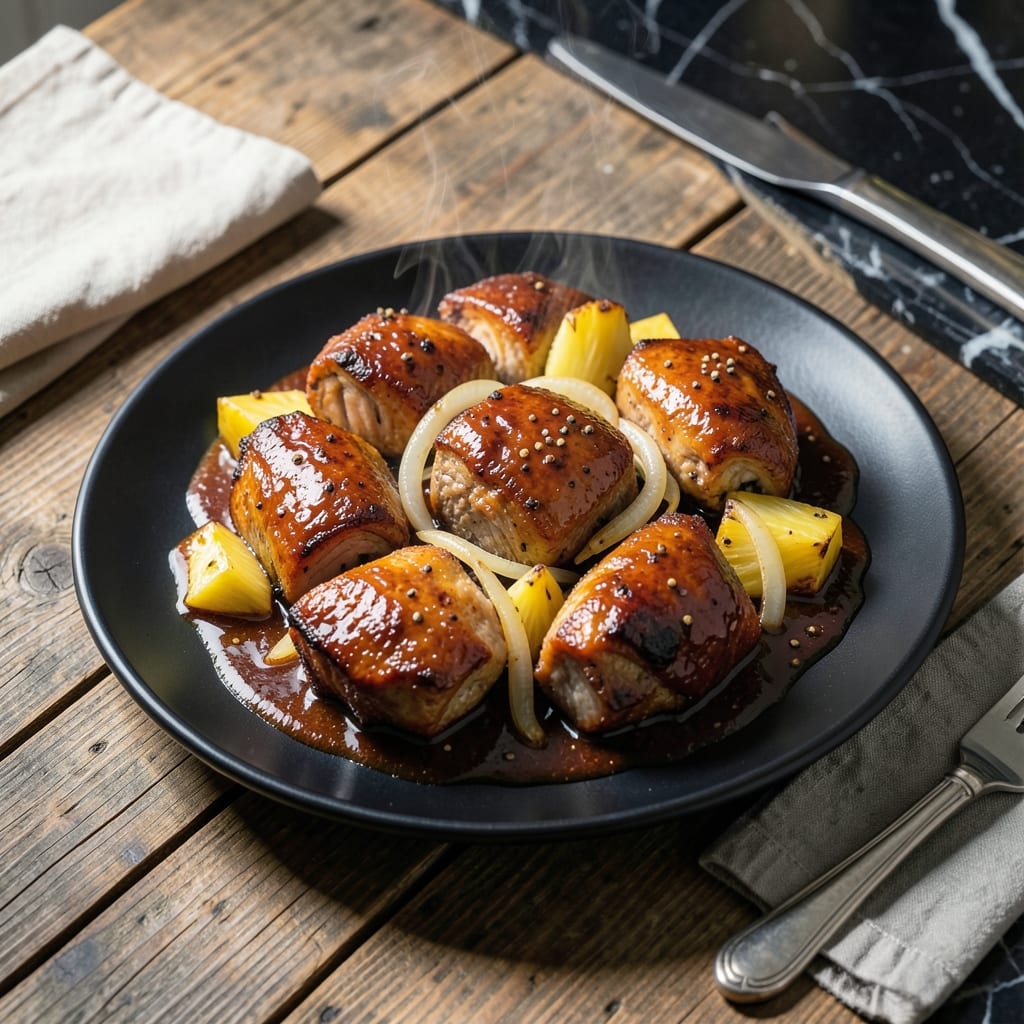
This adobo recipe pork with pineapple brings traditional Filipino flavors to life with a sweet and tangy twist. The combination of vinegar, soy sauce, and garlic creates the classic adobo base, while pineapple adds a bright, fruity contrast.
I've tested this method repeatedly to ensure the pork becomes tender while the sauce reduces to a rich, glossy finish. The pineapple not only tenderizes the meat but also balances the bold adobo flavors with its natural sweetness.
You'll end up with juicy pork pieces coated in a thick, tangy-sweet sauce that's perfect over steamed rice. The dish captures the heart of Filipino comfort food with a modern touch.
This recipe stays true to tradition while offering a refreshing update. Serve it for a weeknight dinner or special occasion.
Ingredients for adobo recipe pork with pineapple
Traditional Filipino flavors meet bright pineapple in this comforting pork adobo dish.
| Ingredient | Amount | Notes |
|---|---|---|
| Pork Shoulder 🥩 | 2 lb | Cut into 2-inch pieces, bone-in preferred |
| Soy Sauce 🫒 | ¾ cup | Filipino brand preferred for authenticity |
| White Vinegar 💧 | ½ cup | Cane or distilled white vinegar |
| Garlic Cloves 🧄 | 10 cloves | Peeled and minced |
| Fresh Pineapple 🍍 | 1 cup | Cubed, reserve juice for sauce |
| Pineapple Juice 🍹 | ½ cup | From fresh pineapple or canned |
| Bay Leaves 🌿 | 3 pieces | Dried, for aromatic depth |
| Black Peppercorns 🌶️ | 1 tsp | Lightly crushed |
| Brown Sugar 🍚 | 2 tbsp | For balancing sweetness |
| Onion 🧅 | 1 whole | Medium, sliced into rings |
| Cooking Oil 🛢️ | 2 tbsp | Neutral-flavored like vegetable or canola |
| Green Onions 🧅 | ¼ cup | Thinly sliced for garnish |
| Cornstarch 🌾 | 1 tbsp | Optional, for thickening sauce |
The pork shoulder is non-negotiable here. Bone-in cuts stay juicier during the long simmer, and Costco or Asian markets have the best prices per pound. Look for cuts with good marbling—this dish relies on that fat for richness. Filipino soy sauce (like Silver Swan or Datu Puti) has a slightly sweeter profile that balances the vinegar perfectly.
No fresh pineapple? Canned chunks in juice work fine (drain but save the juice). Out of white vinegar? Apple cider vinegar at the same ratio is an acceptable substitute. For a deeper umami kick, add a splash of fish sauce (if you eat it)—just a teaspoon. The brown sugar can be swapped for coconut sugar if you prefer a less refined sweetener.
This tastes even better the next day once the flavors meld. Keeps for 4-5 days in the fridge, freezes beautifully for 3 months. Reheat gently to keep the pork tender (don’t boil it aggressively). The sauce thickens as it cools—perfect for spooning over rice.
Why You'll Love This Recipe
- One Pot Wonder: I toss everything in—pork, soy sauce, vinegar, garlic—and let it simmer. No fuss, no multiple pans.
- Sweet-Tangy Magic: The pineapple caramelizes in the adobo sauce, balancing the salty-sour with just the right sweetness.
- Feeds a Crowd: Honestly, this stretches to serve six with leftovers that taste even better the next day.
- Budget Friendly: Pork shoulder is cheap, and the pineapple is the only fancy touch. I’ll be real: it feels like a splurge without the cost.
Step-by-step instructions for pork adobo with pineapple
Here is the method. Straightforward, tested, works every time.
Sear the Pork Shoulder
Heat the 2 tbsp cooking oil in a large pot over medium-high heat. Add all the 2 lb pork shoulder pieces in a single layer, working in batches if necessary to avoid crowding. Sear undisturbed for 3-4 minutes per side until golden brown on all sides.
This initial sear builds a flavorful fond at the bottom of the pot, which will deepen the sauce later. Don’t rush—you want that deep caramelization. Transfer the seared pork to a plate and set aside temporarily.
Build the Adobo Base
In the same pot, add the sliced 1 whole onion and cook for 2-3 minutes until softened. Add the minced 10 cloves garlic cloves and cook for 30 seconds until fragrant but not browned. This prevents bitterness.
Pour in the 0.75 cup soy sauce, 0.5 cup white vinegar, 0.5 cup pineapple juice, 2 tbsp brown sugar, 3 pieces bay leaves, and 1 tsp black peppercorns. Stir to combine and bring to a gentle simmer.
Simmer Until Tender
Return the seared pork to the pot, ensuring it’s mostly submerged in the liquid. Add the 1 cup fresh pineapple chunks, stirring gently to distribute. Reduce heat to medium-low, cover, and let it simmer for 1 to 1.5 hours.
Check occasionally and stir gently to prevent sticking. The pork is done when it’s fork-tender and the sauce has reduced slightly. If the liquid reduces too quickly, add a splash of water to maintain the level.
Thicken the Sauce and Finish
Once the pork is tender, remove it from the pot and set aside. If you prefer a thicker sauce, mix the 1 tbsp cornstarch with 2 tbsp of cold water to create a slurry. Stir this into the simmering sauce and cook for 2-3 minutes until it thickens to your desired consistency.
Return the pork to the pot, coating it evenly with the sauce. Let it simmer together for another 5 minutes to allow the flavors to meld beautifully.
Garnish and Serve
Discard the bay leaves and transfer the pork and sauce to a serving dish. Garnish with the 0.25 cup green onions, thinly sliced. Serve hot with steamed rice to soak up the rich, tangy-sweet sauce.
The pork should be fall-apart tender, and the sauce should have a balanced sweetness from the pineapple and depth from the adobo spices.
Pro Tips For Making Adobo Recipe Pork With Pineapple
- Marinate Overnight: I learned this the hard way—pork shoulder needs at least 4-6 hours in the soy-vinegar-garlic mix to really soak up the flavor, but overnight is even better.
- Use Fresh Pineapple: Canned pineapple works in a pinch, but fresh pineapple adds a brightness and texture that actually changes the outcome.
- Simmer, Don’t Boil: Keep the heat low and steady—boiling the vinegar too hard makes the pork tough and the sauce bitter.
- Reduce the Sauce: After cooking, let the sauce simmer uncovered for 5-7 minutes to thicken it into a glossy glaze that clings to the pork.
Wine and beer pairings for this adobo recipe pork with pineapple
Crisp White Wines
I love pairing this dish with a chilled Riesling from Germany or Washington State. The slight sweetness mirrors the pineapple while the acidity cuts through the richness. A Sauvignon Blanc from New Zealand offers citrus notes that complement the vinegar tang beautifully. 🍷
Light Red Options
For red wine lovers, try a lightly chilled Pinot Noir from Oregon. Its bright acidity and red fruit notes won't overwhelm the adobo flavors. I'd avoid heavy tannic reds—they'll clash with the vinegar forward sauce.
Asian Beer Pairings
San Miguel or Tsingtao beers are perfect matches. Their crisp, clean profiles refresh your palate between bites of the rich pork. The slight sweetness in these lagers complements the pineapple beautifully. 🍺
Craft Beer Choices
A Belgian witbier like Hoegaarden works wonderfully with its citrus and coriander notes. The effervescence cuts through the sauce while the spice notes complement the garlic and vinegar. Avoid hoppy IPAs—they'll fight with the adobo flavors.
Non-Alcoholic Pairing
For a booze-free option, try sparkling pineapple juice with a splash of lime. The bubbles and sweetness mirror the dish's profile. I also enjoy iced jasmine tea—its floral notes pair surprisingly well with the garlic and soy. ✨
Nutrition facts
Frequently asked questions
Can I use a different cut of pork?
Pork belly or ribs work, but shoulder is ideal. It has the right fat-to-meat ratio for 1-1.5 hours of simmering without drying out. Avoid lean cuts like tenderloin—they'll turn tough.
Why add pineapple to adobo?
The fruit's natural enzymes tenderize the meat while its sweetness balances the vinegar's sharpness. It's a modern twist that keeps the dish authentically Filipino at heart.
How do I fix too-sour adobo?
Stir in 1 tbsp brown sugar or a splash of pineapple juice to mellow the acidity. Taste as you go—adobo should be tangy but not puckering.
Can I make this in a slow cooker?
Yes! Brown the pork first, then cook on low for 6-8 hours. Add pineapple the last 30 minutes to prevent it from turning mushy.