
Main Courses
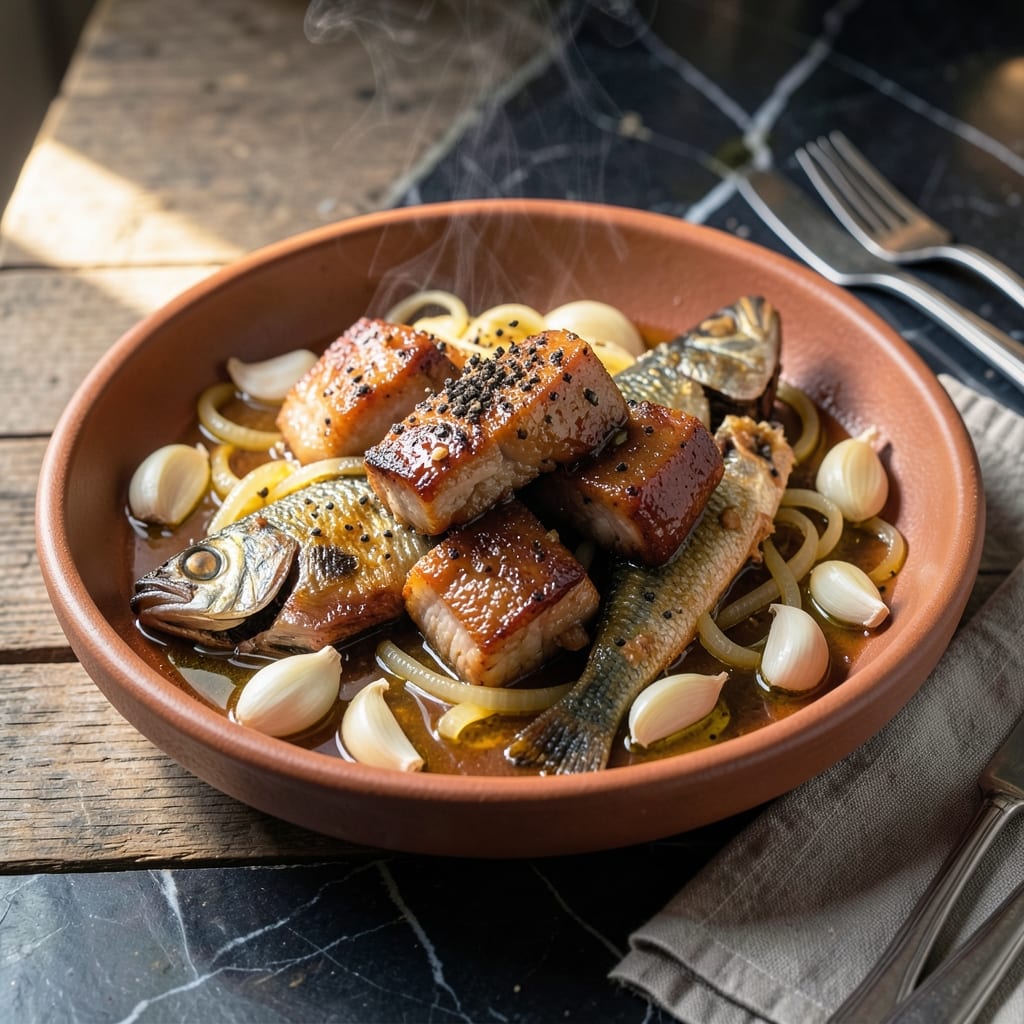
This adobong tuyo pork recipe brings authentic Filipino flavors to your kitchen with its bold, tangy-savory profile. The combination of dried fish and pork creates a depth of umami that’s hard to resist.
I’ve refined this method to balance the saltiness of tuyong with the richness of pork, ensuring every bite delivers a harmonious blend. The vinegar-based marinade tenderizes the meat while adding that signature adobo tang.
The slow simmering process allows the flavors to meld, resulting in tender pork and a sauce that’s both savory and slightly sour. It’s a dish that feels like home, no matter where you are.
Serve it with steamed rice to soak up every last drop of the flavorful sauce. Here’s how to make it.
Ingredients for adobong tuyo pork
Rich pork and salty dried fish create the ultimate umami-packed Filipino classic.
| Ingredient | Amount | Notes |
|---|---|---|
| Pork Belly 🥩 | 1 ½ lb | Cut into 1-inch cubes |
| Dried Salted Fish 🐟 | 4 whole | Tuyo, cleaned and deboned |
| White Vinegar 💧 | ¾ cup | Filipino cane vinegar preferred |
| Soy Sauce 🫒 | ½ cup | Regular or light variety |
| Garlic Cloves 🧄 | 8 cloves | Peeled and minced |
| Yellow Onion 🧅 | 1 whole | Peeled and sliced |
| Bay Leaves 🌿 | 3 pieces | Dried or fresh |
| Black Peppercorns 🌶️ | 1 tsp | Lightly crushed |
| Brown Sugar 🧂 | 1 tbsp | Optional for balancing acidity |
| Water 💧 | 1 cup | For simmering liquid |
| Vegetable Oil 🫒 | 2 tbsp | For sautéing aromatics |
| Green Onions 🌱 | 4 whole | Thinly sliced for garnish |
The pork belly is non-negotiable here—it’s what gives this dish that melt-in-your-mouth texture. Filipino markets usually carry pre-cut pork belly, but any butcher can cube it for you. For the dried fish, tuyo is traditional (those little dried silver fish), but any salty dried fish like daing na bangus works. Look for bright, clean pieces without too much oil.
No tuyo? Salted cod or anchovies can stand in, but soak them first to mellow the salt. Vinegar-wise, Filipino cane vinegar has the right tang, but apple cider works too. The soy sauce is flexible—light or regular. If you’re worried about salt, start with less and adjust. Brown sugar isn’t traditional but adds a nice balance to the acid.
This keeps 3-4 days in the fridge and tastes even better the next day once flavors meld. Freezes beautifully for up to 3 months (the sauce thickens a bit but thins out when reheated). Always serve with steamed rice to soak up that incredible sauce.
Why You'll Love This Recipe
- One Pan Magic: I just toss the pork belly, tuyo, garlic, and sauces in a pan—no fancy techniques, just simple simmering.
- Flavor Bomb: The salty tuyo and tangy vinegar create this rich, savory depth that makes the pork belly irresistibly tender.
- Weeknight Hero: Honestly, it’s my go-to for busy evenings—ready in 30 minutes and pairs with rice or veggies.
- Stretches Far: Leftovers taste even better the next day, and a little tuyo goes a long way for flavor without breaking the bank.
Step-by-step instructions for adobong tuyo pork
Here's how I make this Filipino favorite with perfect balance every single time.
Sauté Aromatics and Brown the Pork
Heat the 2 tbsp Vegetable Oil in a large pot over medium heat. Add the 8 cloves Garlic Cloves and sauté for 30 seconds until fragrant but not browned. Garlic burns quickly, so keep it moving.
Add the 1 whole Yellow Onion and cook for 2 minutes until softened. Then add the 1.5 lb Pork Belly cubes and sear for 5-7 minutes, stirring occasionally, until the meat develops a light golden color. This step builds the flavor foundation for your adobo.
Add the Dried Fish and Seasonings
Stir in the 4 whole Dried Salted Fish and cook for 2 minutes to release their salty, umami flavors. The fish should start to soften slightly at the edges. This is where the dish gets its signature depth.
Add the 3 pieces Bay Leaves, 1 tsp Black Peppercorns, and 1 tbsp Brown Sugar. The sugar balances the acidity and saltiness, creating that classic adobo harmony. Stir well to coat everything evenly.
Simmer in the Adobo Sauce
Pour in the 0.5 cup Soy Sauce, 0.75 cup White Vinegar, and 1 cup Water. Bring to a boil, then reduce heat to low. Cover and simmer for 40-45 minutes, stirring occasionally.
The pork is done when it's fork-tender and the liquid has reduced slightly. You'll notice the sauce thickening and the pork absorbing all those beautiful flavors. Don't skip the simmering time—this is where the magic happens.
Adjust and Garnish
Taste the sauce and adjust seasoning if needed. If it's too tangy, add a pinch more Brown Sugar. If it's too salty, add a splash of Water. The flavors should be balanced—savory, tangy, and slightly sweet.
Remove from heat and discard the Bay Leaves. Garnish with the 4 whole Green Onions, thinly sliced. The green onions add a fresh, crisp contrast to the rich, saucy pork and fish.
Serve hot over steamed rice, making sure to spoon plenty of that delicious adobo sauce over everything.
Pro Tips For Making Adobong Tuyo Pork
- Soak the Tuyo: Rinse and soak the dried salted fish in water for 10-15 minutes to remove excess salt—this keeps it from overpowering the pork belly’s flavor.
- Render the Fat First: Start the pork belly in a cold pan and let the fat slowly render out before adding anything else. It’ll crisp up better and infuse the oil with flavor.
- Balance the Vinegar: Add the white vinegar last and let it simmer for just 2-3 minutes—any longer and the acidity will turn the pork tough instead of tender.
- Crush the Garlic: Lightly crush the garlic cloves with the side of your knife before tossing them in. It releases more aroma without burning, and I learned this the hard way after a few bitter batches.
Best sauces and condiments for these flavors
Classic Toyo't Calamansi
This Filipino staple is my top pick. Mix ¼ cup soy sauce with 2 tbsp calamansi juice and 1 tsp sugar. The citrus cuts through the richness while enhancing the adobo's tang. I always keep calamansi in my fridge at The Smoky Pig. 💛
Spicy Vinegar Dip
Combine ½ cup white vinegar with 2 minced garlic cloves, 1 chopped siling labuyo (or Thai chili), and ½ tsp black pepper. This adds heat that balances the pork's saltiness beautifully.
Sweet Chili Sauce
For a touch of sweetness, I use Mae Ploy sweet chili sauce—drizzle about 2 tbsp per serving. The sticky, slightly spicy glaze complements the savory adobo perfectly. Charleston markets carry this brand.
Atchara Relish
This pickled green papaya salad adds crunch and acidity. I make mine with 2 cups shredded green papaya, ½ cup vinegar, and 1 tbsp sugar. The contrast in textures elevates each bite. ✨
Serve it on the side or directly on top of the pork for a refreshing contrast.
Nutrition facts
Frequently asked questions
Can I substitute pork shoulder for pork belly?
Yes, pork shoulder works well as a leaner alternative. It has less fat, so simmer for an extra 10-15 minutes to ensure tenderness. The flavor will be slightly different but still delicious.
How do I reduce the saltiness from the dried fish?
Soak the tuyo in warm water for 10-15 minutes before cooking. Change the water once to remove excess salt. Taste the fish after soaking to gauge saltiness.
Can I make this dish without vinegar?
Vinegar is essential for authentic adobo flavor, but in a pinch, use lemon or calamansi juice. The acidity balances the richness, so don’t skip it entirely.
How long can I store leftovers?
Leftovers keep well in the fridge for 3-4 days or in the freezer for up to 3 months. Reheat gently to preserve the sauce’s consistency.