
Main Courses
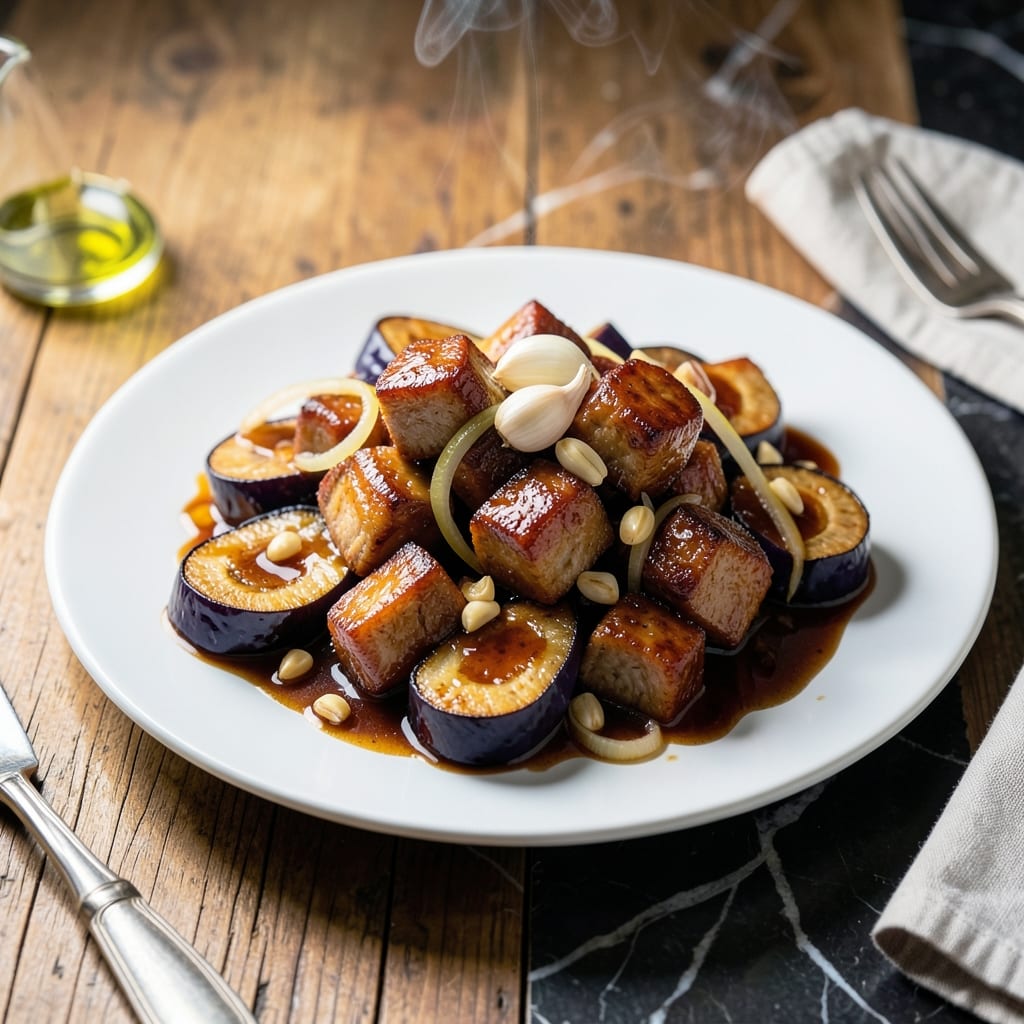
This adobong talong with pork recipe brings authentic Filipino flavors to your kitchen with minimal effort. The combination of tender eggplant and savory pork in a tangy soy-vinegar sauce creates a dish that's both comforting and deeply satisfying.
I developed this version after years of studying traditional techniques, focusing on the perfect balance between sour, salty, and savory. The pork is simmered until fall-apart tender, while the eggplant absorbs the rich sauce without turning mushy.
The key is cooking the pork low and slow first, allowing the flavors to meld before adding the eggplant. This ensures every bite delivers the perfectly balanced taste of this classic Filipino stew.
Serve with steamed rice to soak up every drop of the flavorful sauce. Here's how to make this traditional dish at home.
Ingredients for adobong talong with pork
Pantry staples meet fresh eggplant and pork for this Filipino classic. Nothing fancy here.
| Ingredient | Amount | Notes |
|---|---|---|
| Pork Belly 🥩 | 1 ½ lb | Cut into 1-inch cubes |
| Japanese Eggplant 🍆 | 4 whole | Sliced into 1-inch rounds |
| Soy Sauce 🫒 | ½ cup | Filipino brand preferred |
| White Vinegar 💧 | ½ cup | Cane or distilled |
| Garlic Cloves 🧄 | 8 cloves | Peeled and minced |
| Yellow Onion 🧅 | 1 whole | Thinly sliced |
| Bay Leaves 🍃 | 3 pieces | Dried or fresh |
| Black Peppercorns 🌶️ | 1 tsp | Lightly crushed |
| Brown Sugar 🍚 | 1 tbsp | Optional, for balance |
| Water 💧 | 1 cup | For simmering pork |
| Cooking Oil 🫒 | 2 tbsp | Neutral oil like vegetable |
| Green Onions 🌿 | 3 whole | Chopped, for garnish |
The pork makes this dish. Pork belly gives that melt-in-your-mouth texture—shoulder works too but needs longer cooking. Asian markets usually carry pre-cubed pork belly, or ask the butcher to do it. Look for pieces with good fat marbling. For the eggplant, Japanese eggplant is ideal (thinner skin, creamier flesh), but regular globe eggplant works in a pinch.
No pork belly? Pork shoulder at 1:1 ratio is your best bet. Out of Japanese eggplant? Any variety works—just peel thicker-skinned types. Vinegar swap: apple cider vinegar adds a fruitier note. The soy sauce is key—Silver Swan or Datu Puti are authentic Filipino brands. If you want it sweeter, add the brown sugar; if more tangy, up the vinegar a bit.
Leftovers taste even better the next day. Keeps for 3-4 days in the fridge, freezes for 2 months. Reheat gently to avoid breaking up the eggplant. Always serve with steamed rice—it’s non-negotiable for soaking up the sauce.
Why You'll Love This Recipe
- One Pan Magic: I toss everything—the pork belly, eggplant, and garlic—into one pan and let the soy-vinegar combo do the work.
- Tangy & Savory: That first bite of tender pork and silky eggplant soaked in garlic-infused adobo sauce? Ridiculously good.
- Weeknight Hero: Here’s what sold me—it’s ready before the rice finishes cooking, and my kids actually eat the eggplant.
- Budget Stretcher: Pork belly and eggplant are cheap, and the leftovers taste even better the next day. Honestly, it’s my go-to for feeding a crowd without breaking the bank.
Step-by-step instructions for adobong talong with pork
Here's the method that delivers tender pork and eggplant submerged in that signature tangy-savory sauce.
Brown the Pork Belly
Heat the 2 tbsp cooking oil in a large pot over medium-high heat. Add the 1.5 lb pork belly cubes and cook undisturbed for 3-4 minutes until the bottoms develop a deep golden crust.
Stir and continue cooking for another 5-6 minutes until all sides are evenly browned. This step builds the flavor foundation, so don't rush it. The pork should release easily from the pot when properly seared.
Build the Adobo Base
Add the 1 whole yellow onion and 8 cloves garlic cloves to the pot. Sauté for 2-3 minutes until the onions soften and become translucent. The garlic should turn light golden but not dark brown.
Pour in the 0.5 cup soy sauce, 0.5 cup white vinegar, 1 cup water, 3 pieces bay leaves, and 1 tsp black peppercorns. Stir to combine, then bring to a gentle boil.
Simmer the Pork Until Tender
Reduce heat to medium-low, cover, and let the pork simmer for 30-40 minutes. Check occasionally and add a splash of water if the liquid reduces too much before the pork becomes fork-tender.
When the pork is tender, stir in the 1 tbsp brown sugar to balance the acidity. Then gently fold in the 4 whole Japanese eggplant slices. Simmer uncovered for 8-10 minutes until the eggplant absorbs the flavors and becomes soft but still holds shape.
Reduce the Sauce and Finish
Once the eggplant is cooked, increase heat to medium-high and let the sauce reduce for 5-7 minutes until it thickens slightly and coats the pork and eggplant. The sauce should be tangy, slightly sweet, and deeply savory.
Taste and adjust seasoning if needed. The pork should be meltingly tender, and the eggplant should have soaked up the rich adobo flavors. Discard the bay leaves before serving.
Garnish and Serve
Transfer to a serving dish and top with the 3 whole green onions, chopped. The green onions add a fresh contrast to the rich stew. Serve hot with steamed rice to soak up every last bit of the delicious sauce.
Pro Tips For Making Adobong Talong With Pork
- Dry the Eggplant: Salt the sliced Japanese eggplant and let it sit for 10 minutes to draw out excess moisture—I learned this the hard way after ending up with watery adobo.
- Render the Fat First: Start the pork belly in a cold pan to render the fat slowly, then crank the heat to crisp the edges. Skipping this leaves you with chewy, greasy chunks.
- Balance the Vinegar: Add the white vinegar at the very end of cooking, not the start, or the acid will prevent the pork from tenderizing. My grandmother swore by this, and she was right.
- Use Day-Old Pork: If you have time, let the pork belly marinate in soy sauce and garlic overnight—sounds weird, but it works and cuts cooking time in half.
Creative variations of this recipe
Vegetarian Version
Swap the 1.5 lb pork belly for 1.5 lb mushrooms like shiitake or oyster. Sauté them first until they release their juices, then proceed with the same adobo sauce. The mushrooms absorb the flavors beautifully, creating a hearty meat-free version. 🌱
Seafood Twist
Replace pork with 1 lb firm white fish like cod or halibut. Reduce simmering time to 10-12 minutes since seafood cooks faster. Add the eggplant and fish simultaneously to prevent overcooking. The vinegar in the sauce helps tenderize the fish.
Spicy Adobo
Add 2-3 Thai chili peppers or 1 tbsp chili flakes when building the adobo base for extra heat. I love this variation when I want to kick up the intensity. The spice balances perfectly with the tangy-savory sauce. 🌶️
Coconut Milk Adobo
Stir in ½ cup coconut milk when adding the water for a creamier, slightly sweeter version. This is inspired by some regional variations in the southern Philippines. Simmer until the coconut milk is fully incorporated into the sauce.
Pineapple Addition
Add 1 cup fresh pineapple chunks along with the eggplant for a sweet-tangy contrast. The pineapple softens slightly but retains some texture. This version reminds me of the fruit-infused dishes from my Charleston days.
Extra Umami Boost
For deeper flavor, add 2 tbsp oyster sauce or 1 tbsp fish sauce to the adobo base. This intensifies the savory notes without overpowering the dish. I often use this trick when cooking for my BBQ team.
Nutrition facts
Frequently asked questions
Can I use regular eggplant instead of Japanese?
Yes, but peel thicker-skinned globe eggplant first. Japanese varieties have thinner skin and creamier flesh, but any type works in a pinch.
Why is my adobo too sour?
Balance the acidity with 1 tbsp brown sugar or reduce the vinegar slightly next time. The sauce mellows as it simmers, so taste before adjusting.
How do I prevent mushy eggplant?
Add it only after the pork is tender, then simmer uncovered for 8-10 minutes. This keeps the pieces intact while absorbing the sauce.
Can I make this ahead of time?
The flavors deepen overnight. Store in an airtight container for up to 3 days in the fridge. Reheat gently to preserve texture.