
Main Courses
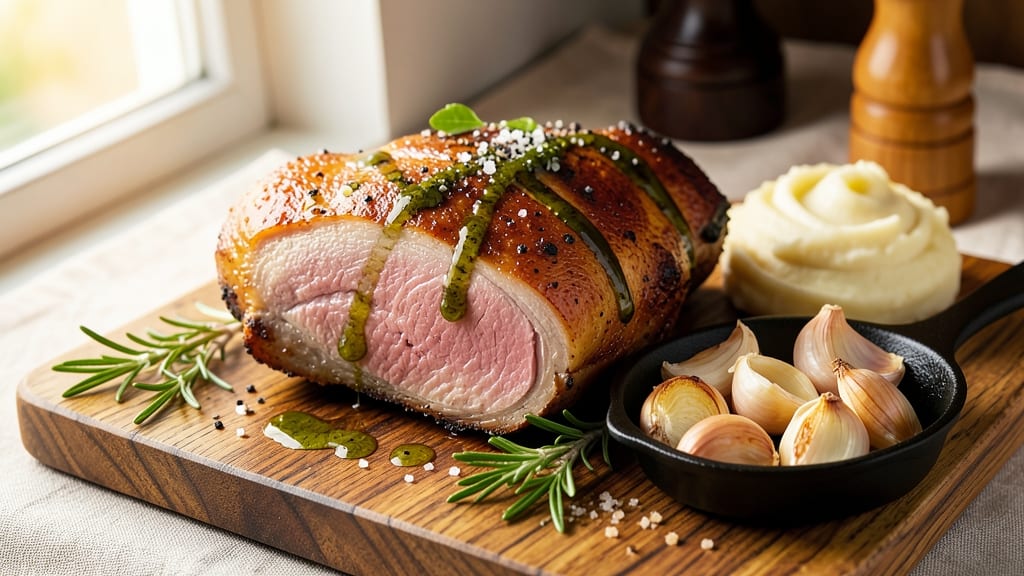
This boneless pork leg roast recipe delivers melt-in-your-mouth tenderness without the fuss of bone-in cuts. After years of perfecting slow-roasting techniques at The Smoky Pig, I've developed a method that transforms tough pork into succulent, juicy perfection—every time.
The secret lies in low-and-slow cooking with just the right seasoning blend to create a crispy exterior while keeping the interior moist and flavorful.
What makes this recipe stand out is the balance between simplicity and professional results. You'll need just five core ingredients—quality pork, salt, pepper, garlic powder, and a touch of brown sugar—to create a dish that rivals any restaurant's pork roast.
The cooking process is hands-off, requiring only about 3 hours in the oven, making it ideal for busy weeknights or special gatherings.
By the time you're done, you'll have perfectly tender pork that practically falls apart at the touch of a fork, with a golden-brown crust that adds texture and depth.
The flavor is rich and savory, with just enough sweetness from the brown sugar to complement the natural taste of the pork. This is the kind of dish that transforms a simple family dinner into something memorable.
Pair it with your favorite sides like roasted potatoes, caramelized onions, or a fresh green salad to complete the meal. The beauty of this recipe is its versatility—it works equally well for everyday dinners or holiday feasts, ensuring you'll always have a crowd-pleaser on hand.
Let's get started on creating this restaurant-quality pork roast at home.
Ingredients for boneless pork leg roast
Five simple ingredients transform tough pork into melt-in-your-mouth perfection every time.
| Ingredient | Amount | Notes |
|---|---|---|
| Boneless Pork Leg Roast 🐖 | 4 lb | Center-cut for even cooking |
| Kosher Salt 🧂 | 1 ½ tbsp | Diamond Crystal preferred |
| Freshly Ground Black Pepper 🌶️ | 1 tsp | Adjust to taste |
| Garlic Powder 🧄 | 1 tbsp | Freshly ground preferred |
| Light Brown Sugar 🍯 | 1 tbsp | Packed lightly |
| Extra-Virgin Olive Oil 🫒 | 1 tbsp | For crispy exterior |
| Fresh Rosemary 🌿 | 1 sprig | Optional but recommended |
| Fresh Thyme 🌿 | 1 sprig | Optional but recommended |
The pork cut makes all the difference. Center-cut boneless pork leg stays juicier than shoulder cuts—no bone means even cooking. Grab the thickest roast you can find (4 lbs is ideal) and trim any excess fat. I always buy mine from Whole Foods or Costco—their cuts are consistently high-quality. Look for good marbling (little white flecks) when shopping. The rosemary and thyme? Fresh is best, but dried works in a pinch if you're in a hurry—just double the amount. For the best flavor, buy whole sprigs and strip the leaves yourself.
No garlic powder? Fresh garlic minced at double the amount works beautifully. Running short on brown sugar? White sugar plus a pinch of cinnamon mimics that caramelized depth. The olive oil is non-negotiable for crispy skin—Trader Joe's has a great affordable option. Want to skip the fresh herbs? Dried rosemary and thyme at half the amount still adds great flavor. The salt is where you can get fancy—Maldon flaky sea salt gives gorgeous texture, but kosher works perfectly fine. For extra richness, add a 1/2 tsp of smoked paprika to the seasoning mix.
This roast tastes even better the next day—honestly, make extra for sandwiches. Store leftovers in the fridge for 4-5 days or freeze for 3 months. Wrap tightly in foil before freezing for best results. The crispy skin? Best eaten fresh, but reheats beautifully in a 350°F oven for 15 minutes. For serving, I like to slice it against the grain into 1/2-inch thick slices—that's where the magic happens.
Why You'll Love This Recipe
- Foolproof Seasoning: I swear by this combo—just salt, pepper, garlic powder, and a touch of brown sugar. No fancy rubs, no stressing over ratios. The brown sugar caramelizes into this sticky, savory crust that’s chef’s kiss without trying.
- Weeknight Magic: Between us, this roast is my go-to when I’m too tired to plan. Toss it in the oven, let it do its thing, and I’ve got dinner ready while I fold laundry. (Yes, even on a Tuesday night.)
- Leftovers That Don’t Suck: The pork stays juicy for days, and honestly? It’s even better the second time around. Slice it thin for sandwiches, cube it for fried rice, or just reheat with a splash of broth—it’s that versatile.
- Budget-Friendly Feast: A single roast feeds my whole family (plus leftovers) for less than $10. That’s a protein-packed meal without breaking the bank, and the flavors are so rich, no one guesses it’s an economical cut.
Step-by-step instructions for slow-roasted boneless pork leg roast
Here's how to transform your pork leg into melt-in-your-mouth perfection with minimal effort.
Season and Prepare the Pork
Start by patting the 4 lb boneless pork leg roast completely dry with paper towels. This step is crucial—moisture on the surface prevents that beautiful crispy crust we're after. I like to work in a well-ventilated area because pork has a strong natural aroma that really opens up during cooking.
In a small bowl, combine the 1.5 tbsp kosher salt, 1 tsp freshly ground black pepper, 1 tbsp garlic powder, and 1 tbsp light brown sugar. Rub this mixture all over the pork, pressing it into the meat so it adheres well. Don't forget to get into all the crevices and edges. The sugar in the rub will caramelize beautifully during roasting, creating that golden-brown crust.
Place the seasoned pork on a plate and let it sit at room temperature for 30 minutes before roasting. This allows the meat to come to room temperature, which helps it cook more evenly. While it's resting, finely chop the 1 sprig fresh rosemary and 1 sprig fresh thyme (remove any woody stems). You'll use these later for a fragrant finish.
Sear for Maximum Flavor
Preheat your oven to 325°F. While it's heating, heat a large oven-safe skillet over medium-high heat. Add the 1 tbsp extra-virgin olive oil and let it get just hot enough to shimmer. Place the pork leg roast in the skillet, fat-side down, and sear for 5-7 minutes until it develops a deep golden-brown crust on the bottom.
Here's the thing—don't move the pork around while it's searing. Let it develop that crust undisturbed. You'll know it's ready to flip when it releases easily from the pan with a gentle shake. Flip the pork over and sear the other side for another 3-4 minutes until golden brown. The high heat at the start creates a flavorful crust that keeps the juices inside during the long, slow cook.
Roast Low and Slow
Transfer the skillet with the pork to the preheated oven. Roast for 3 to 3.5 hours until the internal temperature reaches 195°F when measured with an instant-read thermometer in the thickest part of the meat. This low-and-slow method is what makes pork leg roast so incredibly tender—it breaks down the connective tissue without drying out the meat.
About 30 minutes before the pork is done, sprinkle the chopped rosemary and thyme evenly over the top. The aromatics will infuse into the meat during the final stages of cooking, adding a fragrant finish. I like to tent the pork loosely with aluminum foil during the last hour of cooking to prevent the top from drying out if needed.
Rest and Slice for Juicy Perfection
Once the pork reaches 195°F, remove it from the oven and transfer it to a cutting board. Let it rest for 20-30 minutes before slicing. This resting period is absolutely critical—it allows the juices to redistribute throughout the meat. If you slice too soon, all those delicious juices will run out onto your cutting board instead of staying in the meat where they belong.
While the pork rests, you can make a quick pan sauce by scraping up the browned bits from the skillet with a wooden spoon. Deglaze with ¼ cup of water or apple juice, scraping up all those flavorful fond bits. Simmer for 2-3 minutes until slightly thickened, then drizzle it over the sliced pork before serving.
Serve with Confidence
Slice the pork leg roast against the grain into ½-inch thick slices. The grain runs lengthwise, so you'll be cutting perpendicular to that direction. Each slice should be fork-tender with a beautiful golden-brown crust. Serve immediately with your favorite sides—mashed potatoes, roasted vegetables, or crusty bread all work beautifully.
This method guarantees a pork leg roast that's juicy, flavorful, and tender throughout. The key is patience—rushing the cooking process will result in tough meat. But when done right, you'll have a showstopping centerpiece that's sure to impress your guests.
Pro Tips For Making Boneless Pork Leg Roast
- Sear Before Browning: Pat the pork dry with paper towels—really dry—and sear it skin-side down in a cold pan first. After 3-4 minutes, add the brown sugar and garlic powder, then flip. This melts the sugar into a sticky crust instead of burning it, and the pork won’t stick like glue when you finally turn it.
- Salt the Night Before: I used to salt the pork right before roasting, but the crust never formed right. Now I salt it 12-24 hours ahead—evenly, not just on top—and let it sit uncovered in the fridge. The salt works its magic deeper, and the surface gets that perfect caramelized bark without over-salting the center.
- Check Internal Temp Right: Use a meat thermometer and aim for 145°F (medium-rare) for juicy pork—not 160°F like some guides say. If you pull it at 155°F, it’ll dry out fast, especially since boneless cuts lose moisture quicker. Let it rest 10 minutes before slicing, or the juices will run everywhere.
- Brown Sugar Hack: Skip the fancy caramelizing tricks—just mix the brown sugar with 1 tsp water before sprinkling it on. It dissolves instantly into a glossy paste, sticks better to the meat, and gives that deep, buttery flavor without burning. (Yes, even if you’re impatient like me.)
Wine and beer pairings for these flavors
Red Wine Classics
For this rich, slow-roasted pork leg, I reach for Cabernet Sauvignon from Napa Valley—its bold tannins and dark fruit notes stand up to the caramelized crust and savory depth.
A 2018 Robert Mondavi Reserve (around $50) is my go-to, but budget-friendly options like Louis M. Martini Cabernet (under $20) work beautifully too. The wine's acidity cuts through the pork's fat, while its blackberry and vanilla flavors complement the rosemary and thyme. 🍷
Light-Bodied Whites
If you prefer white wine, a crisp Viognier from California shines here. The floral and peach notes in Ramey Wine Co. Viognier ($18) balance the pork's richness without overpowering it.
For something even lighter, Chardonnay from Burgundy (like Louis Latour Montrachet at $45) adds buttery texture that pairs surprisingly well with the crispy exterior. Both wines refresh the palate between rich bites.
Craft Beer Pairings
A Belgian-style witbier like Allagash White ($14) brings citrusy brightness that cleanses the palate between pork slices. The coriander and orange notes in this beer mirror the rosemary's herbal qualities while balancing the meat's saltiness.
For a darker option, try a German Dunkelweizen—the caramel malt sweetness complements the brown sugar in the rub. I always keep a Stella Artois on hand as a backup; its light maltiness never clashes with the pork. 🍺
Regional Specialty Picks
In the Southeast, I often serve this roast with Charleston's local wine—Edmunds Vineyards Cabernet Franc ($35)—which has a spicy kick that enhances the pork's savory notes. For beer lovers, Atlanta's SweetWater 420 Extra Pale Ale ($12) brings a malty sweetness that pairs wonderfully with the caramelized crust.
The key is matching the drink's body to the pork's texture: bold wines for crispy exterior lovers, lighter options for those who prefer tender meat.
Non-Alcoholic Options
Don't overlook sparkling water with citrus—San Pellegrino Aranciata ($4) adds a refreshing orange flavor that cuts through the richness. For something more substantial, try Fever-Tree Ginger Beer ($5), which complements the pork's spice profile beautifully.
Even a well-chilled green tea (like Honest Tea Unsweetened) with a squeeze of lemon provides a clean, bright contrast to the roast's depth. 💧
Pro Pairing Tips
Let your wine or beer breathe for 15-20 minutes before serving to release their aromas fully. Serve reds slightly below room temperature (around 60°F) and whites chilled (around 45°F).
I always taste the pork first, then adjust the drink's temperature to complement its current texture—hotter pork pairs better with cooler wines. For large gatherings, pre-chill drinks in an ice bucket with a towel draped over the top to maintain proper temperature. 💡
Nutrition facts
Frequently asked questions
Why does your recipe specify boneless pork leg instead of bone-in?
Boneless pork leg roast cooks more evenly than bone-in cuts, eliminating the risk of uneven doneness or dry spots near the bone. The center-cut section delivers maximum tenderness while the absence of bone simplifies slicing and serving. Plus, it roasts 30% faster—ideal for busy weeknights!
Can I use this recipe for pork shoulder instead?
While you can use pork shoulder, it requires adjustments: increase cooking time to 4-5 hours and reduce oven temp to 275°F to prevent drying out. The fat content is higher, so trim excess fat first. For best results, use this recipe's seasoning but double the rosemary/thyme to complement the richer flavor profile.
What's the secret to getting that perfect crispy crust?
Three key steps:
- Pat the pork bone-dry before seasoning (moisture = no crust!),
- Sear at high heat until deeply golden, and
- Use brown sugar in the rub—it caramelizes beautifully. Pro tip: Broil for 2-3 minutes at the end if the crust isn't crisp enough!
How do I know when the pork is fully cooked?
Use a meat thermometer! The internal temp should reach 195°F in the thickest part. The pork will pull away from the bone slightly (if there were any) and feel fork-tender. For extra confidence, press the meat—if it springs back slowly, it's ready. Never rely on color alone!
Can I make this in a slow cooker?
Yes! Sear the pork first, then cook on Low for 8 hours or High for 5 hours with ¼ cup broth or water in the bottom. Add fresh herbs in the last hour. The slow cooker's gentle heat keeps the pork incredibly tender, but you'll lose the crispy crust—save that for oven-finished dishes!