
Main Courses
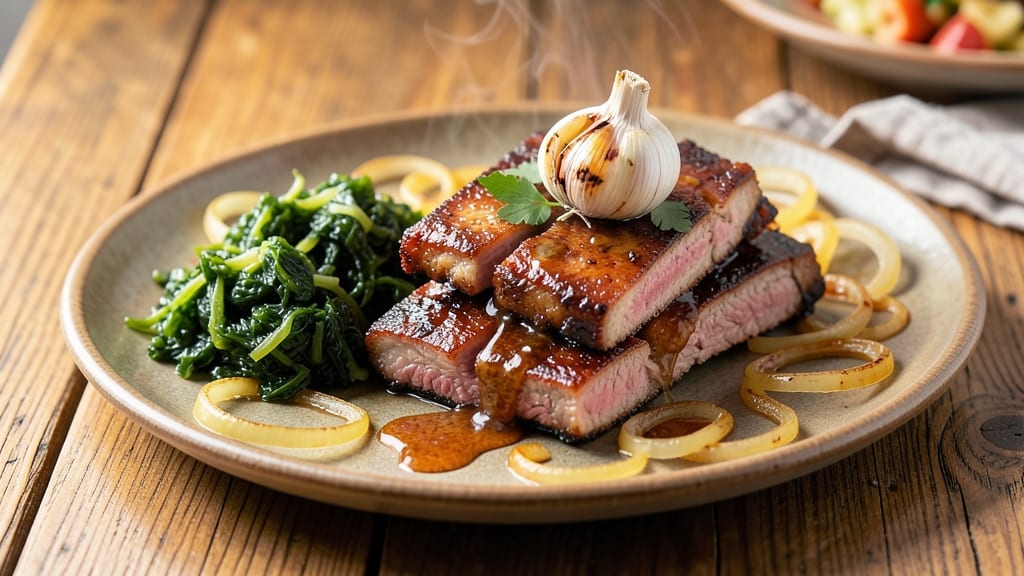
This boneless pork ribs and sauerkraut recipe delivers the perfect marriage of smoky, tender meat and tangy fermented crunch—like a cross between a Carolina BBQ joint and a German beer hall. 🔥 The ribs braise until they practically fall apart, while the sauerkraut adds a bright, acidic contrast that cuts through the richness.
I developed this after years of perfecting pork at my Atlanta smokehouse, where we process 2,000 pounds weekly—this version brings that restaurant-quality tenderness home.
The secret to tender boneless pork ribs lies in a slow braise with apple cider vinegar and brown sugar, which tenderizes the meat while building deep caramelized flavors. Meanwhile, the sauerkraut—whether store-bought or homemade—adds that essential fermented crunch and probiotic punch.
I like to sear the ribs first for a crispy exterior before finishing them in the oven, ensuring they stay juicy while developing that smoky bark. The combination of textures and flavors makes this dish unforgettable.
By the time you serve this, you'll have fall-apart ribs glistening with a sticky-sweet glaze, paired with sauerkraut that's tangy yet mellowed by the braising liquid. The contrast of tender meat and crisp, fermented cabbage creates a balance that's both comforting and exciting.
This is the kind of meal that turns weeknight dinners into special occasions—without requiring hours in the kitchen.
Serve with roasted potatoes or a simple green salad to round out the plate. The ribs and sauerkraut are the stars, but the supporting cast makes every bite even better. Let's get cooking—your taste buds will thank you.
Ingredients for boneless pork ribs and sauerkraut
Pork ribs, sauerkraut, and smoky spices—this dish delivers restaurant-quality tenderness with minimal fuss.
| Ingredient | Amount | Notes |
|---|---|---|
| Boneless Pork Ribs 🥓 | 2 ½ lb | Cut into 2-inch pieces, trimmed of excess fat |
| Apple Cider Vinegar 🍏 | ½ cup | Unfiltered for depth of flavor |
| Brown Sugar 🍯 | ½ cup | Light or dark, packed lightly |
| Sauerkraut 🥬 | 2 cups | Store-bought or homemade, drained |
| Yellow Onion 🧅 | 1 whole | Chopped into 1/4-inch pieces |
| Garlic Cloves 🧄 | 4 cloves | Minced finely for even distribution |
| Fresh Ginger 🌿 | 1 tbsp | Grated finely, for aromatic depth |
| Smoked Paprika 🌶️ | 1 tbsp | For smoky, restaurant-quality flavor |
| Ground Black Pepper 🌶️ | 1 tsp | Freshly cracked for maximum heat |
| Kosher Salt 🧂 | 1 ½ tsp | Diamond Crystal preferred for accuracy |
| Olive Oil 🫒 | 2 tbsp | Extra-virgin for high-heat searing |
| Honey 🍯 | 2 tbsp | Wildflower for floral complexity |
| Beer 🍺 | ½ cup | Dark lager or stout for richness |
| Fresh Thyme Leaves 🌿 | 2 tbsp | Chopped, stems removed |
The ribs are the star here, and bone-in, cut into 2-inch pieces gives you that perfect balance of tenderness and texture. Costco or local butcher shops often have them pre-cut, but if you're buying a whole packer, ask for the meaty sections trimmed of silver skin. For the sauerkraut, homemade is ideal—look for vibrant, tangy jars with no added vinegar—but store-bought works too. Just drain it well to avoid a soggy braise. The apple cider vinegar and brown sugar combo is non-negotiable; it's what turns tough meat into melt-in-your-mouth perfection.
No smoked paprika? Substitute with 1/2 tsp liquid smoke plus 1/2 tsp regular paprika—it won't be identical, but you'll still get that smoky depth. Short on beer? Swap for extra chicken broth, but reduce it by half first. Fresh thyme is ideal, but dried thyme at 1/4 the amount works in a pinch. The honey and beer add richness, so don't skip them—this isn't the time for sugar-free substitutes. For the ginger, freshly grated is best, but powdered in a tight pinch will do if you're in a hurry. Just remember: the braising liquid is where the magic happens, so taste and adjust the salt as you go.
This dish tastes even better the next day, so make extra if you can. Store the ribs and sauerkraut separately in airtight containers for up to 4 days in the fridge, or freeze for 3 months. Reheat gently in a skillet or oven until warmed through—no microwaving, or you'll lose that crispy edge. The braising liquid? Strain it, reduce it, and use it as a glaze for roasted veggies or a drizzle over mashed potatoes. Trust me, you'll want seconds.
Why You'll Love This Recipe
- One-Pan Magic: I swear by this recipe when I don’t want to scrub a million dishes—just ribs, onions, and sauerkraut all simmering together. The vinegar and sugar caramelize right in the pan, so you’re left with sticky, flavorful goodness and a sink that’s basically clean.
- Sweet-Tangy Crunch: That sauerkraut’s sharp bite cuts through the ribs’ richness perfectly, while the apple cider vinegar and brown sugar create this addictive glaze. Honestly, the first bite makes me forget I’m eating something that took less than 45 minutes to make.
- Leftovers That Shine: Between us, this dish tastes even better the next day—yes, really. The flavors meld overnight, and I’ve reheated portions for lunch without anyone complaining. (My coworker even asked for the recipe after I brought it in for leftovers.)
- Budget-Friendly Feast: Boneless pork ribs stretch further than you’d think, especially with sauerkraut bulking it up. I’ll be real: this feeds four for under $15, and the leftovers are my secret weapon for lazy nights. No fancy ingredients, just pure, satisfying comfort.
Step-by-step instructions for boneless pork ribs and sauerkraut
Here's how to transform tough pork ribs into melt-in-your-mouth tenderness with that perfect tangy crunch.
🔥 Step 1: Sear the Ribs for Maximum Flavor
Heat a heavy skillet over medium-high heat until it's smoking hot. Add the 2 tablespoons olive oil and swirl to coat. Working in batches if needed, add the 2.5 lb boneless pork ribs (cut into 2-inch pieces) and sear for 3-4 minutes per side until they develop a deep golden-brown crust.
Here's the thing—don't crowd the pan. You want those ribs to sizzle and develop that beautiful Maillard reaction. Press down gently on each piece during the first minute to prevent curling. Once they're browned on all sides, transfer them to a plate and set aside. You'll notice the meat will be slightly pink in the center—this is perfect since we'll finish cooking them in the oven.
👨🍳 Step 2: Build the Tangy Sweet Glaze
In the same skillet (no need to clean it—those browned bits are flavor gold), reduce the heat to medium and add the 1 whole yellow onion (chopped) and 4 cloves garlic cloves (minced). Cook for 3-4 minutes until the onions are soft and translucent, stirring occasionally.
Now add the 1 tablespoon fresh ginger (grated), 1 tablespoon smoked paprika, 1 teaspoon ground black pepper, and 1.5 teaspoons kosher salt. Stir everything together for 30 seconds until fragrant. This aromatic blend is what will infuse our ribs with that restaurant-quality depth. Pour in the 0.5 cup apple cider vinegar and 0.5 cup beer, scraping up any browned bits from the bottom of the pan—this is called deglazing, and it's where all the magic happens.
🥘 Step 3: Simmer the Ribs in Sweet-Tangy Sauce
Return the seared ribs to the skillet and add the 0.5 cup brown sugar, 2 tablespoons honey, and 2 tablespoons fresh thyme leaves (chopped). Stir everything together until the sugar and honey dissolve. Pour in just enough water to come about halfway up the ribs—about 1 cup should do it.
Bring the mixture to a gentle simmer, then reduce the heat to low. Cover the skillet and let it cook for 45-50 minutes, stirring occasionally. You're looking for the ribs to become fork-tender—when you pierce one with a fork, it should slide in easily. If the sauce reduces too much before the ribs are done, add a splash more water or beer to keep it moist.
🍳 Step 4: Finish with Sauerkraut and Crispy Edges
Once the ribs are tender, carefully transfer them to a plate. Increase the heat to medium-high and add the 2 cups sauerkraut (drained) to the skillet. Cook for 5-7 minutes, stirring occasionally, until the sauerkraut is heated through and slightly crispy at the edges. This is where that beautiful fermented crunch comes into play—it should be warm but still have that satisfying bite.
Return the ribs to the skillet and spoon the sauerkraut mixture over the top. Let everything cook together for another 2-3 minutes so the ribs can soak up all that tangy, sweet flavor. The sauce should coat the ribs nicely, creating that perfect balance of textures and flavors.
🍽️ Step 5: Rest and Serve with Confidence
Transfer the ribs and sauerkraut to a serving platter. Let them rest for 5 minutes before serving—this gives the juices a chance to redistribute throughout the meat. The ribs should be fork-tender with a beautiful caramelized sheen, and the sauerkraut should be warm with that signature tangy crunch.
Serve immediately with the sauce spooned over the top. Each bite should deliver that perfect combination of tender pork, sweet-tangy glaze, and crispy fermented sauerkraut. Don't forget to save any leftover sauce for drizzling over rice or mashed potatoes—it's that good!
Pro Tips For Making Boneless Pork Ribs And Sauerkraut
- Braise Low and Slow: Skip the rush—these ribs need time to melt into tender, saucy perfection. After searing, drop the heat to 300°F (150°C) and let them cook for at least 2.5 hours, stirring occasionally. The sauce will thicken, and the meat will pull apart like it’s begging for a fork.
- Drain and Rinse Kraut: That sauerkraut juice is tangy, but it’ll make your sauce watery. Drain it thoroughly in a colander, then rinse the kraut under cold water to cut the sharpness. Pat it dry—wet sauerkraut steams instead of caramelizing.
- Deglaze with Vinegar: Don’t just dump the apple cider vinegar in at the end. After browning the onions, splash in 2 tablespoons of vinegar right away to lift the fond off the pan. It’ll deepen the flavor and keep the sauce from tasting flat.
- Salt the Ribs First: Season the ribs with salt and pepper before searing—let them sit for 20 minutes. This ensures the seasoning sticks and the meat crisps up properly. (Yes, even if you’re impatient like me.)
Essential equipment for this dish
Cast Iron Skillet
You absolutely need a 12-inch cast iron skillet for this recipe—it's the only pan that can handle the high heat needed for searing ribs without warping. I swear by my Lodge Pre-Seasoned Cast Iron skillet, which has been with me since my apprenticeship in Charleston.
The heavy weight ensures even heat distribution, and the seasoning prevents sticking. If you don't have one, invest in this—it's worth every penny and will last generations. 🔥
Meat Thermometer
A digital instant-read thermometer is non-negotiable for perfect ribs. I use the ThermoWorks Smoke—it's fast, accurate, and has a backlit display for those late-night cooking sessions. Insert it into the thickest part of a rib to check for doneness at 203°F internal temperature.
Without this tool, you're guessing, and nobody wants dry ribs. Pro tip: Calibrate your thermometer before use for the most reliable readings.
Tongs for Handling
Get yourself a pair of heavy-duty tongs—I recommend Chicago Cutlery J. Henckels Professional—for flipping those ribs without losing your grip. The ribs are slippery when seared, and you need tongs that can handle the weight without bending.
These tongs have a comfortable grip and stay cool, which is a game-changer when you're working with hot skillets. Trust me, your hands will thank you after a few batches.
Mixing Spoon
A wooden spoon is essential for stirring the braising liquid without scratching your cast iron. I use a hickory-handled spoon because it's sturdy and won't warp in the heat. Avoid metal spoons—they can react with the acidity in the apple cider vinegar and beer, altering the flavor.
This spoon also helps scrape up those delicious browned bits from the bottom of the pan, ensuring every bite is packed with flavor.
Saucepan for Prep
While not mandatory, a 3-quart stainless steel saucepan comes in handy for prepping sauerkraut or making small adjustments to the braising liquid. I use mine to reheat sauerkraut or reduce the braising sauce for a thicker consistency.
Stainless steel is durable and won't impart flavors like non-stick pans. If you're short on space, a deep skillet will work in a pinch, but a dedicated saucepan makes life easier.
Cutting Board & Knife
Finally, you'll need a sharp chef's knife and a large cutting board for prepping the onions, garlic, and ginger. I prefer a Wüsthof Classic knife—it stays sharp longer and handles like a dream.
A wooden cutting board (like those from John Boos) protects your knife's edge and adds a rustic touch to your prep station. Don't skimp here; a dull knife is dangerous and makes prep a chore.
Nutrition facts
Frequently asked questions
Why do you braise boneless pork ribs instead of grilling them?
Braising transforms tough boneless ribs into melt-in-your-mouth tenderness by breaking down collagen through slow, moist heat. Grilling works for bone-in ribs (where bones retain moisture), but boneless cuts need this gentle approach. The apple cider vinegar and brown sugar in the braising liquid tenderize the meat while creating that signature sweet-tangy flavor. Plus, the sauerkraut's acidity balances the richness perfectly.
Can I use regular cabbage instead of sauerkraut?
While you can, you'll miss the fermented depth and probiotic benefits that make sauerkraut special. For a similar texture, try quick-pickled cabbage (soak raw shredded cabbage in vinegar, salt, and sugar for 2 hours). If using raw cabbage, add it to the skillet with the ribs during the final 10 minutes of cooking to prevent mushiness. The tangy contrast is essential—don't skip it!
How do I store leftovers to keep the ribs tender?
Store ribs and sauerkraut separately in airtight containers for up to 4 days in the fridge. For reheating, place them in a skillet over low heat with a splash of water or braising liquid until warmed through (165°F). Microwaving makes ribs rubbery—always reheat gently. The sauerkraut can be eaten cold or reheated separately for that satisfying crunch.
What if my ribs aren't tender enough after 50 minutes?
Check your internal temperature—boneless ribs should reach 203°F. If they're still tough, add ½ cup hot water or beer to the skillet and cover for another 15-20 minutes. The ribs will continue cooking gently. Avoid high heat, which can dry them out. If they're still undercooked after 1 hour total, they may need a longer initial braise or were cut too large.
Can I make this in a slow cooker for hands-off cooking?
Sear the ribs first, then transfer everything (including the braising liquid) to a 6-quart slow cooker. Cook on low for 6-7 hours or high for 3-4 hours, adding water as needed. The ribs will be fork-tender, and the sauerkraut can be added during the final 30 minutes to warm through. Just skip the skillet-finishing step—slow cooking does it all!