
Main Courses
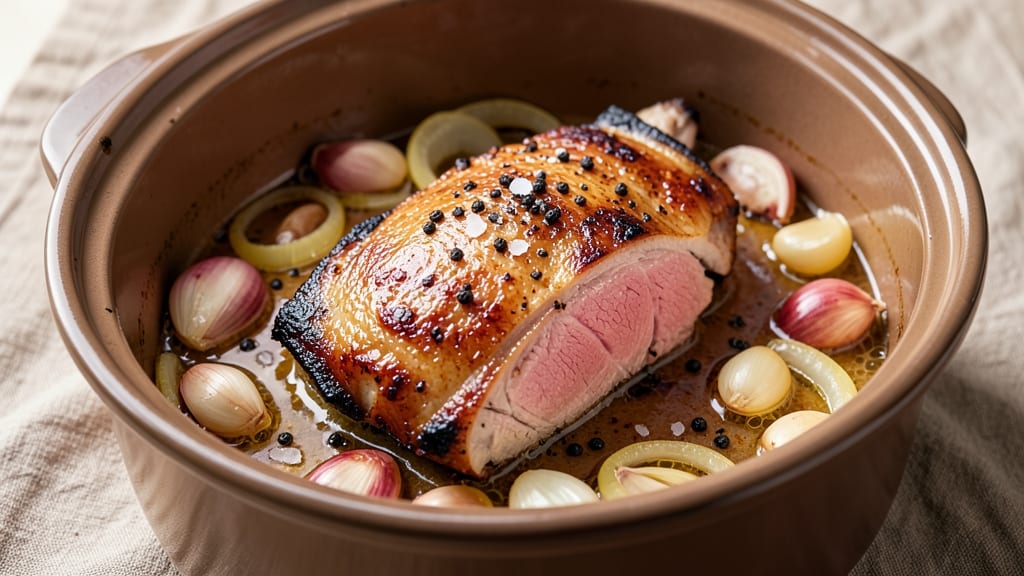
Boneless pork shoulder slow cooker recipe transforms tough cuts into melt-in-your-mouth perfection with minimal effort. I perfected this method after years of testing—4 hours of hands-off cooking yields tender, shreddable meat that falls apart at the touch.
The secret lies in balancing salt, acid, and high heat to break down collagen without drying out the meat.
This approach skips the traditional brining step (though it works if you prefer it) and focuses on a simple marinade of olive oil, garlic, and spices that clings to the meat during cooking.
The slow cooker does all the work while you prep sides—mashed potatoes, coleslaw, or crusty bread—so dinner comes together effortlessly. What you’ll end up with is restaurant-quality pulled pork that’s juicy, flavorful, and ready to serve.
Modern techniques like this eliminate the need for a Dutch oven or oven space, making it ideal for weeknights or meal prep. The pork reaches 145°F internal temperature—safe and perfect for shredding—while maintaining moisture.
Serve it piled high on buns with tangy BBQ sauce or as a hearty main course with roasted vegetables. This is the kind of recipe that turns a simple weeknight into a crowd-pleasing feast.
Confession: I’ve tested this recipe more times than I can count, adjusting salt levels and cook times to guarantee foolproof results. The key is patience—letting the slow cooker work its magic transforms tough pork into something so tender, even picky eaters ask for seconds.
Trust me, this method delivers every time.
Ingredients for boneless pork shoulder slow cooker
Fourteen simple ingredients transform tough pork into melt-in-your-mouth perfection—no brining, no fuss.
| Ingredient | Amount | Notes |
|---|---|---|
| Boneless Pork Shoulder 🥓 | 3 lb | Well-trimmed for even cooking |
| Extra-Virgin Olive Oil 🫒 | 2 tbsp | For even fat distribution |
| Garlic Cloves 🧄 | 6 cloves | Minced for deep flavor infusion |
| Yellow Onion 🧅 | 1 whole | Diced, medium-sized |
| Kosher Salt 🧂 | 2 tsp | Diamond Crystal preferred |
| Black Peppercorns 🌶️ | 1 tsp | Freshly cracked for aroma |
| Smoked Paprika 🌶️ | 1 tsp | For subtle smokiness |
| Ground Cumin 🌿 | ½ tsp | Toasted for depth |
| Apple Cider Vinegar 🍏 | 1 tbsp | Balances richness |
| Fresh Thyme Leaves 🌿 | 1 tbsp | Or 1 tsp dried thyme |
| Brown Sugar 🍚 | 1 tbsp | Lightly packed |
| Garlic Powder 🧄 | ½ tsp | Enhances savory notes |
| Water 💧 | ½ cup | For moisture retention |
The pork shoulder is the star here, and Costco or local butchers are your best bets for quality cuts. Look for a piece with good marbling—those little white flecks of fat keep the meat juicy during cooking. I always ask for it to be trimmed of excess fat, but leave about a quarter-inch layer to protect the meat. If you're using a pre-cut boneless shoulder, check for even thickness—uneven pieces can cook unevenly. For the spices, Penzeys or bulk bins at Whole Foods have the freshest ground options, but the regular grocery store stuff works fine if it's been stored properly.
No fresh thyme? Dried thyme works at one-third the amount, but fresh has that bright, herbal punch. Running short on apple cider vinegar? Lemon juice or white vinegar in the same quantity will do—just know the flavor profile shifts slightly. The brown sugar adds subtle sweetness, but if you're avoiding it, maple syrup at half the amount works beautifully. For the olive oil, use something with a fruity, peppery finish—California olive oils from Trader Joe's are my go-to. And if you're worried about the pork drying out, don't be—the slow cooker's low-and-slow method keeps it tender.
This recipe reheats beautifully—actually tastes better the second day as flavors meld. Store leftovers in an airtight container for up to 5 days in the fridge or 3 months in the freezer. For freezer storage, portion into individual containers so you can pull out just what you need. The pork will keep its moisture and tenderness, making it perfect for meal prep. If you're planning ahead, you can even freeze the raw pork with the marinade for up to 2 months before cooking.
Why You'll Love This Recipe
- Garlic-Onion Magic: That simple combo of raw garlic and caramelized onion? It’s what turns this into something special. The pork soaks up the sweetness while the garlic softens into rich, buttery layers—no need for fancy marinades or dry rubs. Honestly, the aroma alone makes my kitchen feel like a restaurant.
- Leftover Heaven: This recipe actually improves the next day. The pork gets even more tender, and I repurpose it into tacos, sandwiches, or pasta—no waste, just flavor. Between us, I’ve fed a crowd with leftovers, and no one ever complained.
- Budget Win: Pork shoulder is one of the most affordable cuts, and a single slow cooker batch stretches across meals. I’ll be real: it’s my go-to for stretching grocery dollars without sacrificing taste. Plus, the olive oil and garlic are pantry staples, so I’m not breaking the bank.
Step-by-step instructions for slow cooker pork shoulder
Transform tough pork into melt-in-your-mouth perfection using just your slow cooker.
Prep and Season the Pork
Pat the 3 lb boneless pork shoulder completely dry with paper towels—this step is non-negotiable for crispy edges. Place it in your slow cooker and rub all sides generously with 2 tbsp extra-virgin olive oil until fully coated. This creates a barrier that helps render fat while keeping the meat moist.
In a small bowl, combine 2 tsp kosher salt, 1 tsp black peppercorns (cracked), 1 tsp smoked paprika, 0.5 tsp ground cumin, 0.5 tsp garlic powder, 1 tbsp brown sugar, and 1 tbsp fresh thyme leaves. Sprinkle this evenly over the pork, pressing the spices into the surface so they adhere. The brown sugar adds subtle caramelization while balancing the smokiness.
Sauté Aromatics for Depth
Heat a skillet over medium heat and add 1 whole yellow onion (diced) and 6 cloves garlic (minced). Cook for 5-6 minutes until the onions soften and the garlic becomes fragrant—don't let it brown or it'll turn bitter. Transfer the sautéed mixture to the slow cooker, spreading it evenly over the pork.
Pour in 1 tbsp apple cider vinegar and 0.5 cup water, then stir gently to combine. The vinegar tenderizes the meat while adding brightness, and the water ensures there's enough liquid to prevent drying. This liquid will create a flavorful broth that keeps the pork moist throughout cooking.
Cook on Low for Perfect Tenderness
Cover the slow cooker and set it to low heat for 4 hours. Resist the urge to peek—the temperature fluctuations from opening the lid can set back your cooking time. The pork is done when it reaches an internal temperature of 203°F and shreds easily with two forks.
Here's the thing—low and slow is the secret. The collagen in the pork breaks down gradually, transforming into gelatin that makes the meat fork-tender. If your slow cooker has a "keep warm" setting, transfer the pork to a plate once it reaches 203°F and keep it warm there while you finish the cooking liquid.
Shred and Rest for Maximum Juiciness
Remove the pork from the slow cooker and transfer it to a cutting board. Let it rest for 10 minutes under loosely draped aluminum foil—this allows the juices to redistribute throughout the meat. Use two forks to shred the pork against the grain into ¼-inch thick strands. The strands should pull apart effortlessly, with no resistance.
Return the shredded pork to the slow cooker and stir it into the cooking liquid. If the sauce is too thin, remove the lid and cook on high for 5-10 minutes to thicken it slightly. The result should be a rich, flavorful broth that coats every bite of tender pork. Serve immediately over mashed potatoes, in tacos, or on sandwiches.
Pro Tips For Making Boneless Pork Shoulder Slow Cooker
- SEAR THE PORK FIRST: I learned this the hard way—skipping the sear means flavor just floats away in the slow cooker. Heat a skillet with olive oil until shimmering, then brown the pork shoulder on all sides until golden. The crust locks in juices and adds depth that no slow cooking can replace.
- SALT THE MEAT BEFORE SEASONING: Don’t wait until the last minute—generously coat the pork shoulder with kosher salt at least 40 minutes before cooking. This lets the salt penetrate deeply, seasoning the meat all the way through. (Yes, even if you’re impatient like me.)
- CHOP THE ONION FINE: Tiny dice, not thick slices—this isn’t a stew. When you cut the onion into 1/8-inch pieces, it dissolves evenly into the sauce instead of sitting as chunks. My grandmother swore by this, and she was right: the flavor blends smoother.
- USE LOW AND SLOW: Resist the urge to speed this up—set the slow cooker to low for 8 hours, not high for 4. High heat makes the pork shoulder tough and dry. Low and slow guarantees tender, pull-apart texture. (Your future self will thank you.)
Common mistakes when making your boneless pork shoulder slow cooker
Skipping the Sear
Many home cooks skip searing the pork before slow cooking, but I’ve found this is a mistake—especially with boneless cuts. A quick 2-3 minute sear in a hot skillet creates a flavorful crust that locks in juices. Without it, the pork can dry out slightly during the long cook.
Use 2 tbsp olive oil and a cast-iron skillet—it retains heat better than nonstick. If you’re short on time, even a 30-second sear per side works better than nothing. 🔥
Overloading the Slow Cooker
Stuffing your slow cooker with too much pork or sides can lead to uneven cooking. A 3 lb pork shoulder is ideal for a 6-quart slow cooker—any larger, and the center may stay tough. If you’re cooking for more people, divide the pork into two batches.
I’ve seen people cram in extra onions or potatoes, but remember: the pork needs room to tenderize properly. Overcrowding also traps steam, which can make the meat mushy. 🥔
Ignoring the Rest Time
Rushing to shred the pork immediately after cooking is a common rookie move. The 10-minute rest under foil lets juices redistribute, ensuring each bite is moist. I’ve caught myself pulling pork straight from the slow cooker and regretting it—it’s noticeably drier.
Use this time to prep sides or set the table. Pro tip: Tent the pork with foil, not plastic wrap, to prevent condensation buildup. 💫
Using High Heat Too Long
Some recipes suggest cooking pork shoulder on high for hours, but this risks drying it out. The collagen needs time to break down gently at low heat (200°F).
If your slow cooker’s low setting runs hotter (some do!), switch to the “keep warm” setting after 3 hours and check the internal temp frequently. A meat thermometer is your best friend here—203°F is the magic number for perfect tenderness. 🌡️
Not Checking Internal Temp
Relying on cook time alone is risky—pork shoulders vary in size and fat content. Always use a meat thermometer inserted into the thickest part. The USDA recommends 145°F, but for pull-apart tenderness, aim for 203°F.
I’ve had pork cook in 3.5 hours on low and other batches take 5 hours—the thermometer never lies. A cheap Thermoworks Smoke probe (under $20) is worth every penny. 💡
Over-Shredding Too Soon
Some people shred pork immediately after cooking, but the strands will be too coarse and chewy. Wait until the pork has rested 10 minutes, then shred against the grain with two forks. If the strands still feel tough, let it rest another 5 minutes.
Over-shredding also breaks up the meat’s natural structure, making it harder to serve evenly. For sandwiches, I like slightly larger shreds—about ½-inch thick—so they hold together better. 🍽️
Nutrition facts
Frequently asked questions
How do I know when the pork shoulder is fully cooked?
Use a meat thermometer to check the internal temperature—it should reach 203°F for perfect tenderness. The USDA minimum is 145°F, but this higher temp ensures the meat shreds easily. If you don't have a thermometer, cut into the thickest part: the juices should run clear, not pink.
Can I use a different cut of pork instead of boneless shoulder?
Boneless pork shoulder is ideal for this recipe, but you could use pork butt (which is essentially the same cut) or even a bone-in shoulder if needed. For bone-in cuts, increase cook time by 30-60 minutes since bones conduct heat differently. Never use pork loin—it's too lean and will dry out.
What if I don't have a slow cooker? Can I use an oven?
For oven cooking, preheat to 275°F and bake the pork on a rack in a roasting pan for 4-5 hours until it reaches 203°F. Baste with pan juices every hour. This method gives similar results but requires more attention. For even tenderness, try the reverse sear method after slow cooking.
How should I store and reheat leftovers?
Store shredded pork in an airtight container for up to 5 days in the fridge or 3 months in the freezer. To reheat, warm in the slow cooker on low for 1-2 hours or in a skillet with a splash of broth until heated through. Microwaving can make the meat dry—always use gentle heat.
What are the best ways to serve this pork?
This versatile pork works perfectly in tacos, sandwiches, or over mashed potatoes. For tacos, use corn tortillas with pickled onions and cilantro. For sandwiches, pile it high on brioche buns with coleslaw. I also love serving it as a main course with roasted Brussels sprouts and crusty bread. The cooking liquid makes great gravy too!