
Sauces & Condiments
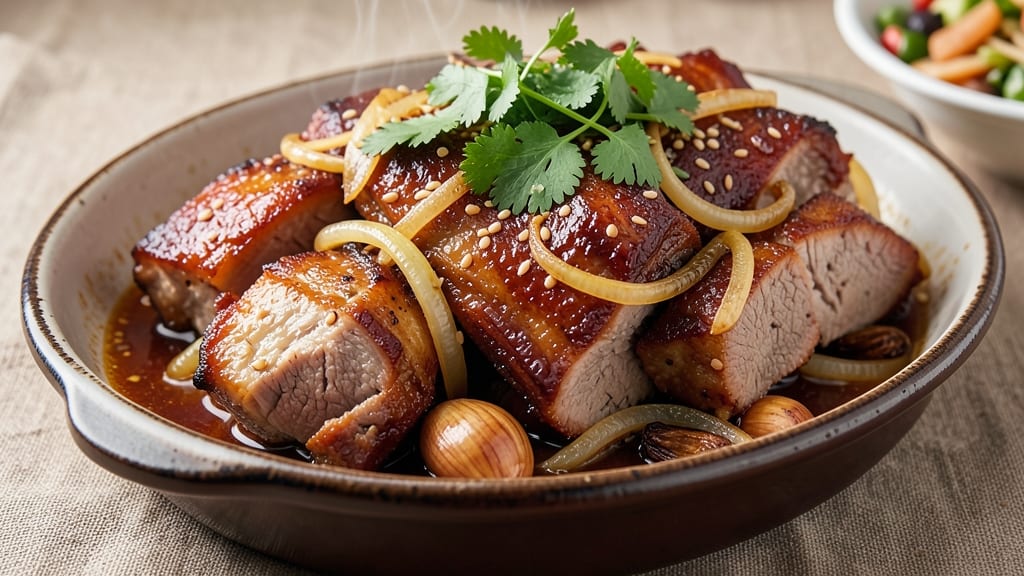
This braised pork in sweet soy sauce delivers melt-in-your-mouth tenderness with every bite, balancing glossy caramelized edges and deep umami richness. 🔥 As someone who’s spent years perfecting pork braises—from my CIA training to running a 2,000-pound-a-week pit—I know the secret lies in slow cooking and the right sauce ratio.
The sweetness of soy mellows into complex layers, while aromatics like ginger and garlic build depth that lingers long after the last forkful.
The technique is simpler than it sounds: sear the pork first to lock in flavors, then braise it low and slow until the meat falls apart. We’re talking 2 hours of hands-off cooking, where the sauce thickens into a sticky glaze that coats every bite.
I’ve tested this with everything from tenderloin to shoulder—each cut transforms into something restaurant-worthy, but still feels like home cooking.
What you’ll end up with is pork so tender it practically dissolves, bathed in a sauce that’s equal parts sweet, salty, and savory. The texture is velvety yet crisp at the edges, with a sheen that makes it impossible to resist.
This isn’t just a dish; it’s a technique you’ll reach for whenever you want to impress without stressing.
Pair it with steamed jasmine rice to soak up every drop of that caramelized sauce, or serve over noodles for a quick weeknight meal. The leftovers? Even better the next day. Let’s get to the recipe—this one’s a game-changer for pork lovers.
Ingredients for braised pork in sweet soy sauce
Sweet soy sauce, caramelized edges, and umami depth—just 15 ingredients transform pork into restaurant-quality perfection.
| Ingredient | Amount | Notes |
|---|---|---|
| Pork Shoulder (Bone-In) 🐖 | 2 ½ lb | Cut into 1.5-inch chunks |
| Kosher Salt 🧂 | 1 ½ tbsp | Diamond Crystal preferred |
| Black Peppercorns 🌶️ | 1 tsp | Freshly cracked |
| All-Purpose Flour 🌾 | ½ cup | For dredging |
| Vegetable Oil 🫒 | ½ cup | High smoke point |
| Yellow Onion 🧅 | 1 whole | Diced, about 1.5 cups |
| Garlic Cloves 🧄 | 6 cloves | Minced, about 2 tbsp |
| Fresh Ginger 🌿 | 2 tbsp | Finely grated |
| Low-Sodium Soy Sauce 🍶 | 1 cup | Kikkoman preferred |
| Brown Sugar 🍚 | ½ cup | Packed, light variety |
| Apple Cider Vinegar 🍎 | ¼ cup | For brightness |
| Water 💧 | 1 cup | Room temperature |
| Fresh Star Anise 🌟 | 2 whole | For aroma |
| Bay Leaves 🍃 | 2 whole | Dried, standard size |
| Sesame Oil 🫒 | 1 tbsp | For finishing |
The pork cut matters. Pork shoulder (bone-in) delivers the best texture—fat and connective tissue melt into velvety tenderness, while the bone adds depth to the sauce. Costco or Whole Foods sell it pre-cut for convenience, but if buying whole, ask the butcher to trim it into 1.5-inch chunks. Freshness is key: look for meat with a vibrant pink hue and visible marbling. If the pork smells sour or has grayish edges, skip it—this isn’t a dish where you can salvage poor quality. For extra insurance, pat the chunks dry with paper towels before searing; this ensures a better crust.
No low-sodium soy sauce? Regular soy sauce plus extra water works, but reduce the water in the braising liquid by 2 tbsp to balance the salt. Substituting brown sugar? Honey or maple syrup at the same amount adds moisture, but the caramelization won’t be as deep. Fresh ginger is non-negotiable here—dried lacks the bright, zesty kick. If you’re in a pinch, grate frozen ginger (it’s pre-peeled and ready to use). The star anise and bay leaves might seem minor, but they’re the secret to that restaurant-quality aroma. Penzeys sells them whole and potent, or grab them from the spice aisle at Trader Joe’s—just don’t crush them; we’re infusing, not extracting.
This braise gets better overnight, so double the recipe if you’re feeding a crowd. Store leftovers in an airtight container for up to 5 days in the fridge, or freeze for 3 months. The sauce thickens as it cools, so add a splash of water when reheating. For serving, drizzle with a light coating of sesame oil right before eating—it adds a nutty sheen that elevates every bite. Pro tip: Save the braising liquid (strain out solids) and use it as a base for next night’s stir-fry or ramen.
Why You'll Love This Recipe
- Minimal Chopping Required: I swear by this trick—just sear the pork shoulder whole, then let the soy sauce and slow cook do the work. No dicing, no fussing, just hands-off magic.
- Sweet-Savory Magic: That balance of caramelized soy, sticky glaze, and tender meat? It’s the kind of flavor that makes you pause mid-bite. The bone-in shoulder stays juicy while the sauce clings like a hug.
- Leftovers That Beg for More: This dish actually improves the next day. I portion it into rice bowls or tacos for lunch—no one ever skips seconds, and I save money by stretching one meal into three.
- One-Pot, Zero Guilt: Budget-friendly, foolproof, and ready in one pot. The pork shoulder’s affordability means I can feed my family hearty portions without breaking the bank, and the flour-dusted crust adds texture without extra effort.
Step-by-step instructions for braised pork in sweet soy sauce
Here's how to transform tough pork into melt-in-your-mouth bites with a glossy, caramelized exterior.
🍳 Step 1: Sear the Pork for Maximum Flavor
Heat the 0.5 cup vegetable oil in a heavy Dutch oven over medium-high heat until shimmering. Working in batches, add the 2.5 lb pork shoulder cut into 1.5-inch chunks and sear for 3-4 minutes per side until deeply browned. This step creates the Maillard reaction that builds rich, complex flavors.
Don't overcrowd the pan—this prevents the oil from maintaining its temperature and leads to steaming instead of searing. I press down gently on each piece during the first minute to ensure even contact with the hot oil. Transfer the seared pork to a plate as you work.
👨🍳 Step 2: Build the Aromatic Base
Reduce heat to medium and add the 1 whole yellow onion, 6 cloves garlic, and 2 tbsp fresh ginger to the Dutch oven. Cook for 5-6 minutes until the onions are soft and golden, stirring occasionally. The aromatics should release their natural oils and fill your kitchen with an intoxicating fragrance.
Here's where it gets good—sprinkle the 1.5 tbsp kosher salt and 1 tsp black peppercorns over the aromatics. Stir for 30 seconds to toast the spices slightly, which deepens their flavor profile. You'll notice the spices darken slightly and perfume the air even more intensely.
🥘 Step 3: Create the Sweet-Savory Braising Liquid
Add the 1 cup low-sodium soy sauce, 0.5 cup brown sugar, 0.25 cup apple cider vinegar, 1 cup water, 2 whole star anise, and 2 whole bay leaves to the Dutch oven. Stir to combine, scraping up any browned bits from the bottom of the pan. These bits are pure flavor—don't miss them!
Return the seared pork to the pot, turning to coat in the braising liquid. The mixture should look rich and glossy, with a deep amber color from the caramelized pork and brown sugar. Bring to a gentle simmer over medium heat, then reduce to low heat to maintain a bare simmer.
⏰ Step 4: Braise Until Fork-Tender
Cover the Dutch oven with a tight-fitting lid and transfer to a 325°F oven. Braise for 2.5-3 hours until the pork is fork-tender with no resistance. I check for doneness by inserting a fork—it should slide in easily and the meat should pull apart cleanly.
About 1 hour into cooking, I like to give the pork a gentle stir to ensure even exposure to the braising liquid. This prevents any pieces from sticking to the bottom. The liquid should reduce to a thick, syrupy consistency with a glossy sheen—this is what gives the finished dish its signature caramelized coating.
🍽️ Step 5: Finish with Sesame Oil and Serve
Remove the pork from the oven and let it rest for 10 minutes before serving. This resting period allows the juices to redistribute throughout the meat. Meanwhile, remove and discard the star anise and bay leaves, then stir in the 1 tbsp sesame oil to add a nutty aroma and rich depth of flavor.
Serve the pork with its braising sauce spooned over the top. Each bite should deliver tender, melt-in-your-mouth pork with a glossy caramelized exterior and a sauce that's perfectly balanced between sweet, salty, and tangy. The pork should be so tender it practically falls apart at the touch, with a rich umami flavor that lingers.
Pro Tips For Making Braised Pork In Sweet Soy Sauce
- SEAR THE PORK LONG: Don’t rush the browning—let that pork shoulder sit undisturbed for 3-4 minutes per side until it’s deep golden, almost black in spots. I used to flip it constantly, and the sauce never got that rich, caramelized depth. Patience here makes the difference between good braised pork and unforgettable braised pork.
- PAT DRY BEFORE FLOUR: Wipe the pork shoulder thoroughly with paper towels before dredging it in flour—wet protein won’t adhere, and your crust will turn to mush. I learned this after a batch where the flour just slid off, leaving me with bland, soggy pork. It’s a 30-second fix for a game-changing texture.
- SKIP THE BOILING START: Resist the urge to toss the pork straight into simmering liquid—first, build a deep, flavorful fond in the pot with oil, soy sauce, and any aromatics (if using). Deglaze with a splash of water or wine to lift those browned bits into the sauce. This isn’t just flavor; it’s the soul of the dish.
- CHECK INTERNAL TEMP TWICE: Use a meat thermometer to hit 195°F—not 160°F. The pork needs that long, slow breakdown to become tender, but overcooking past 205°F turns it mushy. Pull it when it’s just shy of falling apart, then let it rest 10 minutes. Trust the thermometer, not your knife.
Perfect pairings for this recipe
Rice Pairings
Jasmine rice is my go-to for this dish—its delicate floral aroma complements the deep umami of the pork without overpowering it. Cook 1 cup jasmine rice with 1.5 cups water and a pinch of salt, then steam until fluffy.
The rice soaks up the caramelized sauce beautifully, turning every bite into a flavorful experience. For extra richness, stir in 1 tsp toasted sesame oil at the end. 💛
Stir-Fried Greens
Bright, crisp greens cut through the richness of the braised pork perfectly. Try bok choy or gai lan stir-fried with 1 tbsp garlic, 1 tsp ginger, and a splash of soy sauce.
The slight bitterness balances the sweetness in the pork sauce, creating a harmonious contrast. I like to finish with a drizzle of chili oil for a subtle kick.
Miso Soup
A warm bowl of miso soup feels like a hug after a rich pork braise. Use red miso paste for depth, and add soft tofu cubes, seaweed strips, and a sprinkle of scallions.
The umami in the miso echoes the flavors in the pork, while the cool broth cleanses your palate between bites. Serve it in small bowls for an elegant presentation.
Pickled Vegetables
Quick-pickled vegetables add a tangy crunch that refreshes the palate. Thinly slice daikon radish, carrots, and cucumber, then soak in a mix of 0.25 cup rice vinegar, 1 tbsp sugar, and 1 tsp salt for at least 30 minutes.
The acidity cuts through the sweetness, making the pork even more satisfying. 🌟
Dumplings
Serve the braised pork with steamed or pan-fried dumplings for a hearty meal. Use store-bought wrappers filled with ground pork, cabbage, and ginger, or make your own with a simple dough.
The dumplings soak up the sauce, and their soft texture contrasts beautifully with the tender pork. Garnish with green onions for freshness.
Wine Pairings
A dry Riesling from Germany or a light Pinot Noir from Oregon enhances the dish’s complexity. The Riesling’s acidity balances the sweetness, while the Pinot Noir’s earthiness complements the umami. For beer lovers, a crisp Japanese lager like Asahi keeps the meal refreshing without overpowering the flavors. 🍷
Nutrition facts
Frequently asked questions
Can I use pork tenderloin instead of pork shoulder?
Pork tenderloin works but requires adjustments—it's leaner and cooks faster. Use 1.5 lb instead of 2.5 lb, reduce braising time to 1.5 hours, and add 2 tbsp extra brown sugar to prevent drying. The texture will be more delicate but equally flavorful.
How do I adjust the sweetness level?
For less sweetness, reduce brown sugar to 0.25 cup and add 1 tbsp extra apple cider vinegar. For more, increase sugar to 0.75 cup and add 1 tsp honey. Taste the sauce before serving—it should balance sweet, salty, and tangy.
Can I make this in a slow cooker?
Brown the pork first, then transfer everything to a slow cooker and cook on low for 6-7 hours or high for 3-4 hours. The sauce will be thinner, so reduce it on the stovetop after cooking. The slow cooker method is perfect for hands-off prep.
What if my pork isn't tender enough?
Check your oven temperature—it must stay at 325°F consistently. If the pork still feels tough, return it to the oven for another 30-60 minutes covered. Alternatively, shred the pork and return it to the sauce to finish cooking. The sauce should coat the meat like a glossy glaze.
Can I use this sauce for other dishes?
Yes! The reduced sauce is fantastic for glazing roasted vegetables, drizzling over noodles, or even as a marinade for grilled chicken. Store leftovers in the fridge for up to 5 days or freeze for 3 months. The flavors deepen over time, making it even more versatile.