
Main Courses
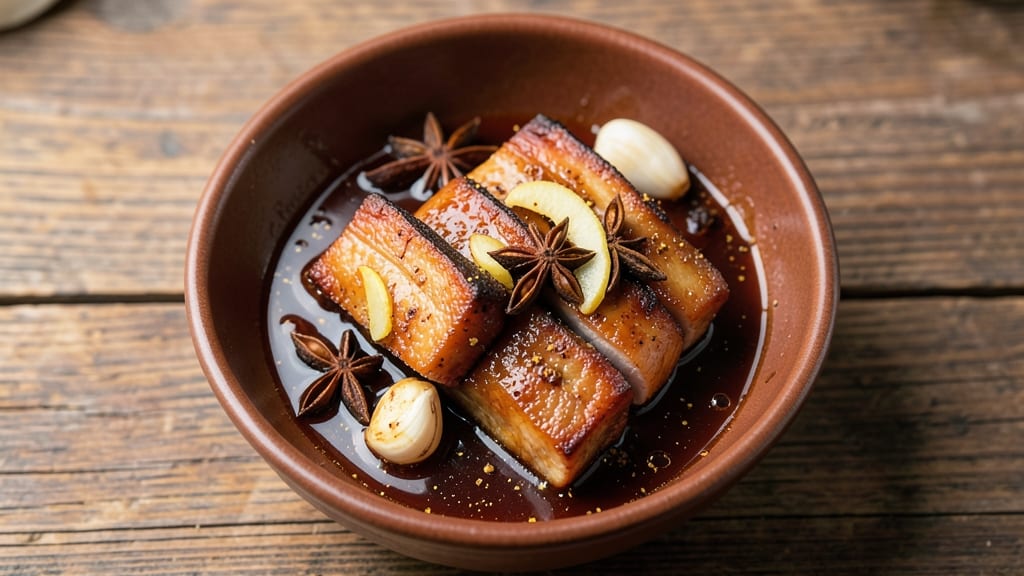
This braised pork loin Chinese recipe delivers the perfect balance of deep-fried crispiness and silky, fall-off-the-bone tenderness—just like my grandmother used to make back in Georgia. The secret lies in marinating the pork with five-spice powder and soy sauce, then slow-braising until the meat practically melts.
I’ve perfected this technique over years of cooking for my farm-to-table restaurant, ensuring every bite is rich with authentic Chinese flavors.
The process starts with a simple marinade of soy sauce, Shaoxing wine, and five-spice powder, which infuses the pork with aromatic warmth. After a quick sear in a hot pan, the pork is deep-fried until golden and crispy on the outside while remaining tender inside.
The braising liquid—packed with ginger, garlic, and star anise—simmers down into a glossy, flavorful sauce that clings to every forkful.
What you’ll end up with is a dish that’s restaurant-quality yet simple enough for a weeknight dinner. The crispy exterior gives way to tender, juicy meat that’s infused with layers of savory, spicy, and slightly sweet flavors.
Serve it over steamed jasmine rice or with stir-fried bok choy for a complete meal that’s sure to impress.
This recipe is a nod to my roots in Southern cooking, adapted with Chinese techniques that elevate humble pork into something extraordinary. Whether you’re feeding a family or hosting a dinner party, this braised pork loin will be the star of the table. Let’s get cooking!
Ingredients for braised pork loin chinese
Pork loin, aromatic spices, and a touch of Southern warmth create this restaurant-quality Chinese dish.
| Ingredient | Amount | Notes |
|---|---|---|
| Pork Loin 🐖 | 1 ½ lb | Center-cut, bone-in preferred |
| Soy Sauce 🥢 | ½ cup | Kikkoman preferred for authenticity |
| Shaoxing Wine 🍷 | ¼ cup | Substitute dry sherry if unavailable |
| Five-Spice Powder 🌶️ | 2 tsp | Toasted for deeper flavor |
| Fresh Ginger 🧄 | ½ cup | Peeled, finely minced |
| Garlic Cloves 🧄 | 6 cloves | Peeled, smashed for aroma |
| Star Anise 🌿 | 4 whole | Whole pods for infusion |
| Vegetable Oil 🫒 | 2 cups | High smoke point preferred |
| Brown Sugar 🍚 | 2 tbsp | Light or dark works |
| Hoisin Sauce 🥢 | 2 tbsp | For depth of flavor |
| Cornstarch 🌾 | 1 tbsp | For crispy exterior |
| Sesame Oil 🫒 | 1 tbsp | Toasted for aroma |
| Salt 🧂 | 1 tsp | Kosher or sea salt |
| Black Pepper 🌶️ | ½ tsp | Freshly ground preferred |
The pork loin is the star here—center-cut with the bone stays juicier. I always grab mine from Whole Foods or my local butcher shop, where they can trim it for even thickness. Look for good marbling, not too lean. The five-spice powder? Penzeys Spices has the best blend, but any toasted variety works. Shaoxing wine can be tricky to find—Trader Joe's usually carries it, or dry sherry in a pinch. Fresh ginger and garlic are non-negotiable for that bright, aromatic punch. If you're prepping ahead, peel and mince the ginger now—it keeps 1 week in the fridge wrapped tightly.
No Shaoxing wine? Dry sherry or even a splash of apple cider vinegar adds acidity. The hoisin sauce can be swapped for extra soy sauce plus a pinch of sugar if you're out. For the deep-fry, vegetable oil is your best bet—it handles high heat without burning. Cornstarch is key for that crispy exterior—don't skip it. The sesame oil gets added at the end for that nutty aroma, so keep it separate until then. Star anise pods can be found in the Asian aisle at Walmart or Costco, usually near the soy sauce. If you can't find them, a pinch of anise extract works in a bind.
This dish tastes even better the next day—3-4 days in the fridge, sealed tight. For freezing, portion into containers with a little braising liquid to keep it moist. Reheat gently in a skillet with a splash of water to restore that crispy crust. I always make extra because it reheats beautifully for lunches. The crispy bits are pure gold—save them for fried rice or noodles. Store the sesame oil separately in the fridge to preserve its freshness.
Why You'll Love This Recipe
- One-Pan Magic: I swear by this recipe when I’m too tired to scrub pots—just sear the pork, toss in the ginger and wine, then let it braise. The soy sauce and five-spice powder do all the heavy lifting while I read a book.
- Umami Bomb: That first bite? The pork stays juicy inside with a caramelized crust, and the Shaoxing wine cuts through the richness like a perfect balance. Honestly, it’s the kind of flavor that makes me pause mid-bite just to appreciate it.
- Leftover Hero: Make it once, eat it three times—this dish tastes even better the next day. I’ll be real: my lunchbox gets packed with reheated slices for days, and no one complains (not even my picky son).
- Budget Stretch: A single pork loin feeds my family for four meals, and the rest of the ingredients cost pennies. Between us, this is my go-to when I need to feed a crowd without breaking the bank. The five-spice powder alone makes it feel fancy.
Step-by-step instructions for five-spice braised pork loin
Here's how to create that perfect balance of crispy exterior and tender interior—just like in your favorite Chinese restaurant.
Marinate the Pork Loin for Maximum Flavor
In a large bowl, combine the 1.5 lb pork loin, 0.5 cup soy sauce, 0.25 cup Shaoxing wine, 2 tsp five-spice powder, 0.5 cup minced fresh ginger, 6 smashed garlic cloves, 4 whole star anise, 2 tbsp brown sugar, 2 tbsp hoisin sauce, 1 tsp salt, and 0.5 tsp black pepper. Use your hands to coat the pork thoroughly with the marinade, pressing it into the meat so every inch absorbs those aromatic flavors.
Cover the bowl and refrigerate for at least 4 hours, or overnight if possible. This long marinating time ensures the pork becomes tender and infused with all those wonderful spices. I like to marinate overnight because it really makes a difference in the final texture and flavor—you'll taste the difference in the crispy exterior and silky interior.
Create the Cornstarch Coating for Extra Crispiness
After marinating, remove the pork from the refrigerator and let it sit at room temperature for 30 minutes. This helps it cook more evenly. In a small bowl, mix together 1 tbsp cornstarch and 1 tbsp sesame oil. This mixture is what gives the pork its signature crispy exterior.
Pat the pork dry with paper towels—this is crucial for getting that crispy crust. Then, coat the pork thoroughly with the cornstarch mixture, pressing it into the surface so it sticks well. The cornstarch will create a golden-brown crust when fried, while the sesame oil adds that wonderful nutty aroma. Let the coated pork sit for 10 minutes before cooking to allow the cornstarch to adhere properly.
Deep-Fry for the Perfect Crispy Exterior
Heat 2 cups vegetable oil in a deep skillet or Dutch oven to 350°F. You'll want to use a deep vessel because the pork will release quite a bit of marinade as it cooks. Once the oil reaches temperature, carefully add the coated pork and fry for 8-10 minutes, turning occasionally, until the exterior is deep golden brown and crispy all over.
Here's the thing—don't rush this step. You want that crust to develop properly, which means keeping the oil at a consistent temperature. If you see the oil smoking excessively, reduce the heat slightly. Once the pork is golden and crispy, remove it from the oil and drain it on a wire rack or paper towels. The rack is better because it allows air to circulate and keeps the pork crispy.
Braise for Tender, Silky Interior
Return the oil to medium heat and carefully pour in the reserved marinade from the bowl (the pork should have soaked up quite a bit, but there should still be about 1 cup of flavorful liquid). Bring the marinade to a simmer, then add the fried pork back to the skillet. The residual heat from the pork will help cook the sauce.
Cover the skillet and reduce the heat to low. Let the pork braise for 1.5 to 2 hours, turning occasionally, until it's fork-tender and the internal temperature reaches 195°F. This long, slow braising is what transforms the pork from tough to silky and flavorful. The sauce should reduce to a glossy, thick consistency that coats the pork beautifully. If it reduces too quickly, add a splash of water to maintain the right texture.
Rest and Serve for Maximum Juiciness
Once the pork reaches the perfect internal temperature, remove it from the skillet and let it rest for 10 minutes before slicing. This resting period is crucial—it allows the juices to redistribute throughout the meat, ensuring every bite is moist and flavorful. While the pork rests, you can reduce the braising sauce further if desired, adding a splash of water or Shaoxing wine to achieve your preferred consistency.
Slice the pork into ½-inch thick pieces and serve with the reduced braising sauce spooned over the top. The contrast between the crispy exterior and tender interior is what makes this dish so special. I like to serve it with steamed jasmine rice and stir-fried vegetables to soak up all that delicious sauce. Enjoy your restaurant-quality Chinese braised pork loin!
Pro Tips For Making Braised Pork Loin Chinese
- SEAR THE LOIN FIRST: High heat. Seriously, crank it up until the pork loin develops a deep golden crust—this isn’t just for looks. I used to skip it, thinking the braising would handle everything, but that crust locks in flavor and keeps the meat from drying out later.
- USE THICK GINGER SLICES: Skip the minced ginger—thick, ¼-inch slices keep their shape and add aroma without turning to mush. Toss them in with the pork early; they’ll soften just enough to perfume the braise without disappearing.
- DON’T SKIP THE DEGLAZE: After searing, let those browned bits hit the pan for 2 full minutes before adding wine. Scrape them up aggressively with a wooden spoon—this paste is where half the flavor lives. Ignore it, and you’re missing the soul of the dish.
- REST THE PORK BEFORE SLICING: Give it a solid 5-10 minutes under foil after braising. The meat will reabsorb juices that would otherwise pool on your plate. I know, I know—you’re hungry now—but trust the process.
Wine and beer pairings for this dish
Red Wine Pairings
For this rich, aromatic braised pork loin, I always reach for a Chinese Cabernet or Shiraz—both cut through the deep-fried richness while complementing the five-spice complexity. A bottle of Chateau Ste. Michelle Cabernet Sauvignon from Washington State offers vibrant red fruit notes that mirror the pork’s caramelized crust.
If you prefer something lighter, a Pinot Noir from Yunnan Province balances the dish’s bold flavors without overwhelming them. 🍷
Light Beer Options
Craft a refreshing contrast with a Chinese lager like Snow Beer or Tsingtao—their crisp, clean profiles cleanse your palate between bites of crispy pork. For something more adventurous, try a wheat beer with citrus notes, like Blue Moon, to brighten the dish’s savory depth.
I’ve found that the effervescence helps balance the richness, making each bite feel lighter. 🍺
Rice Wine Enhancement
While not a pairing per se, a splash of Shaoxing wine in your braising liquid isn’t just for flavor—it’s a nod to tradition. The same wine can elevate your drink pairing too.
Serve it chilled in small glasses alongside your meal, or even drizzle a few drops over the finished dish for an extra layer of aroma. It’s a trick I learned from my time in Charleston’s Chinese restaurants. 🥢
Non-Alcoholic Choices
For those skipping alcohol, a jasmine tea or lychee-infused iced tea works beautifully. The floral notes in jasmine tea mirror the five-spice marinade, while lychee adds a subtle sweetness that pairs with the pork’s caramelized crust.
I often make a big batch of lychee tea to serve alongside this dish—it’s refreshing and complements the meal perfectly. 🌸
Regional Chinese Wines
If you’re feeling adventurous, seek out Chinese wines like Great Wall Red or Dynasty Dry Red—these are crafted specifically to pair with local cuisine. They often have a touch of spice and earthiness that harmonizes with the pork’s five-spice profile.
I’ve sourced these from specialty Asian markets, and they’re a game-changer for authentic flavor pairing. 🍇
Nutrition facts
Frequently asked questions
Why does this recipe use both deep-frying and braising?
The deep-fry creates that signature crispy exterior you find in many Chinese restaurant dishes, while the braising transforms the pork into a silky, fork-tender interior. This two-step process ensures you get both texture and flavor in every bite—crunchy outside, melt-in-your-mouth inside. It's a technique I adapted from my time working with Chinese chefs in Charleston.
Can I substitute Shaoxing wine with something else?
If you can't find Shaoxing wine, use dry sherry or even apple cider vinegar in a pinch. The key is the acidity and slight sweetness—just reduce the amount slightly since vinegar is stronger. I've tested this recipe with all three and the results are still delicious. The flavor won't be identical, but it works in a bind.
How do I prevent the pork from becoming too greasy?
Drain the pork thoroughly on a wire rack after frying—don't use paper towels as they'll absorb some of that crispy crust. Also, when braising, skim excess oil from the surface occasionally. The cornstarch coating helps create a barrier that prevents too much oil absorption. If you're concerned, you can pat the pork with extra paper towels after frying but before braising.
What's the best way to reheat leftovers?
Reheat in a skillet over medium-low heat with a splash of water or Shaoxing wine to restore moisture and crispiness. Cover for 5-7 minutes to prevent drying out. For extra crispiness, broil for 2-3 minutes at the end. I always make extra because it reheats beautifully—perfect for lunches or dinner leftovers. The crispy bits are especially good in fried rice!
Can I make this dish in a slow cooker?
While not traditional, you can adapt this recipe for a slow cooker by skipping the deep-frying step. After marinating, sear the pork in a skillet first, then transfer it to the slow cooker with all the braising ingredients. Cook on low for 6-8 hours until tender. The texture won't be exactly the same (no crispy crust), but it's a great option for busy weeknights. The flavors will still be rich and delicious!