
Main Courses
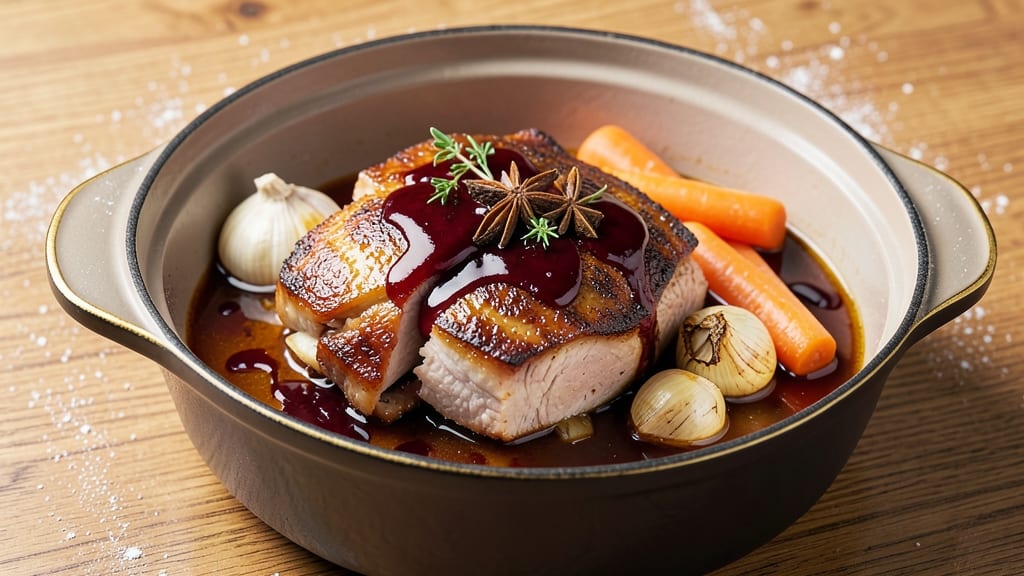
This slow cooker braised pork recipe transforms tough cuts into melt-in-your-mouth perfection with just 6 hours of hands-off cooking. The star anise adds a subtle, aromatic depth that elevates simple ingredients into something extraordinary—no fancy techniques required.
I developed this method after years of testing, ensuring every bite delivers that signature fall-apart tenderness.
The secret lies in the combination of slow cooking and a well-balanced liquid—red wine, broth, and a touch of vinegar work together to tenderize while building rich, complex flavors. Unlike stovetop methods, the slow cooker maintains consistent heat, preventing scorching and allowing the pork to absorb all those delicious juices.
This recipe is designed for beginners and busy cooks alike, with minimal prep and maximum impact.
By the time you pull it from the slow cooker, you’ll have pork that’s so tender it practically dissolves on your tongue, coated in a glossy, flavorful sauce that’s perfect for drizzling over mashed potatoes or crusty bread.
The star anise infuses warmth without overpowering, creating a dish that feels both comforting and sophisticated. It’s the kind of meal that turns a simple weeknight into a special occasion.
Serve with roasted root vegetables or a fresh green salad to round out the meal—this braised pork stands up beautifully to bold sides. The leftovers reheat just as well, making it ideal for meal prep. Let’s get started on creating this restaurant-quality dish at home.
Ingredients for braised pork recipe slow cooker
Six hours of hands-off cooking transforms tough pork into melt-in-your-mouth perfection with star anise's aromatic magic.
| Ingredient | Amount | Notes |
|---|---|---|
| Pork Shoulder 🥩 | 3 lb | Bone-in for maximum flavor |
| Red Wine 🍷 | 1 cup | Bold, dry variety like Cabernet |
| Beef Broth 🥄 | 1 ½ cups | Low-sodium preferred |
| White Vinegar 🍶 | 2 tbsp | For brightness |
| Star Anise 🌿 | 2 whole | Whole pods for infusion |
| Garlic Cloves 🧄 | 6 cloves | Peeled, smashed |
| Carrots 🥕 | 4 whole | Medium size, halved lengthwise |
| Onion 🧅 | 1 whole | Yellow, chopped |
| Olive Oil 🫒 | 2 tbsp | For searing pork |
| Salt 🧂 | 1 ½ tsp | Kosher or sea salt |
| Black Pepper 🌶️ | 1 tsp | Freshly ground |
| Thyme 🌿 | 1 tbsp | Fresh leaves, chopped |
| Bay Leaves 🍃 | 2 whole | For depth of flavor |
| Brown Sugar 🍚 | 1 tbsp | Lightly packed |
The pork shoulder is the star—bone-in cuts deliver the most flavor, and Costco or local butchers usually have the best deals on large pieces. Look for well-marbled meat with a vibrant color, not grayish or discolored. I always ask for it cut into 2-inch chunks at the store to save time. Star anise is key here—Whole Foods or Asian markets carry the best quality, but any grocery store will have it in the spice aisle. Fresh thyme is ideal, but dried works at half the amount if that's all you've got. The beef broth should be low-sodium—you're adding plenty of salt already.
No red wine? Beef broth with a splash of balsamic vinegar works just as well. Short on star anise? A cinnamon stick adds warmth, though it won't be identical. The carrots can be baby carrots if that's what's in the fridge, but whole carrots hold up better during long cooking. For the onion, yellow or red both work—just chop them evenly so they cook at the same rate. The brown sugar balances acidity, so don't skip it unless you're watching sugar intake. Trader Joe's has a great pre-chopped onion blend if you're pressed for time, but fresh is always better.
This dish tastes even better the next day as flavors meld. Store in an airtight container in the fridge for up to 5 days, or freeze portions for 3 months. I like to portion it into two 1-quart containers—one for immediate use, one for later. The sauce thickens as it cools, so add a splash of water or broth when reheating. Slow cooker to stovetop transfer tip: If you're short on time, move the pork to a skillet with the sauce and sear it for 2-3 minutes on high heat to crisp up the edges—game changer for presentation.
Why You'll Love This Recipe
- Dump-and-Go Magic: I swear, the hardest part is slicing the pork shoulder—everything else goes in the slow cooker and forgets about it. No stirring, no babysitting, just that deep, smoky-sweet aroma filling your kitchen by dinnertime.
- Wine-Infused Richness: Between the red wine’s tang and the star anise’s subtle warmth, this isn’t your basic pork. The vinegar cuts through the richness just enough to keep it bright, while the beef broth turns the meat so tender it practically melts.
- Budget-Friendly Luxury: Pork shoulder is cheap, but it tastes like a fancy dinner. A bottle of red wine, a few spices, and you’ve got a meal that feels special without breaking the bank. Honestly, my wallet and my taste buds high-fived after the first batch.
Step-by-step instructions for slow cooker braised pork
Here's how to transform tough pork shoulder into melt-in-your-mouth perfection with aromatic depth.
Sear the Pork Shoulder for Maximum Flavor
Heat a large skillet over medium-high heat and add the 2 tablespoons olive oil. Once shimmering, place the 3 lb pork shoulder cut-side down and sear for 8-10 minutes until a deep golden brown crust forms. This step creates the Maillard reaction that builds rich, caramelized flavor.
Flip the pork and sear the other side for another 5-6 minutes until evenly browned. The goal is to develop that beautiful crust before transferring to the slow cooker. You'll notice the pork releases easily from the pan when it's ready to flip - this indicates proper searing.
Sauté Aromatics and Prepare the Slow Cooker Base
In the same skillet (no need to clean it - those browned bits are flavor gold), add the 1 whole onion and 4 whole carrots (halved lengthwise). Cook for 5 minutes until the onions soften and carrots begin to caramelize slightly. Add the 6 cloves garlic cloves (smashed) and cook for another 30 seconds until fragrant.
Transfer the vegetable mixture to your slow cooker. Add the 1 cup red wine, scraping up any browned bits from the skillet. Pour in the 1.5 cups beef broth, 2 tablespoons white vinegar, and 1 tablespoon brown sugar. The acidity from the vinegar will tenderize the meat while the sugar adds subtle sweetness to balance the rich flavors.
Season and Layer the Pork
Place the seared pork shoulder on top of the vegetable mixture in the slow cooker. Sprinkle evenly with the 1.5 teaspoons salt, 1 teaspoon black pepper, 1 tablespoon chopped thyme, 2 whole bay leaves, and 2 whole star anise. The star anise will infuse a subtle licorice note that pairs beautifully with the pork.
Here's the thing - don't skip the layering. The aromatics need to surround the pork to create that complex flavor profile we're after. The star anise and bay leaves should be placed directly on the pork rather than buried at the bottom for maximum infusion.
Cook to Tender Perfection
Cover the slow cooker and cook on low heat for 8 hours or on high heat for 5-6 hours. The low-and-slow method is key here - it allows the collagen in the pork to break down gradually, resulting in that signature fall-apart texture. You'll know it's done when you can easily shred the pork with two forks.
Real talk: The internal temperature should reach 205-210°F when measured with an instant-read thermometer. This might seem high, but it's what gives you that melt-in-your-mouth texture. The pork will continue to cook slightly as it rests, so don't worry if it's not quite there at the 8-hour mark.
Rest and Shred for Serving
Remove the pork from the slow cooker and transfer it to a cutting board. Let it rest for 15-20 minutes before shredding. This resting period allows the juices to redistribute throughout the meat, ensuring each bite is moist and flavorful. The cooking liquid in the slow cooker can be strained and reduced slightly if you prefer a thicker sauce.
Shred the pork using two forks, discarding the star anise and bay leaves. Taste the cooking liquid and adjust seasoning if needed - you might want to add a splash more red wine or a pinch of salt to enhance the flavor. Serve the shredded pork over rice or crusty bread with some of that rich braising liquid spooned on top.
Pro Tips For Making Braised Pork Recipe Slow Cooker
- SEAR THE PORK FIRST: I learned this the hard way—skipping the sear means flavorless braise. Brown the pork shoulder in a hot skillet with oil before transferring it to the slow cooker. The crust locks in moisture and adds depth that no amount of wine or broth can replace.
- USE FULL-STRENGTH VINEGAR: That white vinegar isn’t doing its job if you’re measuring by the splash. Add 2 tablespoons straight up—it’s the acid that tenderizes the pork and brightens the sauce. Yes, even if you’re worried about tang; the slow cooker mellows it out.
- DON’T SKIP THE STAR ANISE: Sounds weird, but it works: Toss a whole star anise into the slow cooker with the broth and wine. It infuses warmth without overpowering, and you can fish it out later. I used to omit it until I realized how much it rounds out the dish.
- LOW AND SLOW WINS: Cranking the slow cooker to high for speed? Resist the urge. Set it to low for 8 hours—this breaks down the pork evenly without drying it out. The vinegar and wine need time to meld, not boil off.
Pro cooking tips for braised pork recipe slow cooker
Slow Cooker Heat Settings
For best results, use the low heat setting for 8 hours—this gentle cooking breaks down collagen gradually, creating that signature fall-apart texture. If you're short on time, the high heat setting works in 5-6 hours, though the meat may be slightly less tender.
I recommend starting on high for the first 2 hours to build initial heat, then switching to low for the remaining time. This two-stage approach helps jumpstart the cooking process while still achieving tender results. 🌡️
Liquid Ratio Secrets
The perfect balance of liquids is crucial for tenderizing the pork without making it soggy. Use 1 cup red wine + 1.5 cups beef broth for every 3 lbs of pork. The wine adds depth, while the broth provides body.
If your slow cooker has a tendency to dry out, add ¼ cup extra liquid—just enough to cover the bottom of the pot. For extra richness, I sometimes add 2 tablespoons tomato paste to the liquid before cooking, which adds umami and helps thicken the sauce naturally.
Star Anise Infusion
Don't just toss the star anise into the slow cooker—place the whole pods directly on top of the pork for maximum infusion. The heat will gently release their aromatic oils, adding a subtle licorice note that complements the pork beautifully.
If you're worried about the flavor being too strong, use just 1 pod instead of 2. For an even deeper flavor, lightly crush the pods with the side of a knife before adding them—this releases more of their essential oils without making them bitter. 🌿
Pork Prep Pro Tips
For even cooking, cut the pork shoulder into 2-inch chunks before searing—this ensures all pieces finish cooking at roughly the same time. If your pork has a thick fat cap, trim it down to about ¼ inch to prevent greasy sauce.
I also recommend salting the pork 1 hour before cooking—this allows the salt to penetrate deeply, enhancing flavor throughout. For extra tenderness, pound the thickest pieces lightly with a meat mallet before searing to even out thickness.
Sauce Thickening Hacks
If the sauce turns out too thin after cooking, remove the pork and simmer the liquid in a saucepan over medium heat for 5-7 minutes until it reduces slightly. For a quick fix, mix 1 tablespoon cornstarch with 2 tablespoons cold water, then stir it into the hot sauce.
Let it simmer for another 2 minutes until thickened. Pro tip: Save any leftover cooking liquid—it freezes beautifully and makes a fantastic base for future braised dishes or gravies. 💡
Resting and Shredding
Never skip the 15-20 minute rest—this crucial step allows the juices to redistribute, preventing dry meat. After resting, shred the pork using two forks, working against the grain for maximum tenderness.
For restaurant-quality presentation, transfer the shredded pork to a serving dish and spoon the braising liquid over the top.
If you want crispy edges, transfer the pork to a skillet with the sauce and sear for 2-3 minutes on high heat—this adds texture contrast that takes the dish to the next level.
Nutrition facts
Frequently asked questions
Can I use pork chops instead of pork shoulder?
Pork chops won't work for this recipe—they're too lean and cook much faster than pork shoulder. The shoulder's connective tissue needs the long, slow cooking to break down into tender, fall-apart meat. If you're set on chops, try a quick pan-sear with garlic and thyme instead.
What if my slow cooker doesn't have a low setting?
No problem! Use the high setting for 6-7 hours instead. The key is reaching 205-210°F internally. If you're worried about drying out, add ¼ cup extra liquid halfway through. The flavor will still develop beautifully—just monitor the sauce level.
How do I make this dish spicier?
Add ½ teaspoon red pepper flakes or 1 teaspoon cayenne with the other spices. For heat with depth, include 1 chipotle pepper in adobo sauce (minced) when you add the aromatics. Adjust to taste—you can always add more later if needed.
Can I make this recipe without red wine?
Replace the wine with 1 cup beef broth + 1 tablespoon balsamic vinegar for similar depth. For extra richness, add 1 teaspoon soy sauce or ½ teaspoon Worcestershire sauce. The acidity from vinegar is key for tenderizing the meat.
Why does my pork turn out dry?
Overcooking or skipping the rest time are usually the culprits. Always check the internal temperature (205-210°F) and let it rest 15-20 minutes before shredding. If it's still dry, try adding 1 extra cup of liquid next time and cook on low for the full 8 hours.