
Main Courses
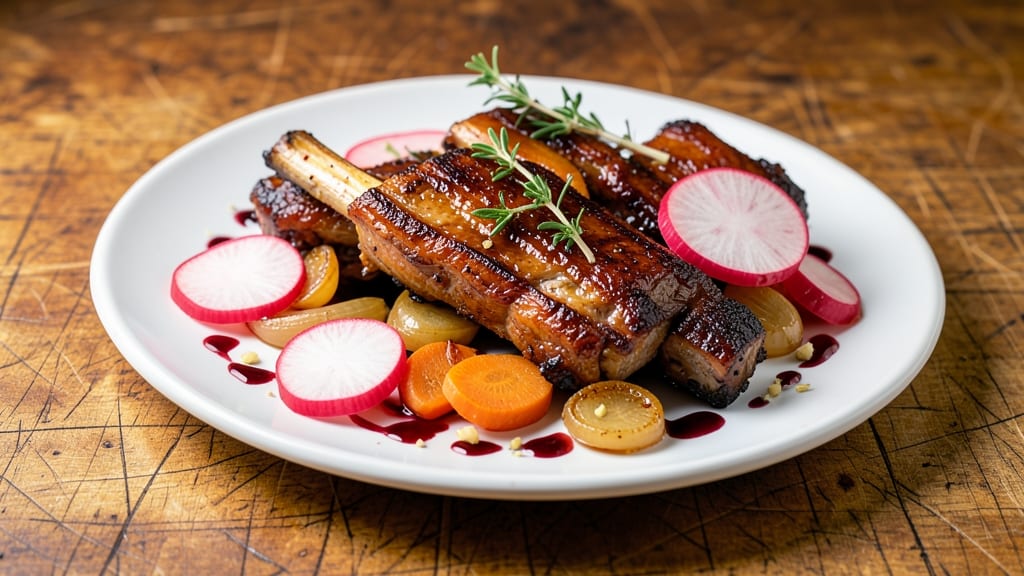
This braised pork ribs with radish recipe transforms tough cuts into melt-in-your-mouth tenderness with a peppery crunch that cuts through the richness. 🔥 The secret lies in slow-braising—where pork ribs become fork-tender while absorbing a deep, aromatic sauce, and radishes add just enough bite to balance every bite.
I perfected this technique while working in Charleston, where pork was the heart of every meal, and it’s become a staple at my farm-to-table table.
The magic happens in the braising liquid—a blend of red wine, aromatics, and a touch of vinegar—that tenderizes the meat while infusing it with layers of flavor.
Radishes, sliced thin and added at the end, soak up the sauce just enough to soften their sharpness, creating a perfect contrast to the silky pork. This isn’t just a recipe; it’s a method that turns a simple cut of pork into something extraordinary, with minimal effort but maximum reward.
By the time you’re done, you’ll have ribs that fall apart at the touch of a fork, bathed in a glossy, peppery sauce with radishes adding a refreshing crunch. The aroma alone will have everyone gathering around the table, and the first bite will make them forget about takeout forever.
This dish is hearty enough for a family dinner but elegant enough for a special occasion—proof that comfort food can be sophisticated too.
Serve it with crusty bread to soak up every last drop of that rich braising liquid, or pair it with a simple green salad to cut through the richness.
The leftovers? Even better the next day, as the flavors deepen and the radishes absorb even more of that delicious sauce. Let’s get cooking—your taste buds will thank you.
Ingredients for braised pork ribs with radish
Pantry staples meet farm-fresh ingredients for ribs that fall apart with peppery radishes to balance every bite.
| Ingredient | Amount | Notes |
|---|---|---|
| Pork Ribs 🍖 | 3 lb | Baby back or spare ribs, meaty cuts |
| Red Wine 🍷 | 1 cup | Bold dry variety like Cabernet Sauvignon |
| Red Wine Vinegar 🍶 | ¼ cup | For tangy depth |
| Yellow Onions 🧅 | 1 whole | Chopped into 1/2-inch pieces |
| Garlic Cloves 🧄 | 6 cloves | Minced for aromatic base |
| Carrots 🥕 | 2 whole | Cut into 1-inch chunks |
| Celery Stalks 🌿 | 3 whole | Chopped into 1/2-inch pieces |
| Fresh Rosemary 🌿 | 1 tbsp | Chopped, for herbal aroma |
| Fresh Thyme 🌿 | 1 tbsp | Chopped, leaves only |
| Black Peppercorns 🌶️ | 1 tsp | Freshly cracked |
| Bay Leaves 🍃 | 2 whole | For subtle earthy flavor |
| Salt 🧂 | 1 ½ tsp | Kosher or sea salt |
| Radishes 🥕 | 1 ½ lb | Sliced thin for crunch |
| Olive Oil 🫒 | 2 tbsp | Extra-virgin for searing |
| Beef Broth 💧 | 1 cup | Low-sodium preferred |
The ribs are the star here, so don’t skimp on quality. Look for meaty baby back ribs with good marbling—they’ll stay tender longer. Most grocery stores carry them pre-cut, but if you’re buying a whole packer, ask the butcher to cut them into 2-inch chunks. Trader Joe’s and Whole Foods often have the best selection, but the regular supermarket ribs work fine too. For the radishes, daikon or French breakfast radishes add the best crunch—avoid the tiny red ones unless you’re slicing them paper-thin. The red wine? Any bold, dry variety works—Cabernet Sauvignon, Merlot, whatever’s open in your cabinet.
No red wine? Substitute beef broth with a splash of balsamic vinegar for similar depth. Fresh herbs are ideal, but dried thyme at one-third the amount works in a pinch. If you’re short on time, pre-chopped mirepoix mixes from the freezer section save you 10 minutes of prep. The radishes can be pre-sliced and stored in water in the fridge for up to 2 days—just drain and pat dry before adding to the braise. For extra richness, stir in a spoonful of homemade chicken fat at the end, but olive oil works just as well if you’re in a hurry.
This dish tastes even better the next day as the flavors meld together. Store leftovers in an airtight container in the fridge for up to 5 days, or freeze for 3 months—the sauce thickens beautifully when reheated. I like to portion mine into individual containers so I can grab a serving straight from the fridge. The radishes will soften slightly but still add that welcome crunch. If you’re making this ahead, add the radishes only when reheating to keep them crisp.
Why You'll Love This Recipe
- One-Pan Magic: I swear by this recipe when I’m too tired to scrub pots—just sear the ribs, toss in chopped onions and garlic, pour in that red wine and vinegar, and let it slow-cook. The radish peeks through the braise like a surprise, but honestly? The sauce does all the work.
- Wine-Infused Richness: That red wine isn’t just for show—it melts into the ribs, turning them tender and glossy, while the vinegar cuts through the richness. Between us, the first bite is always a yes, I made this moment.
- Lunchbox Hero: Between us, these ribs reheat like a dream—pack them in containers with a spoonful of that sticky sauce, and they’re lunch the next day. My kids (and my husband) fight over them, and I haven’t heard a single complaint about "boring leftovers."
- Budget Feast: Pork ribs aren’t cheap, but this recipe stretches them further than you’d think. The radish adds freshness without costing extra, and the wine? A cheap bottle does the trick—no need for the fancy stuff. Feeds four, costs less than takeout.
Step-by-step instructions for braised pork ribs with radish
Here's how to transform tough pork ribs into melt-in-your-mouth perfection with a bright radish crunch.
🔥 Step 1: Sear the Ribs for Deep Flavor
Pat the 3 lb pork ribs dry with paper towels—this ensures maximum browning. Heat 1 tbsp of the olive oil in a heavy Dutch oven over medium-high heat until shimmering. Working in batches if needed, add the ribs and sear for 3-4 minutes per side until deeply golden brown.
Don't rush this step—the caramelization creates that rich, meaty foundation. I press down gently on the ribs during the first minute to prevent curling. Once golden, transfer the ribs to a plate and set aside.
🍳 Step 2: Build the Aromatic Base
In the same Dutch oven, add the remaining 1 tbsp olive oil. Toss in the chopped yellow onions, carrots, and celery stalks. Cook for 5-6 minutes until softened and slightly caramelized. Add the minced garlic cloves and cook for just 30 seconds—don't let it burn!
Stir in the chopped fresh rosemary, fresh thyme, cracked black peppercorns, and bay leaves. Cook for another 1 minute to toast the spices and release their essential oils. This aromatic base forms the flavor backbone of your braise.
🍷 Step 3: Deglaze and Simmer the Braise
Pour in the 1 cup red wine and scrape up all those browned bits from the bottom of the pan—this is where all the flavor hides. Let it simmer for 3-4 minutes until reduced by half. Add the 0.25 cup red wine vinegar and 1 cup beef broth, scraping up any remaining browned bits again.
Return the ribs to the pot, bone-side up. Sprinkle with the 1.5 tsp salt and bring to a gentle simmer. Cover and transfer to a 325°F oven for 2.5 hours. The ribs are done when they're fork-tender and the sauce has thickened into a silky glaze.
🥘 Step 4: Finish with Radishes and Rest
Remove the ribs from the braising liquid and let them rest on a plate. Skim any excess fat from the sauce, then stir in the sliced 1.5 lb radishes. Return the radishes to the sauce and simmer uncovered for 5-7 minutes until just tender-crisp—they should still have a slight bite.
Return the ribs to the sauce and let them soak up those flavors for 5 minutes. The radishes will absorb some of the braising liquid, intensifying their peppery crunch. Serve the ribs with the radishes spooned over the top and the sauce ladled around.
🍽️ Step 5: Serve with Confidence
Transfer the ribs to a serving platter, spooning the radishes and sauce over the top. The contrast of silky braised meat with the peppery radishes is what makes this dish special. Each bite delivers tender pork with that bright, refreshing crunch.
For the best presentation, garnish with fresh thyme leaves. The ribs should be fork-tender with a glossy sheen from the braising liquid, and the radishes should still offer that satisfying crunch. Serve immediately with crusty bread to soak up every last bit of sauce.
Pro Tips For Making Braised Pork Ribs With Radish
- SEAR THE RIB BONES: Get those ribs bone-side down first in a screaming-hot pan—no oil needed, just the fat rendering. I learned this the hard way: skipping the sear means flavor clinging only to the meat, not the bones where it belongs. Let them crisp for 3-4 minutes until the edges darken, then flip to repeat.
- SWEAT ONIONS LOW: Onions go in first, and you’re not rushing this. Cover the pot and cook them on medium-low for 10 minutes until they’re translucent but not browned—you want them to melt into the braise, not turn to mush. After burning two batches, I finally realized patience here makes the sauce silky.
- ACID IN STAGES: Don’t dump all the red wine vinegar at once—add half now, then the rest later. The initial splash tenderizes the ribs, but saving some for the end brightens the sauce without overpowering. I was skeptical until I tried it; the flavor balance is noticeably cleaner.
- SKIP THE RADISH PREP: Buy pre-peeled, pre-sliced radishes—yes, even if they cost a little more. The time you save letting them soak in cold water while the ribs braise is worth it. I skip this when I’m lazy, but the dish is noticeably better when they’re crisp and ready to go.
Creative variations of these flavors
Southern BBQ Twist
Swap the red wine for a 1 cup apple cider and add 2 tbsp hot sauce (like Crystal or Louisiana) to the braising liquid. This gives you ribs with a tangy, smoky kick that reminds me of my first BBQ competition in Atlanta.
I also like to add ½ cup chopped jalapeños with the radishes at the end for extra heat. Serve with cornbread instead of crusty bread for that true Southern touch. 🔥
Asian-Inspired Fusion
Replace the red wine with 1 cup soy sauce and add 1 tbsp grated ginger and 1 tbsp sesame oil to the braising liquid. Stir in 1 tbsp honey or maple syrup to balance the flavors.
For the radishes, use daikon radishes and add 1 tbsp toasted sesame seeds and thinly sliced green onions on top before serving. This version pairs beautifully with steamed jasmine rice. 🌶️
Winter Root Vegetable Upgrade
Add 1 lb parsnips and 1 lb turnips, both cut into 1-inch chunks, along with the carrots and celery. The radishes can be swapped for thinly sliced fennel or jicama for a different texture.
This heartier version is perfect for cold weather and makes great leftovers. I like to serve it with a simple arugula salad dressed with lemon vinaigrette to cut through the richness. ✨
Spicy Cajun Kick
Increase the heat by adding 1 tbsp Cajun seasoning (like Tony Chachere’s) to the braising liquid and stir in 1 tbsp smoked paprika. For the radishes, add ½ cup diced pickled jalapeños and garnish with chopped cilantro.
This version is inspired by my time apprenticing in Charleston, where Cajun flavors were all the rage. Serve with warm tortillas for a fun twist on traditional sides. 💫
Herb-Infused Spring Version
Lighten up the braising liquid by using ½ cup white wine instead of red and adding 1 tbsp fresh tarragon and 1 tbsp fresh dill to the aromatics. Swap the radishes for thinly sliced red radishes and garnish with edible flowers for a springtime presentation.
This version is perfect for Easter or Mother’s Day dinners. Pair it with lemon mashed potatoes for a lighter meal. 🌱
Slow Cooker Adaptation
For a hands-off version, sear the ribs as directed, then transfer everything to a 6-quart slow cooker. Add the braising liquid ingredients and cook on LOW for 8 hours or HIGH for 5 hours.
Add the radishes during the last 30 minutes of cooking. This method is perfect for busy weeknights and keeps the ribs incredibly tender. Just be sure to skim off excess fat before serving. 💡
Nutrition facts
Frequently asked questions
Why do radishes work so well with braised pork ribs?
The radishes add a refreshing peppery crunch that cuts through the richness of the braised pork. Their natural sweetness balances the deep, savory flavors of the red wine and aromatics, while their ability to absorb the braising liquid creates a perfect textural contrast. Plus, they cook quickly at the end, so they stay crisp enough to add that satisfying bite!
Can I use a slow cooker instead of the oven for braising?
Sear the ribs as directed, then transfer everything to a 6-quart slow cooker. Cook on LOW for 8 hours or HIGH for 5 hours, adding the radishes only during the last 30 minutes to keep them crisp. The ribs will be just as tender, and you'll have more time to relax while dinner cooks. Just skim excess fat before serving.
What's the best way to store leftovers?
Store the ribs and sauce in an airtight container in the fridge for up to 5 days. The flavors actually deepen overnight! For freezing, portion into individual containers and keep for 3 months. When reheating, add fresh radishes at the end to restore their crunch. The sauce will thicken beautifully when reheated.
How do I know when the ribs are fully tender?
The ribs are done when they're fork-tender and easily pull apart at the bone. They should have a glossy sheen from the braising liquid and be 165°F internally. If you're unsure, press gently with tongs—they should feel soft and yield easily. The sauce should also have thickened into a silky glaze.
What can I substitute if I don't have red wine?
Use 1 cup beef broth with 2 tbsp balsamic vinegar for similar depth of flavor. For extra richness, add 1 tbsp soy sauce or 1 tsp Worcestershire sauce. The key is balancing acidity and umami to complement the pork. Just don't skip the vinegar—it's what brightens the braise!