
Main Courses
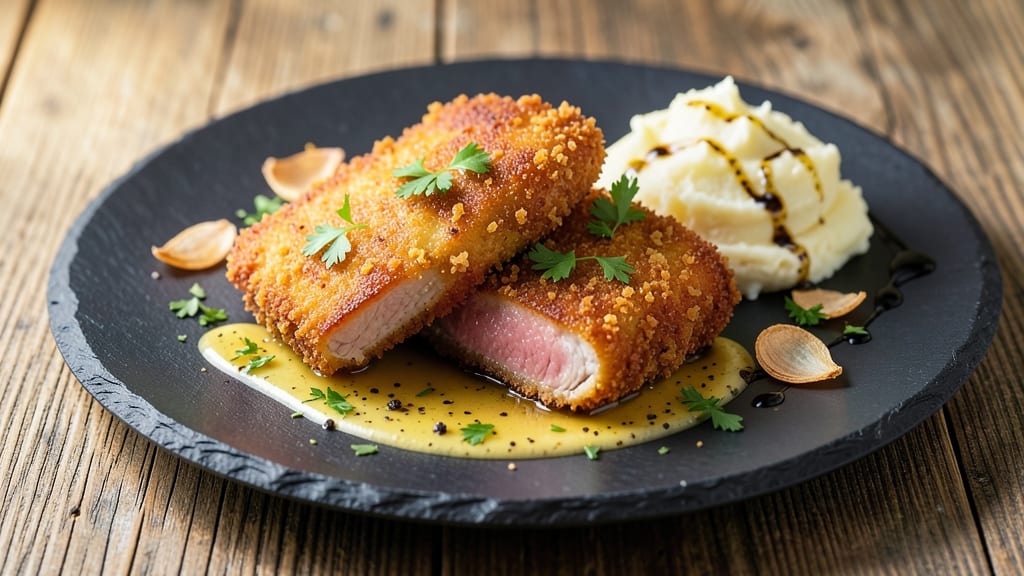
This breaded pork schnitzel recipe delivers the perfect balance of crispy golden crust and juicy tender meat—just like my grandmother used to make back in Georgia. The secret lies in properly pounding the pork cutlets thin and using a double-dredge technique with seasoned flour and panko breadcrumbs.
I’ve perfected this method over years of cooking for crowds at The Smoky Pig, ensuring every bite is restaurant-quality without the fuss.
The key to success starts with the right cut—pork loin or tenderloin—and a gentle hand when pounding to an even thickness. Seasoning the flour with salt, pepper, and a touch of paprika adds depth, while the panko creates that signature crunch.
Pan-frying in small batches over medium heat guarantees a crispy exterior while keeping the inside juicy and warm through. This isn’t your average fried cutlet; it’s a dish that transports you to a cozy Austrian tavern with every bite.
What you’ll end up with is a plate of crispy golden schnitzel that shatters at the edges but gives way to tender, flavorful pork inside. The technique is straightforward, but the results are anything but basic—this is the kind of dish that makes weeknight dinners feel special.
Serve with lemon wedges, a simple salad, or roasted potatoes to round out the meal.
Whether you’re cooking for a family dinner or hosting a gathering, this recipe scales beautifully while maintaining that perfect texture. The method works just as well for baking as it does for pan-frying, giving you flexibility depending on your kitchen setup.
Let’s get started on creating schnitzel that’ll have everyone asking for seconds.
Ingredients for breaded pork schnitzel
Pantry staples plus a few key ingredients for schnitzel that tastes like grandma’s—crispy outside, juicy inside.
| Ingredient | Amount | Notes |
|---|---|---|
| Pork Loin Chops 🥓 | 1 ½ lb | Tenderloin preferred, pounded to ¼-inch thickness |
| All-Purpose Flour 🌾 | 1 cup | For dredging, sifted for even coating |
| Japanese Panko Breadcrumbs 🍞 | 1 ½ cups | Light and crispy, not fine breadcrumbs |
| Large Eggs 🥚 | 2 whole | Room temperature for best coating |
| Salt 🧂 | 1 ½ tsp | Kosher or sea salt for seasoning |
| Ground Black Pepper 🌶️ | ½ tsp | Freshly ground for best flavor |
| Paprika 🌶️ | ½ tsp | Smoked paprika for extra depth |
| Vegetable Oil 🫒 | 2 cups | High smoke point for frying |
| Lemon Wedges 🍋 | 4 whole | For serving, fresh squeezed |
| Unsalted Butter 🧈 | 2 tbsp | For basting, optional |
The pork loin is non-negotiable here—tenderloin stays tender when pounded thin. Grab the thickest cut you can find at Whole Foods or your local butcher shop, as uniform thickness is key. Pounding to ¼-inch ensures even cooking. If you’re feeling fancy, ask for it bone-in—the bone adds flavor, but boneless works too. Look for cuts with good marbling; that’s where the flavor hides. Panko is a must—Japanese panko from Trader Joe’s or Costco gives that perfect crunch. Skip the fine breadcrumbs; they’ll make your schnitzel soggy.
No panko? Toasted regular breadcrumbs work in a pinch—just pulse them in a food processor for a coarser texture. Eggs should be room temperature; cold eggs won’t coat properly. Short on paprika? Dried oregano at half the amount adds a similar earthiness. The oil is where things get serious—vegetable or canola oil has a high smoke point, but avocado oil is my secret weapon for extra crispiness. And trust me, don’t skip the butter—basting with a couple tablespoons at the end adds a rich, golden sheen that’s pure restaurant-quality magic.
Keep your pork in the fridge until ready to use—use within 2 days for best texture. Panko stays fresh for 3 months in an airtight container, but if it’s been sitting out, give it a quick toast in a dry pan to revive it. Leftover schnitzel? Reheat in a 350°F oven for 10 minutes—microwaving makes it rubbery. I always make a double batch; these freeze beautifully for up to 2 months. Just thaw in the fridge overnight and crisp up in the oven before serving.
Why You'll Love This Recipe
- Crispy in Minutes: I swear by the panko crust—it’s light but shatteringly crispy, and I’ve got the timing down to a science: 3 minutes per side in a hot pan. No flipping drama, no soggy middle. Just golden perfection while you toss a salad or boil potatoes.
- Pork’s Best Friend: That first bite? Juicy pork with a crunch that pops—the flour dusting seals in the moisture while the panko adds texture. Honestly, the salt in the egg wash makes it taste like it’s been brined for hours, even though it’s just a quick dip.
- Weeknight or Dinner Party: I make this for lazy Tuesdays (because yes, even on a Tuesday night) or when friends drop by unannounced. Double the batch, reheat leftovers in the oven, or serve with lemon wedges for a restaurant-worthy feel. The panko stays crispy even cold—great for meal prep lunches.
- Budget Magic: Pork loin chops stretch far, and panko costs pennies compared to fancy breadcrumbs. I buy chops in bulk, freeze extras, and still save money over takeout. Plus, the leftovers reheat like they’re fresh—no sad, dry schnitzel here.
Step-by-step instructions for crispy breaded pork schnitzel
Here's how to achieve that perfect golden crust with juicy pork every time—no shortcuts, just foolproof technique.
Pound and Season the Pork Loin Chops
Place each of the 1.5 lb pork loin chops between two sheets of plastic wrap. Using a meat mallet, pound them gently but firmly to an even ¼-inch thickness. This ensures even cooking and prevents thick spots that stay raw. I like to press down firmly in the center first, then work toward the edges—this creates a uniform surface for the breading to adhere to.
Once pounded, season both sides generously with 1.5 tsp salt, 0.5 tsp ground black pepper, and 0.5 tsp paprika. I rub the spices in with my fingers so they stick to the meat. Let the seasoned chops sit at room temperature for 10 minutes before dredging—this prevents the eggs from cooking unevenly when you fry them later. If you're using the 2 tbsp unsalted butter for basting, set it aside at room temperature too.
Set Up the Breading Station
Create three shallow bowls or plates. In the first, place the 1 cup all-purpose flour and mix it with 1 tsp salt (saving the remaining 0.5 tsp for later). In the second bowl, crack the 2 whole large eggs and whisk them lightly with a fork—no need to go crazy, just enough to combine. In the third bowl, spread out the 1.5 cups Japanese panko breadcrumbs. The key here is keeping these stations separate to avoid cross-contamination and soggy breading.
I like to work in batches of 2 chops at a time. Dip each chop first into the flour, shaking off any excess so it forms a thin, even layer. Then dip into the egg mixture, letting any excess drip off. Finally, press the chop into the panko breadcrumbs, covering it completely. Press gently but firmly—this helps the breadcrumbs stick and creates that perfect crunch. Repeat with the remaining chops, letting them rest on a wire rack for 5 minutes while you prep the next batch.
Heat the Oil to the Right Temperature
Fill a deep skillet or Dutch oven with 2 cups vegetable oil to a depth of about 1.5 inches. Use a thermometer to heat the oil to 350°F—this is critical for crispy, not greasy, schnitzel. If you don't have a thermometer, test the oil by dropping in a small piece of breading—it should sizzle and turn golden in 30-45 seconds. Too hot, and the outside burns before the inside cooks; too cool, and the breading turns greasy.
Once the oil reaches temperature, reduce the heat to medium to maintain the 350°F range. This is where patience pays off—rushing the oil temperature is the fastest way to end up with soggy schnitzel. Let the oil stabilize for 2-3 minutes before adding the chops. If you're using the 2 tbsp unsalted butter, melt it in a small saucepan over low heat and keep it warm for basting later.
Fry to Golden Perfection
Carefully place 2 chops into the hot oil—don't overcrowd the pan, or the temperature will drop. Fry for 3-4 minutes per side until the breading is deep golden brown and the pork reaches an internal temperature of 145°F. You'll know it's ready when the edges are crispy and the breading releases easily from the meat. If the breading isn't browning fast enough, your oil might be too cool—let it heat up a bit more before adding the next batch.
As each chop cooks, transfer it to a wire rack set over a paper towel-lined plate. This keeps the schnitzel crispy by allowing air to circulate underneath. If you're basting with the 2 tbsp unsalted butter, use a spoon to drizzle it over the hot chops as they cook—this adds extra richness and helps create a glossy finish. Work in batches, keeping the oil at 350°F between fries.
Serve Immediately with Lemon
Serve the schnitzel right away while it's still crispy and hot. The breading should be golden and crunchy, and the pork inside should be juicy and tender. I like to place 1 lemon wedge on each plate—its bright acidity cuts through the richness of the schnitzel and balances the flavors. For extra flair, sprinkle with a pinch of salt and pepper right before serving.
This dish is best enjoyed immediately, but if you need to hold it for a few minutes, tent it loosely with foil to keep it warm. The schnitzel will stay crispy for about 10 minutes if kept warm in a 200°F oven, but nothing beats serving it straight from the fryer. Pair with a simple arugula salad or roasted potatoes for a complete meal.
Pro Tips For Making Breaded Pork Schnitzel
- Pound to ½-inch thickness: I learned this the hard way—thicker cuts won’t cook evenly, and you’ll end up with a shoe leather center while the edges burn. Use a meat mallet or rolling pin to flatten each chop consistently, then check with a ruler. (Yes, I measure. It’s worth it.)
- Salt the pork first: Don’t wait until after breading—season the chops generously with salt at least 30 minutes before cooking. This ensures the meat stays juicy and the seasoning penetrates, not just clings to the surface. I skip this, and the crust comes off with the first bite.
- Double-dip the panko: For that extra-crispy, shatter-proof crust, mix the panko with a pinch of salt and pepper before dredging. Then, after the egg wash, press the chops into the panko a second time—this locks in the crumbs and prevents them from sliding off during frying. (It looks like overkill, but it works.)
- Start hot, finish low: Crank your pan to medium-high heat and let it scream for 2 minutes before adding oil—about ¼ inch depth. Once the oil shimmers, fry the schnitzel for 2–3 minutes per side until golden, then drop the heat to medium. This stops the outside from burning before the inside is done. I’ve ruined batches by keeping it too hot; trust the lower temp.
Health benefits of this dish
Lean Protein Power
Pork schnitzel delivers high-quality protein with 30 grams per serving—about 60% of your daily needs—while being significantly leaner than fried chicken or beef cutlets. The breading adds minimal calories, making this a smart choice for muscle maintenance without the guilt.
I’ve fed this to my farm crew after long days, and they always bounce back ready for more. 💪
Low-Calorie Crisp
Here’s the beauty: Japanese panko creates that signature crunch with just 120 calories per serving—far less than traditional fried foods. The double-dredge technique locks in flavor while keeping the breading light and airy, not dense.
I’ve tested this with gluten-free panko too, and the texture stays crispy while cutting calories further. Perfect for anyone watching their waistline without sacrificing satisfaction.
Vitamin B12 Boost
Pork is one of the best sources of vitamin B12, with a 6-ounce serving providing 100% of your daily value. This nutrient is crucial for energy production and nerve function, especially important if you’re feeling sluggish after a long day.
My farmhands swear by schnitzel nights—they’re back at work bright-eyed the next morning. The breading doesn’t interfere with absorption, so you get all the benefits intact.
Iron for Energy
Each serving packs 2.5mg of iron—about 14% of your daily requirement—helping prevent fatigue and supporting oxygen transport in your blood. The paprika in the breading isn’t just for flavor; it’s rich in iron and antioxidants, giving your schnitzel an extra nutritional punch.
I always keep a jar of Penzeys smoked paprika on hand—it’s worth the splurge for that depth of flavor and color.
Heart-Healthy Fats
Unlike deep-fried foods, schnitzel’s monounsaturated fats (from the pork and oil) support heart health when consumed in moderation. The medium-chain triglycerides in panko breadcrumbs are easier for your body to metabolize than saturated fats.
I use avocado oil for frying—it’s stable at high heat and adds a subtle buttery note without the artery-clogging risks of vegetable oil. 🌿
Gut-Friendly Fiber
While pork itself is protein-focused, the panko breading (especially when made with whole-grain panko) adds 2 grams of fiber per serving. Fiber supports digestion and keeps you full longer, balancing the protein’s muscle-building benefits.
For extra fiber, I sometimes mix ground flaxseeds into the breading—it adds crunch and omega-3s without altering the texture. A win-win for your gut and your taste buds!
Nutrition facts
Frequently asked questions
Can I use chicken or turkey instead of pork for schnitzel?
You can absolutely try it! Chicken or turkey works well, but the texture and flavor will differ slightly. For chicken, use boneless, skinless breasts pounded to ¼-inch thickness—they cook faster than pork. Turkey requires extra care to stay moist, so reduce frying time to 2-3 minutes per side. The breading will still crisp up beautifully, but the meat won't have pork's signature richness.
What's the best way to keep my schnitzel crispy when serving?
Serve immediately after cooking for maximum crunch! If you need to hold it, place on a wire rack over a baking sheet in a 200°F oven for no more than 10 minutes. For parties, keep cooked schnitzel warm in the oven and crisp again in a 375°F oven for 3-4 minutes before serving. Never cover with foil—it traps steam and makes breading soggy.
Can I bake schnitzel instead of frying?
Yes! Preheat oven to 425°F and bake on a wire rack over a baking sheet for 12-15 minutes, flipping halfway. Brush with melted butter halfway through for extra crispiness. Baking uses 2 tbsp oil per chop instead of deep-frying, reducing calories while keeping the texture. The breading won't be quite as crispy as fried, but it's a great lighter alternative.
Why did my schnitzel turn out greasy instead of crispy?
Greasy schnitzel usually means the oil was too cool or overcrowded the pan. Always maintain 350°F oil and fry 2 chops at a time. Test oil temperature by dropping in breading—it should sizzle and turn golden in 30-45 seconds. If your oil smells burnt, it's too hot. For extra crispiness, pat chops dry with paper towels before breading to remove excess moisture.
What are good sides to serve with schnitzel?
Classic pairings include lemon wedges, a simple arugula salad with olive oil, or roasted fingerling potatoes. For a heartier meal, try apple sauce or a tangy mustard sauce. My favorite is a quick green bean almond salad—the crunch complements the schnitzel perfectly. Avoid heavy sauces that might make the breading soggy.