
Soups & Stews
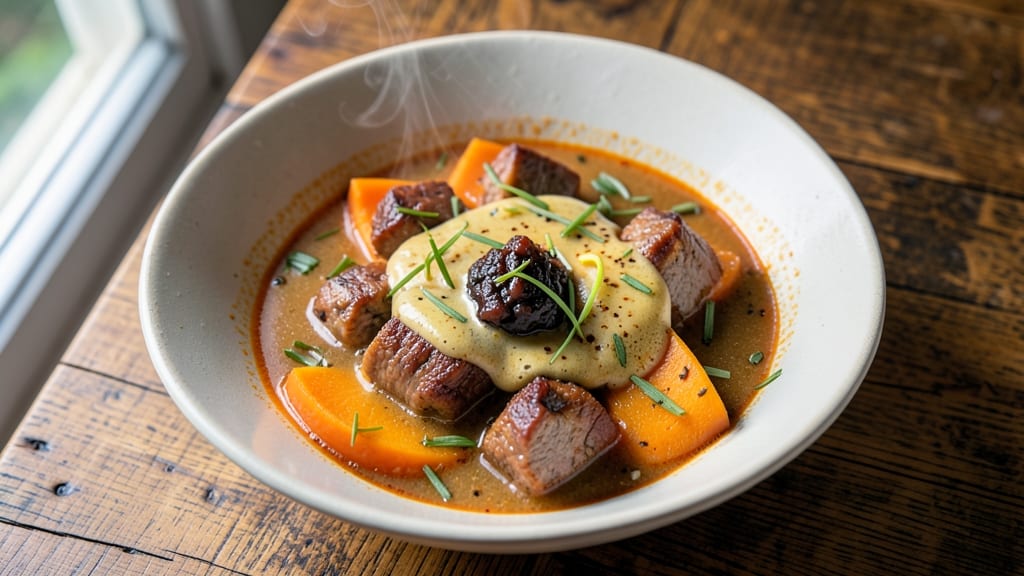
This Burmese pumpkin pork stew recipe brings the bold flavors of Myanmar to your kitchen with its signature earthy coconut and turmeric depth. 🌟 I developed this version after years of perfecting the balance between tender pork, sweet pumpkin, and aromatic spices—a dish that's rich yet light, comforting yet vibrant.
The secret lies in fermented fish paste (ngapi), which adds umami complexity, while turmeric and lemongrass create that signature golden hue and fragrant aroma. What makes this recipe special is its versatility—it simmers beautifully on the stovetop or in a slow cooker, allowing flavors to meld over time.
The pumpkin softens into a velvety texture, while the pork becomes fork-tender, absorbing all the aromatic spices. I've adapted traditional techniques to make it approachable for home cooks, ensuring you get restaurant-quality results without the fuss.
By the time you serve this stew, your kitchen will smell like a bustling Burmese market, and your taste buds will be transported to a world of warm spices and tender meat.
The coconut milk adds a creamy richness, while the tamarind and fish sauce bring a tangy depth that ties everything together. Perfect over steamed jasmine rice or with crusty bread to soak up every last drop. For an extra touch, garnish with fresh cilantro and lime wedges.
This dish is hearty enough for a family dinner but elegant enough for a special occasion. Let's get cooking!
Ingredients for burmese pumpkin pork stew
Six aromatic spices and tender pork create this Burmese market-inspired stew.
| Ingredient | Amount | Notes |
|---|---|---|
| Pork Shoulder 🥩 | 2 lb | Boneless, cut into 1-inch cubes |
| Sugar Pumpkin 🎃 | 3 cups | Cubed, skin removed, fresh or canned |
| Fermented Fish Paste (Ngapi) 🐟 | 2 tbsp | Available at Asian markets |
| Coconut Milk 🥥 | 1 can | 13.5 oz can, full-fat preferred |
| Turmeric Powder 🌿 | 1 tbsp | Freshly ground for best color |
| Lemongrass 🌿 | 2 pieces | White parts only, bruised slightly |
| Garlic Cloves 🧄 | 6 cloves | Minced for aromatic depth |
| Shallots 🧅 | 4 whole | Minced for sweetness |
| Tamarind Paste 🍯 | 1 tbsp | Adjust for tanginess |
| Fish Sauce 🍶 | 1 tbsp | Red Boat preferred |
| Jasmine Rice 🌾 | 2 cups | Uncooked, for serving |
| Fresh Cilantro 🌿 | ¼ cup | Chopped for garnish |
| Lime Wedges 🍋 | 2 whole | For serving |
| Salt 🧂 | 1 ½ tsp | Adjust to taste |
| Black Pepper 🌶️ | ½ tsp | Freshly ground |
The pork shoulder is your secret weapon here—it stays tender through long simmering. Ask your butcher to cube it if you're not up for the chopping, or buy pre-cut from the meat counter at Whole Foods or Trader Joe's. For the fermented fish paste (ngapi), hit up the Asian market section at H Mart or 99 Ranch—it's the umami heart of this dish. If you can't find it, anchovy paste at half the amount works in a pinch. The turmeric? Freshly ground gives the best golden color, but powdered works fine if that's what you've got. Look for bright, vibrant turmeric—none of that dull, pasty stuff.
No lemongrass? Substitute 1 tbsp lime zest plus 1 tsp lime juice—it won't be identical, but you'll still get that citrusy zing. The tamarind paste can be tricky to find—Trader Joe's usually has it, or grab tamarind pods and make your own by soaking and blending. For coconut milk, full-fat is non-negotiable—it's what gives this stew its creamy richness. The pumpkin? Canned works perfectly (just drain and rinse), but fresh is ideal if you're growing your own. Baby carrots or sweet potatoes can stretch it if you're short on pumpkin. And if you're worried about the fish sauce being too strong, start with half and taste as you go—you can always add more.
This stew tastes even better the next day, so make a double batch if you can. Store in airtight containers in the fridge for 4-5 days, or freeze for 3 months. The pork gets more tender with time, and the flavors meld into something truly magical. I like to portion mine into containers with a scoop of jasmine rice on the side—grab-and-go lunches sorted. The lime wedges and cilantro should go on fresh, but if you're prepping ahead, keep them separate until serving. Trust me, the aroma alone will have everyone at the table.
Why You'll Love This Recipe
- One-Pan Magic: I swear by this recipe because it’s literally one pan—no chopping mountains of veggies, no fussing with multiple pots. Just sear the pork, toss in the pumpkin chunks (peeled, halved, done), and let the ngapi and coconut milk work their magic while you stir once or twice.
- Umami Bomb: That fermented fish paste (ngapi) might sound wild, but trust me—it’s the secret weapon. A spoonful dissolves into the stew, giving it this deep, savory punch that balances the sweet pumpkin and creamy coconut milk. Dangerously addictive first bite.
- Leftovers That Shine: Between us, this stew tastes better the next day. The flavors meld, the pumpkin softens just right, and reheating it is zero effort. I make a double batch on Sundays because it’s my go-to for lazy nights or packed lunches—no sad, dry leftovers here.
- Budget Feast: Pork shoulder is cheap, pumpkin lasts forever, and coconut milk stretches far. Plus, ngapi (if you can’t find it fresh) comes in tiny jars that go a long way. Honestly, it’s the kind of recipe that makes grocery bills feel less scary while still feeling like a treat.
Step-by-step instructions for Burmese pumpkin pork stew
This aromatic stew delivers rich coconut depth and earthy turmeric warmth—let's build it layer by layer.
🔥 Step 1: Sear the Pork for Deep Flavor
Heat a large pot or Dutch oven over medium-high heat until hot. Add the 2 lb pork shoulder cubes in a single layer, letting them brown undisturbed for 3-4 minutes until golden. This creates a flavorful crust that won't dissolve into the stew later.
Once browned, stir the pork and continue cooking for another 2-3 minutes until all sides are golden. Remove the pork and set aside—you'll add it back later. The residual fat in the pot will become the foundation of your stew's rich flavor. If needed, add 1 tablespoon neutral oil to prevent sticking during the next steps.
👨🍳 Step 2: Build the Aromatic Base
In the same pot, add 2 pieces lemongrass (bruised), 6 cloves minced garlic, and 4 whole minced shallots. Cook for 2-3 minutes until the shallots soften and become translucent, releasing their sweet aroma. Here's the thing—don't walk away. Garlic burns quickly, and you want it fragrant, not bitter.
Stir in 1 tablespoon turmeric powder and 2 tablespoons fermented fish paste (ngapi), cooking for 30 seconds while stirring constantly. The ngapi will smell intense—this is normal and adds incredible umami depth. The turmeric will give your stew that signature golden hue we're after.
🍳 Step 3: Simmer the Stew with Pumpkin and Coconut
Pour in 1 can coconut milk, scraping up any browned bits from the bottom of the pot. Add 3 cups cubed sugar pumpkin, 1 tablespoon tamarind paste, and 1 tablespoon fish sauce. Bring to a gentle simmer over medium-low heat, then reduce to low heat and cover partially.
Return the pork to the pot and simmer for 45-50 minutes until the pork is fork-tender and the pumpkin is soft. Stir occasionally, but not too frequently—this helps develop the stew's rich texture. The stew should reduce slightly, creating a thick, velvety consistency. Taste and adjust seasoning with 1.5 teaspoons salt and 0.5 teaspoon black pepper as needed.
🥘 Step 4: Finish with Fresh Herbs and Lime
Remove the pot from heat and let the stew rest for 5 minutes. This resting period allows the flavors to meld together beautifully. Stir in 0.25 cup chopped fresh cilantro and the juice from 2 lime wedges. The lime brightens the dish and cuts through the richness of the coconut and pork.
Serve the stew hot over 2 cups cooked jasmine rice, garnished with additional cilantro and lime wedges. Each spoonful should deliver tender pork, sweet pumpkin, and layers of aromatic spices. The stew tastes even better the next day as the flavors continue to develop!
Pro Tips For Making Burmese Pumpkin Pork Stew
- CRISP THE PUMPKIN FIRST: Cut the sugar pumpkin into 1-inch chunks, toss with 1 teaspoon turmeric, and sear them in a dry pan for 3-4 minutes per side until golden. This builds flavor and prevents mushiness later—trust me, skipping this step means soggy pumpkin in your stew.
- SEAR THE PORK IN BATCHES: Don’t crowd the pan when browning the pork shoulder. Work in 2 batches if needed, using medium-high heat until deep brown crusts form. That caramelized layer is what carries the umami through the long simmer—rushed searing equals bland stew.
- CONTROL THE NGAPI SMELL: Toss the fermented fish paste (ngapi) into the hot oil last when frying aromatics, then immediately add coconut milk to mellow the sharpness. Stir like your life depends on it—this is the only way to keep the funk from overpowering the dish.
- LOW AND SLOW IS NON-NEGOTIABLE: After adding coconut milk, reduce heat to a gentle simmer (small bubbles, not rolling). Cover and cook for 1.5 hours, checking occasionally. Too much heat = curdled coconut milk; too little = tough pork. Find that middle ground, or you’ll regret it.
Serving suggestions for this burmese pumpkin pork stew
Rice Pairings
Jasmine rice is my go-to for this stew—its delicate floral aroma complements the rich coconut and pork beautifully. Cook 2 cups uncooked jasmine rice with 3 cups water for perfectly fluffy grains.
For extra authenticity, try Thai-style glutinous rice, which has a slight stickiness that soaks up the stew's velvety sauce. I like to steam mine in a bamboo steamer for that authentic market-fresh texture. 🌾
Pickled Vegetables
Burmese cuisine loves tangy pickles to cut through rich flavors. Quick-pickle ½ cup thinly sliced daikon radish and ¼ cup cucumber in ¼ cup rice vinegar, 1 tbsp sugar, and ½ tsp salt for 30 minutes.
The crisp acidity balances the stew's depth perfectly. For a traditional touch, add 1 tsp grated ginger to the pickling liquid. I always keep a jar of these in my fridge for spontaneous stew nights.
Crusty Bread
For a heartier meal, serve with crusty sourdough or baguette slices toasted with garlic butter. The crust should be golden and shatter when broken—perfect for soaking up every last drop of that coconut-pumpkin sauce.
I recommend Boudin Bakery's French bread from Atlanta's market, but any good bakery loaf works. Warm the bread in the oven for 5 minutes at 350°F before serving. 🍞
Fresh Herbs
Garnish with ¼ cup chopped cilantro and 2 lime wedges right before serving. The lime adds a bright finish that cuts through the richness, while the cilantro brings freshness. For extra flair, sprinkle thinly sliced Thai basil on top—it adds a peppery note that pairs wonderfully.
I keep a small pot of cilantro growing on my windowsill because it's used so often in my cooking.
Spicy Kick
If you love heat, serve with chili crisp or sambal oelek on the side. I like to add ½ teaspoon chili crisp to each bowl just before eating—it adds a smoky, fiery contrast that elevates the dish.
For a milder option, serve with pickled jalapeños for a tangy heat. The key is to let everyone customize their own level of spice. 🌶️
Nutrition facts
Frequently asked questions
Can I substitute regular fish sauce for fermented fish paste (ngapi)?
You can use regular fish sauce, but it won't provide the same deep umami complexity. For a closer substitute, use 1 tablespoon anchovy paste mixed with 1 teaspoon fish sauce—this mimics ngapi's intensity better. The paste gives a more concentrated flavor, while fish sauce adds the necessary saltiness. Adjust to taste, as anchovies can be strong.
How do I make this stew in a slow cooker?
Brown the pork first in a skillet, then transfer it to your slow cooker. Add all remaining ingredients except the cilantro and lime. Cook on low for 6-7 hours or high for 3-4 hours until the pork is tender. Stir occasionally, and add water if needed to reach your desired consistency. The slow cooker method enhances the pork's tenderness even more!
What if I can't find sugar pumpkin? Can I use butternut squash?
Butternut squash works beautifully! Peel, seed, and cube 3 cups of it to match the recipe's measurements. The flavor will be slightly nuttier but still complement the coconut and pork. For extra sweetness, add ½ teaspoon cinnamon along with the other spices. The texture will be similar once cooked.
Why does my stew smell so strong when cooking?
The intense aroma comes from the fermented fish paste (ngapi) and lemongrass—both are key to authentic Burmese flavor. Don't worry, the smell fades as the stew cooks, and the final dish will be rich and balanced. If the smell bothers you, crack a window or cook outside briefly. The fish paste's funk transforms into delicious umami during simmering.
Can I make this stew ahead of time?
This stew tastes even better the next day as flavors meld. Store in an airtight container in the fridge for 4-5 days or freeze for 3 months. Reheat gently on the stove over low heat, adding a splash of water if it's too thick. The pork becomes more tender with time, and the coconut sauce develops deeper richness.