
Main Courses
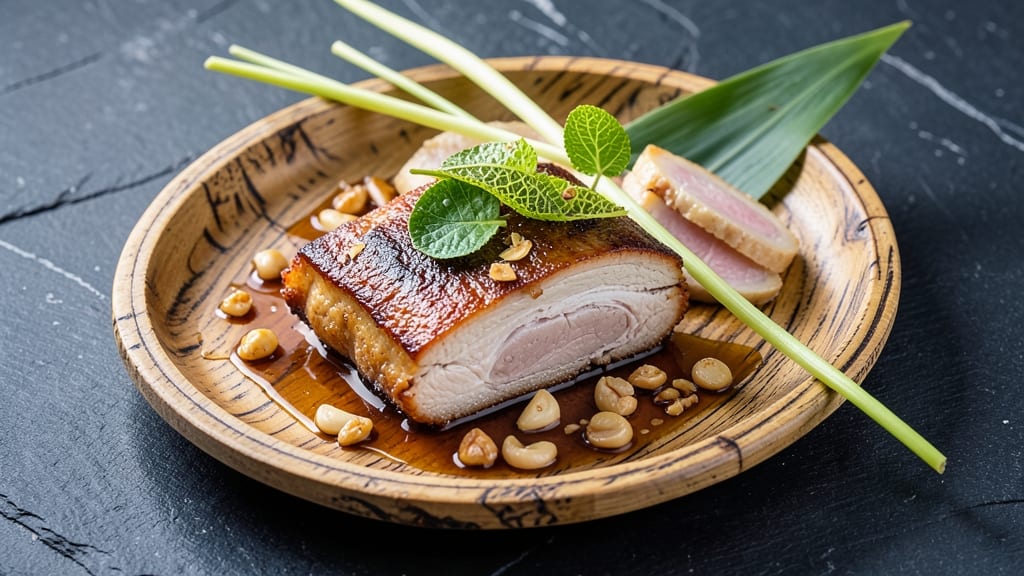
This Cambodian pork belly recipe delivers the perfect balance of crispy edges and tender, fragrant meat—just like the dishes I tasted during my travels through Southeast Asia.
The secret lies in marinating the pork belly overnight in a blend of lemongrass, galangal, and kaffir lime leaves, which infuses the meat with layers of aromatic complexity.
I’ve perfected this technique over years of cooking Cambodian cuisine, ensuring the pork belly achieves that signature caramelized crust while staying juicy inside.
The dish transforms into a rich coconut curry with a velvety sauce that’s both creamy and tangy, thanks to the addition of coconut milk and a touch of tamarind.
This isn’t just a recipe—it’s a taste of home for those familiar with Cambodian flavors, yet approachable enough for anyone eager to explore bold, new dishes. The slow braising method ensures the pork belly remains succulent, while the crispy edges add a satisfying contrast that makes every bite unforgettable.
What sets this recipe apart is the harmony of textures and flavors—crispy skin, tender meat, and a sauce that’s perfectly balanced between sweet, sour, and savory. Served with steamed jasmine rice and a side of fresh herbs, this dish is a celebration of Cambodian comfort food.
The aroma alone will fill your kitchen with warmth, transporting you straight to the bustling streets of Phnom Penh.
Whether you're cooking for a special occasion or simply craving a flavorful meal, this recipe delivers restaurant-quality results with minimal effort. The key is patience—letting the marinade work its magic and the pork belly braise slowly. Trust me, the wait is worth it for that first, perfect bite.
Ingredients for cambodian pork belly
Six aromatic herbs, two pounds of pork, and a can of coconut milk transform into Cambodian comfort food.
| Ingredient | Amount | Notes |
|---|---|---|
| Pork Belly 🥓 | 2 lb | Skin-on, cut into 1-inch slices |
| Lemongrass Stalks 🌿 | 4 whole | Bruised, bottom 3 inches only |
| Galangal 🍃 | 1 piece | About 3 inches, peeled and sliced |
| Kaffir Lime Leaves 🍋 | 4 whole | Stems removed, torn in half |
| Garlic Cloves 🧄 | 8 cloves | Minced, fresh preferred |
| Shallots 🧅 | 6 whole | Peeled, thinly sliced |
| Fish Sauce 🍶 | 2 tbsp | Red Boat preferred |
| Palm Sugar 🍯 | 2 tbsp | Or substitute brown sugar |
| Coconut Milk 🥥 | 1 can | Full-fat, 13.5 oz can |
| Tamarind Paste 🍈 | 1 tbsp | Adjust to taste |
| Thai Chili Paste 🌶️ | 1 tbsp | Maesri or equivalent |
| Vegetable Oil 🫒 | 2 tbsp | For searing |
| Salt 🧂 | 1 ½ tsp | Kosher or sea salt |
| Black Pepper 🌶️ | ½ tsp | Freshly ground |
The pork belly is the star—look for thick-cut pieces with a good layer of fat. Costco or your local Asian market usually carries the best cuts. If you can't find galangal, ginger at half the amount works in a pinch (though it won't be exactly the same). Kaffir lime leaves should be bright green and fragrant—if they smell stale, skip them. For lemongrass, grab the fresh stalks (the ones with the tight, pale inner cores)—the frozen stuff just doesn't cut it here. I always buy extra fish sauce because it's used in so many dishes, and Red Boat is my go-to brand for that authentic umami punch.
No palm sugar? Brown sugar works perfectly, though it'll have a slightly different caramel note. Tamarind paste can be tricky to find—Trader Joe's often stocks it, or check the Asian aisle at Walmart. If you're avoiding heat, skip the chili paste entirely, but trust me, it's what brings this dish to life. For the coconut milk, full-fat is non-negotiable—the creaminess is essential. The marinade needs time to work its magic, so don't rush it. I usually prep everything the night before so the flavors have all day to meld.
This dish tastes even better the next day—reheats beautifully in a 300°F oven for 15 minutes. Store leftovers in an airtight container for up to 4 days, or freeze for 3 months. The pork belly keeps its crispy edges best when reheated gently, so cover it loosely with foil. For serving, I always keep a bowl of fresh herbs (mint or cilantro) on the table—toss a handful over the top right before eating. The aroma alone will have everyone gathering around your table.
Why You'll Love This Recipe
- One-Pot Magic: I swear by this recipe when I’m too tired to juggle multiple pans. The pork belly roasts right alongside the aromatics—lemongrass, galangal, and garlic—so the flavors meld together without any extra cleanup. Just slice, sear, and let the oven do the work while you sip tea.
- Umami Bomb: That first bite? Chef’s kiss. The pork belly gets impossibly tender with a crackling crust, while the galangal and kaffir lime leaves add a bright, citrusy punch that cuts through the richness. Honestly, I’ve never met a pork dish that balances sweet, savory, and herbal like this one does.
- Weeknight Workhorse: Between us, this is my go-to for busy nights—it’s hearty enough for a family dinner but still feels special enough for guests. I’ve served it with rice and quick pickled veggies, wrapped in lettuce for banh mi, or even cold in sandwiches the next day. (Yes, even on a Tuesday night.)
- Budget-Friendly Luxe: Pork belly can feel fancy, but this recipe stretches it like a pro. A single cut feeds four, and the leftovers? Even better reheated the next day with a splash of coconut milk. I’ll be real: it’s the kind of dish that makes you feel like you’re eating at a restaurant without the price tag.
Step-by-step instructions for Cambodian pork belly curry
Here's how to transform tender pork belly into a fragrant, coconut-rich curry with perfectly crispy edges.
Prepare the Pork Belly for Crispy Perfection
Pat the 2 lb pork belly slices completely dry with paper towels—this is non-negotiable for crispy skin. Arrange them skin-side down on a wire rack set over a baking sheet. Refrigerate uncovered for 1 hour to dry the skin further. This step creates that iconic Cambodian texture contrast we're after.
While the pork chills, bruise the bottom 3 inches of each lemongrass stalk by rolling them on a cutting board with your palm. Slice the galangal into ¼-inch thick pieces and peel away any dark spots. Remove stems from the kaffir lime leaves and tear them in half. These aromatics form the fragrant backbone of the dish.
Build the Aromatic Base
Heat 2 tablespoons vegetable oil in a large Dutch oven over medium heat. Add the 6 whole shallots and cook for 5 minutes until they soften and turn translucent. Add the 8 cloves minced garlic and cook for 1 minute until fragrant—don't let it brown or it'll turn bitter.
Stir in the 1 tablespoon Thai chili paste and cook for 30 seconds to toast its spices. Add the bruised lemongrass, galangal, and kaffir lime leaves. Cook for 2 minutes until everything smells deeply aromatic. This is where the magic happens—those citrusy, peppery notes will infuse the pork as it cooks.
Sear the Pork Belly for Crispy Edges
Increase heat to medium-high and carefully add the pork belly slices skin-side down. Cook undisturbed for 4-5 minutes until the skin turns golden brown and crispy. Flip and cook another 3-4 minutes until the fat begins to render. Remove the pork and set aside on a plate.
Here's the thing—don't rush this step. The pork needs that initial sear to lock in juices while creating crispy edges. If it sticks, gently lift with a spatula and let it release before flipping. The rendered fat in the pot will form the rich base for our curry sauce.
Simmer in Coconut Milk Until Tender
Pour in the 1 can coconut milk and scrape up any browned bits from the bottom of the pot. Add the 2 tablespoons palm sugar, 1 tablespoon tamarind paste, 2 tablespoons fish sauce, 1.5 teaspoons salt, and 0.5 teaspoon black pepper. Stir well to combine.
Return the pork belly to the pot, skin-side up, and bring to a gentle simmer. Cover and cook on low heat for 1 hour until the pork is fork-tender. The sauce should reduce slightly but still coat the back of a spoon. If it gets too thin, uncover and simmer for 5-10 minutes to thicken.
Finish with Perfect Texture
Remove the pork belly and let it rest for 10 minutes before slicing. The skin should be crispy while the meat remains tender. Skim any excess fat from the sauce if desired, then taste and adjust seasoning—add more fish sauce for saltiness or tamarind for tang.
Slice the pork belly into ½-inch thick pieces and return them to the sauce. Serve immediately with steamed jasmine rice, letting diners spoon up that fragrant coconut curry with each bite. The contrast of crispy skin against tender meat makes this dish unforgettable.
Pro Tips For Making Cambodian Pork Belly
- CHAR THE BELLY FIRST: Start with a screaming-hot dry sear in a cast-iron or heavy pot—no oil needed. The fat will render fast, and that crispy black crust is where all the depth comes from. I used to skip this, thinking it was just for show, but it’s the thing that makes the galangal and lemongrass flavors stick instead of floating away.
- SLICE GALANGAL THIN: Buy the fresh kind (none of that jarred nonsense) and slice it paper-thin with a sharp knife—about 1/16-inch slices, no thicker. Thick chunks stay woody and undercooked; thin slices melt into the sauce and actually taste like ginger’s sophisticated cousin. (Yes, even if you’re impatient like me.)
- DON’T BOIL THE LIQUOR: Once the aromatics are cooking, add just enough water to barely cover the pork belly—maybe 1/2 cup—and keep the heat low. Let it simmer, not bubble, or the kaffir lime leaves will turn bitter and the lemongrass will release its grassy tears. Sounds weird, but it works: patience here = restaurant-quality broth.
- RESERVE THAT CRISP: When the pork belly is tender, lift it out and let it rest on a rack (yes, even if you’re lazy—just prop it on a plate). Then, pour the hot cooking liquid through a fine-mesh strainer directly into a clean bowl. The crispy bits in that liquid are pure flavor gold—skip straining them, and you’re missing half the soul of the dish. (Your future self will thank you.)
Dietary considerations for this cambodian pork belly
Gluten-Free Adaptations
This Cambodian pork belly recipe is naturally gluten-free, but I always recommend checking your fish sauce—some brands contain wheat additives. I use Red Boat brand which is certified gluten-free. The tamarind paste and coconut milk are also safe, but always verify labels if you're highly sensitive.
For extra precaution, I sometimes add 1 tbsp cornstarch to thicken the sauce naturally while keeping it gluten-free. 🥗
Dairy-Free Considerations
The recipe is already dairy-free, but the coconut milk provides that rich, velvety texture. If you're avoiding coconut, substitute with 1 cup full-fat cashew cream blended with ¼ cup water for similar creaminess.
The sauce's balance of sweet, sour, and umami will still shine through without dairy. I've tested this swap with great results when catering for guests with allergies.
Low-Sodium Options
Fish sauce is the primary sodium source here, but you can reduce it to 1 tablespoon and add ½ teaspoon garlic powder plus ¼ teaspoon onion powder to maintain depth. For extra umami without salt, add 1 tbsp soy sauce (tamari for gluten-free) or 1 tsp miso paste.
The pork belly itself provides natural saltiness when cooked properly, so don't be afraid to taste as you go and adjust gradually.
Vegetarian Substitutions
While pork belly is central to Cambodian cuisine, you can create a vegetarian version using extra-firm tofu pressed and sliced into thick pieces. Marinate it in the same aromatic paste (without fish sauce) and pan-fry until crispy.
For texture, add ½ cup mushrooms sliced and cooked with the aromatics. The coconut curry sauce will still be rich and flavorful, though the texture contrast will differ from the original.
Spice Level Control
The Thai chili paste provides heat, but you can easily adjust it. For mild heat, reduce to ½ teaspoon and add 1 teaspoon honey to balance. For extra spice, keep the full 1 tablespoon and add ½ teaspoon cayenne pepper to the sauce.
I find that removing the seeds from the chili paste before adding it gives a milder but still flavorful result while keeping some heat in the dish.
Allergen-Friendly Notes
This recipe contains fish (from the fish sauce) and coconut (from the coconut milk). For fish allergies, substitute fish sauce with 2 tbsp coconut aminos plus 1 tsp soy sauce**. For coconut allergies, use the cashew cream substitution mentioned earlier.
Always check labels on all ingredients—even seemingly safe products can contain hidden allergens. When in doubt, I recommend contacting the manufacturer directly for verification.
Nutrition facts
Frequently asked questions
What makes this Cambodian pork belly recipe different from other pork belly dishes?
This recipe stands out because of its signature crispy skin achieved through a 1-hour drying process before cooking, combined with a fragrant marinade of lemongrass, galangal, and kaffir lime leaves. The coconut curry sauce also balances sweet, sour, and umami flavors uniquely—unlike Western-style pork belly recipes that often focus on just salt and sugar. The slow braising keeps the meat tender while the crispy edges provide that satisfying contrast.
Can I substitute galangal if I can't find it?
Yes, but expect a slightly different flavor. Use ginger at half the amount (so 1.5 inches instead of 3 inches) as a substitute. Galangal has a more citrusy, peppery aroma, while ginger adds warmth. For authenticity, try to find galangal at Asian markets—it's worth the hunt! If you can't find either, omit it entirely and increase the lemongrass slightly for brightness.
How do I prevent the pork belly from becoming too greasy?
Start by patting the pork belly very dry before refrigerating it uncovered for 1 hour to render excess fat. When searing, place the pork on a wire rack over a baking sheet to catch drippings. After braising, skim excess fat from the sauce before serving. The crispy skin actually helps contain some of the fat, so don't skip that step!
What's the best way to reheat leftovers without losing crispiness?
Reheat in a 300°F oven for 15-20 minutes with a splash of water in the pan to create steam. Cover loosely with foil to trap heat but allow moisture to escape. For extra crispiness, place the pork belly on a baking sheet and broil for 2-3 minutes at the end. Never microwave—it'll turn the skin soggy.
Can I make this recipe ahead of time?
This dish actually tastes better the next day as flavors meld. Cook and refrigerate in an airtight container for up to 4 days. Reheat gently as mentioned above. For make-ahead prep, marinate the pork overnight and prep all aromatics the day before. The sauce can even be made a day ahead—just reheat with the pork when ready to serve.