
Sauces & Condiments
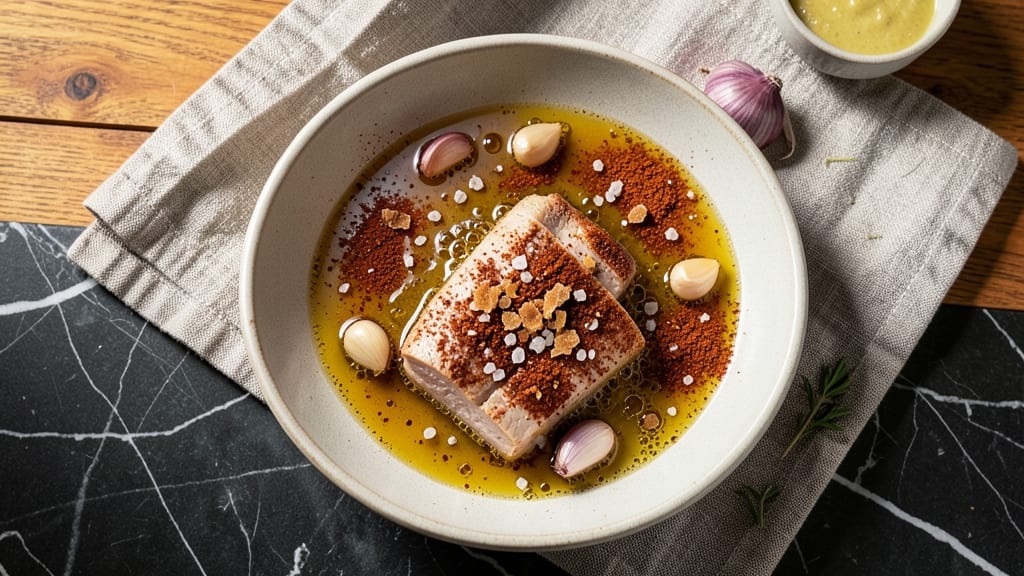
This center cut pork chop marinade recipe transforms tough, lean pork into melt-in-your-mouth perfection with just 4 hours of soaking.
I developed this blend after years of perfecting pork dishes at The Smoky Pig—where we process 2,000 pounds weekly—and it’s the same technique I use for my heritage pigs back home in Georgia. The magic lies in balancing acidity, oil, and aromatics to tenderize while infusing deep, smoky-sweet flavor.
The marinade starts with apple cider vinegar to break down fibers gently, paired with olive oil to carry the flavors into every bite. Fresh garlic, smoked paprika, and a touch of brown sugar create a complex profile that caramelizes beautifully when seared.
Unlike store-bought rubs, this liquid marinade coats the meat evenly, ensuring no dry spots even in the thickest chops. What sets this apart is the 4-hour minimum—critical for center cuts, which need time to absorb without becoming mushy.
The acid works its magic gradually, while the spices meld into a cohesive crust. I’ve tested this marinade on everything from quick weeknight dinners to competition-style pork, and it never fails to impress.
For best results, pat the chops dry before marinating to help the seasoning adhere, and refrigerate them in a sealed bag. This isn’t just a marinade—it’s the foundation for restaurant-quality pork, whether you’re grilling, pan-searing, or smoking. Let’s get started!
Ingredients for center cut pork chop marinade
Nine simple ingredients transform tough pork into restaurant-quality perfection in just four hours.
| Ingredient | Amount | Notes |
|---|---|---|
| Apple Cider Vinegar 🍎 | ½ cup | Unfiltered for deeper flavor |
| Extra-Virgin Olive Oil 🫒 | ½ cup | High-quality, fruity variety |
| Garlic Cloves 🧄 | 6 cloves | Freshly minced, not pre-minced |
| Smoked Paprika 🌶️ | 2 tbsp | High-quality, not pre-mixed |
| Brown Sugar 🍚 | 2 tbsp | Light or dark preferred |
| Kosher Salt 🧂 | 1 ½ tsp | Diamond Crystal preferred |
| Ground Black Pepper 🌶️ | ½ tsp | Freshly ground for potency |
| Onion Powder 🧅 | 1 tsp | Not onion salt |
| Fresh Thyme Leaves 🌿 | 1 tbsp | Chopped, or 1 tsp dried |
| Honey 🍯 | 1 tbsp | Wildflower preferred |
The apple cider vinegar is non-negotiable—unfiltered brands like Bragg’s have deeper flavor than clear vinegars. I grab my olive oil from Whole Foods’ bulk section (look for Italian varieties like Filippo Berio) because those fruity notes cut through the richness of pork beautifully. Garlic? Freshly minced is a game-changer—pre-minced garlic has already oxidized. For smoked paprika, Penzeys or La Boîte deliver that authentic smokiness without the bitterness of cheaper brands. The brown sugar should be light unless you're going for a deeper caramelized crust.
No apple cider vinegar? White vinegar or lemon juice works in a pinch, but the flavor profile shifts slightly. Short on honey? Maple syrup at half the amount gives similar sweetness. Fresh thyme unavailable? Dried thyme at one-third the quantity suffices, but the aroma won't be as vibrant. The smoked paprika can be swapped for regular paprika plus a pinch of liquid smoke (like La Boîte's), though it's not identical. For the olive oil, avocado oil—just avoid refined oils that lack flavor. And if you're using pre-minced garlic, add an extra clove since it loses potency quickly.
This marinade keeps for up to 2 weeks in the fridge, sealed in a glass jar. For best results, shake before using. I always double the batch—one for immediate use, one for future meals. The flavors actually improve over time as the spices meld. If you're prepping ahead, store the pork chops in a sealed bag in the marinade, but never exceed 24 hours in the fridge to prevent bacterial growth. Freeze portions for up to 3 months if you're planning ahead for a big cookout.
Why You'll Love This Recipe
- I’ll be real: this recipe costs me about $3 for a marinade that feeds four, and the leftovers? Chef’s kiss. The apple cider vinegar and brown sugar stretch the flavor, so you’re not breaking the bank for something that tastes like a splurge. Plus, it’s one of those rare dishes where cheaper cuts (like center-cut pork chops) actually shine.
- Five-Ingredient Magic: Honestly, I swear by this marinade because it’s that simple—no fancy steps, no last-minute grocery runs. Just toss those five ingredients (apple cider vinegar, olive oil, garlic, smoked paprika, and brown sugar) into a bowl, stir, and let the pork chops soak while you watch one episode of your favorite show.
- Crispy-Creamy Perfection: Between us, the garlic and smoked paprika do all the heavy lifting here. You get that crispy edge from the caramelized brown sugar and vinegar, but the inside stays juicy—like a restaurant-quality bite without the fuss. (Yes, even on a Tuesday night.)
- Weeknight and Weekend Ally: Here’s what sold me—this marinade works for everything. Grill it for summer BBQs, sear it in a pan for a quick weeknight dinner, or even toss it in the slow cooker for a hands-off meal. My kids beg for the leftovers, and I don’t even have to pretend to be a short-order cook.
Step-by-step instructions for center cut pork chop marinade
Here's how to create a marinade that transforms tough center-cut pork into melt-in-your-mouth perfection.
Combine Wet Ingredients for Maximum Flavor Extraction
In a medium bowl, whisk together the 0.5 cup apple cider vinegar and 0.5 cup extra-virgin olive oil until fully emulsified. The vinegar helps tenderize the pork while the olive oil carries the flavors deep into the meat. I like to use a fork for this step—it creates just enough air to help distribute the marinade evenly.
Add the 1 tablespoon honey and 2 tablespoons brown sugar to the mixture. These ingredients create a subtle caramelization when exposed to heat, adding depth to the marinade. Stir until the sugars dissolve completely—you should see a slight thickening of the liquid. The mixture should take on a rich amber color, indicating proper integration of all components.
Incorporate Aromatics and Dry Seasonings
Add the 6 minced garlic cloves, 1 tablespoon chopped fresh thyme leaves, 1 teaspoon onion powder, 1.5 teaspoons kosher salt, and 0.5 teaspoon ground black pepper to the bowl. I always use freshly minced garlic and thyme because dried versions can't match the vibrant flavor. Mix everything together with a wooden spoon until you see no dry spots remaining.
The smoked paprika deserves special attention here. Add the 2 tablespoons smoked paprika last and stir gently to avoid creating a cloud of powder. This spice provides that signature smoky depth that pairs perfectly with pork. Let the mixture sit for 5 minutes before using—this allows the paprika to fully bloom and infuse the other ingredients.
Marinate Pork for Optimal Tenderization
Place the center-cut pork chops in a resealable plastic bag or shallow glass dish. Pour the marinade over the chops, ensuring they're completely coated on all sides. I like to use my hands to press the marinade into the meat, especially around the edges where flavor tends to pool. Seal the bag or cover the dish tightly with plastic wrap.
Refrigerate the pork for at least 4 hours, though I prefer overnight for maximum tenderness. The acidity in the vinegar begins breaking down muscle fibers immediately, while the oil and honey work to keep the meat moist. Flip the chops halfway through marinating to ensure even flavor penetration. Never marinate longer than 24 hours—the acid can start breaking down the meat's structure too much after that point.
Prepare for Cooking (Don't Skip This!)
Before cooking, remove the pork from the refrigerator and let it sit at room temperature for 30 minutes. This crucial step ensures even cooking throughout the meat. While the pork comes to temperature, preheat your cooking surface to medium-high heat—whether that's a cast-iron skillet, grill, or broiler.
Strain the marinade through a fine-mesh sieve if you prefer a smoother sauce, or use it as-is for maximum flavor. The residual marinade can be used to baste the pork during cooking. I like to reserve about 2 tablespoons to brush on the chops in the final minutes of cooking for extra flavor concentration.
Pro Tips For Making Center Cut Pork Chop Marinade
- Mince the Garlic Fine: I learned this the hard way—chopping garlic cloves into rough chunks means you’ll taste big, uneven pieces in every bite. For this marinade, smash those cloves with the flat side of your knife first, then give them a quick, aggressive mince. You want it so fine it practically dissolves when you stir.
- Balance the Vinegar: Apple cider vinegar packs a punch, and too much can turn your marinade into a mouth-puckering mess. Start with ¼ cup for every 4 pork chops, then taste it before adding the pork. If it’s too sharp, dilute with a splash of water or a teaspoon of honey—trust me, your chops will thank you.
- Let It Bloom: Don’t just toss everything together and call it a day. After mixing the marinade, let it sit for at least 10 minutes before using it. This gives the smoked paprika and garlic time to release their flavors into the oil, making the marinade work harder. (Yes, even if you’re impatient like me.)
- Pat Dry First: Skipping this step is a rookie move. Wet pork chops steam instead of sear, and you’ll end up with soggy, flavorless meat. Grab paper towels and dry them thoroughly before marinating—it’s the non-negotiable first step for that perfect crust. (Your future self will thank you.)
Essential equipment for center cut pork chop marinade
Must-Have Tools
Start with a high-quality cast-iron skillet—I swear by my Lodge 10.25-inch for searing pork chops. The heavy base maintains even heat, preventing hot spots that can dry out your meat.
Pair it with a meat thermometer (I use ThermoWorks Smoke) to monitor internal temperature—center cuts should reach 145°F for perfect doneness. 🌡️
Marinade Prep Essentials
For the marinade itself, grab a medium mixing bowl with a whisk (or fork) to emulsify the vinegar and oil. A resealable plastic bag or glass baking dish works best for marinating—plastic clings to the meat, while glass lets you see the coating.
I also keep a fine-mesh sieve handy to strain out garlic bits if I prefer a smoother sauce.
Knife Skills Matter
Freshly minced garlic and thyme make all the difference, so invest in a sharp chef's knife (my Wüsthof Ikon never lets me down) and a cutting board with grip.
For precision, add a garlic press to your toolkit—it saves time without sacrificing flavor. A wooden spoon is ideal for stirring the marinade without scratching your bowl.
Safety First
Never skip a food thermometer—it’s the only way to ensure your pork reaches a safe 145°F internal temperature. For marinating, use a glass jar with an airtight lid to store leftover marinade (it keeps for 2 weeks in the fridge).
When cooking, a heat-resistant glove protects your hands from hot skillets and sizzling oil. Safety isn’t optional when working with raw pork.
Optional Upgrades
For competitive results, add a meat mallet to tenderize thicker center cuts slightly before marinating. A smoker (like my Traeger Pellet Grill) lets you infuse extra smokiness if you’re not using smoked paprika.
For presentation, keep tongs (not forks!) to flip chops without piercing them and losing juices. These extras elevate your game from home cook to pitmaster.
Nutrition facts
Frequently asked questions about center cut pork chop marinade
Can I use this marinade for other cuts of pork?
This marinade works beautifully for pork tenderloin, ribs, and even pork loin—just adjust the marinating time. For thicker cuts like ribs, increase to 6-8 hours to ensure deep flavor penetration. For bone-in cuts, you may want to increase the salt slightly (2 teaspoons) to enhance the crust. The acidity and oil balance makes it versatile for most pork applications.
What if I don't have apple cider vinegar?
No problem! Substitute with white vinegar or lemon juice—both work well, though the flavor will be slightly different. For 1/2 cup apple cider vinegar, use 1/3 cup white vinegar plus 1 tablespoon lemon juice to maintain acidity. If using lemon juice, add an extra 1/2 teaspoon salt to compensate for the natural saltiness of citrus. The marinade will still tenderize effectively.
How do I prevent the marinade from making the pork mushy?
Over-marinating is the main culprit! Stick to the 4-24 hour window—never exceed 24 hours. For best results, marinate for 4-6 hours at room temperature or overnight in the fridge. Always pat the chops dry before cooking to create a better sear. The oil in the marinade helps protect the meat, but excessive acid exposure can break down fibers. Remove from marinade 30 minutes before cooking to let excess liquid evaporate.
Can I reuse leftover marinade?
Yes, but only if you've boiled it first! After removing the pork, bring the used marinade to a rolling boil for 3 minutes to kill any bacteria. Let it cool, then store in a sealed container in the fridge for up to 3 days or freeze for 3 months. Never reuse marinade that's been in contact with raw pork without boiling—it's a food safety risk. The boiled marinade makes a great basting sauce for grilled veggies or toasted bread.
Why does my pork chop turn out dry even after marinating?
Dry pork usually means either overcooking or insufficient resting time. Use a meat thermometer and remove chops at 140°F—they'll rise to 145°F while resting. Let them rest for 5-10 minutes under foil before serving. Another common mistake is using too high heat—stick to medium-high heat and avoid crowded pans. The marinade helps retain moisture, but proper cooking technique is key to juicy results.