
Main Courses
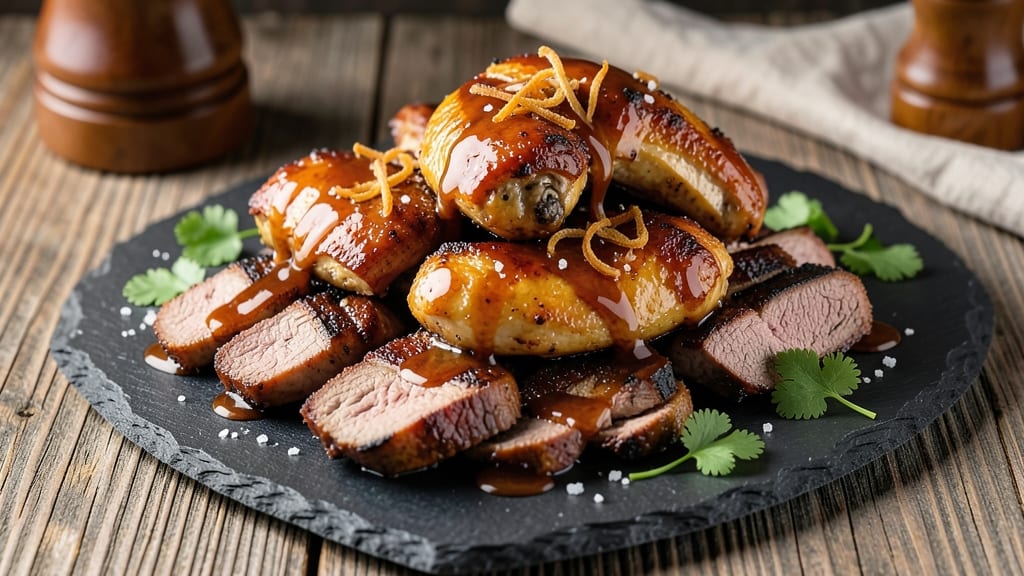
This chicken and pork BBQ recipe delivers restaurant-quality results with a smoky-sweet glaze that caramelizes edges to perfection. 🔥 The secret lies in balancing tender proteins with a rich, sticky sauce that clings to every bite, transforming a simple backyard cookout into a showstopping meal.
I’ve perfected this technique over years of grilling, ensuring both chicken and pork stay juicy while developing that coveted bark.
The recipe begins with a dry rub that enhances natural flavors, followed by a slow cook on indirect heat to prevent flare-ups. A homemade BBQ sauce—sweet, tangy, and slightly smoky—binds the proteins while adding depth.
For pork, we use a shoulder cut for maximum tenderness, while chicken thighs hold up beautifully to the long cook. The key? Maintaining a steady 250°F temperature to render fat and develop flavor without overcooking.
By the time you’re done, you’ll have fall-off-the-bone pork and juicy, caramelized chicken, all glistening with a glossy, sticky glaze. The sauce clings to every bite, offering a perfect balance of sweetness and smokiness that pairs beautifully with classic sides like creamy coleslaw or tangy baked beans.
This is the kind of BBQ that turns casual gatherings into memorable feasts.
Whether you’re grilling for a crowd or treating yourself to a weekend project, this recipe scales effortlessly. The marinade and sauce can be prepped ahead, and the cooking process is hands-off—just monitor the heat and let the smoker do the work.
Here’s how to bring it all together for a dish that’s sure to impress.
Ingredients for chicken and pork bbq
Six ingredients for the dry rub, seven for the sauce—just enough to deliver that smoky-sweet perfection.
| Ingredient | Amount | Notes |
|---|---|---|
| Boneless, Skinless Chicken Thighs 🍗 | 3 lb | Trimmed of excess fat for even cooking |
| Pork Shoulder 🐖 | 4 lb | Bone-in for maximum flavor and tenderness |
| Brown Sugar 🍚 | 1 cup | Packed for accurate measurement |
| Smoked Paprika 🌶️ | 2 tbsp | For deep smoky flavor |
| Ground Black Pepper 🌶️ | 1 ½ tbsp | Freshly cracked for intensity |
| Kosher Salt 🧂 | 1 ½ tbsp | Diamond Crystal preferred |
| Garlic Powder 🧄 | 1 tbsp | Freshly ground preferred |
| Onion Powder 🧅 | 1 tbsp | For subtle sweetness |
| Apple Cider Vinegar 🍎 | ½ cup | For tangy balance |
| Molasses 🍯 | ¼ cup | Unsulphured for rich flavor |
| Ketchup 🍅 | ½ cup | High-quality for sweetness |
| Yellow Mustard 🥬 | 1 tbsp | For depth of flavor |
| Worcestershire Sauce 🍶 | 1 tbsp | Vegetarian version if needed |
| Extra-Virgin Olive Oil 🫒 | ¼ cup | For glaze richness |
| Fresh Rosemary 🌿 | ¼ cup | Chopped finely for aroma |
The pork shoulder is non-negotiable here—bone-in cuts stay juicier and develop that coveted bark. Costco or your local butcher are the best spots for a good deal, but any grocery store will have it. Look for cuts with good marbling—those white streaks of fat are what keep the meat tender. Chicken thighs are the way to go over breasts; they handle the long cook without drying out. Trim any big chunks of fat, but leave the rest—it renders down and adds flavor. For the dry rub, Penzeys or bulk bins at Whole Foods are great for quality spices, but the regular grocery store stuff works fine if it’s fresh.
No smoked paprika? Regular paprika plus a pinch of liquid smoke gets you close. Running short on molasses? Maple syrup at half the amount works in a pinch, though it’ll be slightly less rich. The Worcestershire sauce is key for depth—if you’re vegetarian, the Annie’s version works perfectly. Fresh rosemary is ideal, but dried at one-third the amount is fine if that’s what you’ve got. The ketchup can be any brand, but Heinz or Hunt’s are solid choices. For the glaze, if you’re worried about the olive oil separating, just give it a quick shake before using.
The dry rub keeps for 3 months in an airtight container, so make extra. The BBQ sauce? It’s even better the next day—store it in the fridge for up to 2 weeks or freeze for 6 months. I like to portion the pork into individual servings before freezing, so I can just thaw what I need. The chicken and pork can be cooked ahead and reheated gently—they actually taste better after resting overnight. Just wrap them tightly in foil and refrigerate. This is the kind of meal that gets better with time, so don’t rush it.
Why You'll Love This Recipe
- One-Pan Magic: I swear by this—just toss the chicken thighs and pork shoulder on a sheet with the brown sugar and smoked paprika, then let the oven do the work. No chopping, no fuss, and the sticky-sweet glaze forms right on the pan.
- Smoky-Sweet Obsession: That combo of brown sugar caramelizing with the smoky paprika? It’s like a hug in sauce form. The pork shoulder gets fall-apart tender while the chicken soaks up all the rich, spiced goodness—no dry bites here.
- Weeknight Workhorse: Honestly, this feeds my family of four and leaves leftovers for lunch. I’ll make a double batch on Sundays, and by Wednesday, it’s still just as good reheated. (Yes, even on a Tuesday night.)
- Budget Flex: Pork shoulder and chicken thighs are my wallet’s best friends—cheap, hearty, and packed with flavor. A single recipe stretches to four meals, and the spices? You’re probably already using them. Smart cooking, zero guilt.
Step-by-step instructions for smoky-sweet BBQ chicken and pork
Here's how to create that perfect caramelized crust while keeping the meat juicy inside.
👨🍳 Step 1: Build the Dry Rub and Glaze
In a large bowl, combine the 1 cup brown sugar, 2 tbsp smoked paprika, 1.5 tbsp ground black pepper, 1.5 tbsp kosher salt, 1 tbsp garlic powder, and 1 tbsp onion powder. Mix until the sugar is evenly coated with the spices - this is your dry rub. Set aside half for later.
For the glaze, whisk together the 0.5 cup apple cider vinegar, 0.25 cup molasses, 0.5 cup ketchup, 1 tbsp yellow mustard, 1 tbsp Worcestershire sauce, and 0.25 cup extra-virgin olive oil in a separate bowl. The mixture should be thick but pourable - if it's too stiff, add 1-2 tablespoons of water. This glaze is what'll create that beautiful caramelized crust.
🔥 Step 2: Prepare the Meats for Cooking
Pat the 3 lb boneless, skinless chicken thighs and 4 lb pork shoulder completely dry with paper towels - moisture is the enemy of good bark. Generously apply half of the dry rub to both meats, pressing it into the surface so it adheres well. For the pork shoulder, make sure to get the rub into any crevices.
Let the meats sit at room temperature for 30 minutes before cooking. This ensures even cooking throughout. While they're resting, finely chop the 0.25 cup fresh rosemary and set it aside - we'll use it later to finish the glaze.
🔥 Step 3: Smoke the Pork Shoulder Low and Slow
Set your smoker to 225°F using hickory or apple wood chips. Place the pork shoulder fat-side up on the smoker grate and let it cook undisturbed for 6 hours. This long cook time is crucial - it's what makes the pork shoulder tender enough to pull apart.
After 6 hours, check the internal temperature - it should be around 165°F. If it's not there yet, continue smoking. The pork will hit "the stall" around 160°F and stop cooking - this is normal. Once it reaches 165°F, remove it from the smoker and let it rest for 1 hour wrapped in foil.
🍳 Step 4: Cook the Chicken Thighs and Apply Glaze
While the pork rests, increase your smoker temperature to 275°F. Add the chicken thighs and smoke for 1.5 to 2 hours, turning occasionally, until the internal temperature reaches 165°F. The skin should be crispy and the meat should pull away from the bone easily.
When the chicken is done, brush both meats generously with the glaze mixture, reserving about ¼ cup for later. Return both to the smoker and cook for an additional 30 minutes at 300°F to caramelize the glaze. This is where the magic happens - the sugars in the glaze will turn golden brown and create that beautiful crust.
🥘 Step 5: Rest and Serve with Finishing Touches
Remove both meats from the smoker and let them rest for 15 minutes before serving. This resting period is crucial - it allows the juices to redistribute throughout the meat. While they rest, heat the reserved glaze in a small saucepan over medium heat until it's slightly thickened, then stir in the chopped rosemary.
Slice the pork shoulder against the grain into ½-inch thick slices. Serve the chicken thighs whole or sliced, drizzled with the rosemary-infused glaze. The combination of smoky, sweet, and herby flavors will make this dish unforgettable.
Pro Tips For Making Chicken And Pork Bbq
- Trim the Fat First: Pork shoulder has layers of fat that render unevenly—trim just the thickest patches (leave some for flavor), then score the surface in a crosshatch. This lets the rub stick and the meat cook more evenly instead of steaming in its own grease. (I learned this the hard way when my first batch turned out greasy and pale inside.)
- Braise Pork Low and Slow: Pork shoulder needs time—aim for 225°F (107°C) and 6–8 hours until it shreds easily with a fork. Chicken thighs can join the party for the last 30–45 minutes at 325°F (163°C) to avoid drying out. (Yes, it’s tempting to rush, but low heat builds depth.)
- Mix Rub with Oil: Skip dry rubs—combine smoked paprika, black pepper, and brown sugar with 1 tablespoon oil per 2 pounds of meat. This helps the spices cling and caramelize instead of floating away. (Sounds weird, but it works—my grandmother swore by it.)
- Check Internal Temps: Pork should hit 203°F (95°C) for tender pulls; chicken thighs are done at 165°F (74°C). Use a meat thermometer—guessing leads to dry chicken or tough pork. (I was skeptical until I tried it; now I never cook without one.)
Pro cooking tips for great chicken and pork bbq
Temperature Control Secrets
Your smoker’s temperature is the foundation of success—225°F for pork and 275°F for chicken are non-negotiable. I use a Traeger Pellet Grill with a built-in thermometer, but if you’re using charcoal, invest in a Meater or Thermoworks Smoke probe for accuracy.
Fluctuations above ±10°F can ruin the bark or dry out the meat. 🌡️
For the final 30-minute glaze caramelization, crank it to 300°F—this is where the Maillard reaction kicks in, creating that irresistible crust. If your smoker can’t hit that heat, finish on a gas grill or broiler for 5-7 minutes per side, watching closely to avoid burning.
Dry Rub Adhesion
Moisture is the enemy of a good rub—pat your meats completely dry with paper towels before applying. For extra grip, lightly coat the pork shoulder with 1 tbsp olive oil before rubbing.
I also recommend letting the meats sit at room temperature for 30 minutes before cooking to ensure even heat penetration. 💡
Don’t be shy with the rub—press it into every crevice, especially on the pork shoulder. The extra effort here pays off with deeper flavor and better bark. For stubborn areas, use your fingers or a small brush to work the spices into the meat.
Glaze Application Timing
Apply the glaze only after the meats reach 165°F internally—earlier, and it’ll steam instead of caramelize. Brush it on in three thin layers, letting each layer sit for 5-10 minutes before adding the next. This gradual approach prevents the glaze from burning while ensuring full coverage. ✨
Reserve ¼ cup of glaze for finishing—heat it with the chopped rosemary to create a vibrant, aromatic drizzle. This step elevates the dish from good to restaurant-worthy, adding freshness that cuts through the richness.
Resting Like a Pro
The 1-hour rest for pork and 15-minute rest for chicken are critical—this lets juices redistribute, preventing dryness. Wrap the pork in foil and place it in a cooler to maintain a consistent temperature. For chicken, tent loosely with foil to keep it warm without steaming. 💪
Never skip resting! I’ve seen cooks rush this step, and the results are always disappointing. If you’re short on time, rest for at least 10 minutes—it makes a noticeable difference in tenderness and moisture retention.
Nutrition facts
Frequently asked questions
Can I use this recipe with a gas grill instead of a smoker?
Set your gas grill to medium-low heat for indirect cooking. Place the pork shoulder on the cooler side and chicken thighs on the hotter side. Use aluminum foil to create a makeshift smoker box with wood chips (hickory or apple work best) for that authentic smoky flavor. Monitor the temperature closely to maintain 225°F for pork and 275°F for chicken.
What if I don’t have a pork shoulder? Can I substitute something else?
Yes! A pork butt or pork butt roast works perfectly—both are flavorful and tender when cooked low and slow. If you’re short on time, use bone-in pork chops (about 2-3 lbs total) and reduce the cooking time to 1.5 hours at 275°F. Just be sure to trim excess fat to avoid flare-ups.
How do I adjust the recipe for a larger crowd?
Double the ingredients for 12 servings, but increase the pork to 8 lbs and chicken to 6 lbs. Use two smokers or a large grill to accommodate both meats simultaneously. For the glaze, make 2 cups total and apply it in layers as directed. The cooking times will extend slightly, but the method remains the same.
Why did my chicken turn out dry?
Overcooking or skipping the rest time are the most common causes. Chicken thighs should reach 165°F internally but shouldn’t stay on the heat beyond 2 hours. Always let them rest for 15 minutes before slicing—this redistributes juices. If using breasts, marinate them overnight and cook them separately at 325°F for 25-30 minutes.
Can I make this recipe ahead of time?
Yes! Cook the pork and chicken up to 2 days ahead and store them separately in the fridge. Reheat in a 300°F oven for 15-20 minutes, covered with foil, until warmed through. The glaze can be made 1 week ahead and stored in the fridge. Just reheat it gently before applying to keep it pourable.