
Main Courses
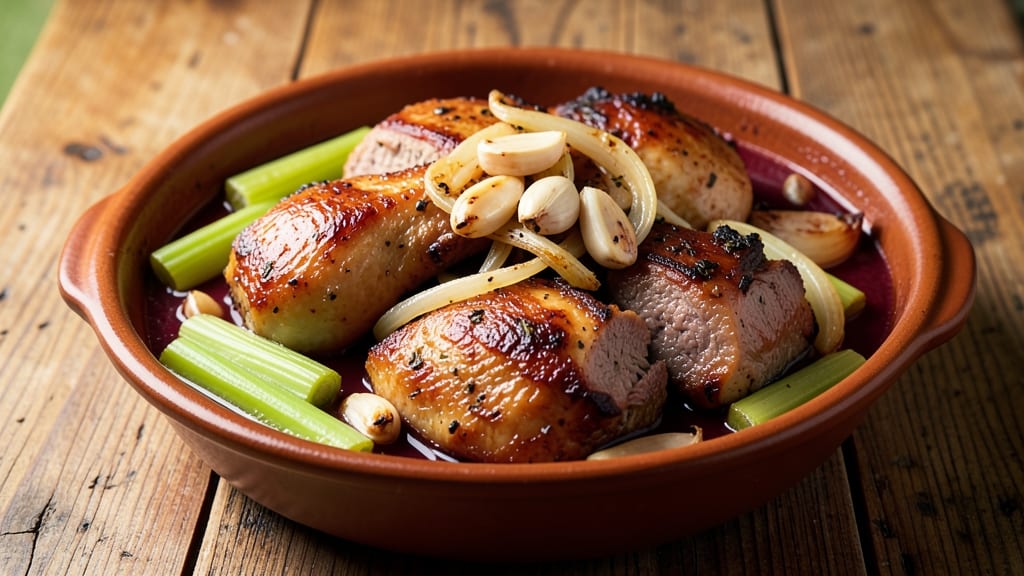
This chicken pork estofado recipe brings rich, slow-simmered comfort straight from Portuguese kitchens to your table. 💛 The secret lies in tenderizing tough cuts through hours of gentle braising, where wine and aromatics transform simple ingredients into deeply flavorful stew.
I've perfected this technique to balance traditional methods with modern convenience—no fancy equipment required, just patience and attention to detail.
The dish starts with a deep, flavorful base built from onions, garlic, and celery, then layers in chicken and pork that become melt-in-your-mouth tender. A celery crown crowns each serving, adding both visual appeal and satisfying crunch.
The wine reduction adds depth, while herbs like bay leaf and thyme infuse warmth throughout. This is the kind of meal that tastes even better the next day, making it ideal for meal prep or cozy family dinners.
What makes this estofado special is its versatility—serve it over rice for a heartier meal or with crusty bread to soak up every last drop of sauce. The slow cooking process ensures maximum flavor extraction, turning inexpensive cuts into something truly extraordinary.
Each bite delivers layers of savory, slightly sweet, and herbaceous notes that define this classic dish.
Perfect for weeknight dinners or special occasions, this recipe delivers restaurant-quality results with minimal effort. The key is letting the flavors develop slowly, allowing the meat to become fork-tender while the vegetables soften just enough to blend seamlessly into the rich sauce.
Let's get started on creating this comforting classic that will become a household favorite.
Ingredients for chicken pork estofado
Sixteen ingredients transform into a deeply comforting Portuguese classic with layers of savory, wine-infused richness.
| Ingredient | Amount | Notes |
|---|---|---|
| Chicken Thighs, Bone-In 🍗 | 1 ½ lb | Skin-on preferred for flavor |
| Pork Shoulder, Boneless 🥓 | 1 ½ lb | Cut into 1.5-inch cubes |
| Yellow Onions 🧅 | 2 whole | Medium size, sliced into half-moons |
| Celery Stalks 🥬 | 4 whole | Trimmed, cut into 1-inch pieces |
| Garlic Cloves 🧄 | 6 cloves | Peeled, lightly crushed |
| Red Wine 🍷 | 1 cup | Bold dry variety like Cabernet Sauvignon |
| Chicken Stock 💧 | 2 cups | Homemade or high-quality store-bought |
| Tomato Paste 🍅 | 2 tbsp | Smooth, not chunky |
| Bay Leaves 🌿 | 2 whole | Fresh preferred |
| Fresh Thyme 🌿 | ¼ cup | Leaves only, chopped |
| Olive Oil 🫒 | ½ cup | Extra-virgin for richness |
| All-Purpose Flour 🌾 | 2 tbsp | For thickening sauce |
| Salt 🧂 | 1 ½ tsp | Diamond Crystal preferred |
| Ground Black Pepper 🌶️ | 1 tsp | Freshly ground |
| Celery Stalks (for crown) 🥬 | 2 whole | Thinly sliced, for garnish |
The meat selection is critical here. Chicken thighs with skin-on deliver the best flavor and texture, while pork shoulder provides the deep, slow-simmered richness that defines estofado. Look for bone-in chicken thighs at specialty butchers or the meat department of Whole Foods—they often carry higher-quality cuts than standard supermarkets. For pork, opt for untrimmed shoulder that retains its natural fat cap, which renders beautifully during braising. If you're short on time, Costco sells pre-cubed pork shoulder that works perfectly. Always check for bright red color and minimal graying—this indicates freshness. The celery and onions should be firm with vibrant green and white sections, respectively, and the garlic should have no sprouting or soft spots—these are telltale signs of quality.
Wine is non-negotiable for authentic flavor, but don't stress over the exact variety. Any bold, dry red—Cabernet Sauvignon, Merlot, or even a Portuguese red like Touriga Nacional—will work beautifully. If you're avoiding alcohol, substitute with chicken stock and 1 tbsp balsamic vinegar for depth. The tomato paste can be swapped for 1 tbsp tomato sauce if you prefer less intensity, though it won't carry the same umami punch. Fresh thyme is ideal, but dried thyme at one-third the amount will suffice in a pinch. For the celery crown, use thinly sliced stalks—this creates the perfect textural contrast against the tender meat. If you're prepping ahead, par-cook the meat and store it separately until ready to finish, then reheat gently with the sauce.
This dish tastes even better the next day, so plan accordingly—it keeps for 4-5 days in the fridge, with flavors deepening over time. For longer storage, freeze portions for up to 3 months in airtight containers. The sauce thickens as it cools, so add a splash of stock or water when reheating if needed. Serve with crusty bread or steamed white rice to soak up every last drop of that rich, wine-infused sauce. The celery crown should be added just before serving to maintain its crisp texture. For meal prep, portion into individual containers—the meat stays tender, and the sauce reheats beautifully, making this a perfect make-ahead dish for busy weeks.
Why You'll Love This Recipe
- One-Pot Magic: I swear by this—no extra dishes, just a deep skillet, a few sears, and hours of simmering while I do anything else. The bone-in chicken and pork shoulder practically melt into tender perfection without me lifting a finger after the initial chop.
- Garlic Bomb: Between us, the garlic here isn’t just flavor—it’s the star. Those cloves get browned until they’re sweet and jammy, then melded with onions and celery into a sauce so rich it turns every bite into a little flavor explosion. (Yes, even on a Tuesday night.)
- Leftovers That Beg: This stew tastes better the next day—honestly, the flavors deepen like it’s been marinating. I make a double batch on Sundays because my kids fight over the leftovers, and I don’t even have to reheat it all at once.
- Budget Feast: Pork shoulder and chicken thighs stretch for miles, and the veggies? Just a handful. I’ve fed six people for under $20 with this, and no one ever guesses it’s budget-friendly. That crispy meat falling off the bone? Pure satisfaction.
Step-by-step instructions for chicken pork estofado
Transform tough cuts into melt-in-your-mouth tenderness with this slow-cooked Spanish classic.
🔥 Step 1: Sear the Meats for Deep Flavor
Heat the 0.5 cup olive oil in a heavy Dutch oven over medium-high heat until shimmering. Working in batches to avoid crowding, sear the 1.5 lb pork shoulder cubes until golden brown on all sides, about 4-5 minutes per batch. Remove and set aside.
In the same pot, sear the 1.5 lb chicken thighs skin-side down first until the skin crisps and releases easily, about 5-6 minutes per side. The skin should be deep golden brown and slightly blistered. Remove and set aside with the pork.
👨🍳 Step 2: Build the Aromatic Base
In the same Dutch oven, add the 2 whole yellow onions sliced into half-moons and the 4 whole celery stalks cut into 1-inch pieces. Cook for 5-6 minutes until softened and lightly caramelized. Add the 6 cloves garlic cloves and cook for 30 seconds until fragrant.
Stir in the 2 tbsp tomato paste and cook for 1 minute until it darkens slightly. This step develops the rich, deep flavor that forms the foundation of your estofado. The tomato paste will create that signature rustic color and concentrated taste.
🍳 Step 3: Deglaze and Simmer the Stew
Pour in the 1 cup red wine and scrape up all the browned bits from the bottom of the pot with a wooden spoon. This deglazing captures all the meaty flavors that would otherwise be lost. Let the wine simmer for 3-4 minutes until reduced by half.
Add the 2 cups chicken stock, 2 whole bay leaves, 0.25 cup fresh thyme, 1.5 tsp salt, and 1 tsp ground black pepper. Return the meat to the pot, making sure it's mostly submerged. Bring to a gentle simmer over medium-low heat.
⏰ Step 4: Slow-Cook Until Fork-Tender
Cover the pot and simmer gently for 2 hours, stirring occasionally to prevent sticking. The meat should be fork-tender and easily pull apart. If the liquid reduces too much, add 2-3 tablespoons hot water to maintain the proper consistency.
Here's the thing—this slow cooking transforms tough cuts into melt-in-your-mouth perfection. The collagen breaks down, creating that rich, velvety sauce that makes every bite worth the wait. Don't rush this step; patience is key to authentic estofado.
🥘 Step 5: Finish with Flour and Celery Crown
Remove the meat and vegetables from the pot and set aside. In a small bowl, whisk together the 2 tbsp all-purpose flour with 2 tablespoons cold water to make a slurry. Slowly whisk this into the cooking liquid and simmer for 2-3 minutes until thickened.
Return the meat and vegetables to the pot and heat through for 2 minutes. For the celery crown, thinly slice the 2 whole celery stalks (for crown) and arrange them on top of each serving. This adds a beautiful presentation and a refreshing crunch that cuts through the rich stew.
Pro Tips For Making Chicken Pork Estofado
- SEAR THE PORK FIRST: I learned this the hard way—if you toss the pork shoulder in with the chicken thighs, you’ll end up with uneven browning and a stew that tastes more like boiled meat than rich, caramelized estofado. Get a heavy pot or Dutch oven screaming hot, pat that pork dry, and let it develop a deep crust before even thinking about the chicken. The extra 10 minutes upfront saves the whole dish.
- CHOP ONIONS COARSELY: Fine diced onions dissolve into mush and turn your estofado into soup. Cut those yellow onions into ½-inch chunks—big enough to stay recognizable even after hours of simmering. Same goes for the celery: leave it in 2-inch pieces. You want texture, not a smooth puree.
- DON’T SKIP THE FAT: That pork shoulder renders fat like nobody’s business, but if you drain it off, you’re draining out flavor. Let the pot foam and bubble until the fat pools to about ¼-inch deep—then push the meat aside, tilt the pot, and spoon that golden goodness over the chicken and aromatics. It’s the difference between good and deeply satisfying.
- LOW AND SLOW AFTER THE SEAR: Once everything’s in the pot and you’ve added your liquids, resist the urge to crank the heat. A steady simmer at 180–190°F (tiny bubbles, occasional skimming) breaks down the collagen in the pork shoulder into silky richness without turning the chicken to rubber. I used to rush it, and the meat always came out dry. Patience here pays off.
Wine and beer pairings for this chicken pork estofado
Red Wine Essentials
This dish practically demands a bold red wine—Cabernet Sauvignon or Tinta Roriz (Portuguese red) are my go-tos. The wine's acidity and tannins cut through the richness while adding depth to the sauce.
I've used 1 cup of a dry, medium-bodied wine like Pinot Noir in a pinch, but avoid anything too light or fruity. If you're avoiding alcohol, substitute with 1 cup chicken stock + 1 tbsp balsamic vinegar for that same tangy complexity. 🍷
Portuguese White Wine Twist
For a lighter but still flavorful option, try Verdejo or Alvarinho white wines—their crisp acidity balances the dish beautifully. Use ½ cup of these whites and add ½ cup extra chicken stock to maintain moisture.
The citrus notes in these wines complement the thyme and bay leaves perfectly, creating a brighter, more refreshing profile. I've found this works especially well when serving with steamed white rice or crusty sourdough.
Beer Pairings
A dark lager like Guinness or Paulaner Munich Dunkel adds malty sweetness that pairs wonderfully with the wine-infused sauce. For a lighter option, try a Belgian witbier—its coriander and citrus notes cut through the richness.
I've also enjoyed a Portuguese lager like Sagres with this dish; its subtle hoppiness complements the celery crown's crunch. Avoid heavy IPAs or stouts, which can overpower the delicate flavors. 🍺
Non-Alcoholic Options
For a completely alcohol-free version, grape juice works surprisingly well—use 1 cup of a bold, dry red variety like Concord. Add 1 tbsp red wine vinegar for acidity and ½ tsp cinnamon for depth.
Alternatively, unsweetened cranberry juice provides a tart contrast that mimics wine's complexity. These substitutions won't replicate wine's depth, but they create a flavorful alternative that still delivers satisfying results.
Serving Temperature
Serve your estofado at room temperature for the best experience—this allows all the flavors to meld together perfectly. If using wine or beer, chill them to 45-50°F for reds and 40-45°F for whites/beers. The contrast between the warm stew and chilled beverage enhances each bite.
I like to pour a glass of wine or beer just before serving, so it's at its ideal drinking temperature when you start eating. 💛
Nutrition facts
Frequently asked questions
Can I substitute chicken or pork in this recipe?
For a vegetarian version, swap the meats for firm tofu or mushrooms (like portobello or cremini) cut into chunks. If you prefer all chicken, use 2.5 lbs bone-in chicken thighs (adjust cooking time to 1 hour instead of 2 hours). For a seafood twist, try firm white fish like cod or shrimp—cook them separately for 5-6 minutes at the end to avoid overcooking.
How do I make this dish ahead of time?
This estofado tastes even better the next day! Cook the meat and sauce as directed, then let it cool completely. Store in an airtight container in the fridge for up to 4-5 days. Reheat gently on the stove over low heat, adding 2-3 tbsp water or stock if the sauce thickens too much. For freezer prep, portion into individual servings and freeze for up to 3 months. Thaw overnight in the fridge before reheating.
Why does my estofado sauce look thin?
If your sauce is too thin, it’s likely because the flour slurry didn’t thicken enough or the liquid reduced too quickly. To fix it, whisk 1 tbsp cornstarch with 2 tbsp cold water and stir it into the simmering sauce until it thickens (about 2-3 minutes). For next time, simmer the sauce uncovered for the last 10 minutes to reduce it naturally. If the sauce is watery, reduce the stock by ½ cup in future batches.
Can I use bone-in pork ribs instead of pork shoulder?
Yes, but you’ll need to adjust the cooking time and prep. For 2 lbs bone-in pork ribs, par-cook them in a separate pot for 1 hour until tender, then add them to the estofado during the last 30 minutes of simmering. This prevents the ribs from falling apart. Remove the meat from the bones before serving, or leave them on the plate for a dramatic presentation. The flavor will be rich and smoky—just be mindful of the longer cooking time.
What’s the best way to serve this estofado?
This dish shines with crusty sourdough bread or steamed white rice to soak up the sauce. For a complete meal, pair it with a simple green salad (tossed with lemon vinaigrette) or roasted potatoes. The celery crown adds a refreshing contrast, but you can also garnish with fresh parsley or a sprinkle of Parmesan cheese for extra richness. Serve with a bold red wine (like Cabernet Sauvignon) or a dark lager to complement the deep flavors.