
Main Courses
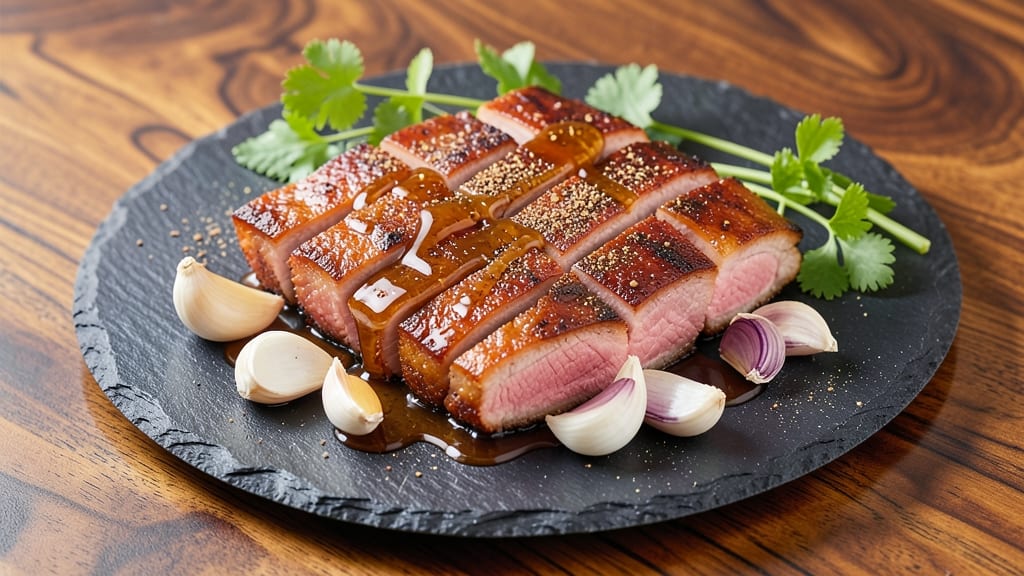
This Chinese honey pork recipe delivers restaurant-quality Char Siu with crispy edges and a sticky-sweet glaze that caramelizes to perfection. 🔥 I first mastered this technique during my apprenticeship in Charleston, where the balance of honey and five-spice creates an irresistible contrast.
The secret lies in marinating the pork overnight, allowing the flavors to penetrate deeply while the honey transforms into a glossy, aromatic crust during roasting.
What sets this recipe apart is the double-boiling method for basting, which ensures the glaze remains glossy and the pork stays juicy. We'll use a blend of honey, soy sauce, and rice wine to create that signature sticky-sweet profile, while five-spice powder adds warmth and complexity.
The result is tender, flavorful pork with edges that are crisp enough to hold their shape when sliced—no more dry, overcooked meat here.
This dish is perfect for special occasions or family gatherings, where the aroma alone will have everyone gathering around the table. The glaze clings beautifully to each bite, offering a perfect balance of sweetness and savory depth.
Whether you're serving it at a holiday feast or a casual weekend dinner, this recipe delivers professional-quality results with minimal fuss.
For those who love fusion cooking, try serving it with steamed jasmine rice and quick-pickled vegetables to cut through the richness. The leftovers reheat beautifully, making this an excellent meal prep option for busy weeks. Let's get started on creating this timeless Chinese classic!
Ingredients for chinese honey pork
Restaurant-quality Char Siu starts with these 14 ingredients—sweet, savory, and aromatic for that signature caramelized crust.
| Ingredient | Amount | Notes |
|---|---|---|
| Pork Shoulder (or Boston Butt) 🐖 | 2 lb | Fat-capped cut for juiciness, cut into 1-inch cubes |
| Honey 🍯 | ½ cup | High-quality, preferably clover or wildflower |
| Light Soy Sauce 🥄 | ⅓ cup | Kikkoman preferred for balance |
| Rice Wine (Shaoxing Wine) 🍶 | ¼ cup | Substitute with dry sherry if unavailable |
| Five-Spice Powder 🌶️ | 1 tbsp | Authentic blend of star anise, cinnamon, fennel |
| Garlic Cloves 🧄 | 6 cloves | Peeled and minced into fine paste |
| Fresh Ginger 🌿 | 1 tbsp | Grated, aromatic, not powdered |
| Sesame Oil 🫒 | 1 tbsp | Toasted, for aroma, not cooking |
| Brown Sugar 🍚 | ¼ cup | Dark, for caramelization depth |
| Cornstarch 🌾 | 1 tbsp | For glaze thickening |
| Vegetable Oil 🫒 | 2 tbsp | High smoke point for searing |
| Green Onions 🧅 | 2 whole | Sliced, for garnish |
| Diamond Crystal Kosher Salt 🧂 | 1 tsp | For seasoning, not iodized |
| Black Peppercorns 🌶️ | ½ tsp | Freshly cracked, medium grind |
The pork cut is critical—pork shoulder or Boston butt delivers the perfect balance of fat and lean for tender, crisp-edged results. Look for marbled cuts at specialty butchers like Hartsfield Farms or Whole Foods for optimal quality. If using frozen pork, thaw it overnight in the fridge to prevent uneven cooking. The five-spice powder should be authentic (avoid generic blends)—Penzeys Spices carries a restaurant-quality version with the right cinnamon-to-fennel ratio. For the honey, local clover honey adds subtle floral notes that complement the soy sauce's umami depth.
No Shaoxing wine? Dry sherry works in a pinch, though it lacks the fermented depth. Substitute brown sugar with white sugar plus 1 tsp molasses for a closer caramel profile. The cornstarch is non-negotiable for that glossy glaze—it thickens without altering the flavor. For a less sweet version, reduce honey to 1/3 cup and add 1 tbsp hoisin sauce to deepen the savory notes. Fresh ginger and garlic should be peeled and minced just before marinating to preserve their volatile oils. If you're short on time, jarred minced garlic (like Gourmet Garden) saves steps without sacrificing flavor.
Marinate the pork for at least 12 hours, ideally overnight, to maximize flavor penetration. Store the marinade in an airtight container in the fridge—it keeps for 5 days and freezes well for 3 months. The cooked pork reheats beautifully: 2-3 minutes in a screaming-hot skillet restores the crisp edges. For meal prep, portion into parchment-lined containers with a drizzle of reserved glaze to keep it moist. Leftovers hold up for 4 days in the fridge or 2 months frozen—though they rarely last that long.
Why You'll Love This Recipe
- One-Pan Magic: Honestly, this dish is that easy—just sear the pork, toss in the honey-soy glaze, and let it caramelize. No chopping veggies, no extra pans, and the five-spice powder does half the work for you.
- Sweet-Savory Balance: That sticky honey glaze with a hint of rice wine? It’s ridiculously good—sweet enough to make your taste buds dance, but the five-spice powder keeps it warm and complex. The pork stays juicy, and the edges get this perfect crispy glaze.
- Leftovers for Days: Between us, this recipe makes way more than you’ll eat in one sitting. The flavors actually get better the next day, and reheating it in the oven (or microwave, if you’re lazy) keeps it tender. I’ve fed a family of four for three meals from one batch.
- Budget-Friendly Feast: Pork shoulder is cheap, and a little goes a long way here. You’re not sacrificing flavor—just look at that glaze—but you’re also not breaking the bank. Plus, the leftovers stretch into stir-fries or sandwiches without extra cost.
Step-by-step instructions for Chinese honey pork
Transform tough pork into melt-in-your-mouth sweetness with this precise technique.
🔥 Step 1: Sear the Pork for Deep Flavor
Heat a heavy skillet over medium-high heat until it's smoking hot. Add the 2 tablespoons vegetable oil and swirl to coat the bottom evenly. Working in batches to avoid crowding, add the 2 lb pork shoulder (cut into 1-inch cubes) and sear undisturbed for 3-4 minutes per side until deep golden brown forms on all surfaces.
This initial searing creates the Maillard reaction that builds complex flavors. Press down gently on the pork cubes during the first minute to prevent curling. If the pan gets too crowded, work in two batches—don't rush this step. The pork should release easily from the pan when ready to flip. Transfer seared pork to a plate and set aside.
👨🍳 Step 2: Build the Glaze Foundation
In the same skillet (no need to clean it—the browned bits are flavor gold), reduce heat to medium and add 6 cloves minced garlic and 1 tablespoon grated fresh ginger. Sauté for 30 seconds until fragrant but not browned. Add 1 tablespoon five-spice powder, 1 teaspoon Diamond Crystal kosher salt, and ½ teaspoon cracked black peppercorns, stirring constantly for 1 minute to toast the spices.
Here's where the magic happens: Pour in ½ cup honey, ⅓ cup light soy sauce, and ¼ cup rice wine (Shaoxing wine). Bring to a gentle simmer and cook for 5 minutes until the liquid reduces by about 30%. You'll see it transform from watery to syrupy—this is your base glaze. The alcohol will cook off, leaving behind concentrated sweetness and umami.
🥘 Step 3: Glaze and Caramelize the Pork
Return the seared pork to the skillet, spooning the glaze mixture over the top. Add ¼ cup brown sugar and bring everything to a gentle boil. Reduce heat to medium-low and simmer uncovered for 20-25 minutes, stirring occasionally, until the pork is tender enough to pierce easily with a fork and the sauce has thickened to a glossy consistency.
Real talk: This is where patience pays off. The glaze should coat the pork completely, caramelizing into a sticky-sweet crust. If it gets too thick before the pork is done, add 1-2 tablespoons water to maintain the right balance. You're aiming for that signature Chinese restaurant presentation—juicy pork swimming in a glossy, caramelized sauce.
⏰ Step 4: Thicken and Finish
Once the pork is tender, increase heat to medium-high and let the sauce reduce for another 3-5 minutes until it reaches your desired thickness. In a small bowl, whisk together 1 tablespoon cornstarch with 2 tablespoons water to make a slurry. Slowly pour this into the skillet while stirring constantly for 1-2 minutes until the sauce thickens to a perfect coating consistency—similar to a thick BBQ sauce but with that signature Chinese sweet-savory balance.
The cornstarch slurry is your secret weapon for achieving that restaurant-quality glossy finish. Stir in 1 tablespoon toasted sesame oil at the end for an aromatic punch. Taste and adjust seasoning—you might need a touch more soy sauce for saltiness or a drizzle of honey for sweetness. The final sauce should cling to the pork like syrup on pancakes.
🍽️ Step 5: Rest and Serve
Transfer the honey pork to a serving platter and let it rest for 5-10 minutes before serving. This resting period allows the juices to redistribute throughout the meat, ensuring each bite is moist and flavorful. Garnish with 2 whole green onions (sliced) for freshness and color contrast.
Serve immediately over steamed rice or noodles to soak up that glorious sauce. The pork should be fork-tender with a crispy-sweet exterior that caramelizes beautifully. For maximum impact, serve with a side of quick-pickled vegetables to cut through the richness. This dish keeps well in the refrigerator for 3-4 days, making it perfect for meal prep—just reheat gently with a splash of water to restore moisture.
Pro Tips For Making Chinese Honey Pork
- Sear the Pork Hard: Get that meat screaming hot in a dry pan first—no oil needed at the start. I used to skip this, and the honey just turned the pork into a sticky mess instead of caramelized perfection. Once it’s golden in spots, add a little oil and finish cooking.
- Simmer Honey Slow: Reduce the honey sauce on medium-low heat until it thickens to a glossy syrup—about 5-7 minutes. Rushing this makes it cloyingly sweet; let it bubble gently so the flavors meld instead of burning. (Yes, even if you’re impatient like me.)
- Salt the Pork Twice: Generously salt the raw pork shoulder before searing, then add another pinch of salt to the braising liquid. The first layer seasons the meat, the second keeps it from tasting bland when the honey and soy mingle. Trust me, your taste buds will notice.
- Deglaze with Wine First: After searing, splash in the Shaoxing wine before adding soy sauce—let it sizzle and evaporate for 30 seconds. This builds depth faster than just dumping everything in at once. (I learned this after a batch tasted flat and one-dimensional.)
Creative variations of these flavors
Cantonese Char Siu
This is the classic version you'd find at any dim sum spread in Hong Kong or Guangzhou. The key difference is using hoisin sauce instead of brown sugar—about 2 tablespoons—for deeper umami. I add 1 teaspoon grated orange zest to the marinade for that signature citrus brightness.
Cook the pork in a wok over high heat to create those signature charred edges while keeping the center tender. 🌶️
Fusion BBQ Style
Take this recipe to the next level by adding 1/4 cup BBQ sauce (like Sweet Baby Ray's) to the glaze and finishing with crushed red pepper flakes for heat.
I like to smoke the pork in a pellet grill at 250°F for 2 hours before glazing, giving it that smoky depth. This version works perfectly for American BBQ joints serving Asian fusion menus.
Spicy Sichuan Twist
For heat lovers, add 1 tablespoon Sichuan peppercorns (toasted and ground) and 1 teaspoon chili bean paste to the marinade. Use dark soy sauce instead of light for deeper color, and finish with 1 tablespoon chili oil before serving. The numbing-spicy kick from Sichuan peppercorns makes this version unforgettable. 🔥
Slow-Cooker Version
If you're short on time, use a slow cooker for hands-off cooking. Sear the pork first, then transfer everything to the slow cooker and cook on low for 6-8 hours. Add 1/2 cup water to prevent drying out.
The result is tender pork with a slightly thicker glaze—perfect for meal prep. I like to finish it in a hot skillet to caramelize the edges before serving.
Vegetarian Adaptation
For a plant-based version, use extra-firm tofu (pressed and cubed) or mushroom medley (shiitake + king oyster). Marinate for 24 hours to absorb flavors, then pan-fry until crispy.
The glaze works perfectly on both—just reduce cooking time by half. This version is great for veggie-loving friends who still want that sweet-savory experience. 🌱
Sweet-and-Sour Glaze
Swap the brown sugar for 1/4 cup rice vinegar and add 1 tablespoon apple cider vinegar to the glaze. The acidity brightens the flavors and cuts through the richness.
I also add 1 teaspoon grated daikon radish for texture. This version pairs beautifully with steamed dumplings or cucumber salad to balance the sweetness. 💫
Nutrition facts
Frequently asked questions
Can I substitute regular sugar for brown sugar in this recipe?
You can use regular sugar, but brown sugar's molasses content adds depth and helps create that signature caramelized crust. For best results, use white sugar plus 1 teaspoon molasses per ¼ cup to mimic the flavor and color. The molasses also helps prevent the glaze from becoming too brittle when cooled.
How do I prevent the pork from drying out during cooking?
Start with a fat-capped cut like pork shoulder and sear it properly before glazing. Don't overcrowd the pan during searing, and reduce heat to medium-low once the glaze is added. Cover the skillet for the first 10 minutes of simmering to trap moisture, then uncover to caramelize. The cornstarch slurry at the end helps create a protective coating that locks in juices.
What's the best way to reheat leftover honey pork?
Reheat in a screaming-hot skillet for 2-3 minutes per side to restore that crispy exterior. Add 1-2 teaspoons water to the pan to prevent drying out. For microwave reheating, cover with a damp paper towel and heat for 30-45 seconds—this helps maintain moisture. Never reheat in the oven without a liquid component, as it will dry out completely.
Can I make this recipe with pork tenderloin instead of shoulder?
Pork tenderloin will cook much faster and is leaner, so it's not ideal for this technique. If you must use it, cut it into ½-inch thick slices and reduce cooking time to 10-12 minutes total. The marinade time should be at least 6 hours (not overnight) to compensate for the shorter cooking window. For best results, stick with pork shoulder or Boston butt for that signature tender-yet-crispy texture.
Why did my glaze turn out too thick or too thin?
If the glaze is too thick, add 1-2 tablespoons water while simmering and stir until smooth. For a thinner glaze, reduce the cornstarch to ½ tablespoon or add 1 teaspoon water to the slurry. The key is patience—simmer uncovered for 5-10 minutes longer if needed. The glaze should coat the back of a spoon but still be pourable, not syrupy.