
Soups & Stews
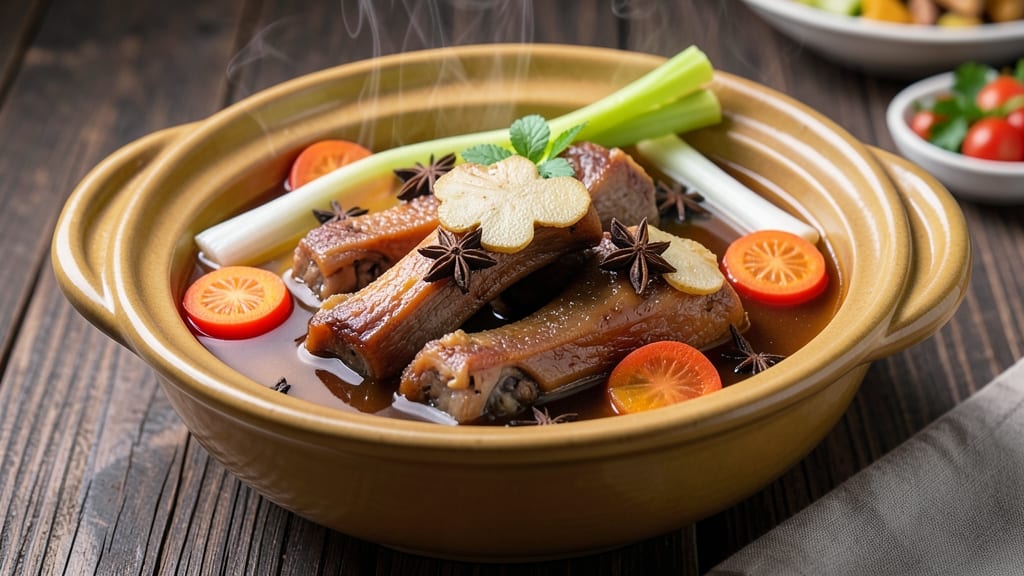
This Chinese pork bone broth recipe delivers the deep umami richness that makes traditional dishes like congee and noodle soups unforgettable. 🔥 I’ve perfected it over years of working with heritage pigs, where the slow simmer transforms tough bones into a velvety, collagen-rich elixir packed with healing properties.
The key lies in balancing aromatics—star anise, cinnamon, and ginger—while controlling the simmer to extract maximum flavor without bitterness.
The process is straightforward but requires patience: 8 hours of gentle simmering at 180°F (82°C) ensures a clear, golden broth with a texture that coats the back of your throat. I use a pressure cooker for efficiency, but a slow cooker or Dutch oven works just as well.
The result is a broth so deeply flavorful it elevates any dish—think steamed dumplings, braised pork, or even a simple bowl of rice.
What sets this recipe apart is the attention to detail: skimming fat regularly, adding aromatics at precise times, and finishing with a splash of Shaoxing wine for brightness. The broth is versatile enough for everyday meals but special enough to serve at gatherings.
Store it in the fridge for up to 5 days or freeze for months—its rich flavor only intensifies with time.
For presentation, garnish with fresh cilantro and scallions, or serve it steaming hot with a side of soft rice. This isn’t just broth; it’s a labor of love that connects you to generations of Chinese home cooks who’ve used it as both nourishment and medicine.
Let’s get started on making yours.
Ingredients for chinese pork bone broth
Heritage pork bones and aromatic spices transform into velvety broth with 8 hours of simmering.
| Ingredient | Amount | Notes |
|---|---|---|
| Pork Bones 🍖 | 4 lb | Heritage pork, cut into chunks |
| Yellow Onions 🧅 | 2 whole | Peeled, halved lengthwise |
| Carrots 🥕 | 4 whole | Scrubbed, cut into chunks |
| Celery Stalks 🥬 | 4 whole | Cut into 2-inch pieces |
| Fresh Ginger 🌿 | ½ inch | Sliced into 3 thin pieces |
| Star Anise Pods 🌶️ | 4 whole | Whole pods for infusion |
| Cinnamon Sticks 🌿 | 2 whole | 2-inch pieces for aroma |
| Shaoxing Wine 🍷 | ½ cup | Dry Chinese cooking wine |
| Rock Sugar 🍬 | ¼ cup | Or brown sugar substitute |
| Fresh Cilantro 🌿 | ¼ cup | Chopped, for garnish |
| Green Onions 🧅 | ¼ cup | Sliced, for garnish |
| Salt 🧂 | 1 tsp | Kosher or sea salt |
| Black Peppercorns 🌶️ | 10 whole | Crushed for depth |
The bones are everything—heritage pork gives that unmatched depth. Look for marrow-rich bones at your local butcher or Asian market. I usually ask for a mix of knuckle and foot bones—they’ve got the best collagen. Costco often has good deals on pork bones, but if you’re buying fresh, check for a vibrant red color and minimal bone exposure. The ginger should be fresh (no powdered substitutes) and about the size of a small lemon. Penzeys or bulk bins at Whole Foods are great for star anise and cinnamon sticks if you want to stock up.
No Shaoxing wine? Dry sherry or rice wine works in a pinch, but it’ll taste different. Rock sugar is key—it dissolves slowly, adding sweetness without cloying. Brown sugar is fine if you’re in a rush, but traditional cooks swear by rock sugar. The carrots and celery can be pre-cut and frozen—just thaw before adding. For extra richness, add a splash of fish sauce at the end (about 1 tsp), but skip it if you want to keep it vegetarian. The cilantro and green onions are purely for garnish, so use whatever you’ve got on hand—basil or parsley work too.
This broth gets better with time. Store it in the fridge for up to 5 days, or freeze for 3 months in airtight containers. I like to portion it into 1-cup servings so I can grab what I need. The fat will solidify on top—just scoop it off before reheating. For maximum flavor, let it come to a full simmer before serving. It’s worth the wait—every spoonful tastes like home.
Why You'll Love This Recipe
- No-Chop Start: I swear by the "dirty onion" trick—just peel and drop whole yellow onions into the pot. The skin adds depth, and you save 10 minutes of chopping while the broth builds its rich, golden hue. (Between us, my kids still think I’m magic when I pull this off.)
- Umami Bomb: That first sip? Pure satisfaction. The pork bones melt into gelatinous richness, while the ginger and celery stalks (charred just a little) layer in warmth and earthiness. It’s the kind of flavor that makes you pause mid-slurp—like a hug in liquid form.
- Weeknight Swiss Army: This isn’t just soup starter. Use it to braise tough cuts of meat, deglaze pans for stir-fries, or even turn into a quick dumpling broth. I keep a batch in the fridge for emergencies—like when the takeout menu gets boring or the kids demand "real food" at 6 p.m.
- Budget Goldmine: Pork bones are cheap, and this broth stretches for days. Freeze it in ice cube trays for single-serving portions, or simmer it down into a concentrated paste for sauces. Honestly, I’ve made this so often, I’ve convinced myself I’m secretly a frugal genius.
Step-by-step instructions for Chinese pork bone broth
Here's how to extract maximum flavor from pork bones in just 8 hours.
🔥 Step 1: Parboil and Blanch the Pork Bones
Fill a large stockpot with 8 quarts cold water and add the 4 lb pork bones. Bring to a boil over high heat and cook for 10 minutes—this removes impurities and surface blood. You'll see scum rise to the top; skim this off with a fine-mesh skimmer or ladle.
Drain the bones and return them to the clean pot. Cover with 6 quarts fresh cold water and bring back to a boil. Reduce heat to medium-low and simmer for 30 minutes. This second blanch extracts more collagen and prepares the bones for the long cook. The water should remain clear with no floating debris.
🍳 Step 2: Build the Aromatic Base
Add the halved yellow onions, carrot chunks, celery stalks, ginger slices, star anise pods, and cinnamon sticks to the pot. Pour in the 0.5 cup Shaoxing wine and sprinkle with the 1 tsp salt and crushed 10 black peppercorns. Stir gently to combine all ingredients.
Bring the mixture back to a gentle simmer over medium-low heat. Here's the thing—you want just enough heat to maintain a slow bubble, not a rolling boil. This preserves the delicate flavors of your aromatics while extracting their essence into the broth. Let it simmer uncovered for 45 minutes to develop that deep aromatic base.
🥘 Step 3: Simmer Low and Slow for Richness
After 45 minutes, add the 0.25 cup rock sugar and stir until dissolved. This sweetener balances the umami and enhances the pork's natural sweetness. Reduce heat to low and maintain a temperature between 180-190°F—this is crucial for collagen extraction without overcooking the bones.
Simmer uncovered for 6 hours, skimming any foam that rises to the surface. The broth should reduce slightly, becoming more concentrated. You'll know it's working when the bones become tender enough to separate easily with a spoon. This long cook time transforms tough connective tissue into gelatin, creating that signature silky texture.
⏰ Step 4: Finish and Strain
When the pork bones are fork-tender (about 6-7 hours total cooking time), remove the pot from heat. Let the broth sit for 15 minutes to allow any settled particles to sink. Line a fine-mesh strainer with cheesecloth or a clean kitchen towel and strain the broth into a large bowl or clean pot.
Discard the solids and return the strained broth to the pot. Skim off any remaining fat if you prefer a leaner broth, or leave it for extra richness. The broth should now be clear with a deep amber color and rich, meaty aroma. Taste and adjust seasoning if needed—you might want to add a pinch more salt to enhance the flavors.
🍽️ Step 5: Serve and Garnish
Divide the warm broth into serving bowls. Garnish each portion with 1 tablespoon chopped fresh cilantro and 1 tablespoon sliced green onions. These fresh herbs add a bright contrast to the deep, savory broth. Serve immediately with steamed rice or noodles for a comforting meal.
For best results, store any leftovers in airtight containers in the refrigerator for up to 5 days or freeze for up to 3 months. The broth will only continue to develop more complex flavors as it ages. This rich, umami-packed broth is the foundation of countless Chinese dishes—use it in stir-fries, soups, or simply enjoy it as-is with a sprinkle of chili oil.
Pro Tips For Making Chinese Pork Bone Broth
- Char the Bones First: I learned this the hard way—skipping the char step means a weaker broth. Use a dry skillet or grill to blacken the bones (about 3-5 minutes per side) before simmering. That crust unlocks deeper flavors, and trust me, your broth will taste richer for it.
- Slice Ginger Thin: Sounds simple, but I used to chunk it like a rookie. Thin slices (1/8-inch or less) infuse better without turning the broth bitter. Bonus: Toss them in at the 1-hour mark for a bright finish—no need to strain them out.
- Simmer Low and Slow: After burning three batches, I finally figured out: a gentle simmer (just small bubbles, not a rolling boil) keeps the broth clear and collagen-rich. Cover the pot and let it hum along for at least 8 hours—yes, even if you’re impatient like me.
- Prep Onions Properly: Peel and quarter the onions, then leave the skin on one half of each quarter. The skin adds color and extra flavor without overpowering the broth. I skip this when I’m lazy, but the dish is noticeably better when I don’t.
Dietary considerations for chinese pork bone broth
Gluten-Free Adaptations
This broth is naturally gluten-free, but always double-check your ingredients—some brands of rock sugar or Shaoxing wine may contain trace gluten. I use King Arthur gluten-free rock sugar and Trader Joe’s gluten-free Shaoxing wine substitute to ensure safety.
The broth’s base ingredients (pork bones, vegetables, spices) are inherently gluten-free, so no substitutions are needed beyond verifying your wine and sugar. 🌱
Dairy-Free Note
Since this recipe doesn’t contain dairy, it’s automatically safe for those avoiding lactose or casein. The rich umami comes entirely from pork collagen and aromatics, making it perfect for dairy-free diets.
I’ve served this broth to friends with dairy sensitivities, and they always comment on how comforting it is without any heaviness. The only potential concern is if you’re using a store-bought broth base, but we’re making this from scratch! 💪
Low-Sodium Options
To reduce sodium, skip the added salt entirely and rely on the natural flavor of the pork and aromatics. If you need some saltiness, use low-sodium soy sauce (½ tsp) or Kelp seasoning (¼ tsp) instead of table salt.
I’ve found that the broth develops enough depth from the long simmer that minimal seasoning works beautifully. For extra umami without sodium, add 1 tsp fish sauce at the end—it’s a secret weapon in many Chinese kitchens. ✨
Vegetarian Substitutes
For a vegetarian version, replace pork bones with 4 lbs of mushrooms (shiitake or oyster work best) and 1 lb of kombu seaweed (soaked overnight). Add 2 tbsp soy sauce and 1 tbsp miso paste for umami depth.
The simmering time reduces to 4-5 hours since mushrooms release flavor faster. I’ve made this version for vegetarian friends, and while it lacks the gelatinous richness of pork broth, it still delivers incredible depth. 🌿
Allergen Considerations
This broth is typically safe for most allergens, but watch for these potential triggers: shellfish (if using fish sauce), soy (in Shaoxing wine or soy sauce), and sesame (if garnishing with sesame oil). For nut allergies, all ingredients are nut-free, but always check labels on wine or sugar substitutes.
I keep a separate set of utensils for nut-free cooking to avoid cross-contamination. The broth itself is a great base for allergy-friendly meals—just verify each ingredient’s source. 🛡️
Keto-Friendly Boost
This broth is already keto-friendly with its high collagen content and low carb vegetables. To enhance it further, add 1 tbsp apple cider vinegar (for extra flavor without carbs) and 1 tsp liquid smoke (for a BBQ-inspired twist).
The natural fats from pork bones make this an excellent choice for low-carb diets. I’ve used it as a base for keto-friendly ramen by adding shirataki noodles and bacon bits. The result is a satisfying, low-carb comfort food. 🥓
Nutrition facts
Frequently asked questions
Why does Chinese pork bone broth need such a long cooking time?
Chinese bone broth requires 8 hours of simmering to break down collagen and connective tissue into gelatin, creating that signature silky texture. The low-and-slow method at 180-190°F extracts maximum flavor while preventing bitterness. This traditional technique builds complex umami layers that store-bought broths can't match.
Can I use a pressure cooker to speed up the process?
Yes! A pressure cooker reduces the time to about 3-4 hours while still delivering deep flavor. Use the high-pressure setting for 2 hours, then switch to low pressure for another 1-2 hours. Just monitor the broth closely—it may need more skimming to remove impurities that rise faster under pressure.
What's the best way to store leftover broth?
Store in airtight containers in the fridge for up to 5 days or freeze for 3 months. The fat will solidify on top—simply scoop it off before reheating. For long-term storage, portion into 1-cup servings to grab exactly what you need. The flavor actually improves over time as the collagen continues to break down.
How do I know when the pork bones are done?
The bones are ready when they're fork-tender and separate easily with a spoon (about 6-7 hours total). The broth should be deep amber with a rich aroma. If you're unsure, test one bone—if it crumbles easily, the broth is perfect. Overcooking can make it bitter, so timing is key.
What can I do if my broth tastes too bitter?
Bitterness usually means the bones were overcooked or impurities weren't skimmed properly. To fix it, strain the broth again through cheesecloth, then simmer with 1 tbsp apple cider vinegar and 1 tsp sugar for 10 minutes to balance flavors. For future batches, always skim frequently and avoid boiling vigorously.