
Main Courses
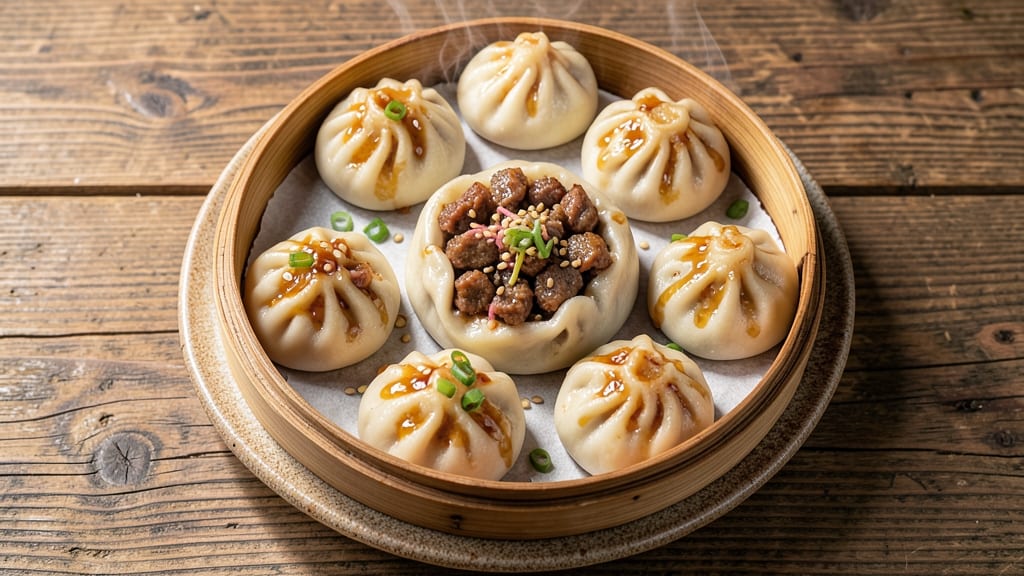
This Chinese steamed pork buns baozi recipe delivers the perfect balance of fluffy, pillowy dough and juicy, seasoned pork that makes every bite irresistible. The secret lies in a simple yet precise dough recipe that develops gluten gradually, while the filling combines tender pork with aromatic spices for maximum flavor.
Unlike many versions that rely on shortcuts, this method ensures authentic texture and taste.
Mastering baozi requires patience—the dough must rest for at least 2 hours to develop that signature softness, while the pork filling needs to be finely chopped and seasoned just right to stay moist during steaming. The key technique?
Sealing the edges tightly to prevent leaks, a skill that comes with practice but results in beautifully shaped buns that steam up perfectly. This recipe includes both traditional methods and modern adaptations for gluten-free dough.
By the time you finish steaming, you'll have golden-brown buns with crisp edges and tender interiors, filled with juicy pork that practically melts in your mouth.
The aroma alone will have everyone gathering around the table, and the contrast of soft dough with savory filling creates a texture that's impossible to resist. Whether you're making them for a family meal or a special occasion, these baozi are sure to impress.
Ready in about 3 hours (including prep and resting time), this recipe is perfect for weekend cooking projects. The dough can be made ahead and refrigerated, while the filling can be prepared in advance, making it a practical yet rewarding dish for any home cook.
Let's get started on creating your own batch of these delicious steamed pork buns.
Ingredients for chinese steamed pork buns baozi
Twelve ingredients transform into twelve golden baozi with tender dough and juicy pork filling.
| Ingredient | Amount | Notes |
|---|---|---|
| Ground Pork Shoulder 🥩 | 1 ½ lb | Finely chopped, not pre-ground |
| All-Purpose Flour 🌾 | 4 cups | Plus 2 tbsp for dusting |
| Instant Yeast 🍞 | ½ tsp | Active dry works too |
| Granulated Sugar 🍚 | 2 tbsp | For dough activation |
| Salt 🧂 | 1 ½ tsp | Diamond Crystal preferred |
| Vegetable Oil 🫒 | ¼ cup | For dough enrichment |
| Garlic Cloves 🧄 | 4 cloves | Minced for filling |
| Fresh Ginger Root 🌿 | 1 tbsp | Finely grated, fresh preferred |
| Soy Sauce 🍶 | 2 tbsp | Light or dark variety |
| Shaoxing Wine 🍷 | 1 tbsp | Substitute with dry sherry |
| Sesame Oil 🥜 | 1 tsp | Toasted for aroma |
| White Pepper 🌶️ | ½ tsp | Freshly ground preferred |
| Green Onions 🧅 | 2 whole | Chopped for garnish |
| Water 💧 | 1 ¼ cups | Warm, not hot |
The pork shoulder is non-negotiable—ground fresh at the butcher counter gives the best texture. Costco or local Asian markets often sell it pre-ground, but if you're chopping yourself, pulse it twice in the food processor for even consistency. Fresh ginger and garlic are worth the extra minute—pre-minced jars lose potency fast. For the dough, King Arthur flour yields the best results, but any all-purpose works. The yeast needs to be fresh; if your packet's past its expiration, grab a new one—old yeast means flat buns.
No Shaoxing wine? Dry sherry or even a splash of apple cider vinegar keeps the acidity. Swapping out sesame oil? Toasted peanut oil works in a pinch, though the flavor shifts slightly. The dough gets sticky—don't fight it. Wet hands and a lightly floured surface are your friends here. For gluten-free dough, substitute half the flour with a 1:1 GF blend, but expect slightly denser buns. The filling can be prepped a day ahead; just store it covered in the fridge until ready to assemble.
Dough keeps 2 days refrigerated wrapped in plastic, or 3 months frozen in an airtight container. The filling stays fresh 2 days in the fridge. For steaming, use a bamboo basket lined with parchment paper—no sticking guaranteed. If you're making these ahead, steam them, then reheat in a steamer for 5 minutes before serving. The aroma alone will have your kitchen smelling like a dim sum house—worth every minute.
Why You'll Love This Recipe
- No-Knead Magic: I swear by this dough trick—just mix the flour, yeast, sugar, and a pinch of salt, then let it rise while I prep the filling. No standing at the counter, no overworking the dough, and it still turns out light as air. (Yes, even on a Tuesday night.)
- Porky Perfection: That ground pork shoulder? It’s the star—juicy, savory, and packed with flavor from a quick sear and simple seasoning. The filling stays moist and rich, wrapped in that pillowy dough that’s just crisp enough when steamed.
- Party in a Bun: Between us, these are my go-to for potlucks, lunchboxes, or feeding a crowd. They reheat beautifully, freeze like a dream, and honestly? Nobody can resist the first bite. My kid’s soccer team’s favorite, no joke.
- Budget-Friendly Staple: A pound of pork shoulder and a bag of flour stretch for weeks—I make a double batch, freeze half, and pull them out whenever. Filling, satisfying, and way cheaper than takeout. My wallet thanks me every time.
Step-by-step instructions for Chinese steamed pork buns baozi
Here's the method for achieving tender, juicy baozi with a perfectly fluffy exterior.
Prepare the Juicy Pork Filling
In a large bowl, combine the 1.5 lb ground pork shoulder, 2 tbsp soy sauce, 1 tbsp Shaoxing wine, 1 tbsp finely grated fresh ginger root, 4 minced garlic cloves, 0.5 tsp white pepper, and 1 tsp toasted sesame oil. Mix thoroughly with your hands until all ingredients are evenly distributed.
This combination of aromatics and seasonings creates a flavorful base for the filling. The Shaoxing wine adds depth while the ginger and garlic provide that essential aromatic punch. Don't skip the sesame oil—it contributes a nutty aroma that's characteristic of authentic baozi.
Make the Fluffy Dough
In a separate large bowl, whisk together the 4 cups all-purpose flour, 0.5 tsp instant yeast, 2 tbsp granulated sugar, and 1.5 tsp salt. Gradually add the 1.25 cups warm water (about 105°F) while stirring with chopsticks until a shaggy dough forms.
Once the dough comes together, turn it out onto a lightly floured surface and knead for about 8-10 minutes until smooth and elastic. The dough should be slightly tacky but not sticky. If it's too dry, add 1 tsp water at a time; if too sticky, add 1 tbsp flour. This kneading develops the gluten needed for that signature baozi texture.
Create the Baozi Dough Balls
Divide the dough into 12 equal portions (about 2 oz each) and roll each into a smooth ball. Flatten each ball into a 3-inch circle and place about 1 tbsp of the pork filling in the center of each circle. Fold the dough over the filling and pinch the edges firmly to seal completely, creating a tight pouch.
Roll each sealed baozi into a smooth ball again, using about 2 tbsp flour to prevent sticking. Arrange the baozi on a parchment-lined baking sheet, leaving about 1 inch between each. Cover with a damp towel and let rise in a warm place for 1-1.5 hours until almost doubled in size.
Steam the Baozi to Perfection
Set up a steamer by filling a large pot with 2-3 inches of water and bringing it to a rolling boil. Place a bamboo steamer basket or heatproof plate in the pot and arrange the risen baozi in a single layer, leaving space between them. Steam over medium-high heat for 15-20 minutes until the baozi are fully cooked and the bottoms are golden brown.
You'll know they're done when the baozi sound hollow when tapped gently on the bottom. The filling should be juicy and the dough should be soft yet slightly springy to the touch. Remove the baozi carefully with a spatula and transfer to a serving platter. Garnish with chopped green onions for freshness and visual appeal.
Pro Tips For Making Chinese Steamed Pork Buns Baozi
- STEAM ON HIGH: The first 10 minutes of steaming are where baozi make or break—don’t skimp on heat. If your steamer isn’t boiling hard enough, the buns will turn out dense and gummy instead of light and airy. I learned this the hard way after making a batch that tasted like dumplings.
- REST THE PORK: After mixing the pork filling, let it sit covered in the fridge for at least 30 minutes. This lets the flavors meld and prevents the filling from leaking out when you shape the buns. (Yes, even if you’re impatient like me.)
- SKIP THE OVER-KNEADING: The dough for baozi is delicate—knead just until it’s smooth and springs back when pressed, about 8-10 minutes. Overwork it, and the gluten tightens up, making the buns tough. My grandmother swore by this, and she was right: less is more.
- USE COLD WATER FOR DOUGH: Mix the yeast with warm water, but keep the rest of the dough ingredients cold. The contrast in temperature gives the gluten time to develop properly without overproofing. I was skeptical until I tried it—now I never skip it.
Pro cooking tips for perfect results
Dough Development Key
The secret to fluffy baozi lies in proper dough development. Knead the dough for 8-10 minutes until it becomes smooth and elastic—this builds the gluten network that traps steam during cooking.
I find using a stand mixer with a dough hook makes this easier, but hand-kneading works too if you take your time. The dough should feel slightly tacky but not sticky; if it's too dry, add 1 tsp water at a time. 💪
Sealing Technique
Properly sealing the baozi is crucial to prevent filling leaks during steaming. After placing the filling in the center, fold the dough over and pinch the edges firmly with your fingers, creating a tight seal. I like to roll the sealed baozi between my palms to ensure a smooth surface.
For extra security, press the edges with a little flour to create a natural barrier. This step takes practice but becomes second nature after a few batches.
Steaming Temperature
Maintaining consistent steaming temperature is key to perfect baozi. Keep the water at a gentle boil—too much steam pressure can make the buns dense. I recommend using a bamboo steamer lined with parchment paper for even heat distribution.
The ideal steaming time is 15-20 minutes at medium-high heat, but always check for doneness by tapping the bottom—they should sound hollow when ready. 🌡️
Rising Conditions
Creating the right rising environment makes all the difference. Place your baozi in a warm spot—your oven with the light on works perfectly—or use a proofing box set to 80°F. Cover them with a damp towel to maintain moisture.
The dough should nearly double in size in 1-1.5 hours. If your kitchen is cold, extend the rising time slightly to ensure proper fermentation for that signature fluffy texture.
Filling Consistency
The pork filling should be finely chopped but not minced too small—pea-sized pieces work best. Overworking the filling can make it dense, so mix just until combined. I like to let the filling rest for 10 minutes after mixing to allow the flavors to meld before assembling the baozi.
This resting time also helps prevent leaks during steaming by letting the seasonings distribute evenly throughout the pork. ✨
Equipment Upgrades
While traditional bamboo steamers work perfectly, I've found a few upgrades that make the process easier. A stainless steel steamer basket lasts longer and cleans more easily than bamboo, while a digital thermometer helps monitor water temperature precisely.
For shaping, I keep a small bowl of flour nearby to prevent sticking. These small investments save time and frustration during the process, especially when making multiple batches. 💡
Nutrition facts
Frequently asked questions
Can I use pre-made dough for baozi?
While it's possible, pre-made dough won't give you that signature fluffy texture. For authentic baozi, homemade dough is key—it develops proper gluten structure when kneaded and rested. If you're short on time, you can use store-bought pizza dough as a substitute, but expect slightly denser buns. For best results, make the dough fresh following the recipe's kneading and resting instructions.
What if my baozi filling leaks during steaming? Leaks usually happen when the edges aren't sealed tightly enough. To fix this, press the sealed edges with your finger to create a stronger barrier, or use a little extra flour to reinforce the seal. For next time,
How do I store leftover baozi?
Store them in an airtight container at room temperature for up to 2 days, or refrigerate for 4 days. For longer storage, freeze them for up to 3 months. To reheat, steam for 5-7 minutes or microwave for 20-30 seconds with a damp paper towel to restore moisture. The texture will be slightly firmer after freezing, but steaming brings back that soft, pillowy feel.
Can I make baozi without Shaoxing wine?
Shaoxing wine adds depth, but you can substitute with 1 tbsp dry sherry or even 1 tsp apple cider vinegar for acidity. For a non-alcoholic option, use 1 tbsp chicken or vegetable broth—it won't replicate the wine's flavor exactly, but your baozi will still taste delicious. Just reduce the soy sauce slightly if using broth to balance the seasoning.
Why did my baozi turn out dense instead of fluffy?
Dense baozi usually mean the dough didn't develop enough gluten or didn't rise properly. Check these common issues: under-kneading (aim for 8-10 minutes of kneading), using cold water (should be 105°F), or not letting the dough rest long enough (at least 2 hours). Also, ensure your yeast is fresh—old yeast won't activate properly, leading to flat buns.