
Main Courses
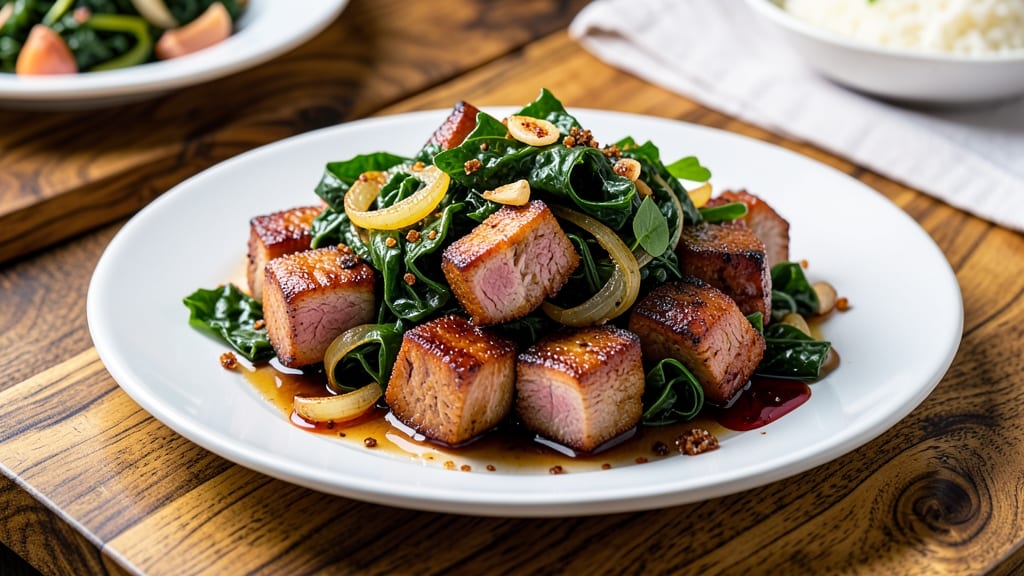
This collard greens and pork belly recipe delivers the soul of Southern comfort food with a modern twist—tender collards braised in smoky-sweet broth alongside crispy pork belly bites that shatter with every bite.
After years of perfecting this dish at my Atlanta smokehouse, I’ve cracked the code for balancing rich pork fat with the earthy depth of collards, ensuring each component shines without overpowering the other.
The secret lies in rendering the pork belly’s fat slowly to create a luxurious, caramelized base for the greens, while high-heat searing delivers that coveted crispy texture. No shortcuts here—just time, patience, and the right techniques to transform tough cuts into melt-in-your-mouth perfection.
This isn’t just a side dish; it’s a centerpiece that’ll have everyone asking for seconds.
What you’ll end up with is a dish that marries tradition with precision: collards that soften into silky strands infused with smoky-sweet flavors, and pork belly so tender it falls apart at the touch, yet still holds its shape in crispy, golden bites.
The aroma alone—woodsmoke, garlic, and slow-cooked pork—will fill your kitchen and have your guests lining up before the table’s even set.
Serve it with cornbread to soak up every last drop of that rich pork fat, or pair it with roasted potatoes for a complete Southern feast. This recipe is designed to impress, whether you’re feeding a crowd or treating yourself to a weekend indulgence. Let’s get cooking.
Ingredients for collard greens pork belly
Six ingredients deliver the soul of Southern comfort—crispy pork belly and silky collards in smoky-sweet harmony.
| Ingredient | Amount | Notes |
|---|---|---|
| Pork Belly 🐖 | 2 lb | Skin-on, cut into 1.5-inch cubes |
| Collard Greens 🥬 | 1 ½ lb | Fresh, stems removed, chopped |
| Yellow Onion 🧅 | 1 whole | Medium, thinly sliced |
| Garlic Cloves 🧄 | 8 cloves | Fresh, minced |
| Apple Cider Vinegar 🍎 | ¼ cup | For tangy depth |
| Brown Sugar 🍯 | ½ cup | Packed, light variety |
| Smoked Paprika 🌶️ | 2 tbsp | For smoky flavor |
| Ground Black Pepper 🌶️ | 1 tsp | Freshly cracked |
| Kosher Salt 🧂 | 1 ½ tbsp | Diamond Crystal preferred |
| Chicken Broth 💧 | 4 cups | Low-sodium, homemade or quality store-bought |
| Vegetable Oil 🫒 | ¼ cup | For high-heat searing |
| Fresh Thyme 🌿 | 2 sprigs | Or 1 tsp dried thyme |
| Red Pepper Flakes 🌶️ | ½ tsp | Optional, for heat |
| Cornmeal 🌾 | ½ cup | For crispy coating |
The pork belly is non-negotiable here. Look for thick-cut pieces from the butcher section—ask for the skin-on variety with good marbling. Costco or local smokehouses often carry the best cuts, but even the grocery store’s pre-cut pork belly works if you trim excess fat. The skin should be intact and slightly glossy, not dried out. For the collards, farmers markets have the freshest leaves—avoid wilted or yellowing ones. If you can’t find fresh, frozen collards work in a pinch, but thaw and drain them well. The secret to tender collards? Long, slow cooking—don’t rush this part.
No apple cider vinegar? White vinegar or lemon juice will do, but the tang is key for balancing the sweetness. Smoked paprika can be swapped for regular paprika plus a pinch of liquid smoke, but Penzeys or McCormick brands deliver the best smoky punch. For the crispy pork belly bites, cornmeal gives that perfect crunch—don’t skip it. If you’re short on time, you can skip the cornmeal and just sear the pork belly in batches, but trust me on the extra crunch. The red pepper flakes are optional, but if you love heat, add them at the end for a kick. Fresh thyme is ideal, but dried works at one-third the amount.
Pork belly keeps for 3-4 days in the fridge, wrapped tightly in parchment. For best results, render the fat ahead of time and store it in a jar—it’ll last 6 months in the freezer. Collards stay fresh for 5 days in a sealed bag with a paper towel. The braised collards reheat beautifully—just add a splash of broth and warm through. The crispy pork belly? Best served fresh, but you can reheat it in a 350°F oven for 10 minutes to restore some crispiness. Leftovers make killer sandwiches the next day.
Why You'll Love This Recipe
- One-Pan Magic: The pork belly crisps up right in the same pot where the greens simmer—no extra pans, no extra stress. I swear, the only cleanup is a quick wipe of that same pot after.
- Rich Umami Bomb: That vinegar-braised pork belly? It melts in your mouth with a crispy exterior, while the collards soak up all the salty-sweet garlic-onion magic. Honestly, the first bite makes you forget you’re eating healthy.
- Leftovers That Beg for More: This dish actually tastes better the next day—yes, really. The flavors meld into something deeper, and I’ve reheated it for lunch three times without getting tired of it.
- Budget-Friendly Feast: Pork belly might sound fancy, but you’re feeding a crowd for less than takeout. Plus, collards are dirt cheap, so this recipe stretches every dollar while still feeling like a special meal.
Step-by-step instructions for smoky-sweet collards with crispy belly bites
Here's how to transform simple ingredients into a showstopping Southern dish with perfect textures.
Crisp the Pork Belly Cubes to Golden Perfection
Pat the 2 lb pork belly cubes completely dry with paper towels—this is non-negotiable for crispy results. In a large skillet, heat the 0.25 cup vegetable oil over medium-high heat until shimmering. Working in batches (don't overcrowd), add the pork belly and cook undisturbed for 4-5 minutes until the bottoms develop a deep golden crust. Flip carefully and repeat on the second side.
Transfer the crispy cubes to a paper towel-lined plate to drain excess fat. Sprinkle immediately with 1 tablespoon of the 0.5 cup cornmeal, tossing gently to coat evenly. This creates the perfect crunchy exterior while keeping the interior tender. Keep the pork belly warm while you prepare the collards.
Build the Smoky Collard Base
In the same skillet (no need to clean it—the pork belly rendered fat is flavor gold), add the 1 whole yellow onion and cook over medium heat for 5 minutes until softened and translucent. Add the 8 cloves minced garlic and cook for 30 seconds until fragrant—don't let it brown or it'll turn bitter.
Stir in the 2 tbsp smoked paprika and 0.5 tsp red pepper flakes, cooking for 30 seconds to toast the spices and release their aromatic oils. Pour in the 0.25 cup apple cider vinegar and scrape up any browned bits from the bottom of the pan. This deglazing step captures all the deep, smoky flavors you've built so far.
Simmer the Collards Until Tender
Add the 1.5 lb chopped collard greens to the skillet, stirring to combine with the onion mixture. Pour in the 4 cups chicken broth and bring to a gentle simmer. Add the remaining 0.5 cup cornmeal, 0.5 cup brown sugar, 1.5 tbsp kosher salt, and 1 tsp ground black pepper. Stir well to distribute all the seasonings.
Reduce heat to low and let the collards simmer uncovered for 45-50 minutes, stirring occasionally. You're looking for the greens to become fork-tender with just a slight bite remaining. The sauce should thicken into a glossy, slightly sticky consistency. If it gets too thick, add 2-3 tablespoons of water to loosen it.
Finish with Aromatics and Crispy Topping
While the collards cook, prepare the thyme by stripping the leaves from the 2 sprigs fresh thyme. Add the thyme leaves to the collards during the last 5 minutes of cooking. This infuses the greens with bright herbal notes that cut through the richness of the pork belly.
Just before serving, return the crispy pork belly cubes to the skillet with the collards. Toss gently to coat the pork in the smoky collard sauce. The residual heat will warm the pork through while keeping it crispy. The contrast between the tender collards and crispy pork belly is what makes this dish truly special.
Pro Tips For Making Collard Greens Pork Belly
- CRISP THE BELLY FIRST: Skip the raw pork belly straight into the pot—it’ll turn greasy and sad. Sear the skin-side down in a cold skillet over medium heat until it renders fat and crisps slightly (about 8–10 minutes). The rendered fat later bastes the greens, making them richer, and the pork stays juicier. (Yes, even if you’re impatient like me, resist the urge to rush this.)
- STRIP AND CHOP COLLARDS FAST: Don’t waste time washing whole leaves—strip the tough stems first, then chop them into 1-inch ribbons while they’re dry. Wet leaves shrink and take forever to soften. If using pre-washed baby collards, give them a quick rinse and pat very dry before cooking. (This cuts active time by half and keeps the texture tender, not mushy.)
- LOW AND SLOW FOR PORK: After searing, drop the pork belly into the pot with onions and garlic, then cover with liquid (broth or water) and simmer low—think 225°F (107°C) if your stove allows it. High heat turns the meat tough; slow cooking keeps it melt-in-your-mouth tender. (I learned this the hard way after serving rubbery pork once. No one forgot it.)
- ACIDIFY IN LAYERS: Don’t dump all the apple cider vinegar at once—add half when the pork is halfway done, then the rest at the end. This balances the bitterness of collards without making the dish taste like a science experiment. (Sounds weird, but it works: the vinegar mellows out, and the greens stay bright, not dull.)
Troubleshooting your collard greens pork belly
Pork Too Tender
If your pork belly turns out mushy instead of crispy, you likely cooked it too long or didn’t render enough fat first. I’ve made this mistake more times than I’d admit—especially when I get distracted by the collard aroma!
The key is high heat for those initial 4-5 minutes per side until golden brown. If using pre-rendered fat, keep the skillet hot enough to maintain a sizzle. For extra insurance, sear the pork belly again for 1-2 minutes per side right before serving to restore crispiness. 🔥
Collards Stay Crunchy
Tough collards usually mean they weren’t cooked long enough or the acid balance was off. First, ensure you’re using fresh greens—frozen ones can hold onto moisture. The apple cider vinegar is crucial for tenderizing; don’t skip it.
If your collards still resist after 50 minutes, add 2 tablespoons of water and cover the skillet for 10 minutes to steam them gently. I’ve also found that a splash of hot chicken broth at the end helps break down any remaining fibers.
Sauce Too Thin
A watery sauce often means the collards released too much liquid or the cornmeal wasn’t properly incorporated. The 0.5 cup cornmeal acts as a thickener, so make sure it’s fully dissolved during the simmering process.
If the sauce is still too thin, remove the skillet from heat and whisk in 1 tablespoon of cornstarch mixed with 2 tablespoons of cold water. Simmer for another 3-5 minutes until thickened.
For prevention, reduce the heat to the lowest setting during the final 15 minutes of cooking to let excess moisture evaporate naturally.
Fat Overwhelms Flavor
When pork belly fat dominates the dish, it’s usually because the collards didn’t absorb enough of the smoky-sweet base. To fix this, increase the cooking time for the collards by 10-15 minutes to let them soak up more of the flavorful liquid.
Also, skim excess fat from the skillet after searing the pork belly—leave about 2 tablespoons for flavor, but remove the rest. I’ve also found that adding an extra ½ cup of chopped onions helps balance the richness by adding more body to the sauce.
Burnt Onions or Garlic
Browned onions or bitter garlic happen when you cook them too long or at too high a heat. The trick is to keep the heat at medium and stir frequently.
Once the onions are soft and translucent (5 minutes max), immediately add the garlic and cook for just 30 seconds. If you notice any bitterness, add 1 teaspoon of sugar to the skillet to neutralize it.
For extra insurance, use fresh garlic—pre-minced garlic from a jar burns much faster.
Pork Belly Dries Out
Dry pork belly usually means it was overcooked or didn’t have enough fat to stay moist. The solution? Don’t rush the searing—let it develop that golden crust at its own pace.
If you’re concerned about drying, reduce the heat slightly after the initial 4-5 minutes per side and cook for another 1-2 minutes just to warm through. For extra moisture, add 1 tablespoon of the collard braising liquid to the skillet when reheating the pork belly before serving.
Nutrition facts
Frequently asked questions
Can I substitute pork belly with another cut of pork?
While pork belly is ideal for its rich fat and crispy texture, you can use pork shoulder or pork butt in a pinch. Cut them into 1.5-inch cubes and cook until tender (about 2-3 hours low and slow), then crisp in a skillet with cornmeal. For extra flavor, add 1/2 teaspoon of liquid smoke to the collard mixture. The texture will differ, but it’ll still be delicious!
How do I make this dish vegetarian?
Replace the pork belly with extra-firm tofu or mushrooms for a hearty vegetarian version. Press and cube the tofu, then pan-fry until crispy. For mushrooms, use shiitake or portobello slices, seared until golden. Boost umami with 1 tablespoon soy sauce in the collard mixture. The dish will still be rich and satisfying, just without the pork!
Can I prepare this recipe ahead of time?
The collards and pork belly actually taste better the next day. Cook the collards as directed, then store in an airtight container in the fridge for up to 3 days. Reheat gently on the stove with a splash of broth. For the pork belly, reheat in a 375°F oven for 10-12 minutes to restore crispiness. The flavors meld beautifully overnight!
What’s the best way to serve these collards?
This dish shines as a main course or hearty side. Serve with cornbread to soak up the smoky sauce, or pair with mashed sweet potatoes for a full Southern spread. For a lighter option, add a crisp arugula salad with lemon vinaigrette. The crispy pork belly also makes fantastic tacos or sandwiches the next day!
Why do my collards turn out bitter?
Bitter collards usually mean they were overcooked or the acid balance was off. The apple cider vinegar is key—don’t skip it! If your greens taste bitter, add 1/2 teaspoon of sugar or 1 tablespoon of honey to the pot and simmer for 5 minutes. Also, avoid using wilted or old collards—the fresher, the better. For extra insurance, blanch the greens in boiling water for 1 minute before adding them to the skillet.