
Main Courses
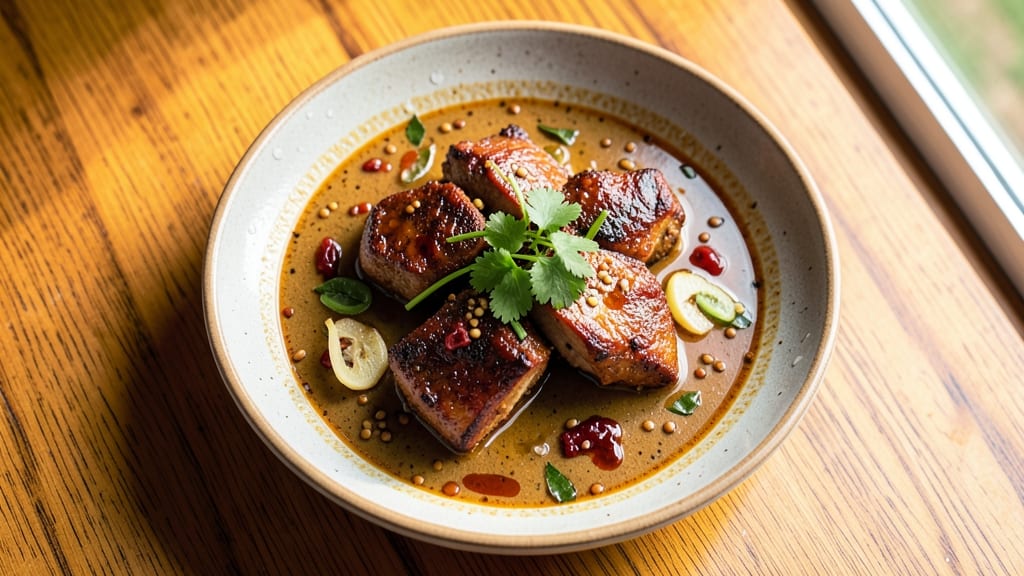
This Coorg pork curry recipe brings the smoky, spiced flavors of Karnataka's Western Ghats to your kitchen, where tender pork simmers in a rich coconut gravy infused with kaari leaves and kokum. 🌟 I first encountered this dish during a culinary exchange in Mysore, where the slow-cooked pork melts into the sauce, creating a dish that's both comforting and deeply flavorful.
The secret lies in balancing the earthy spices with the creamy coconut milk, resulting in a curry that's aromatic, slightly tangy, and perfectly spiced.
The recipe begins with marinating the pork in a blend of mustard seeds, curry leaves, and tamarind, which tenderizes the meat and infuses it with layers of flavor.
As the curry simmers, the potatoes absorb the smoky gravy, adding a hearty texture that makes this dish satisfying on its own or paired with steamed rice. The use of kokum and tamarind adds a unique tanginess that sets Coorg curries apart from other South Indian pork dishes.
What you'll achieve is a dish that's rich in tradition yet approachable for modern palates—a balance of smoky, spiced pork and creamy coconut gravy that's both comforting and complex. The aroma alone will transport you to the hills of Coorg, where this dish is a staple in local homes.
Serve it with ragi mudde or kadubu for a complete meal that celebrates the flavors of Karnataka.
This curry is perfect for family gatherings or special occasions, where its depth of flavor and cultural significance make it a standout dish. The slow-cooking process ensures the pork is tender and the gravy is rich, making it a recipe worth the time and effort.
Let's bring the flavors of Coorg to your table.
Ingredients for coorg pork curry
Tender pork meets smoky spices and creamy coconut—just 18 ingredients for a curry that tastes like Coorg.
| Ingredient | Amount | Notes |
|---|---|---|
| Pork Shoulder 🥩 | 1 ½ lb | Boneless, cut into 1-inch cubes |
| Fresh Curry Leaves 🌿 | ¼ cup | Lightly crushed, stems removed |
| Mustard Seeds 🌶️ | 1 tbsp | Whole, for tempering |
| Tamarind Paste 🍋 | 2 tbsp | Adjust for tanginess |
| Dried Kokum 🍇 | 2 pieces | Soaked in 1 cup warm water |
| Fresh Ginger 🧄 | ½ cup | Finely grated, peeled |
| Green Chilies 🌶️ | 3 whole | Slit lengthwise, seeds removed |
| Onion 🧅 | 1 whole | Finely chopped |
| Tomatoes 🍅 | 2 whole | Chopped, medium size |
| Coconut Milk 🥥 | 1 ½ cups | Full-fat, canned preferred |
| Potatoes 🥔 | 1 ½ lb | Medium size, peeled, cubed |
| Cumin Seeds 🌿 | 1 tsp | Toasted lightly |
| Ground Cumin 🌿 | 1 tsp | For extra depth |
| Ground Coriander 🌿 | 1 tsp | Freshly ground preferred |
| Turmeric Powder 🧂 | ½ tsp | Freshly ground if possible |
| Garam Masala 🌶️ | 1 tsp | For finishing |
| Salt 🧂 | 1 ½ tsp | Adjust to taste |
| Vegetable Oil 🫒 | ½ cup | For tempering |
The pork shoulder is key—look for well-marbled cuts at Indian grocery stores or the meat section. If your local market doesn't carry it, Costco or Whole Foods often have good options. For curry leaves, frozen works but fresh is ideal—just make sure they're bright green, not wilted. Tamarind paste can be found in the international aisle at most supermarkets, or order online if needed. The dried kokum is the secret tang—Amazon or Indian specialty stores carry it, or use 1 tbsp lemon juice in a pinch, though it won't be identical.
No fresh ginger? Powdered works at half the amount, but it loses that bright zing. Short on green chilies? Cayenne pepper at one-quarter teaspoon adds heat without the texture. The coconut milk should be full-fat—canned brands like Thai Kitchen or Aroy-D are reliable. For the potatoes, Yukon Golds hold up best to slow cooking, but russets work too. If you can't find garam masala, mix 1/4 tsp cinnamon, 1/4 tsp cardamom, 1/4 tsp cloves, and 1/2 tsp black pepper—it's not the same but gets you close.
Store the marinade (pork, curry leaves, mustard seeds, tamarind, ginger, and half the salt) in the fridge for up to 2 days if prepping ahead. The full curry reheats beautifully—just add a splash of water and simmer for 10 minutes. It tastes even better the next day as flavors meld. For leftovers, portion into containers with a layer of coconut milk on top to preserve freshness. Freezes for 3 months if stored airtight.
Why You'll Love This Recipe
- Pantry-Friendly Base: I swear by this one—no fancy ingredients, just mustard seeds, curry leaves, and tamarind paste doing all the heavy lifting. The kokum adds that tangy punch without extra effort, and the pork shoulder stays tender with minimal fuss.
- Tangy-Tangy Magic: That tamarind and kokum combo? It’s like a flavor explosion in your mouth—bright, sour, and just sweet enough. The mustard seeds sizzle into crispy little bits that add texture, and the curry leaves perfume the whole dish like a warm hug.
- Leftover Hero: This curry actually improves the next day. The flavors meld deeper, and the pork gets even more fall-apart tender. I make a big batch on Sundays, and it’s still a hit for lunches—just reheat with a splash of water and a sprinkle of fresh curry leaves.
- Budget Stretch: Pork shoulder is affordable, and this recipe stretches it generously. A single cut feeds four, and the spices cost pennies. Honestly, it’s the kind of dish that makes me feel like I’m treating myself without breaking the bank—especially when I pair it with rice or roti.
Step-by-step instructions for Coorg pork curry
Let's bring this aromatic Coorg specialty to life with its signature smoky coconut gravy and tender pork.
🔥 Step 1: Prepare the Pork and Potatoes
Pat the 1.5 lb pork shoulder dry with paper towels and cut into 1-inch cubes. This helps the spices cling better and ensures even cooking. In a large pot, add the 1.5 lb potatoes (peeled and cubed) and cover with 4 cups water. Bring to a boil over medium-high heat, then reduce to a simmer for 10-12 minutes until the potatoes are fork-tender but not mushy. Drain and set aside.
While the potatoes cook, soak the 2 pieces dried kokum in 1 cup warm water for 10 minutes to soften. This will release their tangy, citrusy flavor into the curry. The pork will cook later in the coconut milk, so no need to prep it further yet.
🍳 Step 2: Temper the Spices and Build the Gravy Base
Heat the 0.5 cup vegetable oil in a heavy-bottomed pot over medium heat. Add the 1 tsp cumin seeds and let them sizzle for 30 seconds until they turn golden and release their aroma. Add the 1 tbsp mustard seeds and cook for another 30 seconds until they pop.
Lower the heat to medium-low and add the 0.5 cup finely grated fresh ginger, 3 slit green chilies, and 1 finely chopped onion. Sauté for 5-6 minutes until the onion turns translucent and the raw smell disappears. This is your aromatic base—don't rush it. Add the 2 chopped tomatoes and cook for 3-4 minutes until they soften and release their juices.
🥘 Step 3: Add Kokum Water and Spices for Depth
Pour in the strained kokum soaking water (discard the dried kokum pieces) and the 2 tbsp tamarind paste. Stir well and cook for 2 minutes until the mixture thickens slightly. Add the 1.5 tsp salt, 0.5 tsp turmeric powder, 1 tsp ground cumin, and 1 tsp ground coriander. Mix thoroughly to combine all the spices with the base.
Here's the thing—this step is where the magic happens. The tamarind and kokum create the signature tangy-sour note that balances the richness of the coconut milk. If you want extra depth, you can add 1-2 tbsp water at this stage to help the spices bloom.
🍳 Step 4: Cook the Pork in Coconut Milk
Add the 1.5 lb pork cubes to the pot and stir to coat them evenly with the spiced mixture. Pour in the 1.5 cups coconut milk and bring to a gentle simmer over medium heat. Cover and cook for 20-25 minutes, stirring occasionally, until the pork is tender and cooked through. The coconut milk should reduce slightly but still coat the pork.
I like to press down gently on the pork pieces with a spoon during the first 5 minutes of cooking—this prevents them from curling up and ensures they absorb all the flavors. If the curry looks too thick, add 2-3 tbsp water to loosen it.
🥘 Step 5: Finish with Potatoes and Curry Leaves
Add the drained potatoes to the pot and gently stir to combine. Increase the heat to medium-high and bring to a simmer. Cook uncovered for 5-7 minutes, stirring occasionally, until the potatoes are heated through and the curry has thickened slightly. You want the potatoes to be hot but still hold their shape.
Finally, add the 0.25 cup lightly crushed fresh curry leaves and 1 tsp garam masala. Stir gently for 1 minute—this releases the aromatic oils from the curry leaves and warms up the garam masala. Taste and adjust the seasoning with more salt if needed. The curry should be tangy, slightly sweet, and deeply aromatic with a perfect balance of spice and coconut richness.
Pro Tips For Making Coorg Pork Curry
- SEAR THE PORK HARD: Get that pork shoulder screaming hot in a dry pan first—no oil yet—until it turns deep brown in spots. I learned this the hard way: skipping the sear means the curry tastes flat, like someone forgot to wake up the flavors. Once browned, pull it out and set aside—you’ll add it back later after the tempering.
- SOAK KOKUM RIGHT: Toss those dried kokum pieces into warm water for at least 10 minutes before using. Sounds simple, but I used to just crush them dry, and the curry never got that bright, tangy punch. The soak softens the seeds and releases their sour magic—don’t skip it, even if you’re in a hurry.
- TEMPER MUSTARD SEEDS LOW: Crank the heat to medium when adding mustard seeds—they’ll pop like fireworks, but if you go too high, they’ll burn before the curry leaves get a chance to sing. After the seeds sizzle for 10 seconds, toss in the curry leaves and garlic immediately. Burnt mustards ruin the whole party.
- FINISH WITH TAMARIND WATER: Save a splash of the tamarind soaking water for the end—about 2 tablespoons mixed with a little sugar. Stir it in just before serving to brighten the curry without making it watery. I used to add it all at once, and the dish turned mushy. Timing is everything here.
Make-ahead tips for this coorg pork curry
Marinade Prep Ahead
I always prep the pork marinade the night before—it’s a game-changer for flavor development. Combine the 1.5 lb pork cubes, 0.25 cup crushed curry leaves, 1 tbsp mustard seeds, 2 tbsp tamarind paste, 0.5 cup grated ginger, and 0.75 tsp salt in a bowl.
Store in an airtight container in the fridge for up to 24 hours. The tamarind and curry leaves infuse the pork deeply, making it tender and aromatic. 🌿
Potato Pre-Cooking
Save time by pre-cooking the potatoes the day before. Boil 1.5 lb peeled and cubed potatoes until just tender (10-12 minutes), then drain and store in the fridge.
Reheat them in the curry directly from cold—they’ll absorb the flavors beautifully. This step ensures your curry stays hearty without extra prep on serving day. ⏰
Coconut Gravy Base
Make the spiced coconut base in advance for a foolproof curry. Sauté 1 tsp cumin seeds, 1 tbsp mustard seeds, 0.5 cup ginger, 3 green chilies, and 1 chopped onion in 0.5 cup oil until golden.
Add 2 tbsp tamarind, 2 chopped tomatoes, and 1.5 tsp salt, then simmer for 5 minutes. Store in the fridge for up to 3 days. When ready to cook, just add the pork and coconut milk. 🥥
Slow Cooker Option
For hands-off cooking, use a slow cooker. After marinating the pork, combine it with the pre-made spice base, 1.5 cups coconut milk, and 1.5 cups water. Cook on low for 6-7 hours, then stir in the potatoes and curry leaves in the last 30 minutes.
This method keeps the pork melt-in-your-mouth tender while letting flavors meld naturally. Perfect for busy days! ⏳
Freezer-Friendly Gravy
The full curry freezes like a dream. After Step 4 (pork cooked in coconut milk), cool the mixture completely, then transfer to airtight containers. Freeze for up to 3 months.
To reheat, thaw overnight in the fridge, then simmer on the stovetop for 10 minutes with the potatoes and curry leaves. The texture stays rich, and the flavors only deepen. 💫
Nutrition facts
Frequently asked questions
What makes Coorg pork curry different from other South Indian pork dishes?
The signature tangy-sour balance from kokum and tamarind sets it apart, plus the rich coconut milk gravy creates a creamier texture than most curries. Unlike heavier curries, Coorg style uses kaari leaves for aroma and keeps the heat moderate—ideal for pork lovers who prefer depth over spice.
Can I substitute dried kokum with something else?
Yes! For 2 pieces dried kokum, use 1 tbsp lemon juice or 1 tbsp vinegar (apple cider works best), though the tang won't be identical. The kokum's unique citrusy depth is hard to replicate—if possible, track it down at Indian specialty stores or online.
How do I adjust the spice level for kids or sensitive stomachs?
Remove the seeds from green chilies and reduce them to 1-2 instead of 3. Skip the mustard seeds in the tempering (or use 1/2 tsp) and omit garam masala until the end—add just 1/2 tsp if needed. The coconut milk naturally mellows the heat, so the dish stays flavorful.
What's the best way to serve this curry?
Pair it with steamed basmati rice or ragi mudde (finger millet dumplings) to soak up the rich gravy. For a complete meal, add a fresh cucumber raita or mango pickle to balance the coconut's creaminess. In Coorg, it's often served with kadubu (steamed rice balls) for texture contrast.
Why did my curry turn out too watery?
This usually happens when coconut milk isn't reduced enough. After adding the pork, simmer uncovered for 5-7 minutes longer to thicken the gravy. If it's still thin, mix 1 tsp cornstarch with 2 tbsp water and stir in at the end. Pro tip: Use full-fat coconut milk—light versions won't thicken properly.