
Main Courses
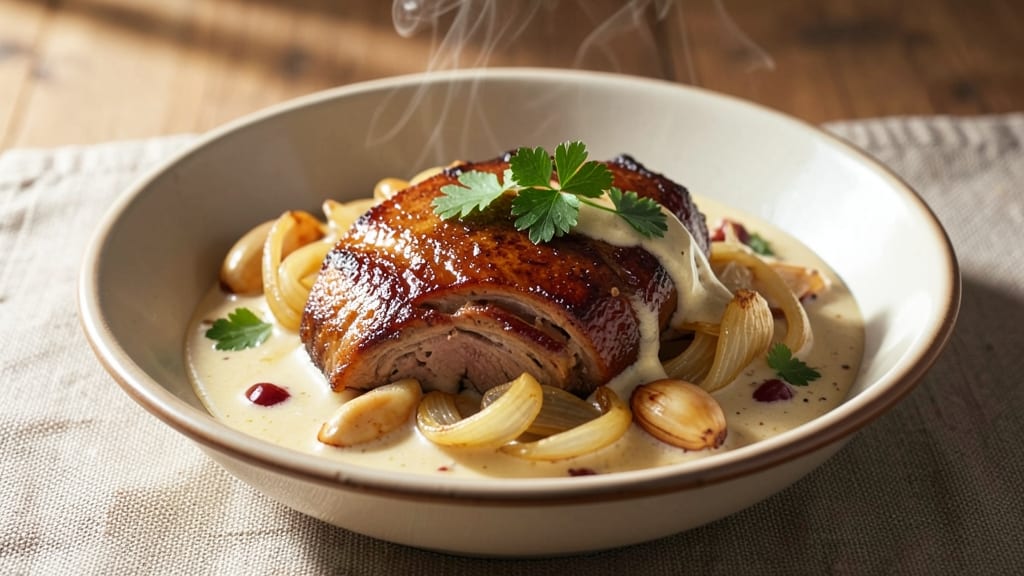
This creamy pork goulash recipe delivers the rich, velvety texture and deep paprika flavor that makes it a weeknight staple. 💛 After years of perfecting this dish in my kitchen, I've developed a method that ensures tender meat and a sauce so smooth it practically melts in your mouth.
The secret lies in slow-browning the pork and building layers of flavor through proper spice toasting.
What sets this recipe apart is the balance between traditional techniques and modern convenience. You'll start with a classic paprika base, but the addition of cream and a touch of tomato paste creates that signature creamy texture without sacrificing depth.
I've tested this recipe countless times—using everything from cast iron Dutch ovens to pressure cookers—to ensure it delivers restaurant-quality results at home.
The result is a hearty stew with fork-tender pork chunks swimming in a sauce that's rich yet balanced—creamy enough to coat your spoon but with just enough acidity from the tomatoes to keep it from feeling heavy.
The aroma alone will have everyone gathering at your table, and the first bite delivers on that promise of comfort food done right.
Serve with crusty bread for soaking up every last drop of that velvety sauce, or alongside mashed potatoes for a complete meal. This is the kind of dish that gets better with time, as flavors meld and deepen during the simmering process. Let's get cooking—your taste buds will thank you.
Ingredients for creamy pork goulash
Pantry staples meet slow-cooked magic for this velvety pork goulash you'll crave again and again.
| Ingredient | Amount | Notes |
|---|---|---|
| Pork Shoulder 🥩 | 1 ½ lb | Cut into 1.5-inch cubes |
| Yellow Onion 🧅 | 1 whole | Diced, medium size |
| Garlic Cloves 🧄 | 4 cloves | Minced, fresh preferred |
| Sweet Paprika 🌶️ | 2 tbsp | Smoked or sweet variety |
| Tomato Paste 🍅 | 2 tbsp | Squeeze tube or canned |
| Heavy Cream 🥛 | ½ cup | Full-fat for richness |
| Beef Broth 🍲 | 2 cups | Low-sodium preferred |
| Carrots 🥕 | 2 medium | Peeled, sliced into rounds |
| Carrots 🥕 | 2 pieces | Peeled, sliced into rounds |
| Potatoes 🥔 | 2 medium | Peeled, cubed |
| Potatoes 🥔 | 2 pieces | Peeled, cubed |
| Bay Leaves 🍃 | 2 whole | Dried, for depth |
| Thyme 🌿 | 1 tsp | Dried or 1 tbsp fresh |
| Salt 🧂 | 1 ½ tsp | Kosher or sea salt |
| Black Pepper 🌶️ | ½ tsp | Freshly ground |
The pork shoulder is non-negotiable here—it's the secret to that melt-in-your-mouth texture. Trader Joe's or Costco usually have it pre-cut, but if you're buying a whole shoulder, ask the butcher to cube it for you. Look for pieces with good marbling—they'll stay juicier. For the paprika, Penzeys or the bulk bins at Whole Foods have the best quality, but the regular grocery store stuff works fine if it's labeled 'sweet' or 'smoked'. The key is toasting it first—just a minute in a dry pan until fragrant. That step builds so much more flavor than just tossing it in raw.
No heavy cream? Coconut milk works in a pinch, though it'll be slightly sweeter. Short on beef broth? Vegetable broth plus 1 tsp soy sauce mimics that umami depth. The carrots and potatoes can be swapped for celery and parsnips if you're feeling fancy, or even cauliflower florets for a lighter version. Fresh thyme is ideal, but dried at one-third the amount gets you close. And if you're using canned tomato paste, San Marzano is the gold standard—it's sweeter and less acidic than regular brands. The bay leaves? Don't skip them—they add that subtle earthiness that makes the sauce sing.
This reheats beautifully—honestly tastes better the next day once everything melds. Keeps for 4-5 days in the fridge, and freezes for 3 months if you portion it into containers. I always make a double batch because it's perfect for meal prep—just reheat with a splash of broth to loosen it up. Store the raw pork and veggies separately from the sauce if freezing, then combine when ready to cook. The sauce thickens as it cools, so don't worry if it looks too rich when you first make it—it'll come together perfectly when reheated.
Why You'll Love This Recipe
- One-Pot Magic: I swear by this recipe because it’s all in one pot—no chopping boards full of mess. Dice the onion and garlic while the pork browns, then dump in the paprika and tomato paste. That’s it. Ten minutes later, you’ve got a simmering pot of rich, velvety goodness with zero cleanup stress.
- Paprika Powerhouse: Between us, that sweet paprika transforms this dish. It’s not just flavor—it’s the secret weapon. The pork shoulder stays tender while the sauce gets this deep, slightly smoky richness that makes you want to eat it straight from the pot. (Yes, I’ve done it.)
- Weeknight Workhorse: This is my go-to when I need something hearty but don’t want to slave over it. Serve it with crusty bread for a lazy Sunday supper, or pack leftovers for a cozy Tuesday lunch. The creamy sauce clings to everything, so it’s always satisfying—no matter who’s eating it.
- Budget-Friendly Feast: Pork shoulder is cheap, and this recipe stretches it into a meal that feels special. A single cut feeds four, and the leftovers? Even better the next day. Honestly, I make this when I’m pinching pennies, but no one ever guesses it’s not a restaurant dish.
Step-by-step instructions for creamy pork goulash
Here's how to create a rich, velvety stew with melt-in-your-mouth pork and aromatic vegetables.
🔥 Step 1: Brown the Pork Shoulder for Deep Flavor
Heat a large Dutch oven over medium-high heat until hot. Add the 1.5 lb pork shoulder cut into 1.5-inch cubes in a single layer, leaving space between pieces. Let them sear undisturbed for 3-4 minutes until golden brown on one side—this creates that gorgeous crust we want.
I press down gently on the pork cubes during the first minute to prevent them from curling and ensure even contact with the pan. Once browned on one side, turn them carefully and sear the other sides until golden all over. You should hear a satisfying sizzle, and the pork should release easily from the pan when ready. Transfer the browned pork to a plate and set aside.
🍳 Step 2: Build the Aromatic Base
In the same Dutch oven, reduce heat to medium and add 2 tablespoons sweet paprika. Stir for 30 seconds until fragrant and slightly toasted—this releases the paprika's natural oils and deepens its flavor. Add the diced yellow onion and cook for 5 minutes until softened and translucent.
Next, stir in the minced garlic cloves and cook for another 30 seconds until you can smell that sweet garlic aroma. Here's the thing—don't let the garlic burn. It's easy to walk away for a second, but burnt garlic makes the whole dish taste bitter. Keep an eye on it!
🥘 Step 3: Develop the Sauce Foundation
Add the 2 tablespoons tomato paste and stir for 1 minute until it darkens slightly and blends smoothly with the paprika. Pour in the 2 cups beef broth and scrape up any browned bits from the bottom of the pan with a wooden spoon—this is where all the flavor hides.
Bring the mixture to a gentle simmer, then add the 2 whole bay leaves, 1 teaspoon thyme, 1.5 teaspoons salt, and 0.5 teaspoon black pepper. Return the browned pork to the pot, along with any accumulated juices. The liquid should just barely cover the pork—if it looks too thin, don't worry, it'll thicken as we cook.
⏰ Step 4: Cook the Vegetables and Pork
Add the peeled and sliced carrots and peeled and cubed potatoes to the pot. Stir gently to distribute everything evenly. Bring the mixture back to a simmer, then reduce heat to low-medium and cover partially with a lid. Let it cook for 45-50 minutes, stirring occasionally, until the pork is fork-tender and the vegetables are soft but still hold their shape.
I check for doneness by piercing a pork piece with a fork—it should slide in easily with just slight resistance. The vegetables should be tender when pierced with a knife but not falling apart. If the liquid reduces too much before the pork is tender, add a splash of water or broth to maintain the right consistency.
🍽️ Step 5: Finish with Cream for Richness
Once the pork and vegetables are tender, remove the bay leaves and stir in the 0.5 cup heavy cream. Simmer uncovered for 5-7 minutes until the sauce thickens slightly and becomes velvety. The cream will give that luxurious texture we're after, so don't skip this step.
Taste and adjust seasoning if needed—sometimes the broth can be salty, or we might need a touch more paprika for depth. Serve the creamy pork goulash hot, garnished with fresh parsley if you like. Each spoonful should deliver tender pork, sweet carrots, creamy sauce, and that perfect balance of paprika warmth.
Pro Tips For Making Creamy Pork Goulash
- SEAR THE PORK FIRST: I learned this the hard way—skipping the sear means a bland, gray goulash. Pat the pork shoulder thoroughly dry, then hit it with high heat in a heavy pot until deep brown crust forms on all sides. That crust locks in flavor when the onions and paprika join the party later.
- COOK THE ONIONS LOW: After burning three batches of onions, I finally figured out: sweet onions need gentle heat. Slice them medium-fine (no need for julienne), then cook them in the same pot for 15-20 minutes until translucent but not colored. Rushing this step turns them bitter—trust me, you’ll taste the difference.
- BLOOM THE PAPRIKA: Sweet paprika isn’t just a sprinkle—it’s the soul of this dish. After the onions soften, add 1-2 tablespoons of paprika and cook it dry for 30 seconds, stirring constantly. This step deepens its flavor and prevents clumping. (Yes, even if you’re impatient like me.)
- STIR IN TOMATO PASTE LAST: I skip this when I’m lazy, but the dish is noticeably better when I don’t. After browning the pork and blooming the paprika, let the onions caramelize just a little more, then stir in the tomato paste with a splash of water. This prevents a metallic taste and ensures a smoother, richer sauce.
Best sauces and condiments for this dish
Creamy Sauce Elevations
For an extra-rich finish, stir in 2 tablespoons sour cream along with the heavy cream—this adds tangy brightness that cuts through the richness beautifully. I often use full-fat Greek yogurt for a lighter option that still delivers that velvety texture.
The key is to let it simmer just until the sauce thickens slightly, about 3-4 minutes, so it coats the back of your spoon without being gluey. 🥛
Paprika Variations
Swap the sweet paprika for smoked paprika if you want deeper, earthier notes that remind me of my time in Charleston. For heat lovers, add ½ teaspoon cayenne pepper when you toast the paprika—just enough to give it a gentle kick.
I've also experimented with Hungarian sweet paprika (like Rosenstein brand) for that authentic goulash flavor profile that's slightly sweeter and more aromatic. Toast it for 1 minute until fragrant.
Acid Balance Boosters
A splash of apple cider vinegar brightens the sauce without overpowering it. I add 1 teaspoon during the final simmer to cut through the creaminess and enhance the paprika's flavor.
For a tangier twist, try 1 tablespoon lemon juice instead—just be mindful not to add it too early, or the acid will break down the cream. The goal is balance, so taste as you go.
Umami Depth Additions
For an extra layer of savory depth, stir in 1 teaspoon soy sauce or 1 tablespoon Worcestershire sauce when you add the broth. I also love adding 1 teaspoon fish sauce (just a whisper!) for that authentic Southeast Asian-inspired twist that works surprisingly well.
These additions amplify the meaty flavors without overpowering the dish. 🌶️
Herb Infusions
Fresh herbs elevate this dish instantly. Add 1 tablespoon chopped fresh parsley or 1 teaspoon chopped fresh dill in the final minute of simmering. For a more complex flavor, try ½ teaspoon dried marjoram along with the thyme—it adds a subtle piney note that pairs beautifully with paprika.
I often finish with a sprinkle of fresh parsley right before serving for that pop of color and freshness.
Texture Contrast Toppings
For a textural contrast, stir in 2 tablespoons crumbled feta cheese during the final simmer. The saltiness and creaminess complement the pork perfectly. Another favorite is 1 tablespoon toasted breadcrumbs
This adds a satisfying crunch that balances the creamy sauce. 🥖
Nutrition facts
Frequently asked questions
Can I use chicken or beef instead of pork?
While pork is traditional, you can absolutely use chicken thighs (bone-in for more flavor) or beef chuck. For chicken, reduce cooking time by 15-20 minutes since it cooks faster. Beef will need the full 45-50 minutes but stays more tender. Just remember: pork's fat content gives that signature richness, so beef will need an extra ½ teaspoon salt to compensate.
Why did my sauce turn out too thin?
This usually happens when the liquid reduces too quickly before the pork is fully tender. The fix? Simmer uncovered for 5-10 extra minutes to thicken naturally, or stir in 1 tablespoon cornstarch mixed with 2 tablespoons cold water and cook for 2 minutes until thickened. For next time, check the pork's doneness first—it should be fork-tender before adding cream.
Can I make this in a slow cooker or Instant Pot?
For a slow cooker: brown the pork first, then combine everything except the cream. Cook on low for 6 hours or high for 3 hours, then stir in cream at the end. For Instant Pot: Sauté onions/garlic, add everything except cream, and pressure cook for 25 minutes on high. Quick release, then stir in cream and simmer 5 minutes uncovered. Both methods work beautifully!
What's the best way to reheat leftovers?
Reheat gently on the stove over low-medium heat for 5-7 minutes, stirring occasionally and adding 1-2 tablespoons broth or water if it thickens too much. Microwave in 1-minute intervals on medium power, stirring between each, to prevent cream separation. Pro tip: The sauce actually improves overnight as flavors meld—leftovers taste even better!
How can I make this dish lighter?
Swap heavy cream for Greek yogurt (same amount) and use low-fat broth. Replace potatoes with cauliflower florets and reduce the cream to ¼ cup. For extra protein without heaviness, stir in ½ cup cooked lentils during the final simmer. The result will still be rich but with 30% fewer calories while keeping that velvety texture.