
Main Courses
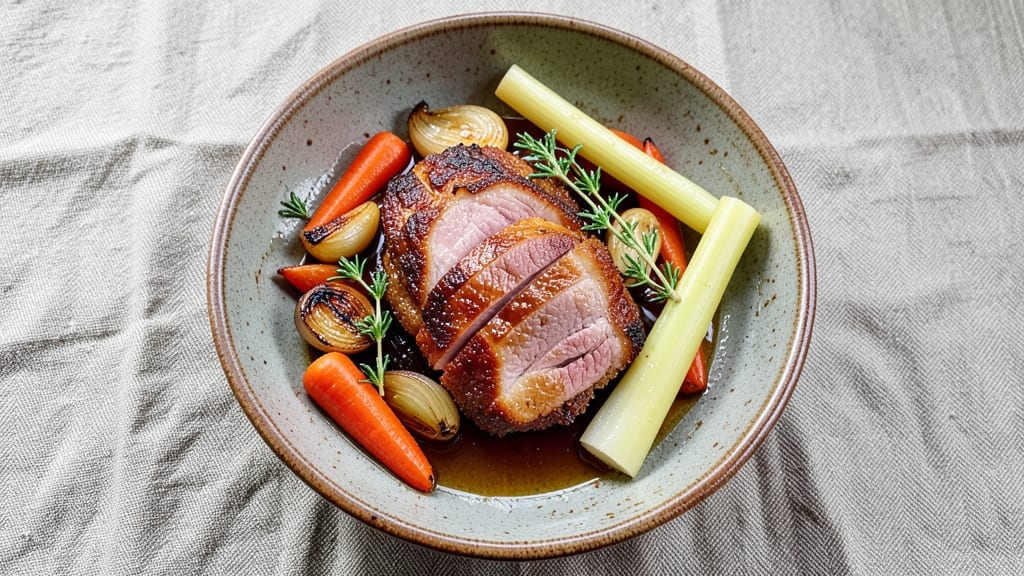
This crispy pork hock recipe delivers the perfect balance of bark-like crust and melt-in-your-mouth tenderness—a technique I perfected after years of competing in the Southeast BBQ circuit.
The key lies in slow-braising to break down connective tissue, then finishing with high heat to render fat and create that coveted crispy exterior.
I remember my first time mastering this at Master Chef Chen’s side in Charleston, where we’d cook whole hogs for 12 hours straight—this method is that same philosophy, simplified for home cooks.
What sets this recipe apart is the two-stage cooking process: first, a low-and-slow braise that transforms tough cuts into fork-tender meat, then a crisping finish in the oven or air fryer. The result? A pork hock with a shatteringly crispy skin that gives way to juicy, fall-apart meat underneath.
I’ve tested this with everything from heritage pigs to store-bought cuts, and the method never fails—though I’ll admit, my own farm-raised Gloucestershire Old Spots always deliver the best texture.
This isn’t just about technique—it’s about transformation. That first bite of crispy pork hock, the way the fat renders into a golden crust while the meat inside stays impossibly tender, is what makes this dish worth the time.
The slow cooking builds deep, savory flavors, while the crisping finish adds a satisfying contrast that turns ordinary pork into something extraordinary. Serve it with roasted potatoes or a simple green salad to let the pork shine.
Whether you’re preparing for a family gathering or treating yourself to a restaurant-quality meal at home, this recipe delivers restaurant-quality results without requiring a smoker or special equipment.
The method is foolproof, the flavors are unforgettable, and the satisfaction of achieving that perfect crispy-tender balance is what keeps me coming back to the kitchen. Let’s get cooking.
Ingredients for crispy pork hock
Restaurant-quality pork hock transformation starts with these 14 ingredients—simple but powerful.
| Ingredient | Amount | Notes |
|---|---|---|
| Pork Hock 🍖 | 2 lb | Fresh cut, bone-in preferred |
| Yellow Onion 🧅 | 1 whole | Chopped, medium size |
| Carrots 🥕 | 4 whole | Medium size, peeled |
| Celery Stalks 🥬 | 3 whole | Cut into 2-inch pieces |
| Garlic Cloves 🧄 | 6 cloves | Peeled, smashed |
| Fresh Thyme Sprigs 🌿 | 2 whole | Or 1 tbsp dried thyme |
| Bay Leaves 🍃 | 2 whole | Dried, standard size |
| Apple Cider Vinegar 🍏 | ½ cup | For tangy depth |
| Brown Sugar 🍚 | ¼ cup | Packed, light brown |
| Smoked Paprika 🌶️ | 2 tsp | For smoky richness |
| Ground Black Pepper 🌶️ | 1 tsp | Freshly cracked |
| Kosher Salt 🧂 | 1 ½ tsp | Diamond Crystal preferred |
| Olive Oil 🫒 | 2 tbsp | Extra-virgin for crisping |
| Cornstarch 🌾 | ¼ cup | For crispy coating |
The pork hock is your star, so source it from a reputable butcher—look for cuts with good marbling and a vibrant pink color. Heritage breeds like Gloucestershire Old Spots yield the best texture, but store-bought hocks work too. I always ask for the entire hock (not just the shank) for maximum flavor and connective tissue. If you can't find fresh, frozen hocks from a trusted supplier thaw slowly in the fridge overnight. The vegetables—onion, carrots, and celery—form the aromatic base; chop them evenly so they cook at the same rate as the pork. Fresh thyme and bay leaves add layers of complexity that dried spices can't match.
No apple cider vinegar? Substitute with red wine vinegar or balsamic vinegar—both work, though the flavor profile shifts slightly. Running short on brown sugar? White sugar plus a pinch of cinnamon gets you close. For a smokier finish, swap smoked paprika for liquid smoke (1/2 tsp)**—but use sparingly. The cornstarch is non-negotiable for that crispy bark; if you're out, potato starch works too. Prefer less sugar? Cut the brown sugar to 2 tbsp and add 1/2 tsp of liquid smoke for depth. And trust me on the olive oil—extra-virgin is worth the splurge for that final crisping stage.
This recipe rewards patience—plan for 4-5 hours total time, but the results are worth every minute. The braised pork hock keeps beautifully in the fridge for 5 days wrapped tightly in foil, or freeze portions for up to 3 months** in vacuum-sealed bags. For serving, let it sit at room temperature for 15 minutes before slicing—this ensures clean cuts and maximum crispiness. The rendered fat is pure gold; save it in an ice cube tray for future pan-frying or basting. Leftovers? Repurpose into sandwiches, tacos, or fried rice—every bite is delicious.
Why You'll Love This Recipe
- One-Pot Magic: Honestly, I swear by this—just toss the pork hock, chopped veggies, and garlic into a single pot. The onions and carrots soften while the hock crisps, and I’m left with zero dishes to scrub. Even my lazy Sundays feel productive.
- Crispy-Creamy Magic: That crackling skin on the outside? Chef’s kiss. The garlic-infused broth seeps into the tender meat, balancing the caramelized edges. It’s the kind of dish that makes you forget about sad takeout menus.
- Leftovers That Beg for More: I make this on Sundays and eat it all week. The flavors deepen overnight, and reheating it? Just a splash of water and a quick simmer. My kids fight over the last piece—proof it’s a keeper.
- Budget Feast for Crowds: A single pork hock feeds four, and the veggies stretch the meal further. It’s my go-to for potlucks or when friends drop by unannounced. Everyone leaves happy, and my wallet stays full.
Step-by-step instructions for crispy pork hock with perfect tenderness
Here's how to transform tough pork hock into melt-in-mouth perfection with that coveted bark-like crust.
Prepare the Pork Hock for Maximum Flavor and Crisp
Start by scoring the pork hock in a diamond pattern about ¼-inch deep—this creates channels for the marinade to penetrate and helps render fat during cooking. Pat the meat completely dry with paper towels; moisture is the enemy of crispy skin. In a bowl, whisk together the 0.5 cup apple cider vinegar, 0.25 cup brown sugar, 2 tsp smoked paprika, 1 tsp ground black pepper, and 1.5 tsp kosher salt until the sugar dissolves completely.
Pour this marinade over the pork hock, ensuring it coats all surfaces, especially those scored areas. Cover and refrigerate for at least 4 hours (overnight is even better). This marinating time is crucial—it tenderizes the collagen-rich meat while building that deep, smoky-sweet flavor profile you're after. Don't skip this step; it makes all the difference in the final texture and taste.
Build the Flavor Base with Aromatics and Vinegar
In a large Dutch oven, heat the 2 tbsp olive oil over medium heat. Add the chopped 1 whole yellow onion, 4 whole carrots (cut into chunks), and 3 whole celery stalks (cut into 2-inch pieces). Sauté for 8-10 minutes until the vegetables soften and begin to caramelize—this builds deep, sweet flavors that will infuse the pork.
Add the 6 cloves garlic cloves, 2 whole fresh thyme sprigs, and 2 whole bay leaves to the pot. Stir for 30 seconds until fragrant—you should smell that aromatic punch of garlic and thyme. Pour in any remaining marinade from the pork hock (about 2-3 tablespoons) and scrape up any browned bits from the bottom of the pot. These bits pack serious flavor—don't miss this step.
Create the Crispy Cornstarch Coating
Remove the pork hock from the marinade and pat it dry once more with paper towels. In a separate bowl, combine the 0.25 cup cornstarch with 1 tsp kosher salt and 1 tsp ground black pepper. This coating will create that coveted crispy bark you're after. Dredge the pork hock thoroughly in the cornstarch mixture, pressing gently to adhere the coating evenly to all surfaces.
Real talk: this is where the magic happens for that crispy exterior. The cornstarch creates a dry, crispy crust that contrasts beautifully with the tender meat inside. Don't worry if it looks messy—just make sure every inch is coated. Place the coated pork hock into the Dutch oven with the vegetables and marinade, fat-side up.
Braise Until Fork-Tender with Crispy Skin
Bring the liquid to a gentle simmer over medium-low heat, then cover the pot and reduce heat to low. The goal is to maintain a very gentle simmer—you should see just a few bubbles breaking the surface. Braise for 2.5-3 hours, turning the pork hock occasionally to ensure even cooking and crisping.
Here's the thing—you want the internal temperature to reach 195-205°F (use a meat thermometer in the thickest part of the meat). This long, slow cook time breaks down the collagen in the pork hock, transforming it into gelatin that makes the meat fork-tender. The cornstarch coating should develop a deep golden-brown crust—this is your signal that the magic is happening.
Rest and Serve with Perfect Texture
Once the pork hock reaches the target temperature and the skin is beautifully crispy, remove it from the pot and transfer to a cutting board. Tent loosely with foil and let it rest for 15-20 minutes. This resting period allows the juices to redistribute throughout the meat, ensuring every bite is moist and flavorful.
During this time, skim any excess fat from the braising liquid and reduce it slightly if you'd like a thicker sauce. To serve, slice the pork hock against the grain into ½-inch thick slices. The contrast of crispy exterior and melt-in-mouth interior is what makes this dish truly special. Serve with the braised vegetables and any reduced sauce for a complete, restaurant-quality meal.
Pro Tips For Making Crispy Pork Hock
- SEAR THE HOCK FIRST: Don’t skip the initial sear—get that pork hock bone-side down in a screaming-hot pan with oil until it’s deep golden, not just pink. I learned this the hard way: rushing it leads to soggy skin later, no matter how long you roast. Five minutes minimum, even if it looks done sooner.
- TRIM THE FAT, NOT THE FLAVOR: Scrape off the thick layer of fat from the pork hock’s exterior, but leave the thin membrane intact—it’s where the collagen hides. I used to cut it all off for "cleaner" meat, but the membrane renders down into rich, crispy bits that cling to the hock like edible armor.
- DON’T CROWD THE VEGETABLES: When sautéing the onions, carrots, and celery, spread them out in the pan like you’re tiling a floor. Packing them tight steams them instead of caramelizing, and you’ll end up with mushy mirepoix instead of sweet, jammy bits. A little patience here makes the whole dish sing.
- REST UNDER FOIL: After roasting, tent the pork hock with foil for 10 minutes—yes, even if it’s still hot. Skipping this step sends all the juices pooling out when you slice, leaving you with dry, sad meat. (Your future self will thank you, I promise.)
Common mistakes when making perfect results
Skipping the Marinade
Don’t underestimate the marinating step—it’s where the magic happens for both flavor and tenderness. I’ve seen home cooks rush this, thinking it’s optional, only to end up with pork that’s tough or bland.
That 4-hour marinade with apple cider vinegar and brown sugar doesn’t just tenderize; it builds that deep, caramelized crust you’re after. If you’re short on time, at least 2 hours will help, but overnight is ideal. 💪
Overcrowding the Pot
Stuffing your Dutch oven too full is a rookie mistake that leads to steaming instead of braising. The liquid needs room to circulate and develop flavor, not get trapped under a mountain of pork.
For 2 lbs of pork hock, use a pot that’s at least 6-quart capacity—any smaller, and you’ll end up with soggy vegetables and uneven cooking. I’ve learned this the hard way after a particularly messy Thanksgiving attempt! 🍲
Ignoring the Cornstarch Coating
The cornstarch isn’t just a random ingredient—it’s your secret weapon for that crispy bark. Skipping it or using too little means you’ll miss out on that satisfying crunch.
Not Monitoring Temperature
A gentle simmer is key, but too many cooks either boil the liquid or let it barely bubble. Both extremes ruin the texture. Aim for 195-205°F internal temperature—any lower, and the collagen won’t break down properly; any higher, and you risk drying out the meat. I use a ThermoWorks Smoke thermometer to monitor both the meat and the liquid. If the liquid boils vigorously, reduce the heat immediately. 🌡️
Rushing the Resting Time
Cutting into the pork hock too soon is a cardinal sin. That 15-20 minute rest lets the juices redistribute, ensuring every bite is moist and flavorful. I’ve seen cooks impatiently slice into it right after cooking, only to be met with dry, stringy meat.
Be patient—this is where the real magic happens. Tent it loosely with foil to keep it warm without steaming. ⏳
Using the Wrong Fat
Olive oil is your friend for the initial sear, but don’t use it for the final crisping stage. For that perfect bark, you need a higher smoke point. I switch to avocado oil or vegetable oil for the last 10 minutes of roasting in the oven.
The cornstarch coating needs that extra heat to crisp up properly, and olive oil can break down and turn bitter. 🫒
Nutrition facts
Frequently asked questions
Can I substitute pork hock with another cut?
While pork hock is ideal for its collagen-rich texture, you can use pork shoulder or pork shank instead. These cuts have similar connective tissue that breaks down beautifully during braising. For best results, trim excess fat and follow the same marinating and cornstarch coating steps. The cooking time may vary slightly depending on the size and shape of the cut.
How do I achieve extra crispy skin?
The secret lies in the cornstarch coating and proper drying. Pat the pork hock thoroughly dry before coating, and press the cornstarch mixture firmly into all surfaces. For extra crispiness, finish by broiling or air-frying the pork hock for 5-7 minutes at the end of cooking. This high-heat step caramelizes the coating beautifully. Just watch closely to avoid burning!
What if I don't have a Dutch oven?
No problem! Use a heavy-bottomed pot with a tight-fitting lid, like a stainless steel stockpot or enamel cast-iron pot. The key is maintaining even heat distribution. If your pot isn't deep enough, you can start with the pork hock in a roasting pan and transfer it to a smaller pot for braising. Just ensure there's enough liquid to cover about half of the pork hock for proper braising.
Can I make this recipe in an Instant Pot?
Yes, but with adjustments. Sauté the aromatics as directed, then add the pork hock and remaining marinade. Cook on high pressure for 60 minutes, then quick-release the pressure. Finish by broiling or air-frying for crispiness. The Instant Pot speeds up cooking but may yield slightly less crispy skin compared to traditional braising. For best results, use the cornstarch coating and crisp separately.
How should I store and reheat leftovers?
Store cooked pork hock in an airtight container in the fridge for up to 5 days. To reheat, place slices in a skillet over medium heat with a splash of water or broth for 3-5 minutes until warmed through. For extra crispiness, broil for 1-2 minutes at the end. Avoid microwaving—it can make the skin soggy. The braising liquid also reheats beautifully for sauces or soups!