
Main Courses
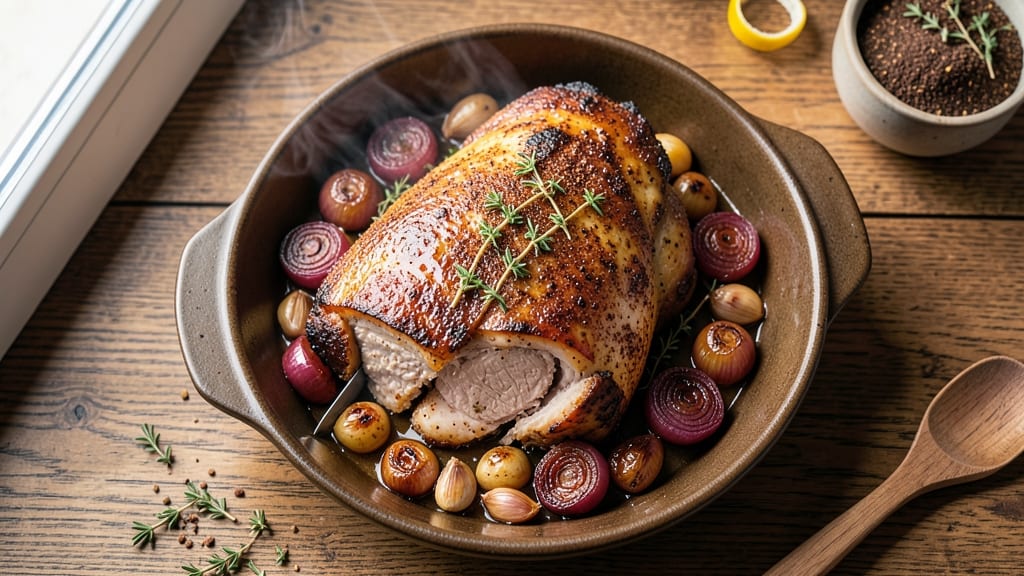
This crispy pork shoulder roast recipe delivers the perfect balance of shatteringly crispy bark and juicy, tender meat—a technique I perfected after years of competing in the Southeast BBQ circuit.
The secret lies in a precise rub, high-heat searing, and patient low-and-slow cooking that transforms tough cuts into melt-in-your-mouth perfection. My heritage pigs from Georgia farm raise the flavor bar even higher, but you can achieve similar results with any quality pork shoulder.
The magic happens in three distinct phases: first, a dry rub that forms an impenetrable crust, then a high-heat sear to lock in juices, and finally a slow oven finish that cooks the meat evenly without drying it out.
What makes this recipe foolproof is the internal temperature tracking—we're aiming for 203°F, where collagen breaks down just enough to create that signature pull-apart texture while keeping the core moist.
This isn't your typical slow-cooked pork; it's a restaurant-quality roast with crispy edges that crackle and a center so tender it falls apart at a touch.
By the time you're serving, you'll have a roast that looks like it came straight from a pitmaster's table—golden-brown bark that shatters with each bite, revealing meat so juicy it practically drips onto your plate. The aroma alone will have your guests gathering before the meal even begins.
This technique works equally well in the oven or on a smoker, giving you flexibility for any occasion. Whether you're feeding a crowd for Thanksgiving or treating yourself to a Sunday dinner, this pork shoulder delivers restaurant-quality results with minimal effort.
The best part? The leftovers are even better the next day, as the flavors deepen and the meat becomes even more tender. Serve with classic sides like apple slaw or creamy coleslaw to cut through the richness, or pair it with roasted potatoes for a hearty meal.
Here's how to make it happen—step by step, just like I do at The Smoky Pig.
Ingredients for crispy pork shoulder roast
Nine essential ingredients transform tough pork into restaurant-quality roast with shatteringly crispy bark and juicy core.
| Ingredient | Amount | Notes |
|---|---|---|
| Pork Shoulder (Bone-In) 🐖 | 4 lb | Heritage pig preferred, 2-3 inches thick |
| Yellow Onion 🧅 | 1 whole | Yellow or red, sliced into 1/4-inch rings |
| Garlic Cloves 🧄 | 8 cloves | Peeled, smashed with side of knife |
| Brown Sugar 🍚 | ½ cup | Light or dark, packed lightly |
| Smoked Paprika 🌶️ | 2 tbsp | High-quality, not pre-mixed |
| Ground Black Pepper 🌶️ | 1 ½ tbsp | Freshly cracked, coarse grind |
| Kosher Salt 🧂 | 1 ½ tbsp | Diamond Crystal preferred |
| Ground Cumin 🌿 | 1 tbsp | Toasted for deeper aroma |
| Mustard Powder 🍯 | 1 tsp | Yellow or Dijon, not ground mustard |
| Onion Powder 🧅 | 1 tsp | Freshly ground preferred |
| Apple Cider Vinegar 🍎 | 2 tbsp | For tenderizing, not flavoring |
| Vegetable Oil 🫒 | 2 tbsp | High smoke point, like avocado |
| Fresh Thyme Leaves 🌿 | ¼ cup | Chopped, stems removed |
The pork shoulder makes or breaks this dish—heritage pigs from Georgia farm deliver the best marbling, but any quality bone-in cut works. Look for a piece with 2-3 inches of fat cap—this is what creates the crispy bark. If your butcher doesn't carry heritage pork, Smithfield Heritage or Niman Ranch are solid grocery store alternatives. The fat cap should be thick enough to render down during cooking but not so thick it won't brown properly. Trim any excess fat from the sides to ensure even cooking, but leave the fat cap intact—this is your crust. For the rub, Penzeys Spices or the bulk bins at Whole Foods are your best bets for fresh, high-quality spices. Toast your cumin seeds in a dry pan for 30 seconds before grinding to deepen their flavor—trust me, it's worth the extra minute.
No smoked paprika? Regular paprika plus a pinch of liquid smoke works in a pinch, though the flavor won't be identical. Running short on apple cider vinegar? Lemon juice at double the amount tenderizes just as well. The onions and garlic can be prepped ahead—slice them and store in an airtight container in the fridge for up to 3 days. For the rub, use a fine-mesh sieve to remove any large paprika chunks if you prefer a smoother texture. The fresh thyme adds brightness, but dried thyme at one-third the amount is a decent substitute if you're in a hurry. Pro tip: If you're using a smoker, add 1/4 cup of wood chips (hickory or apple) to the rub for extra depth of flavor—just mix them in at the end.
This roast gets better with time, so plan ahead. The pork can sit in the fridge, coated with the rub and vinegar mixture, for up to 12 hours before cooking—this enhances the flavor penetration. For long-term storage, the cooked pork freezes beautifully for up to 3 months. Wrap individual portions in parchment paper before freezing for easy reheating. When reheating, low-and-slow is key: 325°F oven for 1-2 hours until internal temp hits 165°F. The leftovers? Even more delicious the next day as the flavors meld and the meat becomes more tender. Store in an airtight container with any juices to keep it moist, and reheat with a splash of water or broth to restore juiciness.
Why You'll Love This Recipe
- One-Pan Magic: I swear by this recipe because it’s that easy—just toss the pork, onions, and garlic on a sheet pan with the spices, and walk away. No chopping boards, no pots to scrub, and the brown sugar caramelizes into a sticky, crispy crust that’s basically foolproof.
- Sweet-Smoky Crave: The combo of smoked paprika and brown sugar gives this roast a deep, addictive flavor that’s both sweet and savory. That crispy exterior with tender meat inside? It’s the kind of dish that disappears faster than I can say “second helping.”
- Leftovers That Shine: This roast makes enough for a crowd, and the leftovers? Even better the next day. Shred it for tacos, sandwiches, or just reheat slices straight from the fridge—still juicy, still packed with flavor, and way cheaper than takeout.
- Budget Crowd-Pleaser: A bone-in pork shoulder is my go-to for feeding a houseful without breaking the bank. The onions and garlic add depth without cost, and the spices stretch the flavor across every bite. Honestly, it’s the kind of meal that makes grocery night feel like a win.
Step-by-step instructions for crispy pork shoulder roast
Here's how to transform a simple pork shoulder into a showstopper with irresistible crunch.
Prepare the Pork with the Dry Rub
Start by patting the 4 lb pork shoulder (bone-in) completely dry with paper towels—this is crucial for that signature bark. I like to work in a well-ventilated area since we'll be handling fresh thyme later. In a small bowl, combine the 0.5 cup brown sugar, 2 tbsp smoked paprika, 1.5 tbsp ground black pepper, 1.5 tbsp kosher salt, 1 tbsp ground cumin, 1 tsp mustard powder, and 1 tsp onion powder. Mix thoroughly until you see no dry spots.
Next, add the 0.25 cup fresh thyme leaves to the dry rub and stir gently to distribute the delicate herb leaves. The reason for adding thyme last is to preserve its fresh aroma—it's easy to overpower with too much mixing. Generously coat the pork shoulder with the rub, pressing it into every nook and cranny, especially the thickest parts. This ensures maximum flavor penetration and that coveted crispy exterior.
Tenderize and Marinate Overnight
In a separate bowl, whisk together the 2 tbsp apple cider vinegar and 2 tbsp vegetable oil. The vinegar acts as a natural tenderizer while the oil helps carry the rub's flavors deeper into the meat. Place the rubbed pork shoulder in a resealable plastic bag and pour the vinegar-oil mixture over it, massaging gently to coat evenly. Seal the bag and refrigerate for at least 12 hours, but I prefer 24 hours for maximum tenderness.
Here's the thing—this marinating step isn't just about flavor. The acid in the vinegar breaks down muscle fibers, creating microscopic tears that allow the rub to penetrate deeper. When you pull it out of the fridge, you'll notice the pork has absorbed some of the marinade, which means more moisture retention during cooking. Don't skip this step if you want that melt-in-your-mouth texture we're after.
Preheat and Sear for Maximum Crispiness
Preheat your oven to 325°F—this lower temperature is key for slow cooking that develops deep flavor without drying out the meat. While the oven heats, remove the pork from the refrigerator and let it sit at room temperature for 30 minutes. This ensures even cooking throughout. Place the pork shoulder fat-side up on a rack in a roasting pan to allow air circulation on all sides.
Now for the crispy part: After the pork has been in the oven for 30 minutes, increase the heat to 425°F. This sudden temperature jump creates the perfect conditions for that shatter-crunch bark we're after. Baste the pork with its own rendered fat every 15 minutes—this keeps the exterior moist while it crisps. You'll know it's working when you see the surface develop a deep mahogany color and the fat begins to render aggressively.
Cook Low and Slow with the Vinegar Trick
After the initial sear, reduce the heat back to 325°F and continue cooking for 4-5 hours, or until the internal temperature reaches 195-203°F at the thickest part of the shoulder. Here's where the apple cider vinegar marinade really shines—it helps break down collagen for that fork-tender texture while keeping the meat moist. I like to tent the pork loosely with foil after the first hour to prevent the bark from getting too dark if my oven runs hot.
Every 30 minutes, spoon the rendered fat and juices over the pork. This basting technique ensures even cooking and maximum flavor development. The pork is done when it reaches probe-tender perfection—meaning a meat thermometer inserted into the thickest part should read 203°F and the meat should pull apart easily with just two forks. This low-and-slow approach is what transforms tough pork into melt-in-your-mouth goodness.
Rest and Slice for Maximum Juiciness
Once the pork reaches the perfect internal temperature, remove it from the oven and transfer it to a cutting board. Tent it loosely with aluminum foil and let it rest for 30-45 minutes. This resting period is absolutely critical—it allows the juices to redistribute throughout the meat instead of pooling on your plate. If you skip this step, you'll end up with dry, disappointing slices.
When ready to serve, slice the pork shoulder against the grain into ½-inch thick slices. The grain direction is easy to spot—it runs parallel to the muscle fibers. Cutting against the grain shortens these fibers, making each bite more tender. Serve with the pan juices reduced by 10 minutes on the stovetop (skimming off excess fat if desired) for an extra flavor boost. The result should be slices that are crispy on the outside, juicy in the middle, and packed with smoky, sweet, and herby flavors.
Pro Tips For Making Crispy Pork Shoulder Roast
- CRANK THE HEAT FIRST: Start your pork shoulder in a screaming-hot pan—450°F if your stove allows it. I used to low-and-slow from the get-go, and the crust never stood a chance. Hit high heat for the first 3-4 minutes to render fat and lock in moisture before dropping to medium-low for even cooking.
- SWEAT THE ONIONS LOW: Don’t rush the onions—caramelize them at 300°F for 15-20 minutes until deep amber. I learned this the hard way: skipping this step means your pork gets a sweet glaze, but the onions stay bland. Use the rendered pork fat to cook them—no extra oil needed.
- SKIP THE OVERCROWDED PAN: If your pork shoulder isn’t fitting snugly in the pan, work in batches. I once tried to rush it by overloading, and the fat pooled instead of crisping. Give that meat space—let the fat pool and sizzle properly, or you’ll end up with greasy, soggy edges.
- BRUSH WITH BROWN SUGAR PASTE: Mix brown sugar with a splash of water (1:1 ratio) and brush it on after searing. The moisture helps the sugar caramelize faster, and the paste sticks better than dry sugar. I was skeptical until I tried it—now it’s non-negotiable for that sticky, glossy crust.
Wine and beer pairings for crispy pork shoulder roast
Red Wine Pairings
For this rich, crispy pork shoulder, I reach for Cabernet Franc from the Loire Valley—its bright acidity and red fruit notes cut through the smoky, caramelized flavors beautifully.
A glass of 2018 Château de la Ménitré (around $25) is my go-to, but any well-balanced Cabernet Franc with 13-14% ABV works. The wine’s earthy undertones complement the pork’s deep, toasty bark while keeping your palate refreshed between bites. 🍷
Malbec Magic
If you prefer something bolder, a Argentinian Malbec like Catena Zapata delivers the perfect weight to match the pork’s richness. The dark fruit and velvety tannins stand up to the crispy exterior while the smoky spices in the rub harmonize with Malbec’s natural earthiness.
Look for a 14-15% ABV bottle to balance the dish’s intensity without overpowering it.
Beer Pairings
A Belgian Dubbel like Westmalle Dubbel (or any 7-8% ABV Belgian ale) brings caramel and spice notes that mirror the pork’s sweet-savory profile. The beer’s malty sweetness contrasts the pork’s smokiness, while its slight funkiness adds depth.
For a lighter option, a German Märzen (like Weihenstephaner Original) with its toasty malt character complements the crispy bark beautifully. 🍺
Cider Harmony
Don’t overlook dry hard cider—a crisp 10% ABV apple cider like Strongbow Original or Angry Orchard Crisp enhances the pork’s natural sweetness while cutting through the fat.
The acidity keeps your palate clean, making each bite of that shatteringly crispy bark even more satisfying. Perfect for those who prefer beer but want something lighter.
Regional Specialties
In the Southeast, where I grew up, we’d often pair this roast with a local Southern red blend—something like St. Supery’s Red from North Carolina. Its blend of Cabernet Sauvignon, Merlot, and Syrah brings a perfect balance of fruit and spice that echoes the pork’s complex flavor profile.
If you’re in Georgia, ask your local wine shop for a Peach State-produced red—they’re always spot-on for regional pairings.
Nutrition facts
Frequently asked questions
Can I use pork shoulder with less fat for this recipe?
The recipe works best with a 2-3 inch thick fat cap for that signature crispy bark, but you can still achieve great results with leaner cuts. If your pork shoulder has minimal fat, brush it generously with 2 tbsp vegetable oil before applying the dry rub to help create the crust. Just monitor the cooking time closely—leaner cuts may need 30-45 minutes less total time to avoid drying out.
What's the best way to store leftovers?
Store cooked pork shoulder in an airtight container with any pan juices to keep it moist. It stays fresh in the fridge for 4-5 days or freezes beautifully for up to 3 months. For reheating, use a 325°F oven for 1-2 hours until internal temp hits 165°F, or warm in a skillet with a splash of broth to restore juiciness. The flavors actually deepen overnight!
Why does my pork shoulder come out dry?
Overcooking is the #1 cause of dry pork. Always use a meat thermometer—remove it when it hits 195-203°F (not 210°F+). Other culprits: skipping the resting time or cutting too soon after cooking. For extra moisture, baste with pan juices every 30 minutes during cooking. Pro tip: If your oven runs hot, tent with foil after the first hour.
Can I make this in a slow cooker?
Not ideal for crispy bark, but you can adapt it! Sear the pork first in a skillet, then transfer to the slow cooker with the rub and 1/2 cup apple cider vinegar. Cook on Low for 8 hours (or High for 5 hours) until 203°F. The result will be tender but not crispy—perfect for sandwiches or tacos. For true crispiness, stick with the oven method.
How do I know when the pork is perfectly cooked?
Use the two-fork test: When the pork reaches 203°F internally, it should pull apart easily with just two forks. The meat should be probe-tender (not mushy) and the juices should run clear. If it's still slightly firm, give it 15-30 more minutes—pork continues cooking after removal from heat. Never guess by time alone!