
Main Courses
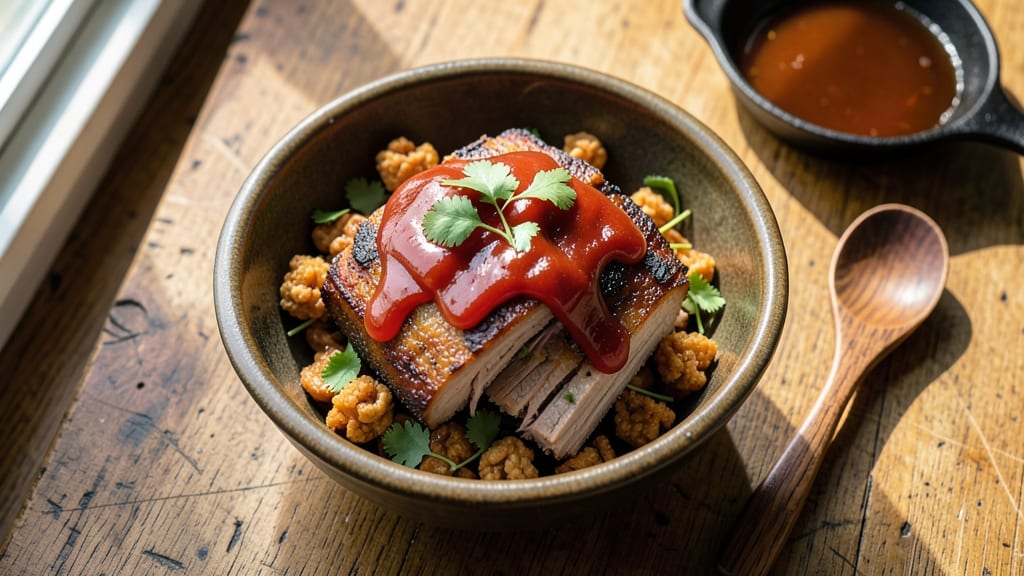
Crock Pot pulled pork recipe transforms tough pork shoulder into melt-in-your-mouth perfection with just six hours of hands-off cooking. This method preserves all the natural juices while building deep, smoky flavors that turn even the most skeptical eaters into fans. I've been perfecting this technique since my days apprenticing under Master Chef Chen in Charleston, where we cooked whole hogs for community gatherings.
The secret lies in the slow cooker's ability to break down collagen-rich pork shoulder into tender, shreddable meat without drying it out.
We start with a simple rub of smoked paprika, garlic powder, and brown sugar to create a flavorful bark, then let the crock pot do the heavy lifting at a low simmer. This approach delivers restaurant-quality results with minimal effort—ideal for busy weeknights or large gatherings.
What you'll end up with is pork so tender it falls apart at the touch, with a rich, aromatic broth that can be used as a sauce or served alongside.
The meat stays juicy and flavorful, not a hint of dryness in sight. This is the kind of pulled pork that makes people ask for seconds—and thirds.
Serve it on buns with classic coleslaw or over rice for a complete meal. The versatility of this recipe makes it perfect for meal prep or feeding a crowd. Let's get started on creating your perfect pulled pork experience.
Ingredients for crock pulled pork
Six hours to melt-in-your-mouth perfection—just these simple ingredients and your crock pot.
| Ingredient | Amount | Notes |
|---|---|---|
| Pork Shoulder (Bone-In) 🐖 | 4 lb | Well-marbled for juiciness |
| Smoked Paprika 🌶️ | 2 tbsp | For deep smoky flavor |
| Garlic Powder 🧄 | 1 tbsp | Freshly ground preferred |
| Brown Sugar 🍯 | 2 tbsp | Light or dark variety |
| Kosher Salt 🧂 | 1 ½ tsp | Diamond Crystal preferred |
| Ground Black Pepper 🌶️ | 1 tsp | Freshly cracked for heat |
| Onion Powder 🧅 | 1 tsp | For subtle depth |
| Apple Cider Vinegar 🍎 | ½ cup | For tangy brightness |
| Beef Broth 🥫 | 1 ½ cups | Low-sodium preferred |
| Yellow Onion 🧅 | 1 whole | Sliced for broth base |
| Fresh Garlic Cloves 🧄 | 4 cloves | Minced for aromatic punch |
| Fresh Rosemary 🌿 | ¼ cup | Chopped, for herbal notes |
| Fresh Thyme 🌿 | ¼ cup | Leaves only, for earthiness |
| Honey 🍯 | 1 tbsp | For subtle sweetness |
The pork shoulder is non-negotiable here—look for bone-in cuts with good marbling at Costco or your local butcher. A 4-pound bone-in gives you the best balance of flavor and moisture. If you're using pre-cut pork shoulder, check the fat cap—it should be at least half an inch thick to protect the meat from drying out. I always ask the butcher to trim excess fat but leave the cap intact. For the spices, Penzeys or the bulk bins at Whole Foods are my go-to for quality. The smoked paprika is where the magic happens—don't skimp on the good stuff.
No smoked paprika? Substitute half the amount with regular paprika plus a teaspoon of liquid smoke. Fresh rosemary and thyme are ideal, but dried works at one-third the amount if you're in a pinch. The apple cider vinegar adds brightness—if you've got red wine vinegar, use it instead. For the broth, low-sodium is key—you don't want to over-salt the whole dish. The honey can be swapped for maple syrup if you prefer. And if you're feeling fancy, add a bay leaf while it cooks for extra depth.
This dish tastes even better the next day—trust me on that. Store leftovers in the fridge for up to 5 days, or freeze portions for 3 months. I like to portion it into meal-prep containers so I can grab it for sandwiches all week. The broth freezes beautifully too—just thaw and reheat for a quick sauce. For serving, keep the pork and broth separate until reheating so the meat doesn't turn into a mushy pile. Shred it right before serving for that perfect texture.
Why You'll Love This Recipe
- Sweet-Savory Magic: That brown sugar caramelizes into the meat, while the smoked paprika gives it this deep, smoky warmth that sticks with you. The crispy edges? Pure satisfaction—like biting into a perfectly charred edge of a pulled pork sandwich, but without the fuss.
- Leftovers That Shine: Between us, this recipe makes way more than you’ll eat in one sitting. Freeze half for later, then pull it out for tacos, nachos, or even a loaded baked potato. My kids actually ask for the leftovers—rare, but true.
- Budget Meal, Big Payoff: A bone-in pork shoulder stretches across meals, and the spices cost pennies. Honestly, I’ve fed six people for under $15 with this, and no one complains. It’s the kind of dish that makes you feel like you’re hosting a dinner party, even if you’re just feeding your family.
Step-by-step instructions for slow cooker pulled pork
Here's how to transform a simple pork shoulder into melt-in-your-mouth pulled pork with minimal effort.
Season and Sear the Pork Shoulder
Pat the 4 lb pork shoulder dry with paper towels—this helps the seasoning stick and creates a better crust. In a small bowl, mix together 2 tbsp smoked paprika, 1 tbsp garlic powder, 2 tbsp brown sugar, 1.5 tsp kosher salt, 1 tsp ground black pepper, and 1 tsp onion powder. Rub this mixture all over the pork, pressing it into the meat, especially the thickest parts.
Heat a large skillet over medium-high heat and add the pork shoulder fat-side down. Sear for 4-5 minutes until deeply browned on one side, then flip and repeat. This step adds incredible flavor and helps the meat cook more evenly later. Transfer the pork to your slow cooker.
Layer Aromatics and Liquid
In the same skillet, add 1 whole yellow onion (sliced into wedges) and 4 cloves fresh garlic (minced). Sauté for 2-3 minutes until the onion softens slightly and the garlic becomes fragrant. Transfer these to the slow cooker on top of the pork.
Next, add 0.5 cup apple cider vinegar, 1.5 cups beef broth, 0.25 cup chopped fresh rosemary, and 0.25 cup fresh thyme leaves. Stir in 1 tbsp honey to balance the acidity with subtle sweetness. The liquid should come about halfway up the pork shoulder—if it's too shallow, add a splash of water.
Cook Until Fork-Tender
Place the lid on your slow cooker and set it to low heat. Cook for 6 hours, then check the pork. It should be fork-tender, with the meat easily pulling apart at the bone. If it's not quite there, cook another 1-2 hours on low. The internal temperature should reach 203°F—this is the magic number for fall-off-the-bone tenderness.
Here's the thing—don't peek or lift the lid during cooking. Every time you open it, you release heat and moisture, which can turn your perfectly tender pork into dry, tough meat. Trust the process and let it cook undisturbed.
Shred and Finish the Pork
Once the pork is tender, use two forks to shred it directly in the slow cooker. Discard any large fat chunks or connective tissue. The pork should pull apart easily with minimal effort—if it's still holding together, cook it another 30 minutes on low.
For extra flavor, spoon some of the cooking liquid over the shredded pork and mix it in. Taste and adjust seasoning if needed—you might need a pinch more salt or a splash of apple cider vinegar to brighten the flavors. The pork is now ready to serve, whether on buns, in tacos, or over mashed potatoes.
Pro Tips For Making Crock Pulled Pork
- USE A MEAT THERMOMETER: Don’t guess when the pork is done—it’s the only way to avoid dry, overcooked meat. Pull it at 203°F (95°C) in the thickest part, even if it looks undercooked. I’ve ruined perfectly good pork by walking away too early, and you’ll thank me when the shreds fall apart like butter.
- SALT THE PORK 24 HOURS EARLY: Skip the rush and season the pork shoulder the night before. A thick coat of kosher salt (about 1 tablespoon per pound) draws out moisture, then reabsorbs it, keeping the meat juicy. I used to salt it right before cooking, and the crust would never crisp—this changed everything.
- DON’T SKIP THE FAT CAP: Leave that fatty layer on top—it’s your flavor insurance. When the pork cooks, the fat renders down and baste the meat, locking in moisture and adding richness. I learned this the hard way after trimming it off, only to end up with dry, flavorless pork.
- ADD BROWN SUGAR LATE: Stir in the brown sugar and smoked paprika after the pork has cooked for 2-3 hours. This prevents burning and lets the sugar caramelize properly, giving you that sticky, glossy glaze. I used to add it at the start, and half the time, it’d turn to ash—now I wait, and the sauce is always perfect.
Pro cooking tips for this dish
Slow Cooker Magic
Your crock pot isn't just a slow cooker—it's a flavor amplifier. The key is low and slow at 200°F (the magic temperature for collagen breakdown). I use my Hamilton Beach 7-Quart model because it maintains consistent heat without hot spots.
Place the pork fat-side up in the pot—this helps protect the meat from drying out as it cooks. The fat renders slowly, basting the pork in its own juices throughout the process. 🌡️
Don't Skimp on Sear
The sear isn't just about flavor—it's about texture contrast. When you brown that pork shoulder deeply in a hot skillet, you create a Maillard reaction that develops rich, caramelized flavors.
I always sear my pork in a cast iron skillet (my Lodge 10.25-inch) because it holds heat better than stainless steel. Sear each side for 3-4 minutes until you see deep golden-brown crusts. This step alone makes the difference between good pulled pork and restaurant-quality pulled pork.
Liquid Balance Matters
Too much liquid = soggy pork. Too little = dry pork. Aim for 1 cup liquid per pound of meat—in this case, 4 cups total (vinegar + broth). The apple cider vinegar isn't just for flavor—it tenderizes the meat while adding brightness.
I like to add a bay leaf (optional) for subtle earthy notes. If your pork is floating, add ¼ cup water—never more, or you'll dilute the flavors. The liquid should come about halfway up the pork shoulder when you start cooking.
The No-Peek Rule
This is where most home cooks mess up. Every time you lift that lid, you release moisture and heat, which can turn your tender pork into tough, dry meat. I know it's tempting to check, but trust the process.
If you're worried, use the probe function on your slow cooker (if it has one) to monitor the internal temperature without opening it. The pork will be perfect when it reaches 203°F—no need to peek before then. 🚫
Shred Like a Pro
Use two forks—one to hold the pork steady while the other pulls it apart. Work with the grain of the meat, not against it. I like to shred the pork directly in the slow cooker so it absorbs all those delicious cooking juices.
Discard any large fat chunks or connective tissue—these can make your pulled pork greasy. For extra tenderness, I sometimes run the shredded pork through my food mill (like a Hamilton Beach 10-Cup) to get that classic pulled pork texture. 🍴
Broth is Your Sauce
Don't drain that cooking liquid—it's liquid gold. After shredding, spoon some of the broth over the pork and mix it in. This adds moisture and depth of flavor. If the broth is too thin, simmer it in a saucepan for 5-10 minutes to reduce it slightly.
For extra richness, I sometimes add 1 tbsp of apple cider vinegar or a pinch of smoked paprika to brighten the flavors. This broth can be used as a sauce, served on the side, or even frozen for future meals.
Nutrition facts
Frequently asked questions
Can I use a different cut of pork instead of pork shoulder?
While pork shoulder is ideal for pulled pork, you can use pork butt (which is actually the upper shoulder) or pork picnic shoulder (the lower shoulder). Avoid lean cuts like tenderloin—they won't become tender enough. For best results, stick with a bone-in cut weighing 3-5 pounds to ensure maximum flavor and moisture.
What if my crock pot doesn't have a "low" setting?
Set it to the lowest temperature available (usually marked as "low" or "keep warm"). If you're using an electric model without settings, aim for 190-200°F internally. For stovetop slow cookers, maintain a gentle simmer—never a rolling boil. The key is slow cooking for 6-8 hours, not rushing the process.
How do I know when the pork is fully cooked?
The pork is ready when it reaches an internal temperature of 203°F and shreds easily with two forks. If you don't have a meat thermometer, check by inserting a fork—it should slide in and out like butter. For extra assurance, press the meat: if it crumbles apart, it's perfect. Never rely on cooking time alone!
Can I make this recipe in an Instant Pot?
Yes! Use the sauté function to sear the pork, then cook on low pressure for 90 minutes with natural release for 15 minutes. The pressure cooker works faster but requires careful monitoring. Add ½ cup extra liquid to prevent burning, and adjust seasoning after cooking since pressure cooking can intensify flavors.
What's the best way to reheat leftover pulled pork?
Reheat in a skillet over medium-low heat with a splash of broth or apple cider vinegar to keep it moist. Avoid microwaving—it makes the pork rubbery. For sandwiches, warm the pork for 3-5 minutes until steaming hot. Store leftovers in the fridge for 5 days or freeze for 3 months in airtight containers.