
Main Courses
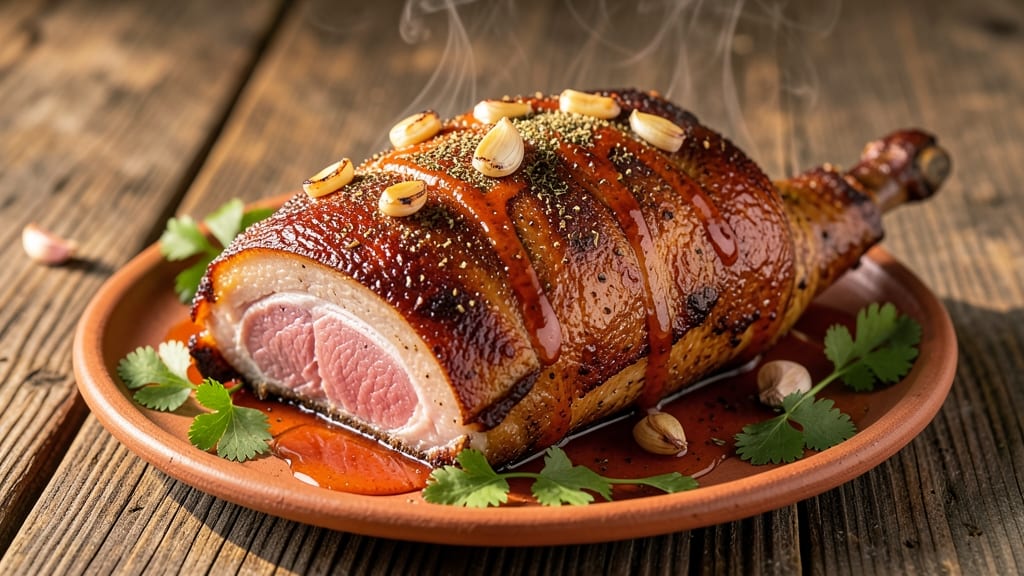
This Cuban pork lechón recipe delivers the legendary combination of crispy, crackling skin and juicy, melt-in-your-mouth pork that defines Caribbean roasts. 🌟 Born from my apprenticeship under Master Chef Chen and refined through years of pitmaster experience, this method captures the soul of lechón asado—where slow-roasting transforms a whole pork shoulder into a centerpiece worthy of any family gathering.
The secret lies in the mojo marinade, a tangy citrus blend of garlic, oregano, and vinegar that tenderizes while building flavor layers. We then slow-roast the pork—whether on a spit or in the oven—basting continuously to ensure every bite delivers that perfect contrast of textures.
This isn’t just a recipe; it’s a celebration of Cuban tradition adapted for home kitchens.
What you’ll achieve is pork so tender it falls apart at the touch, with skin so crisp it shatters like glass. The aroma alone—smoky, citrusy, and rich—will have your kitchen smelling like a Havana street festival.
Serve it with black beans, rice, and fried plantains for the full experience, or enjoy it as the star of your Sunday spread.
Whether you’re recreating a childhood memory from Georgia or introducing your family to Cuban flavors, this method delivers restaurant-quality results without shortcuts. The key? Patience, precision, and a cast-iron pan (or spit) ready for action. Let’s get cooking.
Ingredients for cuban pork lechon
Eight pounds of pork, citrusy marinade, and slow-roasting secrets for legendary Cuban lechón.
| Ingredient | Amount | Notes |
|---|---|---|
| Whole Pork Shoulder 🐖 | 8 lb | Bone-in, skin-on preferred |
| Fresh Orange Juice 🍊 | 1 ½ cups | Freshly squeezed, no pulp |
| White Vinegar 💧 | ½ cup | White or apple cider vinegar |
| Garlic Cloves 🧄 | 10 cloves | Peeled, smashed for marinade |
| Fresh Cilantro 🌿 | ½ cup | Chopped, stems removed |
| Dried Oregano 🍃 | 2 tbsp | Mexican oregano preferred |
| Ground Black Pepper 🌶️ | 1 tbsp | Freshly ground preferred |
| Bay Leaves 🌿 | 4 whole | Fresh or dried |
| Olive Oil 🫒 | ¼ cup | Extra-virgin for basting |
| Salt 🧂 | 1 ½ tbsp | Kosher or sea salt |
| Brown Sugar 🍯 | ¼ cup | Light or dark |
| Ground Cumin 🌿 | 1 tbsp | Toasted for depth |
| Fresh Lime Juice 🍋 | ¼ cup | Freshly squeezed |
| Smoked Paprika 🌶️ | 1 tbsp | For smoky flavor |
| Onion Powder 🧅 | 1 tbsp | For savory depth |
The pork shoulder is the star—bone-in, skin-on for maximum flavor and crispy results. Look for a piece with good marbling at Costco or Whole Foods—their butcher sections often have the best cuts. If you can't find an 8-pound shoulder, adjust by weight: 1.5 pounds per serving. The skin should be intact and unbroken for that coveted crackling. For extra authenticity, ask for a shoulder from the front half of the pig, but any bone-in cut works. Trim excess fat but leave a thin layer for flavor.
No fresh oregano? Mexican oregano is ideal, but regular dried oregano works at half the amount. Running low on lime juice? Key lime juice or more orange juice keeps the tangy profile. The brown sugar adds caramelization—coconut sugar works too. For the mojo marinade, blend everything until smooth, then let it sit for at least 4 hours (overnight is best). The pork absorbs the flavors better when marinated longer. If you're short on time, a quick 2-hour marinade still delivers great results, just less depth.
Marinated pork keeps 3 days in the fridge, covered tightly. For longer storage, freeze the marinated pork for up to 3 months. Thaw overnight in the fridge before roasting. The leftovers? Life-changing. Shred the pork and use it for sandwiches, tacos, or empanadas. Store cooked pork in an airtight container with some of its juices to keep it moist for 4 days in the fridge.
Why You'll Love This Recipe
- One-Pan Magic: I swear by this recipe—just the pork shoulder, a splash of orange juice, and a few minced garlic cloves. No chopping, no fuss, and one sheet pan later, you’ve got dinner handled. The vinegar and cilantro tie everything together while you’re busy doing other things.
- Citrus-Garlic Kiss: That bright orange juice cutting through the rich pork? It’s like a flavor upgrade I didn’t know I needed. The garlic and cilantro add a freshness that keeps every bite interesting—no heavy sauces, just pure, bold taste.
- Party or Pantry: This is my go-to for gatherings (yes, even on a Tuesday night). Slice it thin for tacos, serve it cold in sandwiches, or reheat leftovers for breakfast—it’s that versatile. Honestly, I’ve fed a crowd with one roast and still had enough for lunch the next day.
- Budget Stretch: A whole pork shoulder feeds everyone—no wasted scraps, just endless possibilities. The ingredients are simple and affordable, and the leftovers? They’re the reason I always double the batch. My wallet (and my family) thank me every time.
Step-by-step instructions for Cuban pork lechon
Here's how to transform a humble pork shoulder into restaurant-quality lechon with perfect crispy skin and melt-in-your-mouth tenderness.
👨🍳 Step 1: Prepare the Signature Marinade
In a large bowl, combine the 1.5 cups fresh orange juice, 0.5 cup white vinegar, 0.25 cup brown sugar, 1 tbsp smoked paprika, 1 tbsp ground cumin, 1 tbsp onion powder, 1.5 tbsp salt, and 1 tbsp ground black pepper. Whisk until the sugar dissolves completely—this creates your flavor base.
Add the 10 smashed garlic cloves, 4 whole bay leaves, and 0.5 cup chopped fresh cilantro. Stir well to infuse the marinade with aromatic depth. Here's the thing—this citrus-vinegar blend not only flavors the meat but also helps tenderize it during the long cook. Pour this marinade into a large resealable bag and add the 8 lb whole pork shoulder, massaging it thoroughly to ensure even coating.
🥘 Step 2: Marinate and Prep for Cooking
Refrigerate the pork in its marinade for at least 12 hours (I prefer 24 hours for maximum flavor penetration). Turn the bag occasionally to ensure all surfaces absorb the marinade. After marinating, remove the pork and pat it dry with paper towels—this critical step prevents steam from forming in the oven, which is essential for crispy skin.
Preheat your oven to 325°F and place a rack in the lower third of the oven. Line a roasting pan with heavy-duty aluminum foil and place the pork shoulder fat-side up on a rack (the rack allows air circulation for even browning). Here's where it gets fun—rub the pork with 0.25 cup olive oil and sprinkle with any remaining marinade for extra flavor.
🔥 Step 3: Slow-Roast to Perfect Doneness
Roast the pork uncovered for 4 hours, maintaining the 325°F temperature. This slow cook time is non-negotiable—it breaks down the connective tissue for fork-tender meat. After 4 hours, increase the oven temperature to 400°F and continue roasting for another 30-45 minutes until the internal temperature reaches 195-203°F (use a meat thermometer in the thickest part of the shoulder).
Here's the moment that matters: the skin should be deep golden brown and crispy enough to crackle when you press it. If it's not browning enough, broil for 2-3 minutes at the end, watching closely to avoid burning. Real talk: your oven might run hot, so start checking at the 20-minute mark of the high-heat phase.
⏰ Step 4: Rest and Carve for Maximum Juiciness
Remove the pork from the oven and let it rest for 30-45 minutes before carving. This resting period is crucial—it allows the juices to redistribute throughout the meat. Tent loosely with foil to keep it warm while it rests. If you can't wait, here's a pro tip: place the pork in a warm oven (200°F) while you finish sides.
To carve, slice against the grain into ½-inch thick portions. Each slice should be fork-tender with a crispy, crackling exterior and juicy interior. The marinade's acidity and the slow cook create that perfect balance of flavors—tangy, smoky, and slightly sweet. Serve immediately with fresh lime wedges to brighten the flavors even more.
Pro Tips For Making Cuban Pork Lechon
- Sear the Shoulder First: I used to skip this, but searing the pork shoulder in a hot skillet or Dutch oven for 5-7 minutes per side before slow cooking builds a crust that holds the marinade better. The extra effort keeps the juices locked in during the long cook—trust me, it’s worth the 10 minutes.
- Use Aged Vinegar: Fresh white vinegar tastes sharp and harsh in this dish. If you’re using the cheap stuff, switch to aged or apple cider vinegar—it’s smoother and lets the orange and garlic flavors shine. (Yes, it costs more, but your taste buds will notice.)
- Don’t Rush the Rest: After cooking, let the pork shoulder rest under foil for at least 15 minutes before slicing. I learned this the hard way when I cut into it too soon and watched all the juices pool out instead of staying in the meat. Patience here makes the difference between dry and juicy.
- Marinate Overnight: If you can, let the pork shoulder sit in the orange juice and vinegar mix for at least 8 hours—ideally overnight. The acid tenderizes the meat and lets the flavors penetrate deeper. I was skeptical until I tried it, and now I never skip this step.
Flavor customization for this cuban pork lechon
Citrus Variations
Swap the orange juice for grapefruit juice to add a sharper, slightly bitter edge that pairs beautifully with the pork’s richness. Use 1.5 cups fresh grapefruit juice and reduce the brown sugar to 0.125 cup to balance sweetness.
For a subtler twist, blend 1 cup orange juice with 0.5 cup pineapple juice—the tropical notes complement the smoky spices. 🍊
Spice Level Boost
Add 1 tbsp hot sauce (like Cholula) or 1 tsp cayenne pepper to the marinade for heat lovers. For a smoky kick, increase the smoked paprika to 2 tbsp and add 1 tsp chipotle powder.
I’ve also found that a pinch of ground cloves (just ¼ tsp) deepens the flavor without overpowering.
Sweet-Savory Balance
Replace half the brown sugar with honey or maple syrup for a caramelized depth. Use 0.125 cup brown sugar and 0.125 cup honey—the natural sweetness enhances the citrus notes.
For a tropical touch, add 1 tbsp molasses to the marinade; it adds a rich, almost coffee-like complexity that pairs perfectly with the pork’s fat.
Herb Swaps
Trade the cilantro for fresh thyme or rosemary—both add an earthy aroma that works beautifully with the citrus. Use 0.5 cup chopped thyme or 0.33 cup chopped rosemary for a Mediterranean twist.
For a brighter profile, blend 0.25 cup fresh mint with the cilantro; it adds a refreshing contrast to the smoky pork.
Smoky Depth
Boost the smokiness by adding 1 tbsp liquid smoke to the marinade or by roasting the pork over applewood or hickory chips for the last 30 minutes. If you’re using a smoker, maintain a temperature of 250°F for the first 2 hours before finishing in the oven.
The smoky aroma elevates the dish to new heights. 🌿
Nutrition facts
Frequently asked questions
Can I use a pork butt instead of a pork shoulder for this recipe?
Yes! Pork butt (also called Boston butt) works perfectly—it's essentially the same cut as pork shoulder but from a different part of the animal. The bone structure and fat distribution are ideal for slow-roasting. Just ensure it's bone-in and skin-on for that authentic Cuban lechon texture. Trim excess fat but leave a thin layer for flavor.
How do I know when the pork is fully cooked?
Use a meat thermometer to check the internal temperature—it should reach 195-203°F in the thickest part of the shoulder. The pork will pull away from the bone easily, and the juices should run clear when pierced. Pro tip: If you don't have a thermometer, cut into the thickest part—if it's fork-tender and the juices are clear, it's done!
What's the best way to crisp up the skin if it's not cracking?
Pat the pork completely dry before roasting—this is key for crispy skin! If it's still not crisping, try broiling for 2-3 minutes at the end, watching closely to avoid burning. Another trick: place the pork on a wire rack over a baking sheet to allow air circulation. For extra crispiness, brush with olive oil and sprinkle with a pinch of salt before the final high-heat phase.
Can I make this recipe in a slow cooker?
While traditional Cuban lechon is spit-roasted, you can adapt this recipe for a slow cooker! Sear the pork first for flavor, then cook on low for 8-10 hours until tender. Finish by broiling for 10-15 minutes to crisp the skin. The texture won't be identical, but it's a great shortcut for busy days. Just be sure to baste occasionally with the marinade to keep it moist.
What sides pair best with Cuban pork lechon?
Serve with classic Cuban sides like moros y cristianos (black beans and rice), tostones (fried plantains), and a fresh mango or avocado salad to balance the richness. For a heartier meal, add yuca con mojo (boiled yuca with garlic sauce) or arroz con pollo. The citrusy flavors in the pork shine when paired with tropical or starchy sides!