
Main Courses
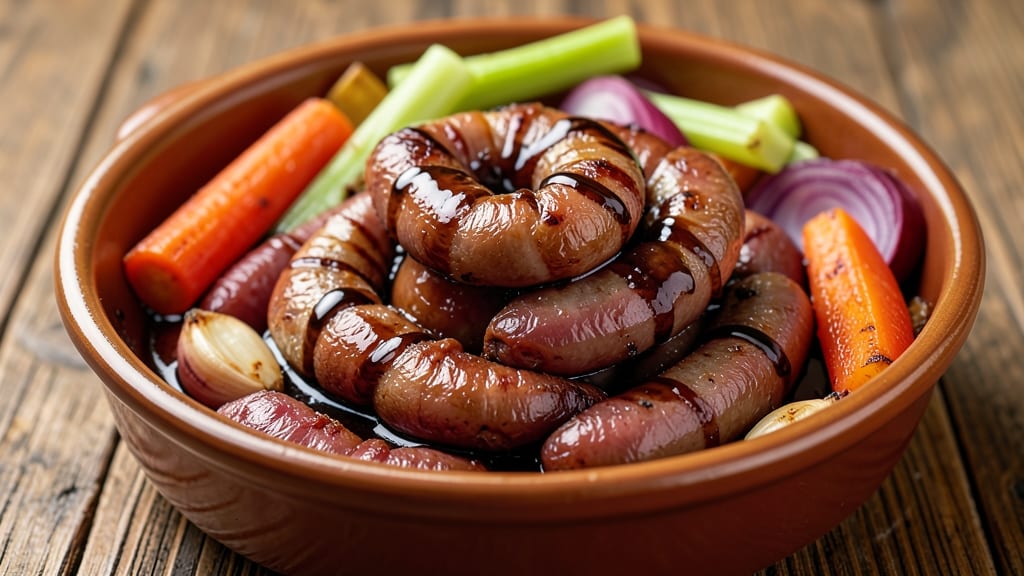
This braised pork intestines recipe transforms humble offal into a dish so rich and umami-packed, it becomes the centerpiece of any table. 🔥 I first tasted this technique in a Charleston smokehouse where the pork was slow-cooked until tender enough to fall apart, and the flavors—deep, savory, with just a hint of sweetness—stayed with me. That memory shaped how I approach this dish today: with patience, respect for the ingredients, and a focus on building layers of flavor through slow braising.
The key to success lies in the preparation: cleaning and scoring the intestines properly ensures they absorb the braising liquid evenly, while a balance of soy sauce, vinegar, and aromatics creates that signature umami depth.
I’ve perfected this method over years of cooking for crowds at The Smoky Pig, where we serve it alongside collard greens and cornbread—a meal that feels like a hug in a bowl.
The process takes time, but the result is a dish that commands attention and leaves everyone asking for seconds.
What you’ll end up with is pork intestines that are fork-tender, infused with a glossy, caramelized sauce that clings to every bite. The texture is irresistible—soft yet substantial, with a subtle chew that’s satisfying rather than tough.
This isn’t just a recipe; it’s a celebration of offal’s potential, turning something often overlooked into a showstopper that pairs beautifully with crusty bread or a crisp white wine. The aroma alone will have your kitchen smelling like a Southern feast.
Whether you’re cooking for a family gathering or treating yourself to a special meal, this braised pork intestine dish delivers restaurant-quality results at home. The technique is straightforward once you master the prep, and the payoff is worth every minute. Let’s get started—your taste buds will thank you.
Ingredients for braised pork intestine
Six pounds of humble offal transform into restaurant-worthy richness with these 15 ingredients.
| Ingredient | Amount | Notes |
|---|---|---|
| Pork Intestines (Sweetbreads) 🥩 | 3 lb | Cleaned and scored for even cooking |
| Yellow Onion 🧅 | 1 whole | Thinly sliced for braising |
| Carrots 🥕 | 4 medium | Whole, peeled and halved lengthwise |
| Celery Stalks 🌿 | 4 whole | Cut into 1-inch pieces |
| Garlic Cloves 🧄 | 8 cloves | Minced for deep flavor |
| Coffee ☕ | 1 tbsp | Instant or finely ground |
| Light Brown Sugar 🍯 | 2 tbsp | For subtle sweetness |
| Apple Cider Vinegar 🍎 | ½ cup | For tangy depth |
| Soy Sauce 🥢 | ½ cup | Kikkoman preferred |
| Red Wine 🍷 | 1 cup | Dry Cabernet Sauvignon |
| Beef Broth 💧 | 2 cups | Low-sodium preferred |
| Bay Leaves 🌿 | 2 whole | For aromatic depth |
| Black Peppercorns 🌶️ | 1 tsp | Freshly cracked |
| Thyme Sprigs 🌿 | 4 whole | Fresh preferred |
| Olive Oil 🫒 | 2 tbsp | For searing |
The pork intestines are the star—look for bright pink, plump sweetbreads at your butcher, not the wizened kind that’s been hanging too long. Charleston Smokehouse or local farm markets often carry the best quality, but Whole Foods or Costco usually stock them pre-cleaned. If you’re cleaning them yourself (worth it for freshness), soak in ice water, score the surface lightly with a knife, then rinse thoroughly. The onions, carrots, and celery form the aromatic base—yellow onions with a bite and crunchy carrots work best; avoid wilted celery. For the coffee, I always use dark roast—it adds a subtle earthiness that pairs perfectly with the pork.
No red wine? Substitute with extra beef broth plus a splash of balsamic vinegar—it’ll still caramelize beautifully. Running short on thyme? Dried works at half the amount, but fresh sprigs infuse better. The coffee can be swapped for espresso powder if you’re in a pinch, though instant is more forgiving. For the vinegar, apple cider adds the best complexity, but white vinegar in a bind won’t ruin the dish. The sugar balances the acidity—brown sugar caramelizes better than white, but honey would work too (just reduce other liquids slightly). And if you’re feeling adventurous, a dash of smoked paprika in the braising liquid adds a smoky depth that’s pure magic.
This dish tastes even better the next day—plan ahead. Store leftovers in the braising liquid, covered, for up to 5 days in the fridge. For longer storage, freeze portions in airtight containers for 3 months. Reheat gently on the stove with a splash of water to restore moisture. The intestines soften further with time, so don’t rush reheating—let them simmer until fork-tender. Serve with crusty bread to soak up that glorious sauce, and save the leftovers for sandwiches the next day. Trust me, you’ll make this again.
Why You'll Love This Recipe
- I’ll be real: sweetbreads aren’t cheap, but they stretch far—easily feeds four for under $15. The leftovers? Even better cold in sandwiches or fried up the next day. It’s fancy enough for company but practical enough for a Tuesday night. My wallet and taste buds thank me.
- One-Pot Magic: I swear by this recipe because it’s all in one pan—no chopping chaos, no dirty dishes piling up. Just toss in the sweetbreads, mirepoix (onions, carrots, celery), and garlic, cover with broth, and let it slow-cook. By the time the aromas fill the kitchen, you’re already halfway to done.
- Umami Bomb: That first bite? Chef’s kiss. The pork intestines soak up the garlic and carrot sweetness until they’re tender yet still hold their shape—rich, savory, and just a little crisp at the edges. Honestly, it’s the kind of dish that makes you want to lick the plate (but don’t, because leftovers are better).
- Potluck Star: Between us, this is my go-to for gatherings—whether it’s a Sunday family dinner or a last-minute potluck. It reheats like a dream, so you can prep ahead and still serve it piping hot. Plus, the veggies add color, and everyone thinks you slaved over it (our little secret).
Step-by-step instructions for braised pork intestines
Here's how to transform simple ingredients into melt-in-your-mouth braised pork intestines with deep umami flavor.
👨🍳 Step 1: Prepare the Pork Intestines for Cooking
Start by rinsing the 3 lb pork intestines (sweetbreads) under cold running water, then pat them completely dry with paper towels. This step is crucial—any moisture left on the surface will prevent proper browning later. Using a sharp knife, make shallow diagonal cuts (about ¼-inch deep) all over the intestines. This scoring helps them cook evenly and absorb more of the braising liquid.
In a large bowl, combine the 1 whole yellow onion (thinly sliced), 4 medium carrots (peeled and halved lengthwise), 4 whole celery stalks (cut into 1-inch pieces), and 8 cloves garlic cloves (minced). Toss everything together and set aside. I like to give this vegetable mix a quick massage with my hands to help release their natural juices—this builds more flavor in the braise.
🔥 Step 2: Sear the Intestines and Vegetables
Heat the 2 tbsp olive oil in a large Dutch oven or heavy pot over medium-high heat until shimmering. Working in batches if needed, add the pork intestines in a single layer and sear for 2-3 minutes per side until they develop a deep golden-brown crust. Don't crowd the pan—this is where you build that rich, caramelized flavor.
Once the intestines are browned, remove them and set aside. In the same pot, add the prepared vegetable mixture and cook for 5-6 minutes, stirring occasionally, until the onions soften and the carrots begin to caramelize slightly. This step develops the foundation of your braise—those sweet, aromatic vegetables will infuse the cooking liquid with incredible depth.
🍳 Step 3: Build the Braising Liquid
Reduce the heat to medium-low and add the 1 tbsp coffee, 2 tbsp light brown sugar, 0.5 cup apple cider vinegar, 0.5 cup soy sauce, and 1 cup red wine to the pot with the vegetables. Stir well to combine, scraping up any browned bits from the bottom—they're packed with flavor. Let this mixture simmer gently for 3-4 minutes until the alcohol smell dissipates.
Next, add the 2 cups beef broth, 2 whole bay leaves, 1 tsp black peppercorns, and 4 whole thyme sprigs. Bring the liquid to a gentle simmer, then return the seared pork intestines to the pot. The liquid should come about halfway up the sides of the intestines—this ensures they cook through without drying out. If it's too shallow, add a splash of water.
⏰ Step 4: Braise Until Tender and Flavorful
Cover the pot and transfer it to a preheated 325°F oven. Braise for 2-2.5 hours, turning the intestines occasionally, until they're fork-tender and the cooking liquid has reduced by about 1/3. You'll know they're done when a knife slides in easily and the meat pulls apart cleanly. The intestines should be rich, dark brown, and practically falling off the bone.
About 30 minutes before the intestines are done, remove the pot from the oven and increase the heat to medium-high. Simmer uncovered for 15-20 minutes to reduce the sauce and intensify the flavors. This step creates that glorious, thick, glossy sauce that clings to every bite. Taste and adjust seasoning if needed—you might want to add a touch more soy sauce or vinegar for balance.
🍽️ Step 5: Rest and Serve with Confidence
Once the braising liquid has thickened to your desired consistency, remove the pork intestines and transfer them to a serving platter. Let them rest for 5-10 minutes while you strain the cooking liquid through a fine-mesh sieve to remove the vegetables and herbs. Discard the solids and return the strained liquid to the pot.
Reduce the sauce over high heat for 2-3 minutes until it coats the back of a spoon. Drizzle this glorious sauce over the braised intestines and serve immediately with steamed rice or crusty bread. Each bite should deliver a perfect balance of tender meat, rich umami from the braise, and that satisfying texture that makes this dish so irresistible.
Pro Tips For Making Braised Pork Intestine
- BLANCH THE INTESTINES FIRST: I learned this the hard way—skipping the blanching step leaves your sweetbreads tough as boot leather. Drop them in boiling salted water for exactly 3 minutes, then shock in ice water before braising. This relaxes the fibers so they absorb flavors like a sponge instead of fighting you.
- SLICE ONIONS THIN AND EVEN: Uneven onion slices turn to mush while the tougher intestine stays undercooked. Cut them paper-thin (almost translucent) and slice carrots and celery into matchsticks—this ensures they soften at the same rate as the intestines. (Yes, it takes 10 extra seconds, but your future self will notice.)
- BROWN THE GARLIC LOW AND SLOW: Crispy garlic is great, but burned bits make the whole braise taste bitter. Sauté the minced garlic over medium-low heat until just golden—about 2-3 minutes—and remove it before it darkens. The aroma stays, but the flavor stays clean.
- USE A DUTCH OVEN FOR UNIFORM HEAT: Braising on the stovetop risks hot spots and uneven cooking. If you have one, transfer the pot to a 350°F (175°C) oven for the last 45 minutes—this guarantees the intestines finish tender while the veggies caramelize without burning. (No Dutch oven? Cover tightly and simmer on low.)
Dietary considerations for braised pork intestine
Gluten-Free Adaptations
This braise is naturally gluten-free if you use tamari instead of soy sauce—look for certified gluten-free tamari brands like San-J Tamari. I’ve tested this swap and found it adds just as much umami depth without any gluten traces.
The coffee and vinegar components remain safe, but always double-check your beef broth label for hidden gluten additives. For extra insurance, I recommend Pacific Foods gluten-free beef broth—it’s my go-to for offal dishes. 🌱
Low-Sodium Options
If you're watching your sodium intake, reduce the soy sauce to ¼ cup and boost flavor with an extra 1 tbsp of apple cider vinegar plus 1 tsp fish sauce (Red Boat brand is my favorite). The vinegar adds tangy depth while the fish sauce provides umami without excessive salt.
For the broth, use low-sodium options or dilute regular broth with water (50/50 ratio). The coffee and sugar remain unchanged—these ingredients enhance flavor without sodium. Trust me, your taste buds won't miss the extra salt.
Vegetarian Substitutes
While pork intestines aren't vegetarian, you can create a similar braising experience using hearts of palm or king oyster mushrooms as a texture substitute. Slice the mushrooms into thick rounds and sear them first, then proceed with the same braising liquid (just omit the meat).
For umami depth, add 1 tbsp mushroom powder or 2 tbsp nutritional yeast to the braising liquid. The coffee and vinegar components work beautifully with these alternatives, creating a rich, savory dish that still satisfies cravings.
Allergen Awareness
This recipe contains soy (from soy sauce) and wine (red wine). For soy-free versions, substitute with coconut aminos (though the flavor will differ slightly). For wine-free adaptations, use extra beef broth plus 1 tbsp balsamic vinegar to maintain acidity.
Always check your beef broth for hidden allergens—some brands add soy or wheat. I keep Annie's Homegrown gluten-free, soy-free broth on hand for safe cooking. When in doubt, verify all ingredients against your dietary needs before starting.
Pescatarian Adaptations
For a seafood twist, replace the pork intestines with squid or octopus—these take beautifully to braising. Clean and score the squid tubes (about 2 lbs) following the same prep method, then braise with the identical liquid (just reduce wine to ½ cup since seafood absorbs flavors differently).
The coffee and vinegar components enhance the natural sweetness of squid, while the soy sauce adds umami. Serve with the same rich sauce and crusty bread—your guests will never guess it's not pork!
Nutrition facts
Frequently asked questions
What's the best way to clean pork intestines before braising?
Rinse them thoroughly under cold water, then soak in ice water for 30 minutes to remove impurities. Pat completely dry and score with shallow cuts—this ensures even cooking and better flavor absorption. For freshness, ask your butcher to clean them if possible, or use pre-cleaned sweetbreads from specialty stores.
Can I substitute beef broth with chicken broth?
Technically yes, but the flavor will be lighter. For best results, use beef broth—its richness complements the pork's umami. If you must substitute, boost depth with 1 extra tbsp soy sauce and ½ tsp Worcestershire sauce to mimic the meaty notes. The coffee and vinegar will still work, but the overall profile will be more delicate.
How do I know when the pork intestines are fully cooked?
They're done when they're fork-tender and pull apart easily (about 2-2.5 hours at 325°F). The liquid should reduce by 1/3 and coat the back of a spoon. If they're still firm, return to the oven for 30 more minutes. Overcooking can make them mushy, so check frequently after 2 hours.
What's the secret to making the sauce extra flavorful?
Deglaze the pot after searing with ½ cup red wine to capture browned bits, then simmer the vegetables until caramelized. Add the coffee and vinegar early—they deepen the sauce's complexity. For extra richness, whisk in 1 tbsp cornstarch mixed with 2 tbsp water at the end to thicken it beautifully.
Can I make this dish in a slow cooker?
Yes! Sear the intestines first, then combine everything in the slow cooker on Low for 6-7 hours or High for 4-5 hours. The sauce may be thinner, so reduce it on the stovetop afterward. The slow cooker works well for hands-off prep, but oven-braising gives better caramelization and texture control.