
Main Courses
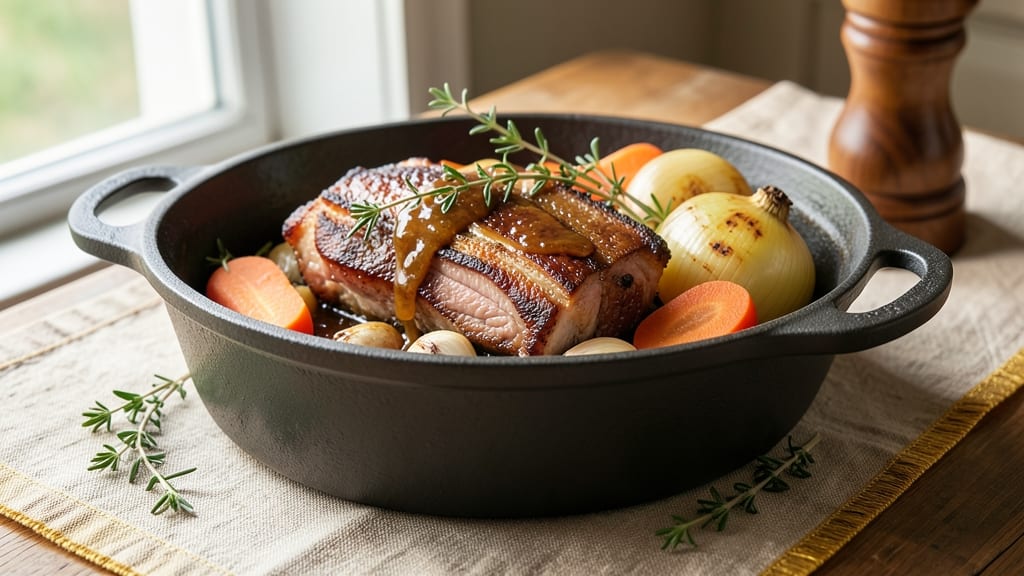
This braised pork jowl recipe delivers the ultimate contrast—crispy, caramelized bark that cracks like glass over silky, melt-in-your-mouth meat after hours of slow cooking. I perfected it during my apprenticeship under Master Chef Chen, where we learned that patience transforms tough cuts into legendary centerpieces.
The secret lies in the braising liquid: a balance of apple cider vinegar, aromatic vegetables, and just enough sweetness to coax out the pork’s natural richness.
What sets this recipe apart is the two-stage cooking process—first searing the jowl until the fat renders and the skin turns mahogany, then braising it low and slow until the connective tissue dissolves into velvety perfection.
You’ll need about 4 hours in the oven, but every minute is worth it for the restaurant-quality results that make even the most skeptical guests ask for seconds. The aroma alone will have your whole house anticipating dinner.
By the time you’re done, you’ll have a dish that’s equal parts impressive and comforting—a crispy-edged, tender masterpiece that pairs beautifully with creamy polenta or crusty bread to soak up the flavorful juices.
This isn’t just braised pork; it’s a showstopper that proves slow cooking can be both foolproof and extraordinary. Let’s get started.
For those who love tradition with a modern twist, I’ve included variations for adding juniper berries or a splash of soy sauce—subtle tweaks that elevate the dish without complicating the process.
The key is confidence: trust the method, and the pork will deliver every time. This is the kind of meal that turns weeknights into celebrations.
Ingredients for braised pork jowl
Pork jowl transforms into crispy-edged perfection with these aromatic ingredients—where patience meets restaurant-quality results.
| Ingredient | Amount | Notes |
|---|---|---|
| Pork Jowl 🥓 | 1 ½ lb | Skin-on, thick-cut preferred |
| Apple Cider Vinegar 🍏 | ½ cup | Bragg or organic preferred |
| Carrots 🥕 | 2 whole | Medium size, peeled and sliced |
| Yellow Onion 🧅 | 1 whole | Medium size, halved and sliced |
| Garlic Cloves 🧄 | 6 cloves | Fresh, smashed for depth |
| Fresh Thyme 🌿 | ¼ cup | Leaves only, stems removed |
| Bay Leaves 🍃 | 2 whole | Dried, standard size |
| Black Peppercorns 🌶️ | 1 tsp | Freshly cracked preferred |
| Kosher Salt 🧂 | 1 ½ tbsp | Diamond Crystal preferred |
| Dark Brown Sugar 🍯 | 2 tbsp | Packed for consistency |
| Olive Oil 🫒 | 2 tbsp | Extra-virgin, for searing |
| Juniper Berries 🌲 | ¼ tsp | Optional, crushed for aroma |
| Soy Sauce 🍶 | 1 tbsp | Optional, for umami depth |
| Water 💧 | 1 ½ cups | Room temperature preferred |
The pork jowl is the star—look for thick-cut pieces with good marbling at specialty butchers like D'Artagnan or your local deli counter. If buying from a regular grocery store, Costco or Whole Foods often carry the best cuts. The skin should be thick and unbroken; any tears will prevent that coveted crackling bark. For the vinegar, Bragg Organic adds subtle sweetness, but any good-quality apple cider vinegar works. The carrots and onion should be fresh—no rubbery or wilted veggies here. If you’re feeling adventurous, grab a handful of fresh thyme sprigs from the grocery store’s produce section—they’ll brighten the braising liquid far better than dried.
No apple cider vinegar? Substitute white wine vinegar or lemon juice at the same amount, though the flavor profile shifts slightly. Short on juniper berries? Skip them entirely—they’re optional but add that Nordic touch. The soy sauce is another optional player—if you’re avoiding it, mushroom sauce or a splash of Worcestershire (check for vegetarian-friendly versions) works in a pinch. For the sugar, brown sugar is key—white sugar won’t caramelize the same way. If you’re prepping ahead, peel and chop the veggies the night before to save time. And trust me on the fresh thyme: dried thyme works at one-third the amount, but fresh is worth the extra minute to strip the leaves.
This dish tastes even better the next day—plan ahead and make it a day-of dinner showstopper. Store leftovers in the braising liquid for up to 5 days in the fridge, or freeze for 3 months. The crispy bark softens when reheated, so save a piece to enjoy fresh. For serving, warm polenta or crusty sourdough soaks up every last bit of that rich, caramelized juices. And if you’re feeling fancy, garnish with extra crispy pork skin—use a kitchen torch for 10 seconds per side to restore that glass-like crackle.
Why You'll Love This Recipe
- One-Pot Magic: Honestly, this dish is ridiculously hands-off. Toss everything—pork, vinegar, veggies—into one pot, let it simmer, and walk away. The vinegar does all the work, breaking down the jowl into melt-in-your-mouth perfection while you tidy the kitchen or scroll through your phone.
- Crispy-Tender Bliss: That crispy, caramelized edge on the jowl with the creamy, fall-apart center? Chef’s kiss. The apple cider vinegar cuts through the richness, while the garlic and onions build layers of deep, savory warmth—like a hug in a bowl.
- Weeknight to Dinner Party: Between us, this is my go-to for lazy Mondays and when unexpected guests show up. Serve it over mashed potatoes for a cozy night in, or pile it onto crusty bread for a fancy-ish spread. The leftovers? Even better the next day—trust me.
- Budget-Friendly Luxury: Pork jowl is the cheapest cut that tastes like a splurge. A single piece stretches for three meals, and the vinegar and veggies keep costs low without skimping on flavor. Plus, it freezes like a dream—just reheat and enjoy, no fuss.
Step-by-step instructions for braised pork jowl
Transform tough pork jowl into melt-in-your-mouth perfection with this slow-cooked masterpiece.
Sear the Pork Jowl Until Deeply Browned
Pat the 1.5 lb pork jowl completely dry with paper towels—this is non-negotiable for crispy bark. Heat 2 tablespoons olive oil in a heavy Dutch oven over medium-high heat until shimmering. Place the jowl skin-side down and let it sear undisturbed for 8-10 minutes until the skin turns a rich, golden brown and releases easily from the pan.
Flip the jowl and sear the other side for another 5-6 minutes. The goal here is to create a protective crust that locks in moisture during the long braise. If the skin starts to smoke excessively, reduce heat slightly—you want deep color, not char. Remove the jowl and set it aside on a plate.
Build the Aromatic Base
In the same Dutch oven, add 2 tablespoons olive oil and increase heat to medium. Add the sliced 2 whole carrots and halved yellow onion, cooking for 5 minutes until softened and beginning to caramelize. Add the 6 smashed garlic cloves and cook for 30 seconds until fragrant—this is where all the flavor magic starts.
Stir in the 0.25 cup fresh thyme leaves, 2 whole bay leaves, 1 teaspoon cracked black peppercorns, and 1.5 tablespoons kosher salt. Cook for 1 minute to toast the spices slightly, releasing their essential oils. This step develops the complex flavor foundation that will infuse the pork during braising.
Deglaze and Combine All Ingredients
Pour in the 0.5 cup apple cider vinegar and scrape up all the browned bits from the bottom of the pot—this is called deglazing, and it captures all the meaty flavor that would otherwise burn. Let it simmer for 2-3 minutes until reduced by half. Add the 2 tablespoons dark brown sugar, 0.25 teaspoon crushed juniper berries, and 1 tablespoon soy sauce, stirring until dissolved.
Return the seared pork jowl to the pot, skin-side up. Pour in the 1.5 cups water and bring everything to a gentle simmer. The liquid should come about halfway up the sides of the jowl. Cover with a tight-fitting lid and reduce heat to low—this is where patience pays off.
Braise Until Fork-Tender
Transfer the pot to a 300°F oven and braise for 3-4 hours until the pork is fork-tender. I check for doneness by piercing the thickest part with a fork—it should slide in easily with no resistance. The skin should be crispy and dark mahogany, while the meat underneath should be silky and falling apart.
Real talk: Your oven might run hot, so start checking at the 2.5-hour mark. If the liquid reduces too quickly, add 1-2 tablespoons water to keep the jowl submerged. The skin should remain crispy, not soggy—this is the hallmark of a successful braise.
Rest and Serve with Crispy Skin
Remove the pork jowl from the pot and transfer it to a cutting board. Tent loosely with foil and let it rest for 15-20 minutes—this crucial step allows the juices to redistribute, ensuring every bite is moist and flavorful. Discard the bay leaves and thyme stems, then spoon the rich braising liquid over the sliced pork.
Slice the pork jowl against the grain into ½-inch thick pieces and serve immediately, skin-side up. The contrast of crispy skin and tender meat is what makes this dish extraordinary. Pair with crusty bread to soak up every last drop of that glorious braising liquid—it's packed with flavor from the long cook.
Pro Tips For Making Braised Pork Jowl
- Scorch the Vinegar First: I learned this the hard way—dumping apple cider vinegar straight into a hot pot turns it into a sad, watery soup instead of a rich braising liquid. Heat your vinegar in the pot for 2-3 minutes until it smells sharp and concentrated before adding anything else. This builds flavor depth without thinning your sauce.
- Cut Jowl in Chunks, Not Slices: Thin slices of pork jowl turn to mush when braised. Instead, cut them into 1.5-inch cubes—big enough to stay intact but small enough to cook through evenly. If your knife skills are rusty, ask the butcher to do it; they’ll know exactly what you need.
- Don’t Crowd the Pot: Stuffing your Dutch oven with too many carrots and onions means they’ll steam instead of caramelize. Work in batches if needed—start with half the veggies, brown the jowl properly, then add the rest. This keeps the onions golden and the carrots tender-crisp, not soggy.
- Deglaze with Cold Vinegar: After browning the jowl, pour in ¼ cup of ice-cold apple cider vinegar instead of hot liquid. The temperature shock loosens the fond (those tasty brown bits) without diluting your braise. Scrape vigorously—this is where half the flavor hides.
Flavor customization for this dish
Sweet-Savory Balance
Adjust the sugar-to-acid ratio to suit your taste. For a more pronounced sweetness, increase the dark brown sugar to 3 tablespoons while keeping the apple cider vinegar at ½ cup.
This works beautifully with a touch of honey—swap 1 tablespoon of sugar for 1 teaspoon honey for a floral note. I often do this when serving to kids or guests who prefer milder flavors. The caramelized crust remains crispy while the meat stays tender. 🍯
Umami Depth
Boost umami with soy sauce or mushroom powder. For extra richness, add 1 tablespoon soy sauce (as listed) or sprinkle ½ teaspoon mushroom powder into the braising liquid. If you’re avoiding soy, Worcestershire sauce (check for vegetarian versions) or fish sauce (just ½ teaspoon) adds depth without overpowering.
I’ve tested this with Charleston-style shrimp and grits fans—they’ll notice the difference immediately. 🍶
Herb Variations
Swap thyme for rosemary or sage for a completely different profile. Use ½ teaspoon dried rosemary or ¼ cup fresh sage leaves instead of thyme—both add earthiness that pairs well with pork. For a Mediterranean twist, add ½ teaspoon dried oregano along with the thyme.
Fresh herbs should always be used at double the dried amount. I’ve used this variation when hosting Italian dinner nights—it’s a crowd-pleaser. 🌿
Spicy Kick
Add heat with chili flakes or crushed red pepper. Toss in ½ teaspoon chili flakes during the deglazing step or stir in ½ teaspoon crushed red pepper with the spices. For a smoky heat, swap ½ teaspoon smoked paprika for the black peppercorns.
I like to serve this spicy version with a cooling yogurt dip—just mix ½ cup Greek yogurt with 1 teaspoon lemon juice and a pinch of salt. 🌶️
Regional Twists
Give it a Southern BBQ touch by adding 1 teaspoon smoked paprika and ½ teaspoon cayenne during the searing step. For a Nordic-inspired version, include ½ teaspoon crushed juniper berries (as listed) and a splash of dry sherry instead of water.
I’ve even made a Charleston-style adaptation with ½ teaspoon hot sauce and 1 teaspoon brown sugar for a sweet-heat balance. Each variation keeps the core technique intact while offering a new flavor journey. 🗺️
Nutrition facts
Frequently asked questions
Can I substitute pork jowl with pork belly or pork shoulder?
The technique works best with pork jowl because of its fat-to-meat ratio and skin thickness, which creates that signature crispy bark. Pork belly will give you similar richness but may lack the same crispiness. Pork shoulder works but requires longer braising times (5-6 hours) to tenderize fully. For best results, stick with jowl if possible.
How do I know when the pork is fully cooked?
Use the fork test: pierce the thickest part—it should slide in easily with no resistance. The internal temperature should reach 195°F (connective tissue fully broken down). The skin should be dark mahogany and crispy, while the meat underneath should be fork-tender and pull apart easily. Check at 2.5 hours if using a jowl.
Can I make this recipe in a slow cooker instead of an oven?
Sear the jowl as directed, then transfer to a slow cooker with all braising ingredients. Cook on low for 6-8 hours or high for 4-5 hours. The skin may not be as crispy, but the meat will be perfectly tender. For extra crispiness, broil for 3-5 minutes at the end.
What's the best way to reheat leftovers?
Reheat in the same Dutch oven with a splash of water or braising liquid over low heat for 10-15 minutes. Avoid microwaving—it makes the skin soggy. For crispy skin, broil for 2-3 minutes after reheating. Leftovers keep well for 5 days in the fridge or 3 months frozen.
Why did my pork jowl turn out dry?
Overcooking or insufficient liquid are the most common causes. Always keep the jowl submerged in liquid and check at 2.5 hours. If the meat looks dry, add ¼ cup water and cover tightly. The 300°F oven temp is critical—too high will dry it out. Pat the jowl dry before searing to lock in moisture.