
Main Courses
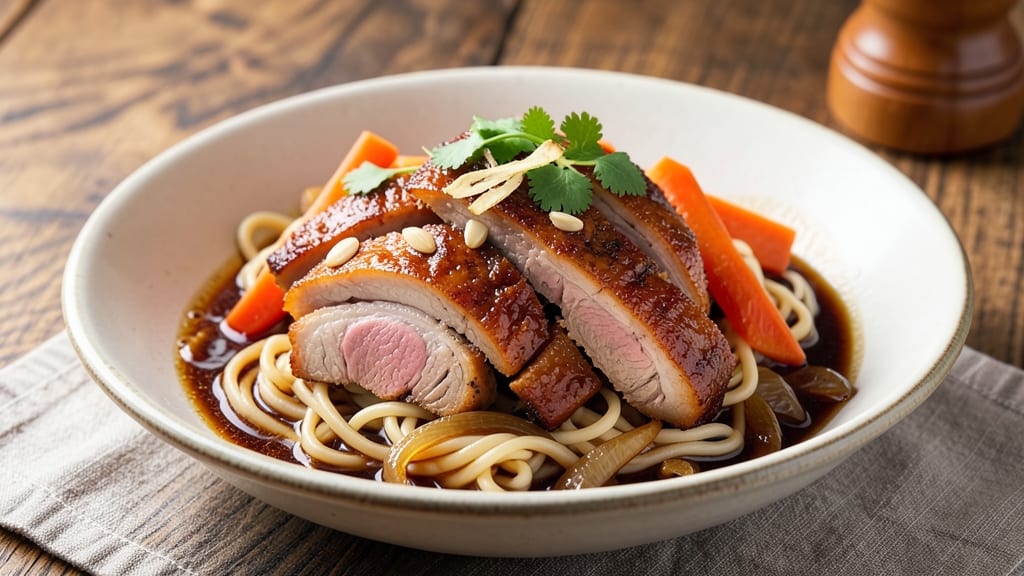
This braised pork noodles recipe delivers restaurant-quality depth in a single pot, transforming simple ingredients into a dish that tastes like it simmered all day. The secret lies in slow-braising pork shoulder with aromatic vegetables until it's fork-tender, then combining it with chewy noodles in a rich, umami-packed sauce.
I perfected this technique during my apprenticeship under Master Chef Chen, where we learned that patience pays off in layers of flavor.
The beauty of this recipe is its balance—tender pork that falls apart at the touch, al dente noodles that hold their shape, and a sauce that's savory, slightly sweet, and packed with caramelized aromatics.
You'll start with a pork shoulder, simmered until it's so tender it practically melts, then toss it with noodles in a sauce thickened just enough to coat every bite. The result is a comforting, hearty dish that's perfect for weeknight dinners or feeding a crowd.
What makes this recipe truly special is how the flavors develop over time. As the pork braises, it releases its natural juices, which combine with soy sauce, ginger, and garlic to create a sauce that's deeply flavorful without being heavy.
The noodles soak up this rich liquid, turning a simple meal into something extraordinary. Each bite delivers a perfect harmony of textures and tastes—crisp vegetables, tender pork, and chewy noodles all working together.
Serve this dish with a sprinkle of fresh cilantro or sesame seeds for brightness, and pair it with a simple green salad to cut through the richness. The leftovers reheat beautifully, making this an ideal meal prep option for busy weeks.
Trust me, once you try this braised pork noodles recipe, it will become a staple in your rotation.
Ingredients for braised pork noodles
Pork shoulder, aromatic veggies, and umami-packed sauce create this deeply satisfying one-pot wonder.
| Ingredient | Amount | Notes |
|---|---|---|
| Pork Shoulder 🥓 | 1 ½ lb | Bone-in for maximum flavor |
| Egg Noodles 🍜 | 8 oz | Fresh or dried, al dente preferred |
| Yellow Onion 🧅 | 1 whole | Thinly sliced for even cooking |
| Carrots 🥕 | 2 medium | Cut into thick matchsticks |
| Garlic Cloves 🧄 | 6 cloves | Minced for aromatic depth |
| Fresh Ginger 🌿 | 1 inch | Thinly sliced, peeled |
| Soy Sauce 🍶 | ½ cup | Use high-quality, preferably Japanese |
| Oyster Sauce 🍜 | 2 tbsp | For umami richness |
| Brown Sugar 🍯 | 2 tbsp | Light or dark, packed |
| Dried Shiitake Mushrooms 🍄 | 4 whole | Rehydrated, sliced |
| Sesame Oil 🫒 | 1 tbsp | Toasted for aroma |
| Vegetable Oil 🫒 | 2 tbsp | High smoke point |
| Fresh Cilantro 🌿 | ¼ cup | Chopped, for garnish |
| Salt 🧂 | 1 ½ tsp | Kosher or sea salt |
| Black Pepper 🌶️ | ½ tsp | Freshly ground |
The pork shoulder is non-negotiable here—bone-in for maximum flavor and texture. Look for well-marbled cuts at your butcher or grocery store's meat department; if you can't find it pre-cut, ask them to trim it into 1.5-inch chunks. Costco or Whole Foods usually carry high-quality pork shoulders. For the noodles, fresh egg noodles hold up best to the braising, but dried works in a pinch. The shiitake mushrooms? Dried is best—they pack more umami and rehydrate perfectly. Soak them in hot water for 20 minutes before slicing.
No oyster sauce? Hoisin sauce or a splash of fish sauce works, but you'll lose some depth. Fresh ginger and garlic are ideal, but jarred minced garlic (the kind in tubes) saves time—just drain it well. The carrots can be baby carrots if that's what you've got, but thick matchsticks caramelize better. For the soy sauce, Japanese brands like Kikkoman have cleaner flavor than American versions. Want extra richness? Add 1 tbsp of miso paste to the braising liquid. The sesame oil is for finishing—toasted adds a nutty aroma, but regular works too.
This dish tastes even better the next day—double the batch if you're feeding a crowd. The pork stays tender for 3-4 days in the fridge, and the sauce thickens beautifully. Store in airtight containers, and reheat with a splash of water. Freezes for up to 3 months if you portion it into meal-sized containers. Garnish with fresh cilantro right before serving—it wilts fast, so don't add it to the pot. Leftovers make amazing sandwiches or fried rice the next day.
Why You'll Love This Recipe
- One-Pot Magic: I swear by this recipe on nights when I’d rather not scrub a million dishes—just brown the pork, toss in the veggies, and let it simmer. The onions caramelize right in the pot while the noodles cook, so you’re basically done with the same utensils you started with.
- Rich Without Fuss: That pork shoulder? It turns fall-apart tender with just a splash of soy sauce and a slow simmer, while the garlic and carrots add sweetness that balances the savory. Honestly, the flavor builds as it cooks—first it’s simple, then it’s ridiculously good.
- Leftovers That Don’t Suck: Between us, this dish tastes even better the next day. I’ll make a double batch on Sundays, and by Wednesday, the noodles are perfectly al dente again after reheating. (Yes, even on a Tuesday night.)
- Budget-Friendly Feast: Pork shoulder is cheap, carrots and onions stretch forever, and a box of egg noodles costs pennies. It’s the kind of meal where you can feed four people for what one fancy dinner would cost—plus, everyone’s happy because it’s actually filling.
Step-by-step instructions for braised pork noodles
This one-pot wonder delivers deep umami flavor and tender pork every time.
Sear the Pork Shoulder for Maximum Flavor
Heat the 2 tablespoons vegetable oil in a large Dutch oven or heavy pot over medium-high heat until shimmering. Pat the 1.5 lb pork shoulder dry with paper towels—this helps create that perfect crust. Place the pork in the pot, fatty side down, and sear undisturbed for 5-6 minutes until a deep golden brown crust forms.
Flip the pork and sear the other side for another 4-5 minutes. The reason we sear so thoroughly is that those browned bits—called fond—dissolve into the braising liquid, creating layers of rich flavor. Remove the pork and set it aside on a plate, leaving all that glorious fond in the pot.
Build the Umami-Packed Braising Base
In the same pot, add the 1 whole yellow onion (thinly sliced) and 2 medium carrots (cut into thick matchsticks). Cook for 5 minutes until the onions soften slightly and the carrots begin to color. Add the 6 cloves garlic cloves (minced) and 1 inch fresh ginger (thinly sliced), cooking for another 1 minute until fragrant.
Pour in the 0.5 cup soy sauce, 2 tablespoons oyster sauce, and 2 tablespoons brown sugar. Stir to deglaze the pot, scraping up all those browned bits from the bottom. Add 1 cup water (yes, just water—it's what makes the braising liquid work) and bring to a gentle simmer over medium heat.
Braise the Pork Until Fork-Tender
Return the pork to the pot, fat-side up. Cover tightly with a lid and reduce heat to low. Let it cook for 2 hours—this is where patience pays off. You'll know it's ready when the pork easily pulls apart with a fork and the meat is fork-tender.
About 15 minutes before the pork is done, add the 4 whole dried shiitake mushrooms (rehydrated and sliced) to the braising liquid. They'll absorb the rich flavors and add an earthy depth to the dish. If the liquid looks too thin, add another ½ cup water to maintain the right consistency.
Finish with Aromatics and Noodles
Remove the pork from the pot and shred it using two forks. Skim any excess fat from the braising liquid, then stir in the 1 tablespoon sesame oil and heat through for 1 minute. Add the 8 oz egg noodles and toss to coat them in the flavorful liquid. Cover and cook for 3-4 minutes until the noodles are al dente.
Return the shredded pork to the pot and stir gently to combine. Taste and adjust seasoning with the 1.5 teaspoons salt and 0.5 teaspoon black pepper if needed. The dish should be rich, savory, and perfectly balanced—not too salty or sweet.
Serve with Fresh Garnishes
Ladle the braised pork noodles into bowls, garnishing each serving with 1 tablespoon chopped fresh cilantro. The bright herb cuts through the richness of the braised pork and adds a fresh finish. Serve immediately while the noodles are still warm and the flavors are at their peak.
This dish tastes even better the next day, so don't hesitate to make extra. The flavors meld and deepen as it sits, making it perfect for meal prep or leftovers. Enjoy your restaurant-quality braised pork noodles!
Pro Tips For Making Braised Pork Noodles
- BLANCH THE CARROTS FIRST: Toss the carrots in boiling water for 2-3 minutes before braising—they’ll soften faster and keep their shape instead of turning to mush. I used to skip this and ended up with sad, stringy carrots that looked like overcooked shoelaces.
- SEAR THE PORK IN BATCHES: Don’t crowd the pan—work in 2 portions if needed. A proper crust forms when the pork hits the hot oil with space, not when it steams in its own juices. After burning two batches, I finally got it right: high heat, 3-4 minutes per side, no moving until golden.
- SALT THE NOODLES BEFORE COOKING: Toss the egg noodles with 1 teaspoon of salt before boiling—it seasons the starch and keeps them from tasting bland. I know it seems weird to salt dry noodles, but trust me: the texture and flavor are noticeably better. (Yes, even if you’re impatient like me.)
- USE COLD PORK FOR BRAISING: Let the seared pork shoulder cool completely before adding liquid—it prevents the braising liquid from boiling over and turning cloudy. I was skeptical until I tried it: the pork stays juicier, and the sauce stays clear. Sounds weird, but it works.
Essential equipment for this dish
Dutch Oven Essentials
Your Dutch oven is the workhorse of this recipe—it needs to be 5-7 quarts to handle the pork shoulder and braising liquid comfortably. I swear by my Lodge cast iron Dutch oven (pre-seasoned, of course) because it distributes heat evenly and retains it beautifully during the long braise.
If you're on a budget, the Amazon Basics brand offers a decent alternative, though you'll need to season it yourself. 🔥
Thermometer Precision
An instant-read meat thermometer is non-negotiable for perfect pork—you want that internal temperature to hit 203°F for fork-tender results. My go-to is the ThermoWorks Smoke, which gives me both smoker and probe readings.
For a more affordable option, the Taylor Precision Kitchen Thermometer does the job just as well. Insert it into the thickest part of the pork shoulder to avoid hitting bone or fat.
Knife Skills Matter
Invest in a sharp 8-inch chef's knife (I use my Wüsthof Ikon) for efficient prep work. Thinly slicing the onion and cutting the carrots into matchstick-sized pieces ensures even cooking. A mandoline speeds up the process if you're prepping for a crowd, but be careful—those thin slices caramelize faster.
For the garlic and ginger, a microplane gives you the perfect fine texture without mincing individually.
Mushroom Prep Tools
Dried shiitake mushrooms need proper rehydration, so grab a small bowl and fine-mesh strainer. Soak them in hot water for 20 minutes, then slice them against the grain for maximum surface area.
A sharp paring knife works best here—no need for your chef's knife unless you're prepping a large batch. Pro tip: Save the soaking liquid to add 2 tablespoons back to the braising liquid for extra umami depth.
Noodle Cooking Gear
For the noodles, a slotted spoon is essential to drain them without losing their shape. I also keep a fine-mesh colander nearby for rinsing if needed. If you're using fresh egg noodles, they cook faster than dried—3-4 minutes in the braising liquid is perfect.
For dried noodles, you might need 5-6 minutes, but always taste-test for al dente texture. A wooden spoon helps toss them gently to avoid breaking.
Garnish Prep Station
Set up a small cutting board with a pair of kitchen shears for the cilantro—it's faster than chopping with a knife. I like to keep a small bowl nearby to catch any stray stems. For sesame seeds, a spoon works great for sprinkling them evenly over each serving.
The key is to garnish right before serving—cilantro wilts fast, and sesame seeds lose their crunch if added too early. 🌿
Nutrition facts
Frequently asked questions
Can I substitute pork shoulder with another cut of pork?
Pork shoulder is ideal for braising because of its fat content and collagen, which break down beautifully. You could use pork butt (they're essentially the same thing) or pork loin in a pinch, but avoid lean cuts like tenderloin—they'll dry out. If using pork loin, reduce braising time to 1 hour and keep the lid tightly sealed to retain moisture.
How do I make this dish spicier?
Add 1 teaspoon of red pepper flakes or 1 tablespoon of gochujang (Korean chili paste) to the braising liquid for heat. For smoky spice, stir in ½ teaspoon smoked paprika with the aromatics. If you like fresh heat, toss in 1 sliced Thai chili or ½ teaspoon of chili crisp when serving. Adjust to taste—start small and add more if needed!
Can I make this recipe in a slow cooker?
Brown the pork in a skillet first, then transfer it (with all the fond) to your slow cooker. Add the onions, carrots, garlic, ginger, and all other ingredients except the noodles. Cook on low for 6-8 hours or high for 3-4 hours. Shred the pork, stir in the noodles, and cook uncovered for 10-15 minutes until tender. The slow cooker version is even more hands-off and delicious!
Why did my pork turn out tough instead of tender?
Tough pork usually means it wasn't braised long enough or the heat was too high. Aim for an internal temperature of 203°F—this ensures the collagen melts into gelatin. If your pork is still firm, return it to the pot with ¼ cup water, cover, and cook for another 30-60 minutes on low heat. Also, make sure your pot is tightly covered to trap steam and moisture.
Can I use a different type of noodle?
Egg noodles are traditional, but you can swap them for rice noodles (use ½ the amount and cook for 2 minutes less) or udon noodles (soak first if dried). For a gluten-free option, try chickpea or brown rice noodles, but they may need 1-2 extra minutes of cooking. Avoid delicate noodles like angel hair—they'll turn mushy in the braising liquid.