
Main Courses
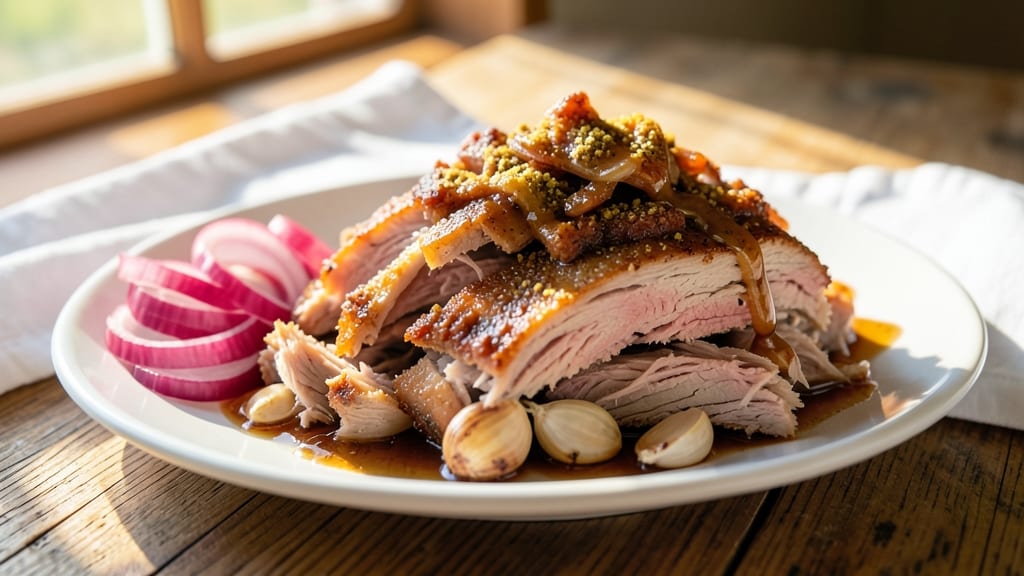
This ButcherBox pulled pork recipe transforms their 8-pound pork shoulder into melt-in-your-mouth perfection with a smoky-sweet bark that’ll have your guests begging for seconds. 🔥 As someone who’s spent years perfecting pork at Atlanta’s Smoky Pig, I’ll show you the exact technique—from the dry rub blend that creates that coveted crust to the low-and-slow cook that guarantees fall-off-the-bone tenderness.
The secret isn’t just time; it’s patience and precision, two things this method delivers every time.
What sets this recipe apart is the two-stage seasoning process: a bold dry rub for the bark, followed by a tangy vinegar mop that keeps the meat juicy while building layers of flavor.
You’ll need just 10 ingredients and about 8 hours of hands-off cooking—ideal for a Sunday project that pays off for a week of sandwiches. The key? A meat thermometer to hit that 195–203°F sweet spot, where collagen breaks down into silky perfection without drying out.
By the time you’re done, you’ll have pork so tender it shreds at a touch, with a bark so crisp it’ll make your taste buds sing. The sauce—whether you go for a classic tangy vinegar glaze or a sweet BBQ rub—becomes the star, clinging to every strand of meat.
This isn’t just pulled pork; it’s the kind of dish that turns casual dinners into memorable feasts, and it all starts with that ButcherBox pork shoulder.
The best part? This recipe scales effortlessly—double the batch for a crowd or halve it for leftovers that taste just as good the next day. Serve it on toasted brioche buns with a side of creamy coleslaw or pile it into tacos for a crowd-pleaser that’s impossible to resist.
Let’s get cooking—your taste buds will thank you.
Ingredients for butcherbox pulled pork
Eight pounds of pork shoulder plus ten simple ingredients transform into legendary pulled pork.
| Ingredient | Amount | Notes |
|---|---|---|
| ButcherBox Pork Shoulder 🥓 | 8 lb | Bone-in, well-marbled preferred |
| Yellow Onion 🧅 | 1 whole | Yellow or red, sliced into wedges |
| Garlic Cloves 🧄 | 8 cloves | Peeled, smashed for rub |
| Dry Mustard Powder 🌶️ | 2 tbsp | For tangy depth |
| Smoked Paprika 🌶️ | 2 tbsp | For authentic bark flavor |
| Brown Sugar 🍯 | 2 tbsp | Light or dark, packed |
| Kosher Salt 🧂 | 1 ½ tbsp | Diamond Crystal preferred |
| Ground Black Pepper 🌶️ | 1 tbsp | Freshly cracked |
| Apple Cider Vinegar 🍎 | ½ cup | For tangy mop |
| Granulated Sugar 🍚 | 2 tbsp | For mop balance |
| Unsalted Butter 🧈 | 2 tbsp | Cold, for bark richness |
The ButcherBox pork shoulder is the foundation—look for well-marbled cuts with good fat distribution. Costco or local butchers often carry similar quality if ButcherBox isn't an option. The bone-in version stays juicier, but bone-out works too if you prefer. For the rub, smoked paprika is non-negotiable—it's what gives that coveted bark its depth. I always grab Penzeys or Trader Joe's for my spices, but any reputable brand works. The apple cider vinegar should be raw, unfiltered for maximum tang.
No smoked paprika? Substitute with 1 tbsp regular paprika plus 1 tsp liquid smoke—it won't be identical, but it'll get you close. Brown sugar can be swapped for white sugar if that's what you have, though it won't caramelize as beautifully. For the mop, balsamic vinegar works in a pinch, but apple cider gives that classic pulled pork brightness. The mustard powder adds complexity—don't skip it unless you're using Dijon in the mop. Diamond Crystal kosher salt dissolves better than table salt, so if that's all you've got, use it but expect slightly grainier results.
This pork keeps 5-6 days in the fridge, wrapped tightly in butcher paper. For longer storage, freeze it for up to 3 months—just thaw overnight in the fridge. The bark stays crisp for about 3 days if stored properly, but it's best enjoyed fresh. I always make extra rub and store it in a jar for future projects. The mop sauce can be made ahead too—just reheat gently before using. Portion into meal prep containers for easy sandwich assembly during the week.
Why You'll Love This Recipe
- No Chopping Needed: The ButcherBox pork shoulder comes pre-portioned—just pop it in the slow cooker. I swear, the onions and garlic get diced in under two minutes, and the dry spices? Sprinkle and forget.
- Smoky Magic: That smoked paprika and mustard powder combo? It turns a simple shoulder into something that tastes like it simmered for hours—even if it didn’t. The edges get this perfect crispy bark, and the meat? Pure pull-apart joy.
- Tailgate to Tuesday: Serve it on buns for a game-day feast or pile it into tacos for a weeknight win. Honestly, the leftovers are just as good cold in sandwiches—my kids fight over them.
- Budget-Friendly Feast: A single pork shoulder stretches across three meals: tacos, sandwiches, and even a pasta bake. I’ll be real, it’s my go-to when groceries feel tight, and no one complains.
Step-by-step instructions for smoky-sweet pulled pork
Here's how to transform your ButcherBox pork shoulder into melt-in-your-mouth perfection.
🔥 Step 1: Prepare the Rub and Season the Pork
In a small bowl, combine the 2 tbsp smoked paprika, 2 tbsp dry mustard powder, 2 tbsp brown sugar, 1.5 tbsp kosher salt, and 1 tbsp ground black pepper. I like to use my fingers to break up any clumps in the spices—this ensures even distribution later. The mustard powder adds that signature tangy depth that sets great pulled pork apart.
Pat the 8 lb ButcherBox pork shoulder completely dry with paper towels—get it bone dry. This step is non-negotiable for crispy bark. Then, generously coat the pork with the rub mixture, pressing it into all the crevices and cracks. The fat cap should get a good coating too. Place the pork in a gallon-sized zip-top bag and refrigerate for at least 4 hours or overnight. This resting period lets the rub penetrate deeply and the meat come to room temperature gradually for even cooking.
🔥 Step 2: Slow Cook Until Probe-Tender
Preheat your smoker, grill, or oven to 225°F. I use my pellet grill for this recipe—it maintains temperature beautifully. Place the pork shoulder fat-side up on the grill grates and close the lid. Here's the thing—don't open that lid for at least 2 hours. Every time you peek, you lose heat and moisture, adding unnecessary time to your cook.
Cook the pork until it reaches an internal temperature of 195-203°F on a meat thermometer inserted into the thickest part (avoid hitting bone). This can take anywhere from 8 to 12 hours, depending on your setup. You'll notice the meat will hit "the stall" around 165°F—this is normal and happens as moisture evaporates. The key is patience; the pork will eventually push through this stall and become fork-tender.
🍳 Step 3: Make the Tangy Apple Cider Mop
While the pork cooks, prepare the mop sauce in a small saucepan. Combine the 0.5 cup apple cider vinegar, 2 tbsp granulated sugar, and 2 tbsp unsalted butter over medium-low heat. Bring to a gentle simmer and cook for 5 minutes until the sugar dissolves and the mixture thickens slightly. This tangy sauce will keep your pork moist during the final stages and add beautiful caramelization to the bark.
Every 90 minutes during cooking, brush the pork generously with this mop sauce. I use a pastry brush for this—it helps distribute the sauce evenly without tearing the bark. The acidity in the vinegar helps tenderize the meat while the sugar promotes that gorgeous dark bark. Save any leftover mop sauce for basting after the pork comes off the grill.
🔪 Step 4: Rest and Shred for Maximum Tenderness
Once the pork reaches 203°F and the meat thermometer slides in like butter, it's time to pull it. Transfer the pork to a cutting board and loosely tent it with aluminum foil. Let it rest for at least 1 hour—this is crucial for redistributing the juices. I know it's tempting to dig in immediately, but trust me on this. The pork will be so tender that it will practically fall apart on its own.
After resting, remove any large pieces of fat or connective tissue. Then, using two forks or your hands, shred the pork against the grain into ¼-inch thick pieces. The meat should be so tender that it pulls apart easily with minimal effort. If you're serving immediately, you can mix in some of the reserved mop sauce to keep everything moist and flavorful. For best results, reheat gently in a skillet with a splash of the mop sauce before serving.
Pro Tips For Making Butcherbox Pulled Pork
- Trim the Fat Cap: The ButcherBox pork shoulder comes with that thick white fat layer—don’t fight it, use it. Score the fat in a crosshatch pattern with a sharp knife (about 1/4-inch deep), then rub the smoked paprika and mustard powder directly into those cuts. This lets the spices penetrate deeper and renders the fat faster, giving you crispy edges and juicier meat.
- Sear Before Slowing: I used to skip this step, thinking it wasn’t worth the hassle, but it’s the thing that matters most for flavor. After seasoning the pork shoulder with salt, sear it in a hot Dutch oven over medium-high heat for 8–10 minutes per side until deep brown. The Maillard reaction kicks in, and that crust locks in moisture during the long cook.
- Onion Dice Like a Pro: Tiny, even onion pieces cook faster and blend seamlessly into the pulled pork. Cut the yellow onion into 1/4-inch dice—no bigger—so they soften completely by the time the pork hits 203°F. Pro tip: Pulse them in a food processor for consistency, then toss them in a bowl with a splash of water to keep them from sticking while you sear the pork.
- Don’t Rush the Rest: After pulling the pork from the oven or smoker, tent it loosely with foil and let it rest for at least 30 minutes. I know, I know—you’re starving, but skipping this means shredding dry, stringy meat. The internal temp will drop 10–15°F as it rests, and the juices redistribute. Trust the process.
Wine and beer pairings for this dish
Red Wine Pairings
For pulled pork, I always reach for a bold red wine that stands up to the smoky, sweet flavors without overpowering them. A Cabernet Sauvignon from Napa Valley—like Caymus Vineyards—is my go-to.
Its dark fruit notes and firm tannins complement the pork’s richness while the acidity cuts through the fat. If you prefer something lighter, try a Zinfandel from California, which brings juicy berry flavors that mirror the sweetness in the bark. 🍷
White Wine Contrast
Don’t sleep on white wines here! A dry Riesling from Germany or Washington State offers surprising balance. The wine’s crisp acidity and hints of citrus play beautifully against the pork’s smokiness, especially if you’ve used apple cider vinegar in the mop.
I love Dr. Loosen Blue Slate—it’s off-dry enough to handle the sweetness but still refreshing. For a more robust option, a Chardonnay with oak (like Kendall-Jackson Vintner’s Reserve) adds a buttery richness that pairs well with the pork’s fat.
Craft Beer Selections
When it comes to beer, I always suggest amber ales or brown ales for their malty sweetness and caramel notes. A Fat Tire Amber Ale from New Belgium is a classic—its caramel and biscuit flavors echo the pulled pork’s bark.
For something stronger, try a Belgian Dubbel like Westmalle Dubbel, which balances the pork’s sweetness with a touch of spice.
If you’re serving this at a tailgate, a local craft IPA with citrus notes can also work, but keep it on the lighter side to avoid overpowering the dish. 🍺
Regional Beer Pairings
In the Southeast, where I grew up, Georgia’s SweetWater 420 is a must. Its smooth, slightly sweet profile lets the pork shine without competing. For a Southern twist, try a bourbon barrel-aged beer like Jack’s Monster Mega Bock, which adds a subtle oakiness that mirrors the smoky flavors.
If you’re in Texas, a Shiner Bock—with its malty sweetness—is a crowd-pleaser. And don’t forget regional ciders! A hard cider like Angry Orchard adds a crisp, fruity contrast that’s perfect for summer gatherings.
Non-Alcoholic Options
For those skipping alcohol, a sparkling apple cider like Martinelli’s is a fantastic choice—its effervescence cleanses the palate between bites. For something richer, try a ginger beer with a hint of spice, like Brew Dr. Brown’s.
Even a cold brew coffee with a splash of cream can work surprisingly well, especially if your pulled pork has a strong smoky profile. The bitterness in the coffee balances the sweetness beautifully. 💛
Nutrition facts
Frequently asked questions
Can I use a different cut of pork from ButcherBox?
This recipe is designed specifically for an 8-pound pork shoulder because its fat content and collagen make it ideal for slow cooking. While you could use pork butt (they're essentially the same cut), avoid leaner cuts like tenderloin—they won't develop the same tender texture. If ButcherBox doesn't have pork shoulder, check their pork butt option, which works nearly identically. The key is marbling and connective tissue—without them, your pork will dry out.
How do I know when the pork is fully cooked?
Use a meat thermometer inserted into the thickest part (avoid hitting bone) to check for 195-203°F. The meat should feel tender when probed with a fork, and the juices should run clear. If you're unsure, let it cook longer—pork continues to tenderize after removing from heat. Never rely on color or time alone, as these can be misleading. Pro tip: The stall (temporary temperature drop around 165°F) is normal and temporary.
Can I make this in an Instant Pot or slow cooker?
For an Instant Pot, sear the pork on all sides first, then cook on low for 8 hours or high pressure for 90 minutes (natural release). In a slow cooker, use the low setting for 10-12 hours. The key is patience—rushing will result in tough meat. Add ½ cup apple juice or broth to the bottom to prevent drying. The bark won't be as crispy, but the tenderness will be perfect.
What if my pork turns out too dry?
If your pork is dry, it likely didn't reach the proper internal temperature or was cooked too quickly. Next time, keep the heat at 225°F and don't rush the process. For immediate fixes, mix the shredded pork with 2 tbsp of the reserved mop sauce and 1 tbsp unsalted butter to restore moisture. If storing, wrap tightly in butcher paper and refrigerate for no more than 5-6 days. For reheating, use a skillet with a splash of broth or the mop sauce.
How do I store and reheat leftovers?
Store pulled pork in an airtight container in the fridge for 5-6 days or freeze for up to 3 months. For reheating, the best method is a skillet over medium-low heat with 2 tbsp of the mop sauce or apple cider vinegar to prevent drying. Avoid microwaving—it makes the pork rubbery. To serve, warm the pork and sauce together until heated through (165°F). For sandwiches, assemble just before serving to keep the buns fresh.