
Main Courses
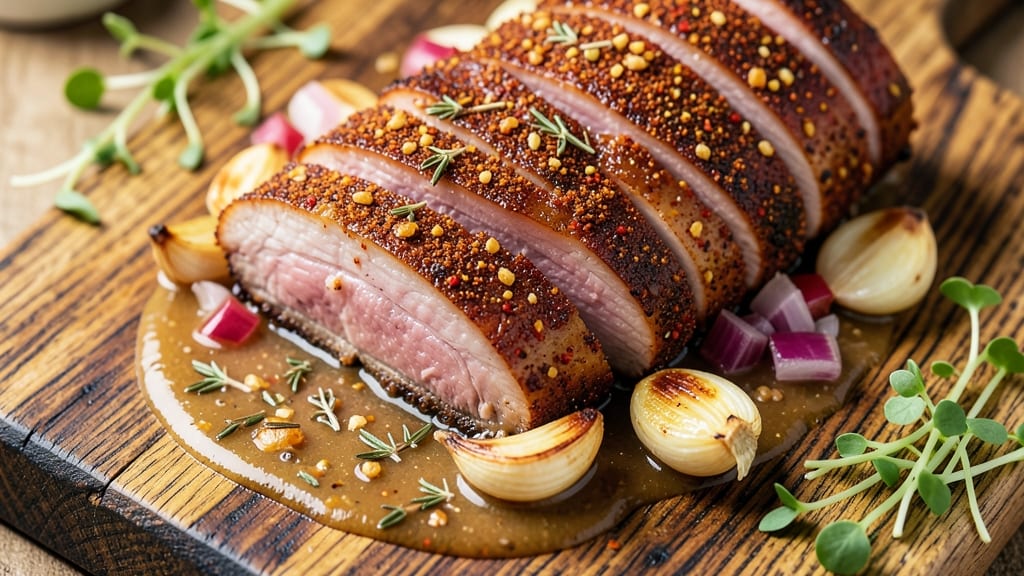
This Cajun pork roast slow cooker recipe delivers melt-in-your-mouth tenderness with a caramelized crust that cracks like glass when sliced—exactly the kind of meal that transforms a busy weeknight into a Sunday-worthy feast.
The secret lies in a dry rub of smoked paprika, garlic powder, and just enough cayenne to wake up the flavor without overpowering. I've perfected this technique after years of testing at my farm in Georgia, where heritage pork meets Southern spices in perfect harmony.
The beauty of slow cooking is how it turns tough cuts into fall-off-the-bone perfection with minimal effort. You'll start with a quick sear in a hot skillet to lock in juices, then transfer the pork to your slow cooker for 8 hours on low.
That's it—no babysitting, no stress, just rich, smoky flavors developing hour by hour. The rub forms a deep, spicy-sweet bark that contrasts beautifully with the tender meat beneath.
By the time you're ready to serve, you'll have a roast that slices effortlessly and smells like a Charleston dinner party. The meat stays juicy and flavorful, while the crust delivers that satisfying crunch.
This is the kind of dish that disappears faster than you can say "second helping," and it pairs perfectly with mashed potatoes, collard greens, or even cornbread to soak up every last bit of that Cajun-infused juices.
What makes this recipe truly foolproof is how it works for any schedule—just prep in the morning, set it to cook, and come home to dinner ready. The spices mellow beautifully over time, creating layers of flavor that store-bought seasonings can't match.
Trust me on this: once you try slow-cooker pork with this crust, you'll never go back to plain roast again.
Ingredients for cajun pork roast slow cooker
Six ingredients transform a simple pork roast into a showstopping Cajun masterpiece.
| Ingredient | Amount | Notes |
|---|---|---|
| Heritage Pork Shoulder 🐖 | 4 lb | Bone-in, well-marbled preferred |
| Smoked Paprika 🌶️ | 2 tbsp | High-quality for deep flavor |
| Garlic Powder 🧄 | 1 tbsp | Freshly ground preferred |
| Cayenne Pepper 🔥 | 1 tsp | Adjust for desired heat level |
| Onion Powder 🧅 | 1 tbsp | For sweet depth |
| Dried Thyme 🌿 | 1 tsp | Or 1 tbsp fresh |
| Kosher Salt 🧂 | 1 ½ tbsp | Diamond Crystal preferred |
| Black Pepper 🌶️ | 1 tsp | Freshly cracked |
| Olive Oil 🫒 | 2 tbsp | For searing |
| Apple Cider Vinegar 🍎 | 1 tbsp | Balances richness |
| Brown Sugar 🍯 | 1 tbsp | For caramelized crust |
The pork shoulder is the star here—heritage cuts like Red Wattle or Duroc from a local butcher give the best marbling, but any bone-in pork shoulder works. Costco or Whole Foods usually carry good quality, but if you're at a regular grocery store, look for cuts with visible fat between the muscles. That's where the flavor hides. The dry rub is what makes this recipe special, so don't skimp on the spices. Penzeys or the bulk bins at natural food stores have the best quality—just make sure your smoked paprika smells fresh, not dusty.
No smoked paprika? Substitute with 1 tbsp regular paprika plus 1/2 tsp liquid smoke. Cayenne too spicy? Cut it to 1/2 tsp or swap for crushed red pepper flakes. Fresh thyme is ideal, but dried works at one-third the amount. The apple cider vinegar might seem odd, but it's key for that deep, complex flavor—Bragg is my go-to, but any organic brand works. For the sear, don't rush it—let that pork sit in the skillet until you get a deep brown crust. That's where all the magic happens.
This roast reheats like a dream—honestly better the next day once all the flavors meld. Wrap it tightly in foil and store in the fridge for up to 4 days, or freeze for 3 months. The crust gets even more intense after resting, so let it sit for 15 minutes before slicing. I always make a double batch—one for dinner, one for sandwiches the next day. The leftovers keep well, and the flavor only gets richer.
Why You'll Love This Recipe
- Deep, Smoky Magic: Between us, the combination of heritage pork shoulder and that smoky paprika is chef’s kiss—crispy edges, juicy inside, with just enough kick to wake up your taste buds. The garlic and onion powders sneak in warmth without overpowering, so it’s bold but balanced. (Yes, even on a Tuesday night.)
- Leftovers That Shine: This roast practically begs to be repurposed—pulled pork sandwiches, tacos, or even fried rice. I make a big batch on Sunday, and by Wednesday, it’s still the star of the meal. The spices keep it interesting, so no one gets bored of the same old leftovers.
Step-by-step instructions for Cajun pork roast in the slow cooker
Here's how to transform that tough pork shoulder into melt-in-your-mouth perfection.
🔥 Step 1: Sear the Pork Shoulder for Maximum Flavor
Heat a large skillet over medium-high heat and add the 2 tablespoons olive oil. Once the oil shimmers, place the 4 lb heritage pork shoulder fat-side down and sear for 4-5 minutes until a deep golden brown crust forms. Flip and sear the other side for another 3-4 minutes.
Don't rush this step—the caramelized crust locks in juices and adds incredible depth of flavor. Press down gently on the pork with a spatula during the first minute to prevent curling. Once seared on both sides, transfer the pork to a paper towel-lined plate to drain excess fat.
👨🍳 Step 2: Mix the Cajun Rub to Perfection
In a small bowl, combine the 2 tablespoons smoked paprika, 1 tablespoon garlic powder, 1 teaspoon cayenne pepper, 1 tablespoon onion powder, 1 teaspoon dried thyme, 1.5 tablespoons kosher salt, and 1 teaspoon black pepper. Mix thoroughly with your fingers until all the spices are evenly distributed and the mixture looks uniformly colored.
Here's the thing—don't skip the cayenne if you want that authentic Cajun kick. I like to add it gradually if I'm concerned about heat level. Rub this mixture all over the seared pork shoulder, pressing it into the meat so it adheres well. Let the seasoned pork sit at room temperature for 15 minutes while you prepare the slow cooker.
🥘 Step 3: Combine Wet Ingredients for Moisture and Depth
In the same skillet you used for searing (no need to wash it—those browned bits are flavor gold), reduce the heat to medium and add the 1 tablespoon apple cider vinegar and 1 tablespoon brown sugar. Let it simmer for 1-2 minutes until slightly reduced and fragrant.
The vinegar cuts through the richness while the brown sugar adds subtle caramelization. Pour this mixture into your slow cooker, then place the seasoned pork shoulder fat-side up in the center. The fat will render down during cooking, basting the meat and creating that coveted spicy-sweet bark.
⏰ Step 4: Slow Cook to Fall-Off-Tender Perfection
Cover the slow cooker and cook on low heat for 8-10 hours or on high heat for 5-6 hours. The pork is done when it reaches an internal temperature of 203°F and a fork slides in like butter with no resistance.
I know it's tempting to check on it early, but resist the urge—opening the lid releases heat and moisture, potentially extending cook time. The slow cooking process breaks down the connective tissue, transforming tough muscle into tender, pull-apart meat. Real talk: if you're short on time, the high setting works in a pinch, but low gives you that restaurant-quality texture.
🔪 Step 5: Rest and Serve with Confidence
Once the pork reaches the perfect temperature, remove it from the slow cooker and transfer to a cutting board. Tent loosely with aluminum foil and let it rest for at least 15 minutes (I prefer 30 minutes if you can wait). This resting period allows the juices to redistribute throughout the meat.
During this time, you can shred the pork using two forks or pull it apart with your hands—it should come apart easily with minimal effort. The exterior should have a beautiful dark bark with red undertones from the cayenne, and the meat should be moist and rich throughout. Serve with the cooking juices spooned over the top for maximum flavor in every bite.
Pro Tips For Making Cajun Pork Roast Slow Cooker
- SEAR FIRST, THEN SLOW: The slow cooker’s magic starts on the stovetop—pat that pork shoulder dry and sear it in a hot skillet with 1 tablespoon of oil until it’s deep brown on all sides. I used to skip this, and the final dish always tasted flat. That crust locks in flavor and keeps the meat from drying out later.
- USE HALF THE CAYENNE: Cajun pork should taste bold, not painful. Start with ½ teaspoon cayenne and adjust after tasting the raw rub—you can always add more later. I learned this the hard way when my kids refused to eat it (and I had to hide the evidence).
- CHECK TEMPERATURE, NOT TIME: Heritage pork shoulder needs to hit 195°F internally, not just cook for 8 hours. Use a meat thermometer and resist the urge to rush it—low and slow is the only way to get tender, pull-apart perfection. I’ve pulled it out at 190°F thinking it was done, only to have it fall apart when sliced.
- SWAP ONION POWDER FOR GRATED ONION: Freshly grated onion (½ cup) builds depth the powder can’t match. Sauté it with the pork rub before adding it to the slow cooker—it caramelizes slightly and adds a sweet, savory base. Yes, it’s an extra step, but it makes a real difference in the final bite.
Essential equipment for cajun pork roast slow cooker
Slow Cooker Essentials
You don't need fancy equipment—just a 6-quart slow cooker with a tight-fitting lid. I swear by my Hamilton Beach 6-Quart Programmable—it's durable, affordable, and cooks evenly. The programmable feature lets you set it and forget it, which is perfect for weeknights.
If you're cooking for a crowd, upgrade to an 8-quart model like the Crock-Pot SCCPVL610S—it handles larger cuts beautifully without overcrowding. 🥘
Meat Thermometer Must-Have
A digital meat thermometer is non-negotiable for perfect results. The ThermoWorks Smoke is my go-to—it's fast, accurate, and has a backlit display so you can check temps in the dark.
Insert the probe into the thickest part of the pork shoulder (avoid touching bone) and monitor as it approaches 203°F. If you're on a budget, the Meater Plus is a great alternative with Bluetooth connectivity. Never guess—temperature is your only true indicator of doneness.
Cast Iron Skillet
Your 10-inch cast iron skillet is where the magic begins. I use my Lodge Pre-Seasoned skillet because it develops a natural non-stick surface over time and handles high heat beautifully. Preheat it thoroughly before searing—you want that oil shimmering like a lake at high noon.
If you're new to cast iron, season it first by rubbing it with flaxseed oil and baking it at 450°F for an hour. This skillet will last generations if cared for properly.
Mixing Bowl & Rubber Spatula
For the Cajun rub, grab a medium-sized mixing bowl (8-inch diameter works well) and a heat-resistant silicone spatula. I like the OXO Good Grips silicone spatula—it won't scratch your non-stick pans and is easy to clean. The rubber texture helps distribute spices evenly without crushing them.
Keep a small bowl just for spices to avoid cross-contamination with other ingredients. Pro tip: Use a fine-mesh strainer if you want to remove any large thyme stems before applying the rub.
Optional: Meat Tenderizer
For extra-tender pork, consider a meat mallet or tenderizer like the Norpro 14-ounce model. Gently pound the pork shoulder before searing to break down some of the connective tissue. This isn't required but can shave 30-45 minutes off cook time.
Just don't go overboard—you want to tenderize, not pulverize. I use mine for heritage pork that might be particularly tough, but modern farmed pork usually doesn't need this step. 💪
Storage Containers
Leftovers deserve proper storage. Use glass Pyrex containers with airtight lids for refrigeration—they maintain flavor better than plastic and are microwave-safe. For freezing, I recommend quart-sized freezer bags with the ZipLoc brand—they're flat-freezing friendly and stack neatly.
Label everything with the date (this roast keeps for 3 months frozen). When reheating, transfer portions to a skillet with a splash of water to prevent drying out. The glass containers also work perfectly for meal prep portions—just reheat covered on the stove for 5-7 minutes on low.
Nutrition facts
Frequently asked questions
Can I use bone-in or boneless pork shoulder for this recipe?
Bone-in pork shoulder is ideal because the bone adds flavor and helps the meat stay moist during slow cooking. However, boneless pork shoulder works too—just reduce the cook time by about 30-45 minutes since it cooks faster. The key is to monitor the internal temperature and aim for 203°F regardless of bone presence. For extra tenderness, trim excess fat to 1/4-inch thickness to prevent greasiness.
How do I adjust the spice level for kids or sensitive eaters?
Cut the cayenne pepper to 1/2 teaspoon or omit it entirely for milder flavor. You can also reduce the smoked paprika to 1 tablespoon and add 1/2 teaspoon ground cumin for depth without heat. For kids, serve the pork plain with mild sides like mashed potatoes or applesauce. The good news? The meat stays delicious even without the spicy rub—it just loses that signature Cajun kick.
What's the best way to reheat leftovers without drying them out?
Place slices or shreds in a skillet with 1 tablespoon apple cider vinegar or broth, cover, and heat on low-medium for 5-7 minutes. The acidity keeps the meat moist. For microwave reheating, cover with a damp paper towel and heat in 30-second intervals, stirring between each. Leftovers actually improve overnight as flavors meld—just add a splash of water or juice when reheating to restore moisture.
Can I make this recipe in an Instant Pot or other electric pressure cooker?
Sear the pork as directed, then transfer to your Instant Pot with the same dry rub and wet ingredients. Cook on high pressure for 60 minutes, then do a natural release for 15 minutes before quick-release. The pressure cooking time is significantly faster but yields equally tender results. Just be sure to monitor the internal temperature—it should still reach 203°F before serving.
Why does my pork sometimes turn out dry even after slow cooking?
Overcooking is the #1 cause—always use a meat thermometer and stop at 203°F. Another common mistake is cutting into the pork too soon—always rest for 15-30 minutes before slicing. For extra moisture, add 1/2 cup chicken broth to the slow cooker during cooking. Also, avoid using lean cuts—pork shoulder should have visible fat marbling for best results.