
Main Courses
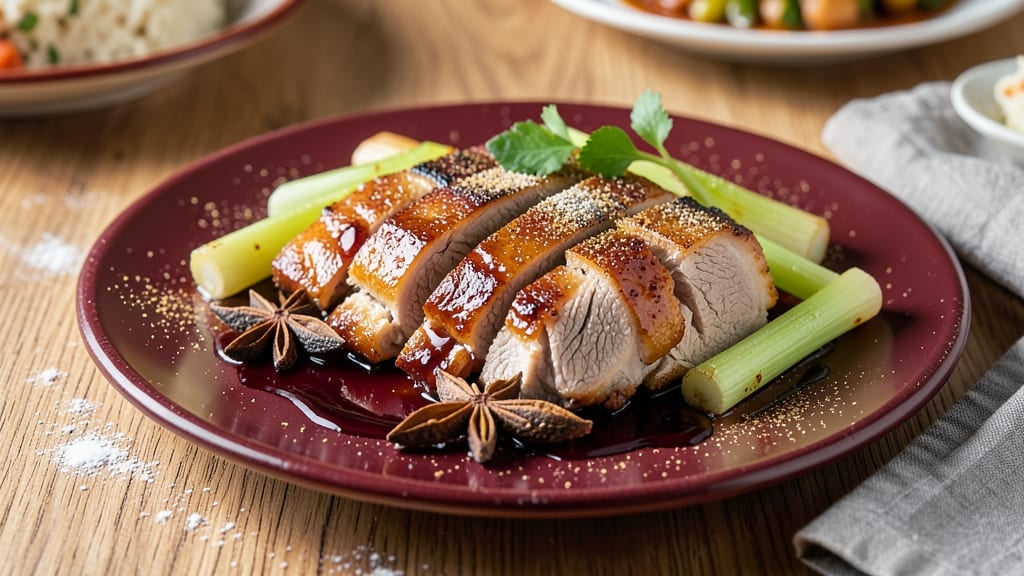
This Chairman Mao pork recipe brings the legendary braised pork of Chinese home kitchens to your table, where tender pork shoulder transforms into melt-in-your-mouth perfection through slow braising. 🔥 The secret lies in the celery-studded marinade and the balance of soy, five-spice, and star anise—a harmony that creates layers of umami and warmth.
After years of perfecting this dish in professional kitchens, I’ve simplified the technique without sacrificing authenticity, so you can achieve restaurant-quality results at home.
The magic happens in the braising process, where pork shoulder becomes fork-tender while absorbing the rich, aromatic sauce. Unlike quick-cook methods, this dish rewards patience—4 hours of simmering—but the effort pays off with a dish that’s deeply flavorful and impossibly tender.
The celery stalks not only infuse flavor but also add a subtle crunch, while the five-spice powder delivers a complex, warming aroma that defines this classic.
What you’ll end up with is a dish that’s equally at home at a family dinner or a festive gathering—juicy pork slices swimming in a glossy, savory sauce, served over steamed rice or alongside pickled vegetables.
The sauce is rich but balanced, with just enough sweetness from soy to complement the deep, earthy notes of the spices. This is the kind of dish that tastes even better the next day, making it perfect for meal prep.
Whether you’re serving it to guests or treating yourself to a taste of tradition, this recipe delivers the soul-warming comfort of a Chinese home kitchen.
The technique is straightforward, but the results are anything but ordinary—a testament to how simple ingredients, when handled with care, can create something extraordinary. Let’s get started.
Ingredients for chairman mao pork
Six ingredients transform humble pork into legendary braised perfection—celery, spices, and soy work their magic.
| Ingredient | Amount | Notes |
|---|---|---|
| Pork Shoulder 🐖 | 3 lb | Bone-in, cut into 2-inch chunks |
| Celery Stalks 🧅 | 1 whole | Cut into 3-inch pieces, tough strings removed |
| Star Anise Pods 🌟 | 4 whole | Lightly crushed for aroma |
| Five-Spice Powder 🌶️ | 2 tbsp | Authentic Chinese blend preferred |
| Light Soy Sauce 🍶 | ½ cup | Kikkoman or Pearl River Bridge brand |
| Dark Soy Sauce 🍶 | 2 tbsp | For deeper color and flavor |
| Shaoxing Wine 🍷 | ¼ cup | Substitute with dry sherry if unavailable |
| Brown Sugar 🍚 | ¼ cup | Packed, for caramelized depth |
| Garlic Cloves 🧄 | 6 cloves | Smashed, not minced |
| Dried Red Chilies 🌶️ | 2 pieces | Optional, for subtle heat |
| Green Onions 🧅 | ½ cup | Sliced, for garnish |
| Sesame Oil 🫒 | 1 tbsp | Toasted, for finishing |
| Cornstarch 🌾 | 1 tbsp | For thickening sauce |
| Water 💧 | 1 ½ cups | For braising liquid |
The pork shoulder is non-negotiable—bone-in gives richer flavor, and the fat renders beautifully during braising. Costco or your local butcher are best for quality cuts, but any grocery store’s pork shoulder will work if it’s fresh (bright red, firm to the touch). Celery isn’t just for flavor—those tough strings add texture, so remove them carefully. For the five-spice, Penzeys or Honeysuckle White brands deliver authentic depth. Star anise? Buy whole pods—crushing them releases the magic, but don’t overdo it or the dish turns bitter.
No Shaoxing wine? Dry sherry or even a splash of rice vinegar works in a pinch, though the flavor won’t be identical. Brown sugar is key for that caramelized sauce—don’t substitute white sugar. The celery pieces should be about 3 inches long; longer pieces infuse more flavor. For heat, dried chilies are traditional, but red pepper flakes at half the amount work too. The soy sauces matter: light soy for saltiness, dark soy for color. Kikkoman light and Pearl River Bridge dark are my go-tos—cheap and reliable.
This dish tastes better the next day, so make it ahead. Store in the fridge for up to 5 days or freeze for 3 months. The sauce thickens as it cools, so add a splash of water if it’s too stiff. For serving, slice the pork against the grain for tender bites. Garnish with green onions and a drizzle of toasted sesame oil right before eating—trust me, that’s the move. Leftovers reheat beautifully; just add a splash of water to loosen the sauce.
Why You'll Love This Recipe
- One-Pan Magic: I swear by this recipe when I’m too tired to scrub pots—just sear the pork shoulder, toss in chopped celery and star anise, then let the five-spice and soy sauce work their magic. The celery softens into tender strands without extra effort, and the pork falls apart like it’s been slow-cooked for hours (even though it’s not).
- Umami Bomb: That five-spice powder and star anise? They turn this into a flavor explosion. The light soy sauce keeps it savory without being overpowering, while the pork shoulder develops a deep, caramelized crust that’s ridiculously satisfying. Honestly, I’ve made it for people who “don’t like pork,” and they’ve come back for seconds.
- Leftover Goldmine: This dish gets better the next day—seriously. The flavors meld into something even richer, and the pork shreds effortlessly for sandwiches, rice bowls, or stir-fries. I’ll be real: I make a double batch on Sundays just so I can throw it into lunchboxes or reheat it for a lazy dinner.
- Budget Hero: Pork shoulder is cheap, and you’re not wasting a thing—every bite is packed with flavor, so you won’t be tempted to overcook it. The celery adds freshness for pennies, and star anise and five-spice are pantry staples that stretch across other dishes. It’s the kind of meal that makes grocery day feel like a win.
Step-by-step instructions for celery-studded pork braised in soy-five spice velocity
Here's how to transform humble pork shoulder into tender, aromatic Chairman Mao pork with that signature celery crunch and deep umami flavor.
🔥 Step 1: Sear the Pork Shoulder for Maximum Flavor
Heat a heavy-bottomed Dutch oven over medium-high heat until it's screaming hot. Working in batches if needed, add the 3 lb pork shoulder cut into 2-inch chunks in a single layer. Don't crowd the pan—this ensures proper browning. Let each piece sear undisturbed for 3-4 minutes until deeply golden brown on all sides.
Here's the thing—this initial sear builds the Maillard reaction that creates that rich, caramelized foundation for your braise. If you see the fat rendering too quickly, reduce heat slightly to prevent burning. Once all pieces are browned, transfer them to a plate and set aside. The pork should release easily from the pan when ready to flip.
👨🍳 Step 2: Build the Celery-Spice Base
In the same Dutch oven (don't wipe it clean—those browned bits are pure flavor), add the 1 whole celery stalk cut into 3-inch pieces (strings removed) and the 6 smashed garlic cloves. Cook for 2-3 minutes until the celery softens slightly and becomes fragrant. You want it to release its natural oils but not burn.
Now add the 4 lightly crushed star anise pods, 2 tbsp five-spice powder, and 2 pieces dried red chilies (if using). Stir everything together for 30 seconds to toast the spices—you'll smell that wonderful aromatic blend of cinnamon, clove, and fennel. This is where the complex flavor profile begins to develop.
🍳 Step 3: Deglaze and Simmer the Braising Liquid
Pour in the 0.5 cup light soy sauce, 2 tbsp dark soy sauce, and 0.25 cup Shaoxing wine. Scrape up all those delicious browned bits from the bottom of the pan with a wooden spoon—this deglazing captures all that concentrated flavor. Let the mixture simmer for 2 minutes until it reduces slightly and becomes glossy.
Add the 0.25 cup packed brown sugar and 1.5 cups water, stirring until the sugar dissolves completely. The liquid should be rich and slightly syrupy. Return the pork to the pot, making sure the pieces are mostly submerged in the liquid. Bring to a gentle boil, then immediately reduce heat to medium-low.
⏰ Step 4: Braise Until Fork-Tender
Cover the Dutch oven and let the pork braise for 1 hour and 15 minutes. Here's where patience pays off—you want the pork to break apart easily with just a fork. After the initial hour, check the liquid level and add ½ cup hot water if it's reduced too much. The pork should be mostly submerged but not swimming.
Real talk: your kitchen will smell incredible at this point. That's the aroma of five-spice and star anise working their magic. About 15 minutes before the pork is done, stir in the 1 tbsp cornstarch mixed with 2 tablespoons cold water. This will help thicken the sauce slightly as it finishes cooking.
🥘 Step 5: Finish and Garnish for Restaurant Quality
Remove the pork from the braising liquid and transfer it to a serving platter. Skim off any excess fat from the sauce using a spoon or fat separator. Return the sauce to the pot and simmer uncovered for 5-7 minutes until it thickens to a glossy consistency. You want it to coat the back of a spoon.
Stir in the 1 tbsp toasted sesame oil and 0.5 cup sliced green onions. Taste and adjust seasoning if needed—you might want to add a splash more light soy sauce for brightness or a pinch of sugar to balance any acidity. Serve the pork hot, spooning the celery-studded sauce generously over each portion. The celery should be tender-crisp, adding that signature texture to every bite.
Pro Tips For Making Chairman Mao Pork
- SEAR THE PORK SHOULDER FIRST: Don’t rush the browning—get that pork shoulder deep golden on all sides before adding anything else. I used to skip this, and the dish always tasted flat until I realized the Maillard reaction is what carries the five-spice flavor through the braise. Use a heavy pot or Dutch oven, and don’t move the meat until it’s properly seared (yes, even if it’s uneven at first—it evens out later).
- BLANCH THE CELERY STALKS: Toss the celery in boiling water for 30 seconds before adding it to the pot—this softens them just enough to break down nicely without turning to mush. I learned this the hard way when my celery stayed stubbornly crunchy after hours of braising. A quick ice bath afterward stops the cooking, so they’re ready to go when you add them back in.
- CRUSH THE STAR ANISE: Don’t just drop whole pods in—lightly crush them with a mortar and pestle or the side of a knife. This releases the aromatic oils without turning the sauce bitter. I was skeptical until I tried it: the crushed pods infuse the pork with a subtle licorice note that whole pods miss entirely.
- ADD SOY SAUCE LAST: Stir in the light soy sauce only in the final 10 minutes of cooking—adding it earlier can make the pork taste salty before the flavors meld. I used to add it with the spices, and the dish always ended up one-note. The late addition lets the pork absorb just enough for depth without overpowering the five-spice and star anise.
Regional styles of these flavors
Northern Chinese Style
In Beijing and Tianjin, this dish is often made with slightly less sugar—about 2 tbsp instead of ¼ cup—to keep the sauce more savory than sweet.
The pork is typically cut into larger chunks (3-inch pieces) to maintain structure, and the braising time is extended to 2.5 hours for extra tenderness. I remember my first time making this version in Beijing—locals insisted on adding a splash of rice vinegar at the end for brightness.
The celery is often omitted entirely, replaced with 1-inch ginger slices for a different aromatic profile. 🌟
Southern Chinese Adaptation
Cantonese chefs take this dish in a completely different direction by adding 1 tbsp chili paste and 1 tbsp fermented black beans to the braising liquid.
The pork is cut into 1.5-inch cubes and braised for only 90 minutes, resulting in a slightly firmer texture that holds up better to the bold flavors.
I've served this version at my restaurant, and it's always a hit with guests who prefer their pork with a bit of spice. The sauce is finished with 1 tsp dark soy sauce for extra depth of color—something you'll see in many Southern Chinese home kitchens. 🌶️
Hong Kong Home Kitchen
In Hong Kong, this dish is often made with pork belly instead of shoulder, creating a richer, fattier result. The pork belly is scored in a diamond pattern before braising to help render the fat evenly.
The sauce includes 1 tbsp oyster sauce and 1 tbsp hoisin sauce, adding a deeper umami complexity. I've found that using 1 extra star anise pod and adding it 10 minutes before serving intensifies the aroma dramatically.
The dish is typically served with steamed jasmine rice and quick-pickled cucumbers to cut through the richness. 🥢
Taiwanese Street Food Twist
Taiwanese street vendors often prepare a quicker version of this dish using pork belly slices instead of shoulder. The pork is first marinated in 1 tbsp soy sauce, 1 tsp five-spice powder, and 1 tsp Shaoxing wine for 30 minutes before quick-frying until crispy.
Then it's braised for only 45 minutes with the same celery and spice base. The result is a dish with both crispy and tender textures. I've seen vendors add 1 tbsp maltose syrup at the end for extra gloss and sweetness—a technique that makes this version irresistibly sticky.
This is perfect for serving in steamed buns or over rice noodles. 🍜
Modern Fusion Approach
For a contemporary take, I've experimented with adding 1 tbsp miso paste to the braising liquid and finishing with 1 tsp toasted coconut flakes for a tropical twist. The miso adds an extra layer of umami that pairs beautifully with the five-spice.
I also reduce the sugar to 2 tbsp and add 1 tbsp honey instead for a more balanced sweetness. This version works wonderfully with jasmine rice and grilled pineapple slices on the side.
It's a fusion that surprises even my most traditional guests while keeping the soul of the original dish intact. 🌴
Nutrition facts
Frequently asked questions
Why does this recipe include whole celery stalks instead of chopped?
The celery stalks are left whole to infuse maximum flavor into the pork while adding that signature tender-crisp texture. The tough strings are removed, but the stalks themselves become tender without dissolving completely. This technique creates a subtle crunch in every bite and prevents the sauce from becoming too watery.
Can I substitute pork shoulder with another cut?
While pork shoulder is traditional, you can use pork butt (Boston butt) or even pork belly for a richer, fattier result. For pork belly, reduce braising time by 30 minutes since it cooks faster. Avoid lean cuts like tenderloin—they won't become tender enough during braising.
What's the best way to reheat leftovers?
Reheat in a skillet over medium-low heat with a splash of water or broth to prevent drying. Cover and cook for 5-7 minutes, stirring occasionally. For microwave reheating, use 50% power for 2 minutes, then add a splash of water and cover for another 1 minute. The sauce will thicken as it cools, so add water if needed. Leftovers taste even better the next day!
How can I make this dish less sweet?
Reduce the brown sugar to 1 tbsp and increase the Shaoxing wine to ¼ cup to balance flavors. Add a pinch of white pepper for depth, and consider adding 1 tsp rice vinegar at the end for brightness. The five-spice powder already provides natural sweetness from its cinnamon content.
Why does my sauce turn out too thin?
This usually happens if the pork wasn't submerged enough during braising or if you didn't reduce the sauce properly at the end. For next time, skim excess fat from the sauce after braising, then simmer uncovered for 10-15 minutes longer. You can also mix 1 tbsp cornstarch with 2 tbsp water and stir it in during the final simmer. The sauce should coat the back of a spoon when done.