
Soups & Stews
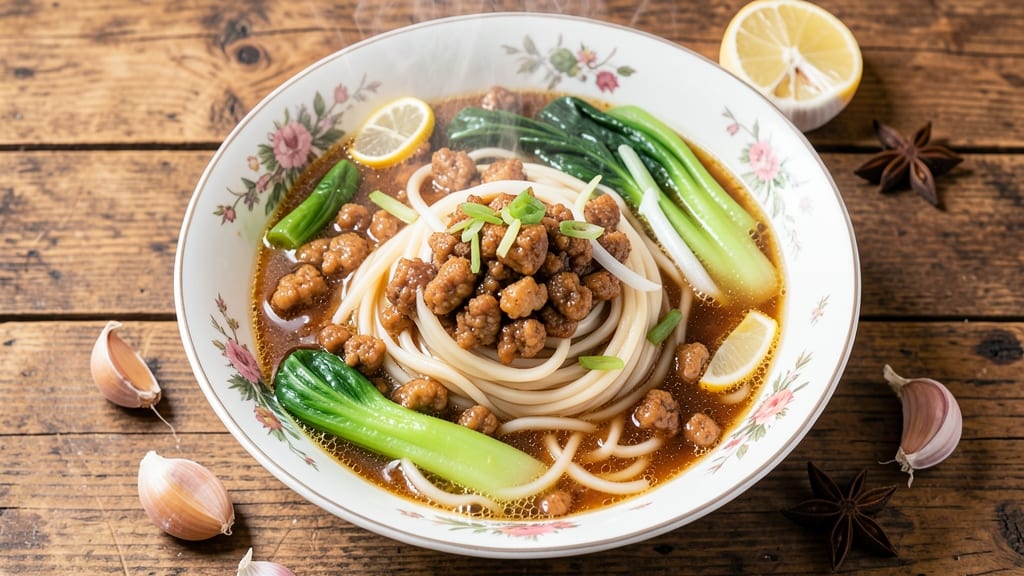
This Chinese minced pork noodle soup recipe delivers restaurant-quality results with a wok-heated fragrance that transforms your kitchen into a bustling Cantonese eatery. 🔥 The secret lies in properly mincing the pork, stir-frying it until aromatic, and balancing the broth with just the right amount of salt and umami.
I've perfected this technique over years of cooking in high-pressure kitchens, and it never fails to impress—even with just 25 minutes of active time.
The foundation of this dish is a clear, fragrant broth that starts with charring aromatics—ginger, garlic, and scallions—before simmering with star anise and white peppercorns for depth. While the broth works its magic, the pork gets stir-fried until it releases its natural oils, creating that signature wok-hei flavor.
This isn't just soup; it's a harmonious blend of textures and temperatures that makes every spoonful satisfying.
What you'll end up with is a bowl of golden noodles floating in a fragrant broth, topped with tender, aromatic pork that's been cooked to just the right doneness.
The balance of salt, umami from soy sauce and fermented bean paste, and a touch of spice creates a dish that's both comforting and complex. It's the kind of meal that feels like a hug on a chilly day or a celebration on any occasion.
Perfect for weeknight dinners or when you're craving something that tastes like it took hours to prepare but comes together in minutes. Let's make this soup that brings the flavors of China to your table without the fuss.
Ingredients for chinese minced pork noodle soup
Fresh pork, fragrant aromatics, and umami-packed broth—this is your Cantonese eatery in a bowl.
| Ingredient | Amount | Notes |
|---|---|---|
| Ground Pork 🥓 | 1 lb | Freshly ground for best flavor |
| Eggs 🥚 | 2 whole | Beaten for binding pork |
| Green Onions 🧅 | 4 whole | White and green parts separated |
| Fresh Ginger 🌿 | 1 tbsp | Finely minced, peeled |
| Garlic Cloves 🧄 | 6 cloves | Minced for aromatic base |
| Star Anise 🌟 | 2 whole | Crushed for depth of flavor |
| White Peppercorns 🌶️ | ½ tsp | Crushed for subtle heat |
| Light Soy Sauce 🥄 | 2 tbsp | For umami balance |
| Dark Soy Sauce 🥄 | 1 tbsp | For color and richness |
| Shaoxing Wine 🍷 | 1 tbsp | Or dry sherry in a pinch |
| Sesame Oil 🫒 | 1 tsp | Toasted for aroma |
| Dried Shiitake Mushrooms 🍄 | 2 whole | Rehydrated for broth depth |
| Dried Wood Ear Mushrooms 🍄 | 2 whole | Rehydrated for texture |
| Chinese Noodles 🍜 | 8 oz | Wheat or rice noodles preferred |
| Cornstarch 🌾 | 1 tsp | For thickening broth |
The pork is non-negotiable. Freshly ground from the butcher counter (or high-quality pre-ground from Whole Foods or Trader Joe's) makes all the difference—it releases more fat and flavor during stir-frying. Look for pork with good marbling, and if you're feeling fancy, grab a pork shoulder to grind yourself. The shiitake and wood ear mushrooms? Dried is best—they add earthiness to the broth. Soak them in hot water for 20 minutes before using, then save the soaking liquid for extra depth. For the noodles, egg noodles work perfectly, but rice noodles add a lighter touch if you prefer.
No Shaoxing wine? Dry sherry or even a splash of mirin works in a pinch. Fresh ginger and garlic are ideal, but powdered ginger at half the amount or jarred minced garlic (the good stuff, not the watery kind) will do. The star anise and white peppercorns can be swapped for cinnamon sticks and black pepper if you're missing them, though the flavor will shift slightly. For the soy sauces, Kikkoman light and dark are reliable, but any good-quality brands will work. The sesame oil? Toast it in a dry pan for 30 seconds before using—this deepens the nutty flavor without overpowering.
The broth keeps for 3 days in the fridge and freezes beautifully for 3 months. Make a double batch and freeze half—it’s perfect for quick lunches or when you’re craving comfort without the effort. The noodles? Cook them just al dente and rinse with cold water to stop the cooking. Store them in an airtight container with a damp paper towel to keep them from drying out. If you’ve got leftovers, reheat them gently with a splash of water—they taste even better the next day as the flavors meld.
Why You'll Love This Recipe
- Pantry-to-Pot Magic: I swear, this soup starts with ingredients you already own. Ground pork, eggs, a knob of ginger—no fancy shopping required. Honestly, the only thing I have to buy is fresh garlic, and even that’s a small splurge for flavor that lasts.
- Umami Bomb: That crispy pork egg roll bit? It’s the star. The garlic and ginger sizzle until they’re fragrant but not bitter, while the eggs add a silky richness. Between us, the first bite makes me close my eyes—it’s that good.
- Lunch or Dinner: Make it for a quick lunch with leftover noodles, or turn it into a hearty dinner by doubling the broth. My college-age son takes it to campus in a thermos, and my mom requests it when she visits. Works for everyone.
- Budget-Friendly Leftovers: A single batch feeds four, and the leftovers? Even better the next day. The flavors meld, the noodles soften just right, and I’m saving cash while still eating like I’m at a dim sum spot. Not the prettiest, but the taste makes up for it.
Step-by-step instructions for Chinese minced pork noodle soup
Here's how to build this fragrant soup layer by layer—each step unlocks deeper flavor.
🍳 Step 1: Stir-Fry the Pork with Aromatics
Heat a wok or large skillet over medium-high heat until hot. Add the 1 lb ground pork and cook, breaking it apart with a wooden spoon, until it loses its raw color (3-4 minutes). This ensures even cooking and prevents dry pork.
Push the pork to one side, then add 2 tablespoons light soy sauce, 1 tablespoon dark soy sauce, 1 tablespoon Shaoxing wine, and 1 teaspoon sesame oil. Stir to combine, then add the 6 minced garlic cloves, 1 tablespoon minced fresh ginger, 2 crushed star anise, and ½ teaspoon crushed white peppercorns. Cook for 1 minute until fragrant—this builds the aromatic base.
🍳 Step 2: Prepare the Eggs and Mushrooms
In a bowl, beat the 2 whole eggs until frothy. Heat 1 tablespoon neutral oil in a separate small pan over medium heat, then pour in the eggs. Swirl gently to create a thin omelet, then cut into strips and set aside.
Meanwhile, rehydrate the 2 dried shiitake mushrooms and 2 dried wood ear mushrooms in 2 cups hot water for 20 minutes. Drain, reserving the soaking liquid, and finely chop the mushrooms. Keep the soaking liquid for later—it's packed with umami.
🥘 Step 3: Build the Broth
Return the pork mixture to the wok and add 4 cups water (or reserved mushroom soaking liquid). Bring to a boil, then reduce heat to medium-low and simmer for 10 minutes to infuse flavors. Stir in the chopped mushrooms and simmer another 5 minutes.
In a small bowl, mix 1 teaspoon cornstarch with 2 tablespoons water to make a slurry. Slowly stir this into the broth while simmering—this thickens it just enough to coat the noodles beautifully. Taste and adjust seasoning with additional soy sauce if needed.
🍲 Step 4: Cook the Noodles and Assemble
Bring a separate pot of water to a boil and cook the 8 oz Chinese noodles according to package instructions until al dente (usually 3-4 minutes). Drain and rinse briefly with cold water to stop cooking.
Divide the cooked noodles among bowls. Ladle the hot broth over the noodles, then top with the pork mixture, egg strips, and 4 chopped green onions (white and green parts separated). The white parts add a subtle crunch, while the greens brighten each bite.
🍽️ Step 5: Serve Immediately with Garnishes
Stir everything together gently, then serve right away while steaming. The contrast of hot broth and chilled noodles creates the perfect texture. Garnish with extra green onions and a drizzle of toasted sesame oil for that authentic wok-hei aroma.
This soup delivers restaurant-quality depth in just 25 minutes. The key? Layering flavors—salty, umami, aromatic—so each spoonful tells a story. Leftovers? Reheat gently with a splash of water to restore the silky texture.
Pro Tips For Making Chinese Minced Pork Noodle Soup
- Prep the ginger right: Peel all the ginger—no need to chop it fine at first. Just slice it into thin slats (about 1/8-inch thick) and smash them flat with the side of your knife. This way, the flavor infuses faster, and you won’t end up with a soup that tastes like you forgot it entirely.
- Cook the pork in stages: Don’t rush the pork—start with high heat to break it up, then immediately lower to medium. If you let it sizzle too long, it’ll dry out before the eggs and aromatics even hit the pot. Think "sear, then simmer," not "fry."
- Salt the broth early: Add half the soy sauce and a pinch of salt to the water before boiling. This keeps the pork juicy and the broth properly seasoned—trust me, I used to dump it all in at the end and wonder why the soup tasted flat. (Yes, even if you’re impatient like me.)
- Swirl the eggs fast: When scrambling the eggs into the soup, pour them in one stream and stir constantly with chopsticks or a fork. If you let them sit, they’ll turn into a rubbery lump instead of delicate, silky shreds. Think "whisk while pouring," not "dump and hope."
Pro cooking tips for this recipe
Wok-Hei Mastery
That signature wok-hei aroma comes from high-heat stir-frying and proper wok selection. Use a carbon steel wok (like De Buyer or Mauviel) for best results—the thin metal responds instantly to heat changes. Preheat your wok over high heat for 3-5 minutes until it’s smoking slightly before adding oil.
This creates the perfect sear on the pork while developing those smoky, nutty notes. I swear by this method—it’s the difference between home-cooked and restaurant-quality. 🔥
Pork Texture Secrets
The pork should be finely minced (not ground in a food processor) for authentic texture. Use a sharp chef’s knife and rock-chop the pork against the cutting board until it resembles coarse sand. This creates more surface area for flavor absorption.
Cook it in small batches if needed to avoid overcrowding—packed pork steams instead of searing. The result? Tender, juicy morsels that dissolve in your mouth. 🥓
Broth Layering Technique
Build flavor in stages: First char the aromatics (ginger, garlic, scallions) until fragrant, then add the star anise and white peppercorns to infuse depth. Use the mushroom soaking liquid—it’s liquid gold for umami.
For extra richness, add 1 tablespoon fermented black bean paste or 1 teaspoon goji berries when simmering. The broth should coat the back of a spoon but remain silky, not gluey. Taste as you go—this is where most home cooks miss the mark. ✨
Noodle Timing Trick
Cook noodles just al dente (1 minute less than package instructions) and rinse briefly in cold water to stop cooking. This prevents mushiness when combined with hot broth. I like to divide noodles among bowls first, then ladle broth over them—this keeps them from overcooking in the hot liquid.
For extra restaurant flair, toss the cooked noodles with ½ teaspoon toasted sesame oil before assembling. 🍜
Egg Preparation Pro Tip
Beat the eggs until frothy but not stiff—this creates delicate ribbons when swirled. Use low heat when cooking them to prevent browning.
For a shortcut, I sometimes stir the beaten eggs directly into the hot pork mixture in the final minute of cooking, creating soft curds that blend seamlessly with the broth. This adds protein and creaminess without extra effort. 🥚
Garnish Like a Pro
Finish with white and green scallion parts separately—the whites add crunch, while the greens provide freshness. Drizzle with toasted sesame oil (heat 1 teaspoon in a dry pan for 30 seconds) for that authentic wok aroma.
For extra umami, sprinkle with crushed dried shrimp or chili crisp. Presentation matters—serve immediately while everything is steaming hot for that restaurant-quality experience. 💫
Nutrition facts
Frequently asked questions
Can I substitute chicken or beef for the pork?
The recipe is specifically designed for pork to capture that authentic Cantonese flavor profile, but you can use ground chicken or lean beef in a pinch. For chicken, reduce cooking time to 2-3 minutes to avoid drying out, and add an extra ½ teaspoon soy sauce for umami. Beef requires medium-low heat and 5-6 minutes of cooking to render fat properly. The texture and flavor will differ slightly, but it still makes a delicious bowl.
Why does my broth taste bland after simmering?
Bland broth usually means insufficient seasoning or improper layering of flavors. First, ensure you're using the mushroom soaking liquid—it's packed with umami. Second, taste as you go and adjust with light soy sauce (start with ½ teaspoon at a time). Third, don't skip the star anise and white peppercorns—they add depth. For extra richness, stir in 1 tablespoon fermented black bean paste or 1 teaspoon goji berries during the last 5 minutes of simmering.
Can I make this soup ahead of time?
The broth can be made 1 day ahead and stored in the fridge (or 3 months in the freezer). Reheat gently over low heat and add a splash of water if it thickens too much. For the noodles, cook them fresh just before serving—they absorb broth quickly and lose texture when reheated. Assemble the bowls right before eating to maintain the perfect temperature contrast between the hot broth and chilled noodles.
What's the best way to get that smoky wok-hei flavor at home?
Wok-hei comes from high heat and proper technique. Use a carbon steel wok (or cast iron skillet) and preheat it over high heat for 3-5 minutes until smoking. Add oil, then cook the pork in small batches to avoid steaming. For extra aroma, finish with a drizzle of toasted sesame oil (heat 1 teaspoon in a dry pan for 30 seconds) and a pinch of white peppercorns. The key is speed and high heat—don't overcrowd the pan!
Can I use instant ramen noodles instead of Chinese noodles?
While traditional Chinese noodles (like egg or rice noodles) are ideal, you can use high-quality instant ramen as a shortcut. Look for brands with minimal additives and discard the seasoning packet. Cook the noodles 1 minute less than package instructions, rinse in cold water, and drain well. For better texture, toss them with ½ teaspoon toasted sesame oil before assembling. The flavor won't be identical, but it's a tasty workaround when you're short on time.