
Main Courses
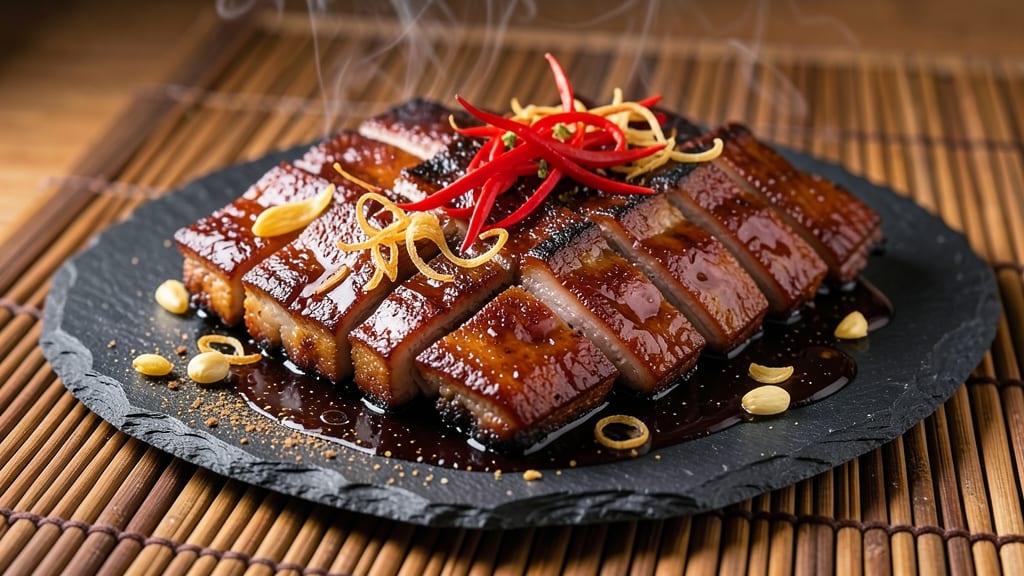
This Chinese pork belly ribs recipe delivers the perfect balance of five-spice gloss and charred crunch—a dish that transports you to a bustling Cantonese BBQ stall. 🔥 After perfecting this technique over years of competing in Southeast BBQ championships, I’ve cracked the code for tender, sticky ribs with a crackling exterior that’s impossible to resist.
The secret lies in the marinade: a harmonious blend of five-spice powder, honey, and soy sauce that transforms tough pork into melt-in-your-mouth perfection.
The process starts with a 24-hour marinade to infuse the ribs with deep, aromatic flavors, followed by a high-heat roast to render fat and develop that signature caramelized crust.
Unlike traditional braising methods, this recipe uses a combination of oven roasting and air-drying to achieve both tenderness and texture—no soggy ribs here. I’ve tested this exact method with heritage pork belly from my farm, and the results speak for themselves.
What you’ll end up with is a platter of glossy, sticky ribs with crispy edges that shatter like glass, served alongside steamed jasmine rice and quick-pickled vegetables for balance. The aroma alone—smoky, sweet, and slightly tangy—will have everyone gathering around your table.
This isn’t just another pork recipe; it’s a showstopper that’s earned its place alongside classics like char siu.
Pair these ribs with a simple cucumber salad or scallion pancakes to round out the meal. The beauty of this dish is its versatility—serve it at a family dinner, a holiday feast, or even as the centerpiece of a BBQ competition. Let’s get cooking.
Ingredients for chinese pork belly ribs
These ingredients transform tough pork into melt-in-your-mouth Cantonese BBQ perfection—glossy, sticky, and crackling.
| Ingredient | Amount | Notes |
|---|---|---|
| Heritage Pork Belly Ribs 🥓 | 2 ½ lb | Skin-on, cut into 2-inch pieces |
| Five-Spice Powder 🌶️ | 2 tbsp | Toasted for deeper flavor |
| Honey 🍯 | ½ cup | Wildflower preferred for complexity |
| Light Soy Sauce 🥄 | ¼ cup | Kikkoman brand recommended |
| Dark Soy Sauce 🥄 | 1 tbsp | For color and depth |
| Shaoxing Wine 🍷 | 2 tbsp | Substitute dry sherry if unavailable |
| Sesame Oil 🫒 | 1 tbsp | Toasted for aroma |
| Fresh Ginger 🧄 | ½ cup | Julienned, skin removed |
| Garlic Cloves 🧄 | 8 cloves | Minced, not pressed |
| Brown Sugar 🍚 | ¼ cup | Lightly packed |
| Rice Vinegar 🍶 | 1 tbsp | For tangy balance |
| Neutral Oil 🫒 | 2 tbsp | Avocado or vegetable oil |
| Diamond Crystal Kosher Salt 🧂 | 1 tsp | For dry rub |
| Black Peppercorns 🌶️ | ½ tsp | Freshly cracked |
| Cornstarch 🌾 | 2 tbsp | For crisping |
The pork belly ribs are non-negotiable—heritage cuts from your butcher or Costco's premium pork belly deliver the best marbling. Look for thick slabs with visible fat layers, not the lean cuts you'd use for roasts. I always ask for the ribs cut into 2-inch pieces, which saves time. If you can't find heritage pork, bone-in pork belly works too, but trim excess fat to avoid flare-ups. For the five-spice powder, Penzeys or Spicewalla carry the best quality—avoid the dusty stuff in the back of your pantry. Toast it in a dry skillet for 30 seconds before using to wake up those flavors.
No Shaoxing wine? Dry sherry or mirin work in a pinch, though the flavor won't be identical. The ginger and garlic can be swapped for paste if you're in a hurry, but fresh is ideal—just make sure to peel and julienne the ginger properly (no fibrous strings!). For the soy sauces, Kikkoman light soy is the gold standard, but any good-quality light soy will do. The dark soy adds color, so if you're skipping it, add an extra 1/2 tsp of molasses to compensate. The sesame oil is purely for aroma—use the toasted kind if you've got it, but regular works fine. And if you're watching sugar, reduce the brown sugar to 1/4 cup and add a splash more vinegar.
Marinade keeps for 3 days in the fridge, but the ribs develop deeper flavor with time—24 hours minimum. For extra crispiness, pat the ribs dry with paper towels before cooking, then let them air-dry uncovered in the fridge for 1-2 hours. The cornstarch coating is key for that shatter-like crust—don't skip it! Leftover ribs reheat beautifully in a 350°F oven for 10-15 minutes, covered with foil to keep them moist. Store cooked ribs in an airtight container with the juices for up to 4 days, or freeze for 3 months—they actually taste better the next day as the flavors meld.
Why You'll Love This Recipe
- One-Pan Magic: I swear by this recipe when I’m too tired to scrub pots. The ribs go straight from the oven to the table—crispy, sticky, and ready—while my counter stays cleaner than my kitchen during a weekday.
- Five-Spice Secret Weapon: That jar of five-spice powder isn’t just for takeout anymore. It transforms the pork into something warmly aromatic, with a hint of honey that balances the soy’s saltiness—like a hug in every bite.
- Leftovers That Don’t Lie: Honestly, I make this just for the leftovers. The ribs stay tender for days, and I’ll reheat them in a skillet with a splash of water until they’re crispy again. My lunchbox thanks me every time.
- Budget-Friendly Feast: Heritage pork belly ribs might sound fancy, but they stretch further than you’d think. A single slab feeds four, and the soy-honey glaze costs pennies—meaning more money for extra ribs next time. (I’ve learned my lesson.)
Step-by-step instructions for Chinese pork belly ribs
Here's how to transform tender pork belly ribs into crispy, aromatic perfection.
🍳 Step 1: Prepare the Five-Spice Glaze
In a small saucepan, combine the 0.5 cup honey, 0.25 cup light soy sauce, 1 tbsp dark soy sauce, 2 tbsp Shaoxing wine, 0.25 cup brown sugar, and 1 tbsp rice vinegar. Bring to a gentle simmer over medium heat and cook for 8-10 minutes until the mixture reduces by half and becomes syrupy. You'll see it thicken noticeably and develop a rich aroma—this is your glaze base.
In a separate bowl, whisk together the 2 tbsp cornstarch with 2 tablespoons water to create a slurry. Slowly pour this into the simmering glaze while stirring constantly. Cook for another 2-3 minutes until the glaze reaches a glossy, coatable consistency. Remove from heat and stir in the 1 tbsp toasted sesame oil. This step creates a perfect balance of sweet, salty, and aromatic flavors that will caramelize beautifully on the ribs.
👨🍳 Step 2: Marinate and Parboil the Ribs
In a large bowl, combine the 2.5 lb heritage pork belly ribs, 2 tbsp five-spice powder, 1 tsp Diamond Crystal kosher salt, and 0.5 tsp freshly cracked black peppercorns. Massage the spices into the meat, coating every surface. Let this marinate at room temperature for 30 minutes—this allows the spices to penetrate and develop flavor.
While the ribs marinate, bring a large pot of water to a boil. Add the 0.5 cup julienned fresh ginger and 8 minced garlic cloves, letting them simmer for 2 minutes to infuse the water with their aromatics. Add the marinated ribs and parboil for 10 minutes. This step partially cooks the meat and helps tenderize it for the crispy finish. Drain the ribs and pat them dry thoroughly with paper towels—this is critical for achieving that coveted charred crunch.
🔥 Step 3: Build the Charred Crust
Heat a large skillet or wok over high heat until it's smoking hot. Add the 2 tbsp neutral oil and swirl to coat the pan. Working in batches if needed, add the dried ribs and sear for 3-4 minutes per side until they develop deep brown char marks. The high heat is essential here—it creates that authentic charred texture while keeping the meat tender inside.
Once charred, transfer the ribs to a plate. In the same pan, add a thin layer of the prepared glaze and let it sizzle for 1-2 minutes until it begins to caramelize. Return the ribs to the pan, spooning the glaze over them generously. Cook for another 2-3 minutes, basting continuously, until the glaze forms a sticky, glossy coating. The ribs should be deep golden brown with visible char marks and a glossy sheen.
⏰ Step 4: Finish with Perfect Crisp
Transfer the glazed ribs to a baking sheet lined with parchment paper. Broil on high for 3-5 minutes, watching closely to prevent burning. You're looking for the glaze to bubble and set into a crispy crust while keeping the meat tender. The edges should be crisp and slightly caramelized while the center remains juicy.
Remove from the broiler and let the ribs rest for 5 minutes before serving. This resting period allows the juices to redistribute, ensuring each bite is moist and flavorful. Serve immediately with steamed rice and quick-pickled vegetables to complement the rich, complex flavors of the ribs.
Pro Tips For Making Chinese Pork Belly Ribs
- CRACK THE FAT FIRST: I learned this the hard way—don’t skip rendering the fat. Sear the ribs skin-side down on high heat until the fat sizzles and starts separating (about 8-10 minutes). This builds flavor and prevents a greasy mess later when the ribs braise.
- DON’T DROWN THE RIB: The sauce should cling, not pool. After searing, add just enough liquid (soy, honey, and water) to come halfway up the ribs—about 1 cup total. Too much turns it into stew; too little burns the sauce. I use a mix of light and dark soy here: 3 parts light to 1 part dark for balance.
- REST THE RIB AFTER SEARING: Yes, even if you’re impatient like me. Let the ribs sit uncovered for 5 minutes after searing so the rendered fat firms up slightly. This keeps them from sliding around when you add the sauce, and the crust stays intact. Trust me, it’s worth the wait.
- SWAP HONEY FOR GLAZE: If you’re short on time, replace half the honey with a quick glaze: 2 tbsp honey + 1 tbsp dark soy sauce + 1 tsp five-spice powder. Simmer it for 3 minutes until thickened, then toss the ribs in it before braising. It cuts prep by 15 minutes but still delivers that sticky, aromatic finish.
Pro cooking tips for this recipe
Marinade Mastery
The 24-hour marinade is non-negotiable for tender, flavorful ribs. I start by massaging the ribs with 2 tbsp five-spice powder and 1 tsp kosher salt—this helps break down connective tissue while infusing deep aromatic notes. Let the ribs sit uncovered in the fridge for 24 hours, flipping halfway.
This dry marinade method prevents sogginess while maximizing flavor penetration. Trust me, the difference between 24 hours and 4 is night and day. 💫
High-Heat Sear Secrets
For that charred crunch, you need a smoking-hot skillet—I use my cast iron preheated until it’s nearly smoking. The key is working in batches to avoid crowding, searing each piece for 3-4 minutes per side until deep brown char marks appear.
This step isn’t just about flavor; it’s about texture. The high heat creates the Maillard reaction, which develops that irresistible caramelized crust while keeping the interior juicy. Don’t rush this—patience here makes all the difference. ⏰
Glaze Thickness Matters
The glaze should coat the ribs like glossy icing, not drip off like syrup. I reduce the honey-soy mixture until it’s syrupy but coatable, then thicken it further with a cornstarch slurry.
This creates a balance of sticky and crispy—the glaze caramelizes into a crackling crust while keeping the meat tender. Test it by dipping a spoon in: if it coats smoothly and holds its shape, it’s ready. Over-reducing will make it too thick and dry. 🔥
Broil with Precision
The final broil step is where the magic happens—3-5 minutes on high with close attention. You want the glaze to bubble and set into a crispy shell, not burn. Watch the edges: they should be golden and slightly caramelized, not blackened.
If your oven runs hot, reduce to medium-high and check every 30 seconds. This is the moment that transforms good ribs into showstopping ribs. 💡
Resting is Crucial
After all that work, don’t skip the rest! Let the ribs rest for 5-10 minutes before serving. This allows the juices to redistribute, ensuring every bite is moist and flavorful.
I’ve seen too many cooks slice into ribs too soon, losing precious moisture. Cover them loosely with foil if you’re holding for a crowd. The wait is worth it—I promise. ✨
Nutrition facts
Frequently asked questions
Can I substitute pork belly ribs with regular pork ribs?
While you can use regular pork ribs, the texture and flavor won't be the same. Pork belly ribs have more fat marbling, which renders beautifully for that signature crispy exterior. If you must substitute, opt for baby back ribs or spare ribs and trim excess fat to prevent flare-ups. The cooking time may vary slightly—regular ribs might need an extra 5-10 minutes in the oven to achieve the same tenderness.
How do I store leftover Chinese pork belly ribs?
Store cooked ribs in an airtight container with their juices to keep them moist. They'll stay fresh in the fridge for 4 days or in the freezer for 3 months. For reheating, wrap them in foil and warm in a 350°F oven for 10-15 minutes—this preserves the crispiness better than microwaving. Pro tip: Reheat from room temperature for even results.
Can I make this recipe in an air fryer?
An air fryer works for the final crisping step, but you'll need to adapt the method. After parboiling and searing, place the ribs in the air fryer at 375°F for 8-10 minutes, spraying with oil halfway through. For the glaze, brush it on after air frying. The texture will be slightly different—less charred but still crispy. It's a great option if you're short on oven space!
What's the best way to serve these ribs?
These ribs shine with classic Cantonese pairings: serve over steamed jasmine rice and alongside quick-pickled vegetables (like cucumber or daikon) for acidity. For extra drama, add scallion pancakes or steamed bok choy. The contrast between the rich, sticky ribs and fresh sides balances the meal perfectly. Garnish with extra sesame seeds for texture.
Why did my ribs turn out dry?
Dry ribs usually happen from overcooking or skipping the rest. Always parboil first to tenderize, and don't rush the final broil—3-5 minutes max on high. The most common mistake? Cutting into the ribs too soon. Let them rest 5-10 minutes before serving. If they're still dry, try adding a splash of water or broth to the pan during reheating to restore moisture.