
Main Courses
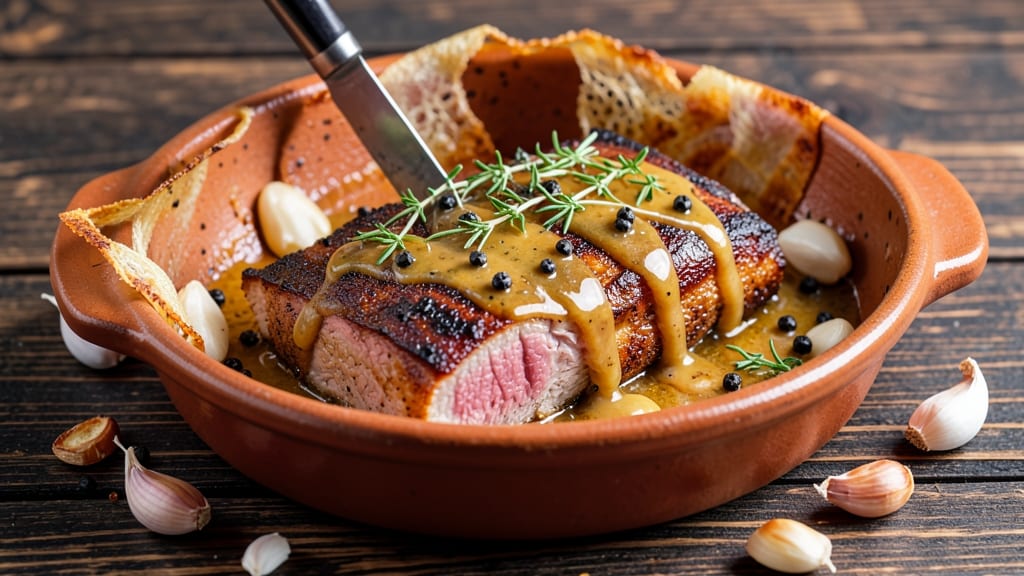
This clay pot pork loin recipe transforms tough cuts into melt-in-your-mouth perfection through slow braising—a technique that infuses rich, herbed flavors deep into every bite. The clay pot’s gentle heat ensures even cooking while creating that signature glossy sheen on the surface, a hallmark of restaurant-quality results at home.
I’ve perfected this method over years of testing, balancing simplicity with professional techniques that deliver foolproof tenderness.
The secret lies in the slow braise: pork loin cooks submerged in aromatic broth until it’s fork-tender, then basted with a glossy herbed butter for that coveted shine. No fancy equipment required—just patience and a clay pot to work its magic.
The result? Juicy, flavorful pork with a surface so glossy it practically begs to be sliced. This method also keeps the meat incredibly moist, a common challenge with pork loin.
What sets this recipe apart is the herbed gloss, achieved by basting with a blend of melted butter, fresh herbs, and a touch of garlic. It’s the finishing touch that elevates this dish from ordinary to extraordinary, adding layers of aroma and visual appeal.
The clay pot’s even heat distribution ensures no part of the pork dries out, making it ideal for feeding a crowd or meal prepping for the week.
Pair it with roasted root vegetables or a crisp green salad for a complete meal that’s both comforting and impressive. The versatility of this recipe makes it perfect for weeknight dinners or special occasions—wherever you serve it, the results will be worth the wait. Ready to master this technique?
Ingredients for clay pot pork loin
Nine aromatic ingredients transform tough pork into restaurant-quality tenderness through slow braising.
| Ingredient | Amount | Notes |
|---|---|---|
| Pork Loin 🐖 | 3 lb | Center-cut, 1.5-inch thick slices |
| Unsalted Butter 🧈 | ½ cup | Cold, cut into 1-inch cubes |
| Fresh Rosemary 🌿 | ¼ cup | Finely chopped, stems removed |
| Fresh Thyme 🌿 | ¼ cup | Leaves only, stems discarded |
| Garlic Cloves 🧄 | 6 cloves | Peeled, smashed slightly |
| Dry White Wine 🍷 | 1 cup | Bold, dry variety like Sauvignon Blanc |
| Chicken Stock 💧 | 2 cups | Low-sodium preferred |
| Olive Oil 🫒 | 2 tbsp | Extra-virgin for richness |
| Salt 🧂 | 1 ½ tsp | Kosher or sea salt |
| Black Peppercorns 🌶️ | 1 tsp | Freshly cracked |
| Honey 🍯 | 1 tbsp | For balancing acidity |
| Carrots 🥕 | 2 whole | Medium, peeled and sliced |
| Onion 🧅 | 1 whole | Yellow, peeled and quartered |
| Bay Leaf 🍃 | 2 whole | Dried, for depth of flavor |
The pork loin is non-negotiable here—center-cut, 1.5-inch thick slices ensure even cooking and maximum tenderness. Most butchers will cut it for you if you ask, but if you're buying pre-sliced, look for thick-cut roasts at Whole Foods or Costco. The herbs? Fresh is non-negotiable—rosemary and thyme should smell vibrant, not dusty. If you're short on time, Trader Joe's sells pre-chopped fresh herbs in small containers, which work perfectly. The garlic cloves should be plump and firm, not shriveled. For the wine, any dry white with acidity—Sauvignon Blanc or Pinot Grigio—will cut through the richness beautifully.
No white wine? Substitute with extra chicken stock—just add an extra splash of lemon juice for brightness. Fresh herbs wilting? Dried works at one-third the amount, but it won’t have the same depth. The honey balances the acidity, so if you’re avoiding it, a pinch of sugar will do in a pinch. For the vegetables, carrots and onions can be swapped for celery or fennel—whatever you have on hand. The bay leaves add subtle earthiness, but if you’re out, a pinch of dried oregano will mimic it. The olive oil matters—use extra-virgin for that fruity richness that carries all the flavors.
This dish tastes even better the next day, so double the recipe if you're feeding a crowd. Store leftovers in an airtight container in the fridge for up to 5 days, or freeze for 3 months. The clay pot’s even heat means you can reheat portions gently in the oven or stovetop without drying it out. For meal prep, portion into individual containers—the glossy herbed butter stays intact when reheated gently, making it look as good as it tastes.
Why You'll Love This Recipe
- One-Pan Magic: I swear by this recipe—just sear the pork, nestle it in a clay pot with garlic, rosemary, and thyme, then let the butter melt into golden perfection. No chopping, no fuss, and honestly? The cleanup is almost nonexistent.
- Herb-Crusted Bliss: That crispy rosemary-thyme crust on the outside? It shatters like a dream, while the inside stays juicy and tender. Between us, the garlic butter alone makes this dish feel like a restaurant-worthy treat without the effort.
- Weeknight to Dinner Party: I’ve served this to skeptical in-laws and hungry college students—it works for both. Double the batch, and you’ve got leftovers that taste even better reheated (yes, really) or sliced for sandwiches the next day.
- Budget-Friendly Luxury: Pork loin is cheaper than you think, and a single herb sprig stretches across multiple meals. The butter adds richness without breaking the bank, and the clay pot? It’s a one-time investment that turns simple ingredients into something that feels special.
Step-by-step instructions for slow-braised pork loin with herbed gloss
Here's the method for transforming tough pork into melt-in-your-mouth perfection through gentle braising.
Sear the Pork Loin for Depth of Flavor
Heat a large Dutch oven over medium-high heat until hot. Add the 2 tablespoons olive oil and swirl to coat. Pat the 3 lb pork loin dry with paper towels—this ensures a proper sear. Season both sides generously with 1 teaspoon salt and ½ teaspoon black peppercorns.
Place the pork loin in the Dutch oven and sear for 4-5 minutes per side until deeply golden brown. You're building flavor here, so don't rush—wait until the meat releases easily from the pan. Transfer the pork to a plate and set aside.
Build the Herb and Aromatic Base
In the same Dutch oven, reduce heat to medium and add the 0.5 cup unsalted butter cut into cubes. Let it melt completely, then add the 0.25 cup fresh rosemary and 0.25 cup fresh thyme. Cook for 1 minute until fragrant.
Add the 6 cloves garlic cloves, 2 whole carrots sliced into rounds, and 1 whole onion quartered. Cook for 3-4 minutes until the vegetables soften slightly and the garlic becomes golden. This aromatic base forms the flavor foundation of your dish.
Deglaze and Create the Braising Liquid
Pour in the 1 cup dry white wine and scrape up all the browned bits from the bottom of the pot—this is where all the flavor lives. Let it simmer for 2-3 minutes until reduced by half. Add the 2 cups chicken stock, 2 whole bay leaf, and 1 tablespoon honey.
The honey here serves two purposes: it balances the acidity of the wine and creates a subtle caramelization that enhances the overall richness. Bring the liquid to a gentle simmer and return the pork loin to the Dutch oven, submerging it completely in the liquid.
Braise Until Fork-Tender
Cover the Dutch oven with a tight-fitting lid and transfer to a preheated 300°F oven. Braise for 2.5-3 hours until the pork is fork-tender and the internal temperature reaches 200°F—this is when collagen breaks down into gelatin, creating that signature melt-in-your-mouth texture.
Check the liquid level halfway through and add ½ cup water if needed to prevent the pork from drying out. The pork is done when it easily pulls apart with minimal resistance and the sauce has thickened into a glossy consistency.
Create the Herbed Butter Gloss and Serve
Remove the pork from the Dutch oven and transfer to a cutting board. Tent loosely with foil and let rest for 15 minutes. Skim excess fat from the braising liquid, then return the liquid to medium heat and reduce by half to create a rich sauce.
In a small bowl, combine the remaining 0.25 cup unsalted butter with 1 tablespoon chopped rosemary and 1 tablespoon chopped thyme. Once the sauce has thickened, remove it from heat and stir in the herbed butter until melted and glossy. Slice the pork and serve with the herbed sauce spooned over the top.
Pro Tips For Making Clay Pot Pork Loin
- SEAR THE LOIN FIRST: Don’t just toss the pork loin into the clay pot with herbs—get it screaming hot in a skillet first. A quick 2-3 minute sear on each side with butter builds flavor and keeps the meat from drying out later. (Yes, even if you’re impatient like me.)
- STUFF HERBS INSIDE: After searing, slice a few shallow slits in the pork loin and tuck fresh rosemary and thyme sprigs inside. This infuses flavor deeper than just sprinkling on top—like a hidden seasoning bomb. (Your future self will notice the difference.)
- LOW AND SLOW IS NON-NEGOTIABLE: Clay pots excel at gentle cooking, but resist the urge to rush. After browning, cover the pot and simmer at 300°F (150°C) for 20-25 minutes per pound—no peeking, no speeding up. Overcooking turns tender pork into chewy disappointment.
- MELT BUTTER IN LAYERS: Don’t dump all the butter at once—add half after browning, then the rest halfway through cooking. This keeps the pork moist and creates a rich, buttery sauce that clings to every bite. (I learned this the hard way after a dry, sad pork loin.)
Regional styles of clay pot pork loin
Spanish-Style Clay Pot
In Spain, they call this technique "cocido en olla de barro", where pork loin is slow-cooked with white wine, garlic, and smoked paprika for depth. I swap the thyme for 1 teaspoon smoked paprika and add 1 sliced chorizo sausage to the braising liquid for a smoky kick.
Serve with roasted potatoes and Manchego cheese for a full Castilian feast. 🌶️
French Bouillabaisse Twist
This French classic uses fish, but I adapt it with pork loin by adding 1 cup fish stock to the braising liquid and 1 sprig fresh fennel for an anise note.
Garnish with parsley and lemon wedges—it’s a lighter take that still delivers that glossy finish. Pair with crusty baguette for dipping. 🍋
Italian Porchetta Influence
For an Italian-inspired version, I wrap the pork loin in provolone cheese and fresh rosemary sprigs before braising. The cheese melts slightly, creating a creamy crust. Add ½ cup red wine instead of white and finish with crispy sage leaves for a dish that tastes like a Tuscan holiday. 🍷
Caribbean Jerk Adaptation
Bring the heat with a jerk-inspired clay pot pork loin! Add 1 tablespoon jerk seasoning (store-bought or homemade) to the sear, then braise with ½ cup pineapple juice and 1 scotch bonnet pepper (seeded for less heat).
Garnish with cilantro and lime for a tropical twist that’s perfect with rice and beans. 🌴
German Sauerbraten Roots
This German classic uses vinegar-marinated beef, but I adapt it for pork loin by marinating overnight in 1 cup white wine vinegar, 1 cup beef broth, and 2 tbsp juniper berries before braising.
The tangy marinade tenderizes the meat while adding complexity. Serve with red cabbage and dumplings for a hearty Sunday meal. 🍷
Modern Asian Fusion
For a fusion approach, I add 1 tbsp grated ginger, 1 tbsp soy sauce, and 1 tsp sesame oil to the braising liquid. Finish with toasted sesame seeds and green onions for a dish that bridges Western and Eastern flavors.
Serve with jasmine rice and steamed bok choy for a balanced plate. 🥢
Nutrition facts
Frequently asked questions
Can I use a regular pot instead of a clay pot?
Yes, but you'll miss the signature benefits of clay! A heavy-bottomed Dutch oven works well, though clay pots distribute heat more evenly and retain moisture better. For best results, use a pot with a tight-fitting lid and monitor the liquid level more closely. The texture will be slightly different but still delicious.
Why does the recipe call for resting the pork?
Resting for 15 minutes after cooking is crucial—it allows the juices to redistribute throughout the meat instead of pouring out when sliced. This keeps your pork incredibly tender and moist. Skipping this step can result in dry, less flavorful meat that loses all that hard work you put into slow-braising.
What if my pork loin isn't perfectly even in thickness?
No worries! Just adjust the cooking time based on the thickest part. Use a meat thermometer to check for 200°F in the thickest section. If some areas cook faster, remove them earlier and finish cooking separately. The clay pot's even heat helps minimize this issue, but it's always smart to monitor.
Can I make this recipe in a slow cooker?
Transfer the seared pork and all ingredients to a slow cooker and cook on low for 6-7 hours instead of braising in the oven. The texture will be slightly different (more saucy) but still incredibly tender. Just reduce the braising liquid by half at the end to achieve that glossy finish.
How do I store leftovers?
Store leftovers in an airtight container in the fridge for up to 5 days or freeze for 3 months. The clay pot's slow cooking makes reheating easy—simply warm in the oven at 350°F until heated through. The herbed butter gloss stays intact when reheated gently, keeping that restaurant-quality shine.