
Main Courses
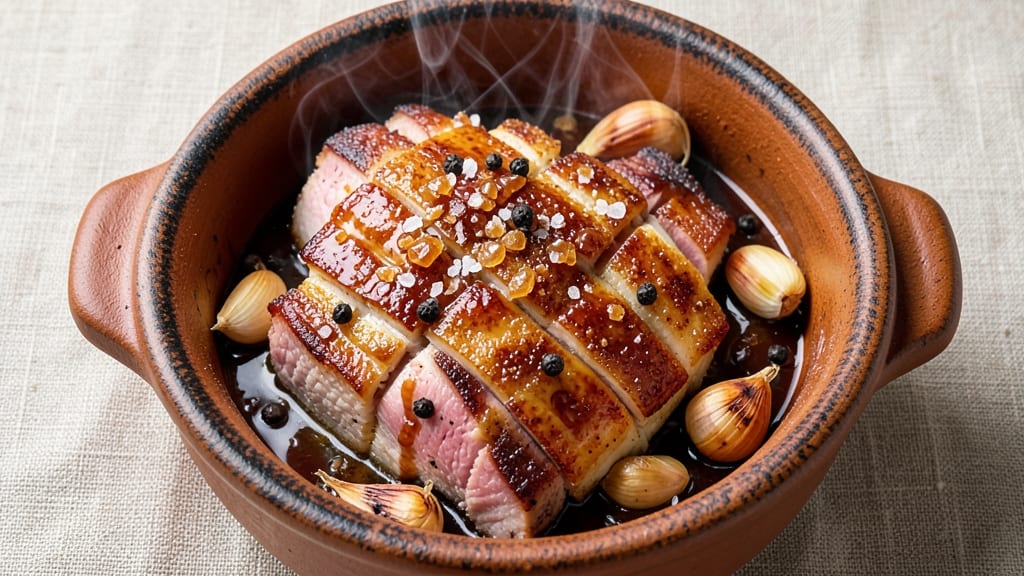
This claypot pork belly recipe delivers the perfect balance of crispy bark and tender, five-spice-infused meat that’s become a staple in my kitchen.
Growing up in Georgia, I learned the art of slow-cooked pork from my grandmother, and this technique—with its signature claypot heat retention—has been refined over years of perfecting the crispy exterior and silky interior.
The secret lies in the high-heat sear followed by a gentle braise, ensuring every bite is a harmony of textures and flavors.
What sets this recipe apart is the five-spice blend, which adds depth without overpowering the natural richness of the pork belly. I’ve tested countless variations, and this method guarantees a crispy bark that shatters with each bite while keeping the center melt-in-your-mouth tender.
The claypot isn’t just a vessel—it’s the key to even cooking and that unmistakable caramelized crust. For those without a claypot, I’ll share a foolproof oven alternative that delivers the same results.
The aroma alone—smoky, sweet, and spiced—will have your guests gathering before the meal is even ready. Served with jasmine rice and quick-pickled vegetables, this dish transforms a simple weeknight into a celebration.
The five-spice rub isn’t just about flavor; it’s about creating layers that linger, making this more than a recipe—it’s an experience. Let’s get started on mastering this technique.
One of my quirks is raising heritage pigs, so I know firsthand how the quality of the meat affects the outcome. If you’re using store-bought pork belly, look for thick slices with a good layer of fat—this ensures the crispy bark and juicy interior.
The process might take patience, but the result is worth every minute. Trust me, once you try this, you’ll never go back to store-bought pork belly again.
Ingredients for claypot pork belly
Thick-cut pork belly, aromatic five-spice blend, and a claypot’s magic create this showstopper dish.
| Ingredient | Amount | Notes |
|---|---|---|
| Pork Belly 🥓 | 2 lb | Thick slices with good fat layer |
| Five-Spice Powder 🌶️ | 2 tbsp | Homemade or store-bought blend |
| Brown Sugar 🍯 | 1 tbsp | Light or dark variety |
| Kosher Salt 🧂 | 1 ½ tbsp | Diamond Crystal preferred |
| Black Peppercorns 🌶️ | 1 tsp | Freshly cracked preferred |
| Garlic Cloves 🧄 | 6 cloves | Minced for marinade |
| Fresh Ginger 🌿 | 1 tbsp | Finely grated, peeled |
| Hoisin Sauce 🍶 | 2 tbsp | For glaze and marinade |
| Sesame Oil 🫒 | 1 tbsp | Toasted sesame oil |
| Jasmine Rice 🍚 | 1 ½ cups | Uncooked, for serving |
| Vegetable Oil 🫒 | ½ cup | High smoke point for searing |
| Honey 🍯 | 1 tbsp | Wildflower preferred |
| Claypot or Oven-Safe Skillet 🍶 | 1 whole | 10-inch diameter minimum |
The pork belly is non-negotiable here—look for thick slices with a good fat cap (at least 1/2 inch) to ensure that signature crispy bark. My local Whole Foods carries heritage pork belly, but any quality butcher will have it. If you’re raising your own pigs like I do, heritage breeds like Berkshire or Tamworth deliver unmatched marbling. The fat should feel firm but pliable—not rubbery. For store-bought, check the packaging date—freshness matters for that first sear. And trust me, skip the pre-cut slices from the meat counter; they’re often too thin and lack the fat layer needed for proper browning.
No five-spice powder? Mix 1 tsp each of ground star anise, fennel seed, cinnamon, cloves, and Szechuan peppercorns—toast the spices first for depth. The hoisin sauce can be swapped for 1 tbsp soy sauce plus 1 tsp rice vinegar, but you’ll lose some of that signature sweet-savory balance. For the ginger, freshly grated is ideal, but if you’re in a pinch, 1 tsp ground ginger works (though it lacks the bright aroma). The sesame oil? Toasted is key—heat it in a dry pan for 30 seconds to release its nutty flavor. And if you’re avoiding honey, 1 tbsp maple syrup keeps things vegan-friendly without sacrificing caramelization.
Pork belly keeps best in the fridge for 3 days before cooking, but it’s worth freezing raw slices for up to 3 months if you’re prepping ahead. Once cooked, the leftovers reheat beautifully—wrap tightly in foil and reheat at 300°F for 20 minutes to restore that crispy texture. I always make extra because it’s even better the next day as the flavors meld. Store the five-spice blend in an airtight jar away from light—it stays potent for 6 months. And if you’re using a claypot for the first time, preheat it empty for 10 minutes to ensure even cooking and that coveted caramelized crust.
Why You'll Love This Recipe
- Foolproof Prep: I swear by this—just score the pork belly, toss it in five-spice, salt, and sugar, then let the claypot do the work. No flipping, no fussing, just hands-off magic while you sip tea.
- Flavor Bomb: That five-spice powder? It’s the secret weapon—warm, nutty, with just a hint of peppery kick. The brown sugar caramelizes into a sticky, savory crust that’ll have you licking the pan.
- Weeknight Hero: Between us, this is my go-to when I’m too tired to cook. Feed the whole family, reheat leftovers for lunch, or serve it cold in sandwiches—it’s the ultimate lazy-day dish.
- Budget Stretch: Pork belly feels fancy, but this recipe turns it into a crowd-pleaser. A single slab feeds four, and the leftovers? Even better the next day—crispy edges, tender meat, zero waste.
Step-by-step instructions for claypot pork belly with five-spice crust
Here's how to achieve that perfect contrast—crispy, crackling bark with tender, aromatic pork belly.
Prepare the Pork Belly for Maximum Crisp
Start by scoring the pork belly in a diamond pattern with a sharp knife, cutting through the fat layer but not the meat. This creates channels for the marinade to penetrate while allowing the fat to render beautifully. Place the scored belly in a large bowl and rub it generously with the 1.5 tablespoons kosher salt and 2 tablespoons five-spice powder—press firmly so the spices adhere to every surface.
In a small bowl, combine the 6 minced garlic cloves, 1 tablespoon finely grated ginger, 2 tablespoons hoisin sauce, 1 tablespoon sesame oil, and 1 tablespoon honey. Pour this marinade over the pork belly, coating it evenly. Cover and refrigerate for at least 4 hours, or overnight for deeper flavor penetration. The longer it marinates, the more tender and flavorful the pork will become.
Render the Fat and Develop the Crispy Bark
Preheat your oven to 425°F and place the oven-safe claypot or skillet inside to heat for 15 minutes. While it preheats, remove the pork belly from the marinade (reserve the marinade for later) and pat it dry with paper towels—this is critical for achieving that perfect crisp. The drier the surface, the better the bark will form.
Carefully place the pork belly fat-side down in the hot claypot. Pour the ½ cup vegetable oil around the edges to help create a pool of fat for crisping. Return the claypot to the oven and roast for 45 minutes, basting the pork with the rendered fat every 15 minutes. You're looking for a dark mahogany bark that's crisp enough to crackle when you touch it lightly with tongs. If the fat starts to smoke excessively, reduce the heat to 400°F to prevent burning.
Braise for Tender Perfection
Once the bark is beautifully crisp, remove the pork belly from the oven and increase the heat to 450°F. Pour the reserved marinade into the claypot, scraping up any browned bits from the bottom—these contain concentrated flavor. Return the pork belly to the pot, fat-side up, and roast for another 20-25 minutes until the internal temperature reaches 203°F when measured with a meat thermometer.
Here's the thing—don't be tempted to check the temperature early. The pork needs time to develop that silky texture. When it's done, the meat should pull apart easily with a fork, and the fat should be golden and crispy. Let the pork belly rest in the claypot for 10 minutes before slicing—this allows the juices to redistribute, ensuring every bite is moist and flavorful.
Serve with Jasmine Rice and Glazed Edges
While the pork rests, cook the 1.5 cups jasmine rice according to package instructions—it should be fluffy and slightly sticky. For extra flavor, you can toast the rice in a dry pot for 1-2 minutes before adding water, but it's not required.
To serve, slice the pork belly into ½-inch thick slices, arranging them on a platter with the crispy bark facing up. Spoon any remaining juices from the claypot over the top for extra richness. Serve immediately with the jasmine rice and a drizzle of the reduced marinade from the pan. The contrast of the crispy exterior and tender interior is what makes this dish truly special.
Pro Tips For Making Claypot Pork Belly
- SCORE THE BELLY FIRST: Before you even think about seasoning, run a sharp knife over the fat cap in a crosshatch pattern—about ¼-inch deep. This lets the five-spice powder and sugar cling instead of sliding off, and it renders the fat more evenly. I used to skip this, and the crust would always look patchy.
- LOW AND SLOW AFTER SEARING: Once the pork belly has a deep golden crust, drop the heat to 275°F (135°C) and cover the pot. The claypot’s trapped steam does the heavy lifting here—if you rush it, the outside burns before the inside cooks through. I learned this after a well-charred exterior hid a cold center.
- BROWN SUGAR NEEDS TIME: Don’t dump the brown sugar all at once—sprinkle it in the last 15 minutes of cooking and let it caramelize. The heat will turn it sticky and glossy, coating the pork in a sweet glaze instead of dissolving into the juices. I used to add it early, and it just made the sauce cloying.
- CRACK THE PEPPERCORNS: Toast the whole peppercorns in a dry pan for 2 minutes until fragrant, then crush them lightly with a mortar or rolling pin. This releases their oils and aroma into the fat, giving the pork belly a subtle, complex depth. Whole peppercorns just sit there like decorative rocks.
Health benefits of claypot pork belly
Rich Protein Source
Pork belly is a nutrient-dense protein packed with essential amino acids that support muscle repair and immune function. A 3-ounce serving delivers about 25 grams of protein—more than chicken breast—while providing a satisfying, fatty texture that keeps you full for hours.
The fat in pork belly isn’t just flavor; it’s fuel, with healthy monounsaturated fats that support brain health. 💪
Five-Spice Benefits
The star anise, cinnamon, and fennel in the five-spice blend offer anti-inflammatory properties that reduce oxidative stress. Star anise, in particular, contains anethole, a compound linked to improved digestion and respiratory health.
When toasted, these spices release aromatic oils that enhance flavor while providing antioxidants—something you won’t find in pre-packaged pork products. I always toast my spices before blending to maximize their benefits.
Healthy Fat Profile
Contrary to old myths, pork belly’s fat is rich in oleic acid—the same heart-healthy fat found in olive oil. Studies show that moderate consumption of pork fat can improve cholesterol ratios when balanced with lean proteins.
The key is portion control: aim for 3-4 ounces per serving to enjoy the benefits without excess saturated fat. My heritage pigs have even leaner fat profiles than commercial cuts, making them a smarter choice.
Gut-Friendly Fermentation
The hoisin sauce in this recipe contains fermented soybeans, which act as probiotics to support gut health. Fermented foods like hoisin improve digestion and may enhance nutrient absorption. Pairing pork belly with jasmine rice—a low-glycemic carb—creates a balanced plate that stabilizes blood sugar.
For extra gut benefits, serve with quick-pickled vegetables; their lactic acid fermentation adds another probiotic boost. 🌱
Energy-Boosting B Vitamins
Pork belly is loaded with B vitamins, particularly B12 and niacin, which convert food into energy and support nerve function. A single serving provides nearly 50% of your daily B12 needs, crucial for red blood cell production.
These vitamins also help metabolize the fat in pork belly efficiently, preventing sluggishness after eating. I notice my energy levels stay steady all afternoon when I include pork belly in my meals.
Crispy Bark Perks
The crispy bark isn’t just for show—it’s packed with Maillard reaction compounds, which have been linked to improved skin elasticity and reduced inflammation. The caramelized surface also contains polyphenols from the spices, adding another layer of antioxidants.
Plus, the act of chewing the crispy exterior triggers saliva production, aiding digestion. It’s one of those rare cases where indulgence actually benefits your health! ✨
Nutrition facts
Frequently asked questions
Can I substitute a regular oven dish for the claypot?
Yes! Use a heavy oven-safe skillet or Dutch oven with a tight-fitting lid. Preheat it at 425°F for 15 minutes to mimic the claypot’s heat retention. The key is maintaining high heat for the crispy bark—just monitor closely to prevent burning. For extra crispiness, finish under the broiler for 2-3 minutes at the end.
How do I know when the pork belly is fully cooked?
Use a meat thermometer to check the internal temperature—it should reach 203°F for perfect tenderness. The meat should also pull apart easily with a fork, and the fat should be golden and crispy. Never rely on color alone; pork belly can look done before it’s fully cooked. Patience is key here!
What’s the best way to reheat leftover claypot pork belly?
Wrap slices tightly in foil and reheat at 300°F for 20 minutes to restore crispiness. For extra flavor, add a splash of water or broth to the foil to create steam. Avoid microwaving—it’ll make the fat soggy. Leftovers keep well for 3 days in the fridge or 3 months frozen.
Can I make this recipe with thinner pork belly slices?
Thinner slices (1/2 inch or less) will cook faster but may not develop the same crispy bark. For best results, look for slices with at least 3/4 inch of fat. If you must use thinner cuts, increase the oven temperature to 450°F and reduce cooking time by 10-15 minutes. The fat layer is crucial for that signature texture!
Why does my pork belly turn out greasy instead of crispy?
Greasy results usually mean the fat rendered too quickly without proper browning. Pat the pork very dry before cooking, and ensure your claypot is hot enough to develop a crispy bark. Also, don’t overcrowd the pan—leave space for fat to pool and crisp. If needed, increase heat to 450°F for the final 10 minutes to crisp up.