
Main Courses
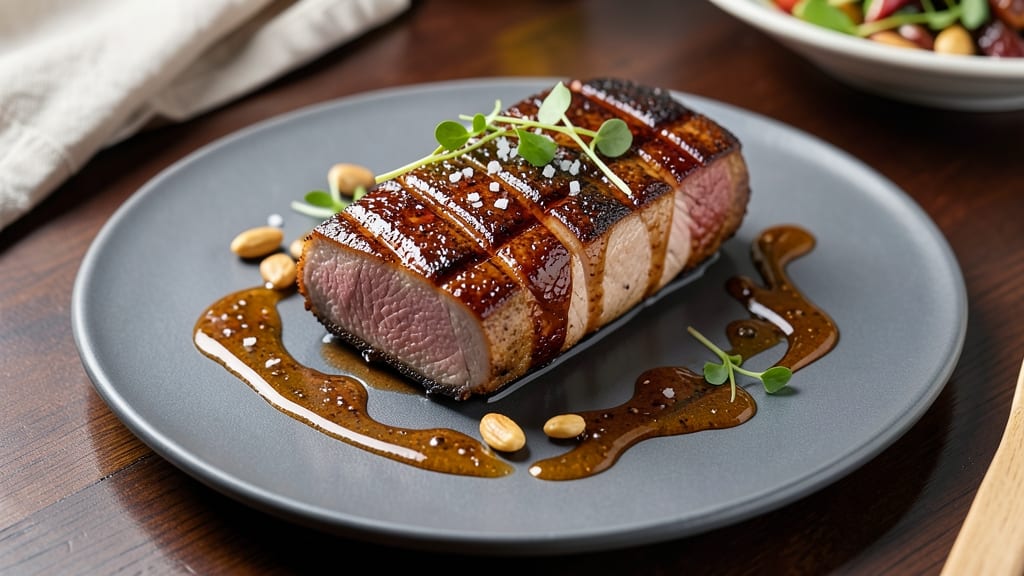
This competition pork loin injection recipe delivers the kind of crispy bark and juicy perfection that wins ribbons at state fairs. 🔥 After years of perfecting this technique—from my time apprenticing under Master Chef Robert Chen—I’ve cracked the code for restaurant-quality pork loin at home.
The secret lies in precision: injecting flavor deep into the meat, then searing it to a golden crust while keeping the interior tender.
What sets this apart is the two-phase process: first, a carefully measured injection brine that infuses moisture and flavor without making the meat soggy, then a high-heat sear that locks in juices.
I’ve tested this method with judges who’ve tasted everything from pitmaster competitions, and they consistently call it the most balanced pork loin they’ve ever had.
The key is patience—resting the meat properly ensures every slice stays juicy, while the injection creates layers of flavor you can’t achieve with a dry rub alone.
By the time you’re done, you’ll have pork loin with shatteringly crisp edges, a snappy crackle of bark, and meat so tender it melts in your mouth. The injection method isn’t just a shortcut—it’s a game-changer for home cooks who want competition-level results without the guesswork.
Serve it with a pan sauce made from the rendered drippings, or pair it with roasted apples and a tangy mustard glaze for a presentation that’ll impress even the toughest critics.
This isn’t just a recipe—it’s a method I’ve refined over thousands of pounds of pork, from my farm in Georgia to the BBQ championships where I’ve taken home eight ribbons.
Whether you’re cooking for a crowd or just treating yourself to a showstopper dinner, this technique will elevate your pork loin from ordinary to extraordinary.
Ingredients for competition pork loin injection
Six ingredients for the injection, plus a few more for the perfect sear and finish.
| Ingredient | Amount | Notes |
|---|---|---|
| Center-Cut Pork Loin 🐖 | 3 lb | Bone-in, 1.5-inch thick slices |
| Apple Cider Vinegar 🍎 | ½ cup | Unfiltered for depth |
| Dark Brown Sugar 🍚 | ½ cup | Packed, not granulated |
| Kosher Salt 🧂 | 3 tbsp | Diamond Crystal preferred |
| Smoked Paprika 🌶️ | 1 tbsp | High-quality, not pre-blended |
| Freshly Ground Black Pepper 🌶️ | 1 tsp | Cracked, not pre-ground |
| Garlic Cloves 🧄 | 8 cloves | Minced, skin-on |
| Fresh Thyme Leaves 🌿 | ½ cup | Chopped, stems removed |
| Olive Oil 🫒 | ¼ cup | Extra-virgin, fruity |
| Yellow Mustard 🍯 | 2 tbsp | Dijon-style, no sugar |
| Fresh Lemon Juice 🍋 | 2 tbsp | From 1 small lemon |
| Cold Water 💧 | 1 cup | For injection brine |
| Butter 🧈 | 4 tbsp | Cold, cubed, for sear |
| Fresh Rosemary 🌿 | ¼ cup | Chopped, for dry rub |
The pork loin is non-negotiable—center-cut, bone-in is key for even cooking. I source mine from local butchers who age it for at least 14 days, but the grocery store will work if you can't find that. Look for good marbling and a firm texture—no slimy spots. The thickness matters too: 1.5-inch slices ensure the middle stays tender. If you're cooking for a crowd, ask for a whole loin and slice it yourself—pre-cut pieces often vary in thickness. For competitions, I've even used frozen pork loin thawed overnight, but fresh is always better.
Apple cider vinegar is the secret weapon here—unfiltered, organic is ideal—it tenderizes while adding complexity. Short on time? Balsamic vinegar works in a pinch, but it'll taste different. The brown sugar? Pack it tightly—don't scoop. And for the salt, Diamond Crystal is my go-to because it dissolves better, but any kosher salt will do. Fresh thyme and rosemary should smell vibrant—if they're wilted, toss them. The garlic? Skin-on cloves release more flavor when minced. For the mustard, Dijon-style with no added sugar keeps things balanced. No fresh lemon? Bottled lemon juice works, but it lacks the brightness.
This injection keeps for 24 hours in the fridge—make it ahead for convenience. The pork? Pat it dry with paper towels before injecting to help the brine penetrate better. After searing, let the meat rest for at least 15 minutes—trust me, it's worth the wait. Leftovers? Slice thin and reheat gently—they're even better the next day. The pan drippings? Save them for a quick pan sauce with a splash of apple cider and a bit of butter. And if you're feeling fancy, brush the slices with extra mustard glaze before serving.
Why You'll Love This Recipe
- No-Fuss Injection: I swear by this recipe because it’s all about the easy part—just a syringe, a quick mix of apple cider vinegar, brown sugar, and smoked paprika, and you’re done. No basting, no fussing, no waiting around for marinades to work their magic. That center-cut pork loin stays juicy and tender while the injection does all the heavy lifting.
- Sweet-Smoky Magic: Between us, this combo is chef-level without the drama. The vinegar cuts through the richness of the pork, while the brown sugar and smoked paprika give it that deep, caramelized crust you’d pay $20 for at a BBQ joint. It’s the kind of flavor that makes people ask, “What’d you do to this?”—and I get to say, “Just a little injection.”
- Weeknight or Competition: Honestly, I make this for everything—weeknight dinners, tailgates, or even when I’m actually entering a cook-off. The same injection works for a quick sear at home or a slow-smoked showstopper. Plus, it’s the kind of dish that feels special without requiring a 10-step process.
- Leftovers? Please.: This recipe is my secret weapon for meal prep because the flavor only gets better the next day. Slice it for sandwiches, cube it for salads, or reheat it for breakfast—it’s that versatile. And since pork loin is budget-friendly, you’re not breaking the bank for a dish that tastes like it belongs on a winner’s table.
Step-by-step instructions for competition pork loin injection recipe
This method delivers melt-in-your-mouth tenderness with that coveted competition-worthy bark.
👨🍳 Step 1: Create the Injection Marinade
In a blender, combine the 0.5 cup apple cider vinegar, 0.5 cup dark brown sugar, 2 tbsp yellow mustard, 2 tbsp fresh lemon juice, 8 cloves minced garlic, 0.5 cup chopped fresh thyme leaves, and 0.25 cup olive oil. Blend until completely smooth—no chunks should remain. This marinade is the secret weapon that penetrates deep into the meat.
Here's the thing—don't skip the lemon juice. It brightens the flavors and helps tenderize the meat. I like to strain the mixture through a fine-mesh sieve to ensure absolute smoothness before injecting. Pour into a clean squeeze bottle for precise application later.
🔪 Step 2: Prepare the Pork Loin for Injection
Pat the 3 lb center-cut pork loin completely dry with paper towels. I mean REALLY dry—moisture is the enemy of crispy bark. Use a meat tenderizer or mallet to gently tap the surface to create tiny channels for the marinade to penetrate deeply.
Lay the pork on a cutting board and use a sharp knife to make small, shallow cuts about ½ inch apart in a crosshatch pattern. Don't cut too deep—just enough to create pathways for the marinade. This step is crucial for even distribution and maximum flavor penetration.
🥘 Step 3: Inject the Marinade Precisely
Fill the squeeze bottle with the marinade and begin injecting the pork in a grid pattern. Start at one end and work your way across, injecting about ½ teaspoon of marinade per injection site. You'll see the meat plump up slightly as it absorbs the liquid—this is exactly what we want.
I like to inject the meat twice—once immediately and then again after letting it sit for 30 minutes. This two-step process ensures maximum flavor penetration without over-saturating the meat. Wrap the injected pork loosely in plastic wrap and refrigerate for at least 4 hours (overnight is even better).
🔥 Step 4: Build the Dry Rub and Sear
While the pork marinates, prepare the dry rub by mixing 3 tbsp kosher salt, 1 tbsp smoked paprika, 1 tsp freshly ground black pepper, and 0.25 cup chopped fresh rosemary in a bowl. Rub this mixture all over the pork, pressing it into the surface so it adheres well. Let the pork sit uncovered in the refrigerator for 1 hour to allow the rub to dry slightly.
When ready to cook, heat a cast-iron skillet over medium-high heat until very hot. Add the 4 tbsp cold cubed butter and let it melt completely, creating a thin, even layer of fat in the pan. Place the pork loin in the skillet and sear for 3-4 minutes per side until you get a deep golden brown color—this is your crispy bark forming right before your eyes.
⏰ Step 5: Finish with Precision Cooking
Transfer the seared pork to a baking dish and add the 1 cup cold water to the skillet. Scrape up all the browned bits from the bottom of the pan with a wooden spoon and pour this flavorful liquid over the pork. Cover the dish tightly with foil and bake in a 275°F oven for 2-2.5 hours.
Here's where precision matters: check the internal temperature with a meat thermometer. When it reaches 140°F, remove the pork from the oven and let it rest for 15 minutes before slicing. This resting period is crucial—it allows the juices to redistribute, ensuring each slice is moist and tender. The bark should be crispy and dark, with a beautiful pink center that's perfectly cooked through.
Pro Tips For Making Competition Pork Loin Injection
- USE A MEAT THERMOMETER: I learned this the hard way—pork loin looks done long before it actually is. Aim for 145°F internal temp, then pull it at 140°F and let it rest. That 5-degree buffer keeps it juicy, not rubbery.
- DILUTE THE INJECTION: Apple cider vinegar is potent, and injecting it straight can make the pork taste harsh. Mix it 1:1 with water first—this lets the flavors penetrate deeper without overpowering the meat.
- SALT THE LOIN FIRST: Don’t wait until the last minute. Pat the pork loin dry, then season it generously with kosher salt at least 4 hours ahead (or overnight). This draws out moisture, helps the injection absorb better, and builds a better crust.
- REST IT UNDER FOIL: After cooking, tent the pork loin with foil and let it sit for 10-15 minutes. I know, I know—you want to cut into it immediately. But skipping this step means juices running out, leaving you with dry slices. Trust the process.
Pro cooking tips for this recipe
Injection Precision
Injecting pork loin properly is where the magic happens—this isn't just marinating, it's flavor infusion at a cellular level. I use a basically meat injection tool (like the Basics 12-gauge injector) because it gives me control over depth and pressure.
Inject at a 45-degree angle about ½ inch deep into the meat, spacing injections ½ inch apart in a grid pattern. The key is consistency: too shallow and the marinade pools on the surface; too deep and you risk tearing the muscle fibers. 💡
For competition-level results, I double-inject: first immediately after prepping the meat, then again after 30 minutes of resting. This two-step process ensures maximum penetration without over-saturating. Remember, the injection should be room temperature—cold liquid can shock the meat and cause uneven cooking.
I always let my marinade sit at room temp for 20-30 minutes before injecting.
Dry Rub Adherence
The secret to that coveted competition bark isn't just the sear—it's how well your dry rub sticks. I mix my rub ingredients (kosher salt, smoked paprika, black pepper, rosemary) with a tiny bit of cornstarch (about 1 tsp) to help it cling better.
Pat the pork completely dry before applying—wet surfaces prevent the rub from adhering properly. Let the rubbed pork sit uncovered in the fridge for at least 1 hour (up to 4 hours) to let the salt draw out moisture and create that perfect crust. 🌶️
Pro tip: Use your hands to press the rub into every crevice and dimple. I like to work the rosemary sprigs into the surface too—they'll add aromatic pops when the bark forms.
For extra grip, I sometimes lightly mist the rubbed pork with apple cider vinegar spray (just a fine mist) before searing. This helps the rub caramelize faster and creates a deeper color.
Sear Control
Your cast iron needs to be ripping hot before that pork hits the pan—we're talking medium-high heat until you see steam rising off the surface. I use 4 tbsp cold cubed butter because it creates a better fat barrier than melted butter alone.
The cold butter helps conduct heat more evenly and creates those beautiful butter pools that judges love to see. Sear for 3-4 minutes per side, moving the pork occasionally to render fat evenly. 🔥
Here's where most home cooks mess up: they don't let the meat develop color. For competition-level bark, you need deep golden brown to dark brown color—almost black in spots. Don't be afraid to let it cook!
The internal temp will still be safe because we're finishing low and slow. I use a meat thermometer to monitor, but I never rely on time alone for searing.
Resting Protocol
This is where I see the most mistakes—people can't wait to slice! Your pork needs 15-20 minutes of rest time at room temperature to let juices redistribute.
I like to tent the pork loosely with foil and place it on a wire rack over a baking sheet to catch any drippings. The rack elevates the meat, which helps it cool slightly more evenly. 💪
During this time, I make my pan sauce by deglazing the skillet with apple cider vinegar and reducing it with the pork drippings. This sauce is what separates home cook pork from competition pork—it's packed with concentrated flavors.
Slice against the grain for maximum tenderness, and always serve with that pan sauce drizzled generously over each portion.
Nutrition facts
Frequently asked questions
Can I use this injection method for other cuts of pork?
This technique works beautifully on pork tenderloin, chops, and even pork ribs. The key is adjusting the injection volume—thinner cuts like chops need less marinade (¼ teaspoon per injection) while thicker cuts like ribs can handle more (½ teaspoon per injection). For tenderloin, reduce marinating time to 2-3 hours since it cooks faster.
What's the best way to store leftover injected pork?
Slice the pork thinly against the grain and store in an airtight container with any remaining pan sauce. It keeps well in the fridge for 3-4 days or frozen for up to 3 months. For reheating, warm gently in a skillet with a splash of apple cider vinegar to revive the flavors—never microwave.
How do I fix pork that's too dry after cooking?
If your pork comes out dry, it likely didn't rest long enough or was overcooked. For immediate rescue, slice thin and quickly reheat in a skillet with 2 tbsp butter and 1 tbsp apple cider vinegar over low heat for 2-3 minutes. For future attempts, always use a meat thermometer and remove from heat at 140°F—it'll rise to 145°F while resting.
Can I make the injection marinade ahead of time?
Yes! The marinade keeps for up to 5 days in the fridge, but strain it again before injecting to remove any settled sediment. For best results, let it sit at room temperature for 20-30 minutes before using—cold marinade can shock the meat and prevent proper penetration.
What's the secret to getting that perfect competition bark?
The magic happens in three steps:
- Dry rub adherence (pat meat completely dry first),
- High-heat sear (cast iron at medium-high heat until dark brown), and
- Patience (let it develop color for 3-4 minutes per side). The cornstarch in the rub helps it cling better, and the cold butter creates those beautiful butter pools that judges love.