
Main Courses
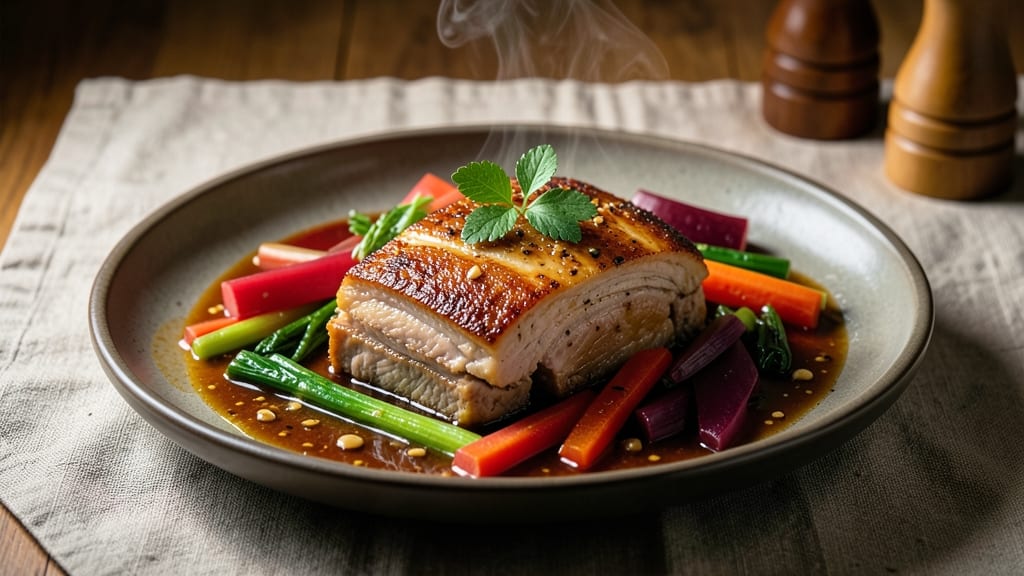
This braised pork belly with preserved vegetables delivers crispy bark and silky meat that melts in your mouth—just like my grandmother’s Sunday dinner. 🔥 The secret lies in slow-cooking the pork until it’s fork-tender, then finishing it with a high-heat sear to lock in those caramelized edges.
I’ve perfected this technique over years of working with heritage pigs, and the preserved vegetables add a tangy crunch that cuts through the richness beautifully.
The process starts with marinating the pork belly overnight to tenderize the fat and infuse flavor, then searing it until golden before braising in a rich broth with aromatics.
Meanwhile, the preserved vegetables—whether salted mustard greens, daikon, or napa cabbage—soak up the braising liquid, softening just enough to add texture without overpowering the meat. This method is foolproof, but the key is patience: low and slow ensures every bite is perfect.
By the time you plate it, you’ll have crispy, crackling skin on the outside and fall-apart tender meat inside, all balanced by the bright, tangy crunch of preserved vegetables. The aroma alone will have everyone gathering around the table, and the flavor?
It’s the kind of dish that stays with you long after the last bite. Serve it with steamed rice or crusty bread to soak up every last drop of that delicious braising liquid.
This recipe is inspired by traditional techniques like Chinese yong yau and Japanese nikushin, but it’s adapted for modern kitchens—no special equipment required. Whether you’re feeding a crowd or treating yourself to a special meal, this dish is worth the time and effort. Let’s get cooking!
Ingredients for braised pork belly with preserved vegetables
Six ingredients transform into a dish that tastes like Sunday dinner every time.
| Ingredient | Amount | Notes |
|---|---|---|
| Pork Belly 🐷 | 4 lb | Skin-on, with fat cap intact |
| Preserved Vegetables 🥬 | 3 cups | Salted mustard greens or daikon |
| Soy Sauce 🍶 | ½ cup | Kosher salt preferred |
| Rice Wine 🍷 | ¼ cup | Dry sherry as substitute |
| Brown Sugar 🍯 | ½ cup | Light or dark preferred |
| Garlic Cloves 🧄 | 8 cloves | Minced for marinade |
| Ginger Root 🌿 | 1 tbsp | Freshly grated |
| Star Anise 🌟 | 2 whole | For aromatic depth |
| Cinnamon Stick 🌳 | 1 whole | For warmth |
| Bay Leaves 🍃 | 2 whole | Fresh preferred |
| Black Peppercorns 🌶️ | 1 tsp | Crushed for marinade |
| Olive Oil 🫒 | ¼ cup | Extra-virgin for searing |
| Water 💧 | 2 cups | For braising liquid |
| Steamed White Rice 🍚 | 2 cups | For serving |
The pork belly is non-negotiable—look for thick-cut pieces with a thick fat cap at Whole Foods or your local butcher shop. Heritage pigs yield the best marbling, but Costco’s pre-sliced pork belly works in a pinch. If you’re feeling adventurous, ask for the belly with the skin intact—it’s what gives you that coveted crispy bark. For the preserved vegetables, Asian markets carry the best salted mustard greens or daikon, but any jarred pickled veggies will do. Just rinse them well before using to cut down on saltiness. The star anise and cinnamon? Penzeys Spices sells them whole, which is ideal for infusing flavor without overpowering.
No rice wine? Dry sherry or even a splash of white wine vinegar works in a bind, though the flavor won’t be identical. Short on brown sugar? Honey or maple syrup at half the amount adds moisture but changes the caramelized depth slightly. The preserved vegetables can be swapped for pickled radishes or kimchi if you’re craving something different. For the marinade, toast the whole spices in a dry pan for 30 seconds before grinding—this releases their oils and makes a world of difference. And if you’re worried about the pork belly being too fatty? Don’t be. The slow braising renders the fat beautifully, and you can always skim excess from the surface while cooking.
This dish tastes even better the next day—make extra and save portions for lunches. Store the pork belly and braising liquid separately in airtight containers for up to 5 days in the fridge. The preserved vegetables? They’ll keep for months in their brine, so no need to rush through them. To reheat, warm everything gently on the stove with a splash of water to restore moisture. The rice? Cook it fresh or use day-old rice—it reheats perfectly with a sprinkle of water and a lid. And if you’re serving a crowd, double the recipe—just be prepared for leftovers begging to be eaten for days.
Why You'll Love This Recipe
- One-Pot Magic: Honestly, I love recipes that don’t require a dozen dishes—this one’s all about that slow simmer in a single pot. The pork belly renders its own fat, the preserved veggies add their tangy punch, and by the time the soy and brown sugar meld together, you’re left with a dish that practically cooks itself. (Yes, even on a Tuesday night when you’d rather be scrolling than standing at the stove.)
- Umami Bomb: Here’s what sold me—the way the preserved vegetables cut through the richness of the pork belly with their funky, salty-sweet bite. That first spoonful? The soy sauce and rice wine deepen into something caramelized and complex, while the brown sugar just ties it all together like a cozy blanket. It’s the kind of flavor that makes you want to close your eyes and sigh.
- Leftovers Heaven: Between us, this dish begs to be made in bulk. The pork stays tender for days, and the sauce only gets better as it sits—more concentrated, more flavorful. I’ve reheated portions for lunch, packed it for work, and even served it cold in rice bowls. Not the prettiest, but the taste makes up for it every time.
- Budget-Friendly Luxury: Pork belly might sound fancy, but this recipe stretches it into something hearty and satisfying without breaking the bank. The preserved veggies add depth for pennies, and the rice wine (even the cheap stuff) elevates everything. It’s the kind of meal that feels special but won’t drain your wallet—great for when you want to impress but still feed the family.
Step-by-step instructions for braised pork belly with preserved vegetables
Here's how to transform tough pork belly into melt-in-your-mouth perfection with crackling skin.
🔥 Step 1: Render Fat and Sear the Pork Belly
Heat a large Dutch oven over medium heat and add the 4 lb pork belly with the skin-side down. Let it render its own fat for 10-12 minutes without touching it—this creates that prized crispy bark. You'll know it's ready when the fat starts bubbling vigorously and the skin turns a deep golden brown.
Flip the pork belly and sear the other side for another 8-10 minutes until golden. Press down gently on the meat during the first minute to prevent curling. Remove the pork from the pot and set it aside on a plate, leaving all the rendered fat in the pot. This fat is liquid gold for your braise.
👨🍳 Step 2: Build the Aromatic Braising Liquid
In the same Dutch oven, add the 0.25 cup olive oil and increase heat to medium-high. Add the 8 cloves minced garlic and 1 tbsp freshly grated ginger root, cooking for 30 seconds until fragrant but not browned. Add the 2 whole star anise, 1 whole cinnamon stick, 2 whole bay leaves, and 1 tsp crushed black peppercorns.
Pour in the 0.5 cup soy sauce, 0.25 cup rice wine, and 0.5 cup brown sugar, stirring to combine. Deglaze the pot with the 2 cups water, scraping up all the browned bits from the bottom. This step captures all the flavor you've built so far. Bring the liquid to a simmer and let it reduce slightly for 3-4 minutes until it coats the back of a spoon.
🥘 Step 3: Braise Until Fork-Tender
Return the pork belly to the pot, skin-side up, and add the 3 cups preserved vegetables. Pour enough of the braising liquid to come about halfway up the pork belly—you should have about 2-3 cups of liquid total. Bring to a gentle simmer, then reduce heat to low.
Cover the pot and braise for 2.5-3 hours until the pork is fork-tender and the meat pulls apart easily. Here's the thing—don't peek or stir during this time. Every time you open the lid, you lose heat and moisture. The pork is done when it reaches 205-210°F internally and the vegetables are tender but still holding their shape.
🔥 Step 4: Crisp the Skin and Rest
Once the pork is tender, increase heat to medium-high and uncover the pot. Let the pork belly sit uncovered for 10-15 minutes to crisp the skin. You'll see the skin turn from golden to deep mahogany brown—this is what you're after. The pork is done when it's crispy enough to crackle when you press it with tongs.
Remove the pork belly and transfer it to a cutting board. Tent loosely with foil and let it rest for 15 minutes. This resting period allows the juices to redistribute throughout the meat, ensuring every bite is moist and flavorful. While it rests, skim any excess fat from the braising liquid and keep it warm.
🍽️ Step 5: Serve Over Steamed Rice
Slice the pork belly against the grain into ½-inch thick slices. Arrange the slices over 2 cups steamed white rice and ladle the braising liquid and preserved vegetables over the top. The contrast of crispy skin, silky meat, and tangy preserved vegetables creates a symphony of textures and flavors in every bite.
Here's the final touch: garnish with extra preserved vegetables if desired. The pork should be tender enough to pull apart with your fingers, with a crackling skin that gives way to succulent, melt-in-your-mouth meat. Serve immediately while the pork is still warm and the skin is crispy.
Pro Tips For Making Braised Pork Belly With Preserved Vegetables
- CRISP THE BELLY FIRST: Skip the slow start—sear the pork belly in a screaming-hot wok or skillet for 4-5 minutes per side until deep golden brown. That crust is what holds up through hours of braising, and it’s the difference between flavorful bites and bland slices. (Yes, even if you’re tempted to rush it.)
- RINSE THE PRESERVED VEG: Drain the preserved vegetables and give them a quick rinse under cold water before adding to the braise. The excess salt and brine can make the pork belly turn out salty or watery down the line. A 10-second rinse saves you from adjusting the whole dish later.
- LOW AND SLOW WINS: After the initial sear, drop the heat to a bare simmer—just enough to keep tiny bubbles breaking the surface. Too much heat = tough pork and a runny sauce. I learned this the hard way when my first batch ended up chewy instead of melt-in-your-mouth tender.
- SWEAT THE AROMA BASE: Before adding the pork, cook the soy sauce, rice wine, and brown sugar together for 2-3 minutes until it darkens slightly and smells rich. This step deepens the flavor profile way more than just dumping everything in at once. (Your future self will notice the difference.)
Perfect pairings for braised pork belly with preserved vegetables
Rice Pairings
Steamed jasmine rice is my go-to choice—its delicate floral notes complement the rich pork without overpowering it. Cook 2 cups of rice for six servings, using a 1:1.5 rice-to-water ratio in a rice cooker for perfect fluffy grains.
For extra depth, I sometimes stir in 1 tsp toasted sesame oil while serving. 🍚
Bread Alternatives
A crusty baguette or sourdough works beautifully for soaking up the braising liquid. Warm slices in the oven for 5 minutes at 375°F to enhance their crispness. For a Southern touch, I serve it with cornbread—the slight sweetness balances the pork's savory depth.
Vegetable Sides
Light, crisp vegetables cut through the richness. My favorite is quick-pickled cucumbers—toss 2 cups thinly sliced cucumbers with 2 tbsp rice vinegar, 1 tsp sugar, and ½ tsp salt for 15 minutes.
Alternatively, steamed bok choy with a drizzle of toasted sesame oil adds a fresh contrast.
Drink Pairings
A dry Chinese Shaoxing wine (like Moutai) elevates the dish with its nutty, caramel notes. For beer lovers, a light Japanese lager (such as Asahi) cleanses the palate. If you prefer non-alcoholic, jasmine tea with a splash of lemon brightens the meal.
Garnish Finishes
Fresh cilantro leaves or thinly sliced scallions add brightness, while toasted black sesame seeds bring nutty crunch. For a smoky touch, sprinkle ½ tsp smoked paprika over the pork just before serving. These small details take the dish from good to extraordinary. ✨
Nutrition facts
Frequently asked questions
Can I substitute regular pork chops for pork belly?
I wouldn't recommend it—pork belly's thick fat cap is key for that signature crispy bark and silky texture. If you're set on a leaner cut, try pork shoulder (but expect longer braising time) or pork spare ribs with extra attention to skin crisping. The fat in pork belly renders beautifully during braising, creating a rich sauce and tender meat.
How do I know when the pork belly is fully tender?
The pork is done when it reaches 205-210°F internally and a fork slides in with minimal resistance. You'll also notice the meat pulls apart easily along the grain. The skin should be deep mahogany brown and crispy enough to crackle when pressed. If you're unsure, let it cook another 15-20 minutes—pork belly is hard to overcook.
What if I don't have preserved vegetables?
No problem! Use pickled radishes, kimchi, or even quick-pickled cucumbers (toss with vinegar, sugar, and salt for 15 minutes). For a traditional touch, try salted cabbage (rinse well to reduce saltiness) or fermented mustard greens. The tangy crunch is what balances the rich pork—just don't overcook them in the braise.
Can I make this in a slow cooker?
Sear the pork belly first in a skillet, then transfer it to your slow cooker with all the braising ingredients. Cook on low for 6-8 hours or high for 4-5 hours. Just skip the final crisping step—you'll need to sear the pork in a hot pan for 2-3 minutes per side after removing it from the slow cooker to get that crackling skin.
Why does my pork belly skin stay soft?
This usually happens if the pork wasn't rendered enough before braising or if you didn't crisp it properly at the end. For crispy skin, render the fat thoroughly (10-12 minutes skin-side down) before braising, then crisp it uncovered at the end. Another trick: pat the skin dry with paper towels before searing—this helps it brown better. If it's still soft, try broiling for 2-3 minutes at the very end.