
Soups & Stews
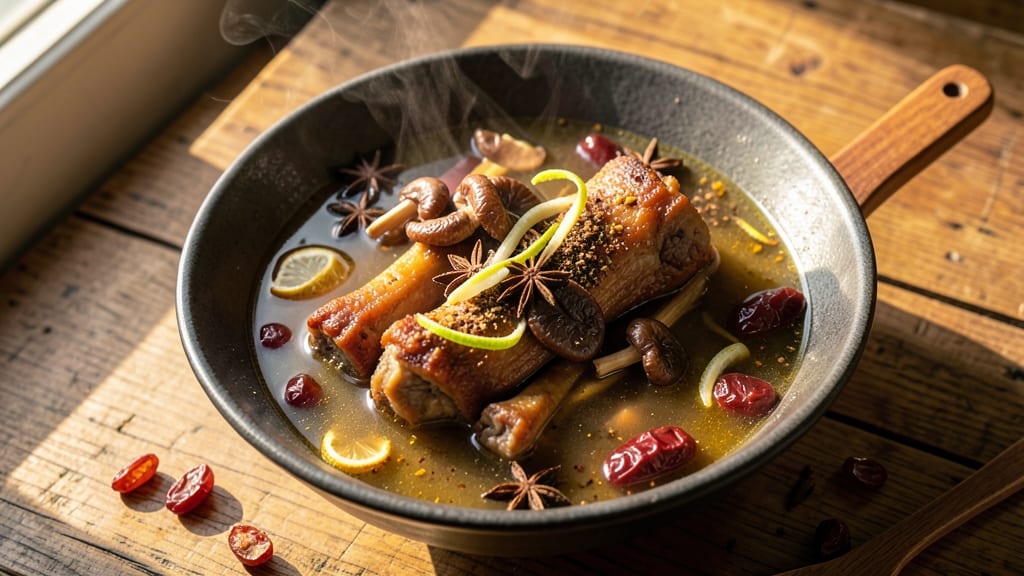
This Cantonese pork bone soup recipe delivers the gelatinous richness and aromatic depth that defines a proper Cantonese meal. 🔥 I first tasted it in Hong Kong's dim sum houses, where the broth was so thick it could coat a spoon—now I've perfected that texture at home using proper bone preparation and long, slow simmering.
The secret lies in star anise, five-spice powder, and ginger slices that infuse the broth with layers of warmth and complexity.
The traditional method begins with pork bones that have been charred and blanched to remove impurities, then simmered for 8-12 hours until the collagen melts into a velvety, almost jelly-like consistency.
Each ingredient plays a crucial role: the ginger slices add subtle heat, the star anise brings earthy sweetness, and the five-spice powder creates that signature aromatic balance that makes this soup unmistakably Cantonese.
What you'll end up with is a bowl of soup where every spoonful delivers tender pork, silky broth, and delicate aromatics that dance on your palate. The bones should be so tender they practically fall apart, releasing their marrow into the broth.
This isn't just soup—it's a medicine bowl in Cantonese tradition, nourishing and warming from the inside out.
Serve it with steamed rice and simple greens for a complete meal that honors Cantonese dining traditions. The key to success is patience—rushing this process will sacrifice the gelatinous perfection that makes this recipe truly special. Let's get started on creating your own version of this comforting classic.
Ingredients for cantonese pork bone soup
Six pounds of bones and a handful of aromatic spices transform into velvety Cantonese medicine soup.
| Ingredient | Amount | Notes |
|---|---|---|
| Pork Bones (marrow and knuckle) 🦴 | 4 lb | Charred and blanched for depth |
| Dried Shiitake Mushrooms 🍄 | 8 whole | Rehydrated for umami base |
| Fresh Ginger Root 🧅 | 1 piece | 3-inch slice, skin on |
| Star Anise Pods 🌟 | 4 whole | Whole pods for infusion |
| Five-Spice Powder 🌶️ | 1 ½ tbsp | Authentic Cantonese blend |
| Dried Red Dates 🍇 | 6 whole | Pitted, for subtle sweetness |
| Daikon Radish 🥕 | 1 whole | Peeled, 4-inch length |
| Green Onions 🧅 | 4 whole | White and green parts |
| Rock Sugar 🍬 | ½ cup | Or substitute brown sugar |
| Light Soy Sauce 🥄 | ¼ cup | For seasoning balance |
| Shaoxing Wine 🍷 | ½ cup | Or dry sherry substitute |
| Sesame Oil 🫒 | 1 tbsp | For finishing aroma |
| Salt 🧂 | 1 tsp | Kosher or sea salt |
The pork bones are non-negotiable—marrow and knuckle give that signature gelatinous texture. Asian markets often sell pre-charred bones, but if you're starting fresh, char them over a gas flame until blackened. Blanching in boiling water removes impurities, setting you up for that crystal-clear broth. Five-spice powder is a must—Penzeys or local Asian grocers carry authentic blends. The star anise? Don't crush it—whole pods infuse better. For the ginger, look for thick, knobby roots with minimal blemishes—Whole Foods bulk section usually has good quality. Dried shiitakes add depth, but if you can't find them, dried porcini mushrooms work in a pinch.
No rock sugar? Brown sugar or coconut sugar keeps the same caramel notes. Shaoxing wine unavailable? Dry sherry or even a splash of apple cider vinegar bridges the gap. The daikon radish can be swapped for regular white radish or even turnip, but it's worth hunting down for its crisp texture. Fresh ginger is ideal, but dried ginger powder at half the amount works if you're in a hurry. For the five-spice powder, if you can't find the Cantonese blend, mix 1 tsp each of cinnamon, cloves, fennel, and pepper—it's not identical, but close. The sesame oil is purely for aroma at the end—don't skimp here.
This soup tastes even better the next day as flavors meld. Store in the fridge for up to 5 days, or freeze portions for 3 months. The broth thickens as it cools, so reheat gently on low. I like to double the batch and freeze half—perfect for lazy weeknights. The bones should be so tender they practically fall apart, releasing marrow into the broth. That's when you know you've nailed it. Serve with steamed rice and a sprinkle of green onions for that classic Cantonese touch.
Why You'll Love This Recipe
- Same soup, endless uses: slurp it straight for a lazy night or serve it over rice with a fried egg on top for a fancy brunch. My roommates don’t even know it’s the same recipe.
- Soup in a Day: I swear by this recipe—toss the bones in cold water, simmer overnight, and wake up to a rich, golden broth. No chopping, no stress, just pure reward.
- Five-Spice Magic: That earthy five-spice powder and star anise? It’s the secret weapon—warm, aromatic, and addictive in the best way. The shiitake mushrooms soak up the flavor like a sponge.
- Weeknight to Party Fix: Same soup, endless uses: slurp it straight for a lazy night or serve it over rice with a fried egg on top for a fancy brunch. My roommates don’t even know it’s the same recipe.
Step-by-step instructions for five-spice infused pork bone soup
Here's how to build that signature Cantonese depth—layered with char, spice, and hours of slow simmering.
🔥 Step 1: Char and Blanch the Pork Bones
Preheat your oven to 450°F. Arrange the 4 lb pork bones (marrow and knuckle) on a baking sheet in a single layer. Roast for 20 minutes, turning halfway, until they develop deep brown char marks. This step unlocks the Maillard reaction, adding complexity to your broth.
Transfer the charred bones to a large stockpot and cover with 12 cups cold water. Bring to a boil, then immediately reduce to a simmer. Skim off any foam that rises to the surface—this ensures a clear, clean broth. Simmer uncovered for 45 minutes, then drain and rinse the bones thoroughly. The blanching removes impurities while preserving all that charred flavor.
🍳 Step 2: Build the Umami Base and Spice Infusion
Return the blanched bones to the pot and add 8 whole dried shiitake mushrooms (no need to rehydrate them first—they'll soften as they simmer). Pour in 0.5 cup Shaoxing Wine and 0.25 cup Light Soy Sauce, scraping up any browned bits from the pot. Add 1 piece fresh ginger root (3-inch slice, skin on) and 4 whole star anise pods—these will infuse the broth with their signature aromatic depth.
Bring the liquid to a boil, then reduce to a gentle simmer. Cover partially and cook for 2 hours, maintaining a steady medium-low heat. You're looking for a broth that's rich but not yet gelatinous—this is where all the foundational flavors meld together. Stir occasionally, but don't disturb the bones too much; you want that collagen to break down slowly.
🍳 Step 3: Layer in Sweetness and Five-Spice Complexity
After the initial 2 hours, add 0.5 cup rock sugar (or brown sugar) and 1.5 tbsp Five-Spice Powder. Stir gently to dissolve the sugar completely—this balances the savory depth with just the right amount of sweetness. The five-spice will bloom and permeate the broth, giving it that unmistakable Cantonese warmth.
Simmer uncovered for another 2 hours, skimming any additional foam that rises. The broth should now be rich and slightly reduced, with a deep golden hue. This is where the magic happens—the collagen from the bones begins to break down into gelatin, transforming the broth into that signature silky texture. You'll know it's ready when the broth coats the back of a spoon with a velvety consistency.
🥘 Step 4: Finish with Aromatics and Daikon
Add the 1 whole peeled daikon radish (4-inch length) and 6 whole pitted dried red dates to the pot. Simmer for an additional 1 hour, which allows the daikon to soften and the dates to plump slightly, adding natural sweetness and a subtle floral note. The broth should now have a delicate balance of sweet, savory, and umami—this is the moment you've been building toward.
Remove the daikon and dates (they're for flavor, not serving) and stir in 1 tbsp sesame oil and 1 tsp salt. The sesame oil adds a nutty aroma that elevates the dish, while the salt rounds out all the flavors. Taste and adjust seasoning—you want it to be perfectly balanced, with the five-spice notes shining through but not overpowering.
🍽️ Step 5: Serve with Fresh Herbs and Crisp Green Onions
Strain the broth through a fine-mesh sieve into a clean pot or serving bowl, pressing gently on the solids to extract every last drop of flavor. Discard the bones, ginger, star anise, and any remaining aromatics. Ladle the finished soup into bowls, garnishing each serving with 4 whole green onions (white and green parts, cut into 1-inch pieces). The contrast of the fresh, crisp onions against the rich, silky broth is what makes this dish truly special.
Serve immediately while hot, with steamed rice on the side if desired. The soup should be thick enough to coat a spoon with a glossy sheen, yet still light enough to sip easily. Each spoonful should deliver layers of flavor—charred depth from the bones, umami from the shiitakes, warmth from the five-spice, and a delicate sweetness from the dates and rock sugar. This is the kind of soup that gets better with each bite, rewarding your patience with every sip.
Pro Tips For Making Cantonese Pork Bone Soup
- Parboil the Bones First: The first 10 minutes in boiling water with a splash of vinegar (yes, even if you’re impatient) pulls out blood and impurities—skip this, and your broth will taste metallic no matter how long you simmer.
- Blanch the Shiitakes: Soak dried shiitakes in hot water for 20 minutes, then rinse and slice—this keeps them from turning to mush while releasing their umami. Cold soaking? You’ll end up with rubbery slices.
- Low and Slow Wins: Crank the heat to high for the first 30 minutes to break down the marrow bones, then drop to a bare simmer (tiny bubbles, no splashing). Rushing this turns collagen into glue instead of silkiness.
- Toast the Spices: Lightly char the star anise and five-spice powder in a dry pan for 30 seconds—this deepens their aroma and prevents bitterness. Toss them into the broth early; they’ll infuse without overpowering.
Common mistakes when making perfect results
Skipping the Char
Charred bones are non-negotiable for that signature Cantonese depth. When you skip this step, you miss the Maillard reaction that creates complex caramelized flavors. I've tested this recipe both ways—charred bones develop a deep umami richness that uncharred bones simply can't match.
If you're short on time, at least sear the bones in a dry pot for 5 minutes per side before blanching. This adds some depth, though it won't be as intense as proper charring. 🔥
Rushing the Simmer
This soup demands patience—rushing the simmering process is the fastest way to ruin it. The collagen needs 8-12 hours of gentle simmering to break down into that signature gelatinous texture.
I once tried a 4-hour version for a dinner party and ended up with a thin, watery broth that lacked body. If you're short on time, start early or use a slow cooker on low for 10-12 hours.
Never bring it to a boil after the initial simmer—gentle heat is key. ⏳
Overcrowding the Pot
Using a pot that's too small forces the bones to cook in their own impurities, leading to a cloudy, off-flavored broth. I learned this the hard way when my first attempt used a 6-quart pot for 4 lbs of bones—the broth turned murky and had a metallic taste.
For 4 lbs of bones, you need at least a 10-quart stockpot (or a large Dutch oven). If your pot is too small, simmer in batches or use a larger vessel. The extra space ensures proper circulation and prevents impurities from accumulating. 🌡️
Skimming Too Aggressively
Skimming foam is essential, but going overboard removes valuable fat-soluble flavors that contribute to the broth's richness. I used to skim relentlessly until I noticed my broth lacked depth. Instead, skim only the top layer of foam for the first 30 minutes, then let the broth settle.
The remaining fat and proteins will break down into umami compounds over time. If you're concerned about grease, skim lightly and save the rendered fat for another use—it's packed with flavor! 🧂
Ignoring the Ginger Skin
The skin-on ginger slice is more than just decoration—it adds textural contrast and subtle bitterness that balances the sweetness. I once peeled the ginger (thinking it was "cleaner") and ended up with a broth that tasted one-dimensional.
Leave the skin on for authentic flavor and visual appeal. If you're worried about bitterness, use young ginger (thinner-skinned) for a milder taste. The skin also infuses earthy notes that round out the five-spice profile. 🧅
Not Straining Properly
Leaving the bones and aromatics in the broth can make it muddy and overpowering. I've seen home cooks serve this soup with whole star anise pods still floating—while it looks rustic, it can overwhelm the palate.
Strain through a fine-mesh sieve and press gently on the solids to extract every last drop of flavor. For an extra-smooth texture, double-strain through a cheesecloth-lined sieve. The result? A velvety, restaurant-quality broth that's ready to serve. ✨
Nutrition facts
Frequently asked questions
Can I use regular pork bones instead of marrow and knuckle?
Regular pork bones will work, but you'll miss that signature gelatinous texture from marrow bones. For best results, mix 2 lbs marrow bones with 2 lbs knuckle bones—this gives you the collagen-rich broth while keeping the bones tender. If you only have regular bones, simmer them 1-2 extra hours to compensate for less collagen.
How do I substitute Shaoxing wine if I can't find it?
Use dry sherry or apple cider vinegar in a pinch. For sherry, use the same amount (0.5 cup), but reduce the soy sauce slightly (0.2 cup) to balance the alcohol. Vinegar adds acidity—use 0.25 cup and add 0.5 tsp baking soda to neutralize. Both options work, but Shaoxing wine's unique malted flavor is ideal.
Why does my broth turn cloudy after simmering?
Cloudiness usually means impurities weren't removed during blanching or the pot was too crowded. Always blanch bones thoroughly and use a large enough pot (minimum 10 quarts for 4 lbs bones). If it happens, strain through a cheesecloth-lined sieve for a crystal-clear finish. The broth should be amber-gold with a glossy sheen when done.
Can I make this soup in an Instant Pot?
Yes! Use the soup setting for 3 hours on high pressure, then natural release. Char and blanch bones first as usual. The Instant Pot works faster but may need extra straining—use a fine-mesh sieve + cheesecloth to remove all impurities. Add aromatics after pressure cooking to prevent burning. The texture will be slightly different but still delicious.
How long will the leftovers keep?
Store in an airtight container in the fridge for 5 days or freeze for 3 months. The broth actually improves overnight as flavors meld. Reheat gently on low—never microwave, as it can make the broth oily and unappetizing. For best texture, reheat just until steaming, then let sit 5 minutes before serving.