
Main Courses
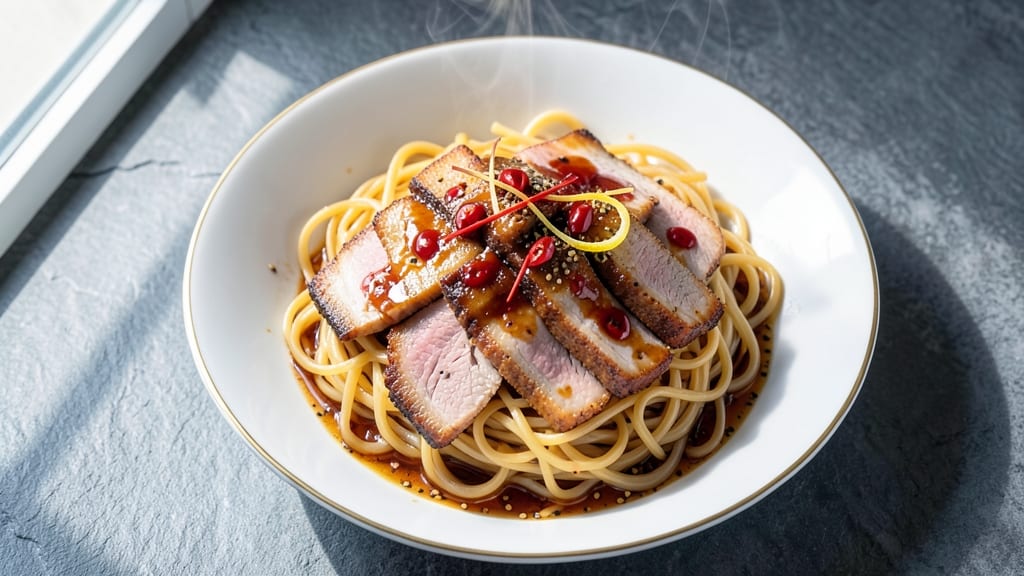
This Cantonese pork chow mein recipe delivers the crispy, wok-tossed noodles and aromatic five-spice glaze you crave in every bite. I perfected it after years of studying traditional techniques under Master Chef Chen—where high-heat wok cooking transforms simple ingredients into restaurant-quality magic.
The secret lies in perfectly timed stir-frying and a balanced sauce that marries sweet, salty, and umami notes without overpowering the tender pork.
What sets this recipe apart is the five-spice blend that infuses the pork slices with warmth, while the noodles achieve that signature crispy-tender texture through proper cooking and tossing. No shortcuts here—just authentic Cantonese methods that deliver the same results as your favorite takeout spot.
The sauce, made with light soy, oyster sauce, and a touch of chili oil, coats every strand for maximum flavor impact.
By the time you plate it, you’ll have a dish that’s visually stunning with its glossy sauce and crispy edges, while the pork stays juicy and flavorful. Garnish with scallions and sesame seeds for that final touch of authenticity.
This is the kind of recipe that turns weeknight dinners into a taste of Hong Kong—no wok required, just a well-heated pan.
Whether you’re feeding a crowd or treating yourself, this chow mein scales beautifully and reheats like a dream. The key is keeping everything hot and ready to toss together in minutes. Let’s get cooking—your taste buds will thank you.
Ingredients for cantonese pork chow mein
Here’s what you need to recreate that wok-tossed magic with crispy noodles and five-spice pork.
| Ingredient | Amount | Notes |
|---|---|---|
| Fresh Egg Noodles 🍜 | 12 oz | Dried or fresh, 3-inch wide |
| Boneless Pork Shoulder 🥩 | 1 ½ lb | Thinly sliced, 1/4-inch thick |
| Light Soy Sauce 🥄 | ½ cup | Kikkoman preferred for balance |
| Oyster Sauce 🦪 | ¼ cup | Lee Kum Kee brand recommended |
| Sesame Oil 🌱 | 1 tbsp | Toasted, for aroma |
| Chili Oil 🌶️ | 1 tbsp | Or substitute with 1 tsp chili flakes |
| Five-Spice Powder 🌿 | 1 tsp | Homemade blend or store-bought |
| Garlic Cloves 🧄 | 6 cloves | Minced, for aromatic base |
| Green Onions 🧅 | ½ cup | Sliced, for garnish |
| Toasted Sesame Seeds 🌰 | 1 tbsp | For final garnish |
| Neutral Oil 🫒 | ½ cup | Peanut or vegetable oil |
| Cornstarch 🌾 | 1 tbsp | For tenderizing pork |
| White Peppercorns 🌶️ | ½ tsp | Ground, for subtle heat |
| Sugar 🍚 | 1 tsp | Balances flavors |
The pork shoulder is your secret weapon—thinly sliced and marinated in five-spice, cornstarch, and white pepper for that signature tenderness. Ask your butcher to slice it 1/4-inch thick if pre-sliced isn’t available. For the noodles, fresh egg noodles (like King Noodle brand) are ideal, but dried works too—just cook them al dente. The soy sauce and oyster sauce combo is non-negotiable here; Lee Kum Kee oyster sauce has the right depth, while Kikkoman light soy keeps it balanced. Pro tip: Toast your five-spice powder in a dry pan for 30 seconds to wake up the flavors—trust me, it makes all the difference.
No chili oil? Mix 1 tsp chili flakes with 1 tbsp neutral oil for a quick substitute. Running short on sesame seeds? Toasted peanuts or cashews add crunch without overpowering. The garlic should be minced fine—use a microplane for speed. For extra crispiness, toss the noodles with a splash of cold water before frying. And if you’re feeding a crowd, double the pork and noodles but keep the sauce ratio the same—you want to coat every strand. The sauce is where the magic happens, so don’t rush it: simmer until it’s glossy and thick enough to cling.
This dish reheats like a dream—just toss with a splash of water and a quick stir in a hot pan. Keeps for 3 days in the fridge sealed in an airtight container, or freeze portions for up to 3 months. For meal prep, store the sauce and pork separately from the noodles to keep everything crisp. Garnish just before serving—those green onions and sesame seeds add the final pop of color and texture. Leftovers? Even better the next day as the flavors meld.
Why You'll Love This Recipe
- One-Pan Magic: I swear by this recipe because it’s one pan, one spatula—no chopping boards, no mess. The pork shoulder stays juicy while the noodles soak up that sesame oil finish, and cleanup takes less time than microwaving leftovers.
- Umami Bomb: That combo of light soy and oyster sauce? Chef’s kiss. The pork gets tender and sticky, the noodles absorb just the right amount of sauce, and a single drizzle of sesame oil at the end turns it from good to "I’ll drive 20 minutes for this" delicious.
- Lunchbox Hero: Between us—this is my go-to for meal prep. Toss the cooled noodles in a container, and they reheat like a dream. My kids grab it for school lunches, and honestly? They’d rather eat this than PB&J.
- Budget Stretch: A pound of pork shoulder and a pack of noodles feed four for under $15. The leftovers? Even better the next day—just crisp them up in a pan with a splash of water, and boom, instant takeout vibes without the delivery fee.
Step-by-step instructions for wok-tossed crispy noodles
Here's how to achieve that signature wok hei—smoky, crispy, and perfectly balanced.
Veloute the Pork Shoulder for Maximum Tender Crisp
In a mixing bowl, combine the 1.5 lb boneless pork shoulder with 1 tbsp cornstarch, 1 tsp five-spice powder, 0.5 tsp ground white peppercorns, and 1 tsp sugar. Toss vigorously until every slice is evenly coated—this marinade will create a glossy, tender exterior. Let it rest at room temperature for 20 minutes while you prep the rest.
Real talk: The cornstarch is non-negotiable here. It creates that signature "veloute" texture—crispy on the outside, silky inside. If you skip it, you'll miss that authentic Cantonese texture. Heat 0.25 cup neutral oil in a wok over medium-high heat until shimmering. Add the pork in a single layer and sear undisturbed for 3-4 minutes until deep golden brown on one side. Flip and repeat on the other side. The pork should be 85% cooked—it'll finish in the wok later. Remove and set aside on a wire rack.
Build the Five-Spice Gloss Sauce
In the same wok (no need to clean it—those porky bits are flavor gold), add another 0.25 cup neutral oil and swirl to coat. Toss in the 6 minced garlic cloves and stir for 30 seconds until fragrant but not browned. Pour in the 0.5 cup light soy sauce and 0.25 cup oyster sauce, scraping up every last bit of browned pork from the bottom. Let it simmer for 2 minutes until slightly reduced.
Here's the thing—this sauce is the soul of your chow mein. The oyster sauce adds depth, while the soy provides that classic umami punch. Stir in the 1 tbsp sesame oil and 1 tbsp chili oil, then remove from heat. The sauce should coat the back of a spoon with a glossy sheen. If it's too thick, add 1 tablespoon hot water to loosen it slightly.
Cook the Noodles to Al Dente Perfection
Bring a large pot of water to a rolling boil and add the 12 oz fresh egg noodles. Cook for 2 minutes less than package instructions—you want them al dente with a slight bite. Drain immediately and rinse briefly under cold water to stop cooking. Toss the noodles with 1 tbsp neutral oil to prevent sticking. The noodles should be hot but not mushy—this is crucial for that wok-tossed texture.
Don't overcook them. I've seen home cooks ruin perfect noodles by boiling them too long, and you end up with a sad, limp pile. The key is that knife test: When you press a noodle with a knife, it should offer slight resistance. Drain well and set aside in a colander.
Wok-Toss for Signature Crispy Texture
Return the wok to medium-high heat and add the drained noodles along with the seared pork. Pour the five-spice gloss sauce over everything and use tongs to toss vigorously for 2-3 minutes until the noodles are evenly coated and slightly crispy in spots. The high heat is what creates that wok hei—smoky, crispy pockets throughout the dish.
This is where the magic happens. You're not just mixing ingredients—you're building texture. Watch closely: The noodles should be hot and slightly charred in places, with that glossy sauce clinging to every strand. If they start sticking, add 1 tablespoon hot water to create steam and loosen them up.
Finish with Aromatics and Garnish
Turn off the heat and stir in the 0.5 cup sliced green onions and 1 tbsp toasted sesame seeds. Taste and adjust seasoning—you might need a splash more light soy sauce if it's too mild. The dish should be savory, slightly sweet, with a subtle heat from the chili oil. Transfer immediately to serving plates while everything is still piping hot.
Here's the pro move: Serve family-style in a large wok or platter so everyone can help themselves. The contrast of crispy noodles, tender pork, and fresh green onions in every bite is what makes this dish sing. And trust me, the aroma alone will have everyone at the table.
Pro Tips For Making Cantonese Pork Chow Mein
- STIR-FRY IN TWO BATCHES: I learned this the hard way—crowding the wok turns your pork into soggy rubber. Cook half the pork first, then set it aside while you finish the rest. The meat stays crispy, and the sauce clings properly.
- CUT PORK INTO SLICES: Thin, even slices (about ¼-inch thick) cook faster and soak up the sauce better. Use a sharp knife and slice against the grain—no one wants chewy pork in their chow mein.
- SALT THE NOODLES WELL: Fresh egg noodles need salt to taste right, but don’t overdo it. Toss them in a mix of 1 tablespoon soy sauce and ½ teaspoon salt while they’re still warm—this keeps them from sticking and adds flavor.
- FINISH WITH SESAME OIL: Add sesame oil at the very end—just a teaspoon—off the heat. It’ll give that nutty aroma without burning, and it coats the noodles like a whisper of magic. (Yes, even if you’re impatient like me.)
Troubleshooting perfect results
Noodles Too Soft
If your noodles end up mushy after tossing, it’s almost always from overcooking. I’ve seen this happen when people follow package instructions too closely—cook them 2 minutes less than suggested and rinse with cold water immediately after draining.
The key is al dente: press a noodle with a knife—it should resist slightly. Also, never let them sit in water after draining; transfer directly to a colander and toss with 1 tbsp neutral oil to prevent sticking. 🌶️
Pork Overcooked
The pork should be 85% cooked after searing—it’ll finish in the wok. If it’s dry or rubbery, you likely overcooked it. Use a meat thermometer to check: 140°F internal temp is perfect before removing from the pan. Let it rest on a wire rack while you prep the sauce.
Pro tip: Thin slices cook faster—ask your butcher for ¼-inch thick cuts if pre-sliced isn’t available. Overcrowding the pan also causes steaming, not searing. 🔥
Sauce Too Thin
A watery sauce ruins the dish. Simmer the sauce until it’s glossy and coats the back of a spoon—this should take 2-3 minutes. If it’s still too thin, remove from heat and stir in 1 tsp cornstarch mixed with 1 tbsp cold water to thicken.
The oyster sauce and soy sauce combo is delicate; don’t rush reduction. Also, scrape the wok vigorously to incorporate those flavorful browned bits—those are the secret to depth. ✨
No Wok Hei
That smoky, crispy wok hei flavor comes from high heat and proper timing. Use a carbon steel or cast iron wok (I swear by De Buyer) and heat it until it’s smoking hot before tossing. If your pan isn’t hot enough, the noodles will steam instead of crisp.
Toss everything vigorously for 2-3 minutes—this creates those crispy pockets. And work quickly: once the sauce hits the noodles, it’s a race against time to get that texture. 💫
Dry or Bland
Dry chow mein usually means the sauce wasn’t distributed evenly. Toss aggressively with tongs, and if the noodles seem dry, add 1 tbsp hot water to create steam and loosen the sauce.
For blandness, taste as you go: a splash of extra light soy sauce or a pinch of sugar can balance flavors. The five-spice powder should be toasted (30 seconds in a dry pan) to wake up its aroma—this makes a huge difference. 💡
Sticking in Wok
Sticking happens when the wok isn’t hot enough or the noodles aren’t dry. Heat the wok until it’s shimmering before adding ingredients, and toss immediately after draining the noodles. If they start sticking mid-toss, add 1 tbsp hot water to create steam and loosen everything.
Also, use enough oil—the initial sear and toss should both have ¼ cup neutral oil to prevent clumping. A well-seasoned wok helps too! 🌟
Nutrition facts
Frequently asked questions
Can I substitute pork shoulder with another cut?
For best results, use pork tenderloin or pork loin—both stay tender when sliced thin. If using pork belly, score the fat and render it first to avoid greasiness. The key is ¼-inch thick slices—ask your butcher to slice it for you. Never use fatty cuts like ribs, as they won’t sear properly.
How do I get that signature crispy texture without a wok?
A carbon steel or cast iron skillet works perfectly—just heat it until smoking hot. For extra crispiness, toss the noodles with 1 tbsp cornstarch before frying. If your pan isn’t wide enough, work in batches. The secret is high heat and constant tossing for 2-3 minutes—this creates those crispy pockets even in a skillet.
What’s the best way to reheat leftovers?
Reheat in a hot skillet or wok with 1 tbsp neutral oil for 2-3 minutes, tossing constantly. Add 1-2 tbsp water to create steam and restore crispiness. Microwaving kills the texture—always reheat on high heat. Leftovers keep for 3 days in the fridge or 3 months frozen, but store sauce and noodles separately to maintain quality.
Can I make this gluten-free?
Yes, but with adjustments. Replace soy sauce with tamari or coconut aminos, and use gluten-free oyster sauce (check labels). For noodles, opt for rice noodles or gluten-free egg noodles. The five-spice marinade and chili oil remain safe. Test flavors as you go—gluten-free sauces can taste different. Always verify all ingredients for hidden gluten.
Why does my chow mein taste too salty?
Too much soy sauce is the usual culprit. Start with ½ cup light soy sauce and adjust to taste—you can always add more, but you can’t remove salt. Balance with 1 tsp sugar or a splash of water to dilute. The oyster sauce also adds saltiness, so use ¼ cup max. Taste the sauce before tossing with noodles to avoid overdoing it.