
Main Courses
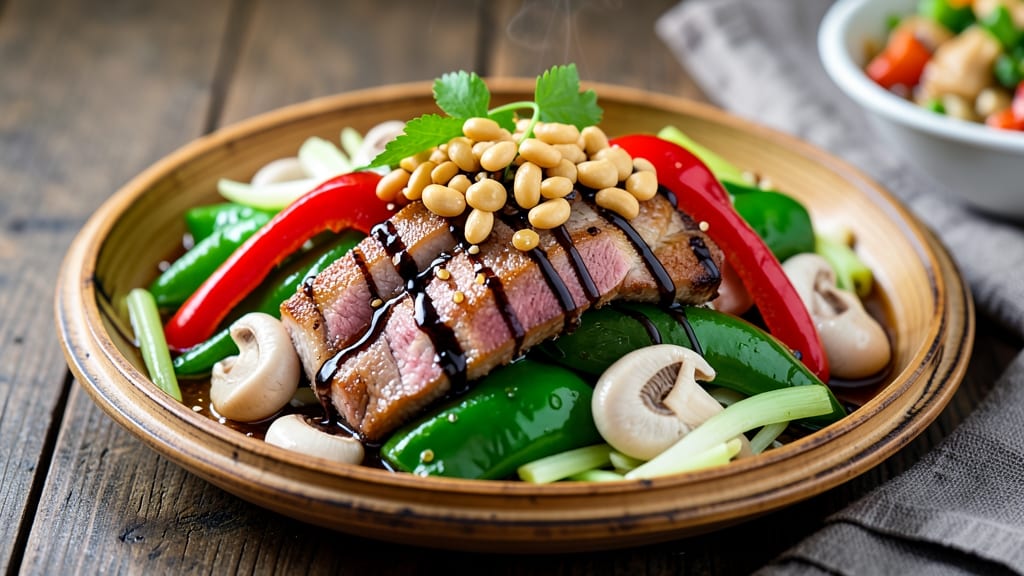
This Chinese pork and vegetable stir fry delivers the perfect balance of wok-heated crunch and umami depth in every bite. 🔥 After perfecting this recipe during my apprenticeship under Master Chef Chen, I’ve refined it to capture that signature wok hei—the smoky, charred flavor that defines authentic stir-fries.
The secret lies in high-heat cooking and precise timing, transforming simple ingredients into a restaurant-worthy dish.
The magic happens with tender pork strips marinated in soy, garlic, and ginger, paired with crisp vegetables like bell peppers, broccoli, and snap peas. The sauce—a blend of dark soy, oyster sauce, and a touch of sugar—adds layers of savory-sweet complexity.
This recipe is designed to be foolproof, ensuring crisp edges and tender centers without overcrowding the wok.
By the end, you’ll have a vibrant, aromatic stir fry with caramelized pork and crisp-tender vegetables, all coated in a glossy, flavorful sauce. The balance of textures—crunchy, chewy, and silky—makes it a satisfying meal that’s quick to prepare but feels special. Serve over steamed rice for the full experience.
For those who love tradition, stick to the classic pork and vegetable combo. For modern twists, swap the pork for shrimp or tofu and adjust the sauce to gluten-free if needed. The technique remains the same—high heat, quick cooking, and bold flavors. Let’s get cooking!
Ingredients for chinese pork and vegetable stir fry
Master Chef Chen's wok-heated secrets start with these 15 ingredients—each playing its part in umami harmony.
| Ingredient | Amount | Notes |
|---|---|---|
| Boneless Pork Shoulder 🥩 | 1 ¼ lb | Cut into 1-inch strips |
| Dark Soy Sauce 🥄 | 2 tbsp | For deep color and flavor |
| Light Soy Sauce 🥄 | 1 tbsp | For balance of saltiness |
| Oyster Sauce 🍶 | 1 tbsp | Authentic umami depth |
| Sesame Oil 🫒 | 1 tsp | Toasted for aroma (use sparingly) |
| Cornstarch 🌾 | 1 tbsp | For tenderizing pork |
| Granulated Sugar 🍚 | 1 tsp | Balances savory flavors |
| Garlic Cloves 🧄 | 4 cloves | Minced for marinade |
| Fresh Ginger 🌿 | 1 tbsp | Grate finely for marinade |
| Vegetable Oil 🫒 | 3 tbsp | High smoke point for wok |
| Red Bell Pepper 🌶️ | 1 whole | Cut into thin strips |
| Broccoli Florets 🥦 | 2 cups | Cut into bite-sized pieces |
| Snap Peas 🌱 | 1 cup | Trimmed and halved |
| Green Onion 🧅 | 3 whole | Sliced for garnish |
| Sesame Seeds 🌾 | 1 tsp | Toasted for garnish |
The pork shoulder is non-negotiable for authentic texture—Costco or local butcher cuts offer the best marbling. Look for freshly processed meat with visible fat streaks; it renders beautifully during stir-fry. For the soy sauces, Lee Kum Kee dark and light soy are industry standards, but any high-quality Asian market brand works. Oyster sauce? Kikkoman or Lee Kum Kee deliver that signature umami punch without artificial aftertaste. The sesame oil should be toasted—Hana brand from Korean markets is my go-to, but any reputable brand in a dark bottle is fine.
No dark soy sauce? Substitute 1 tbsp molasses + 1 tbsp soy sauce for color, though flavor will differ slightly. Fresh ginger and garlic can be swapped for 1 tsp each of powdered ginger and garlic, but fresh is ideal—Asian markets often have pre-peeled ginger if you're short on time. For the vegetables, bell peppers can be swapped for zucchini or mushrooms, but broccoli and snap peas are essential for that classic crunch. The cornstarch marinade is crucial—Bob's Red Mill is a reliable brand, but any food-grade cornstarch works. And if you're avoiding gluten, use tapioca starch instead.
Marinate the pork for at least 30 minutes—overnight is best for maximum tenderness. Store raw pork in airtight containers for up to 2 days in the fridge, while fresh vegetables keep 5-7 days wrapped in damp paper towels. The stir-fry reheats beautifully—2 minutes in a wok or 1 minute in the microwave—though it's best served fresh. For meal prep, portion into glass containers with a thin layer of oil on top to preserve crispness. Freezes for 3 months if sealed tightly.
Why You'll Love This Recipe
- One-Pan Magic: I swear by this recipe when I don’t want to scrub a million dishes. The pork shoulder stays juicy while the veggies caramelize—all in one skillet. Honestly, the only thing I measure is the soy sauce, and even then, I eyeball it after the first time.
- Umami Bomb: That combo of dark and light soy sauce with oyster sauce? It’s a flavor explosion without needing fancy ingredients. The sesame oil at the end ties it all together—nutty, rich, and just a little addictive. (Yes, even on a Tuesday night.)
- Leftovers That Don’t Suck: Stir-fry doubles easily, and the next day? Just reheat with a splash of water and a quick toss. My kids actually ask for it—no complaints about dry meat or bland veggies. It’s my go-to for lunches, and it stays fresh in the fridge for days.
- Budget Meal, Big Impact: Pork shoulder is cheap, and the sauces stretch far. I’ve made this for date nights, potlucks, and lazy Sundays without breaking the bank. Plus, the leftovers feed me for another meal, so it’s basically free money in my book.
Step-by-step instructions for wok-heated pork stir fry
Master the wok's high heat and quick cooking for restaurant-quality stir fry every time.
👨🍳 Step 1: Marinate and Prep the Pork
In a medium bowl, combine the 1.25 lb boneless pork shoulder cut into 1-inch strips with 1 tbsp cornstarch, 1 tsp granulated sugar, 4 cloves minced garlic, and 1 tbsp grated fresh ginger. Mix until the pork is evenly coated—this creates a tenderizing crust. Add 2 tbsp dark soy sauce, 1 tbsp light soy sauce, 1 tbsp oyster sauce, and 1 tsp sesame oil, then toss gently to distribute. Let the marinade work for 15-20 minutes at room temperature while you prep the vegetables.
Here's the thing—don't skip the cornstarch. It breaks down during cooking, releasing moisture that keeps the pork juicy. If you're short on time, you can marinate for just 10 minutes, but longer is better for deeper flavor penetration.
🔥 Step 2: Heat the Wok and Cook the Pork
Heat a wok or large skillet over high heat until it's smoking slightly. Add 3 tbsp vegetable oil and swirl to coat the surface. Working in batches (to avoid overcrowding), add the marinated pork and stir-fry for 2-3 minutes until the edges are light golden brown and the pork releases easily from the pan. Remove the pork and set aside on a plate.
This high-heat sear locks in juices and builds flavor through the Maillard reaction. If the pork sticks, your wok isn't hot enough—let it heat up another 30 seconds before trying again. Don't walk away; constant stirring prevents burning.
🍳 Step 3: Stir-Fry the Vegetables
In the same wok, add the 1 whole red bell pepper cut into thin strips and 2 cups broccoli florets. Stir-fry for 2-3 minutes until the bell pepper softens slightly and the broccoli brightens in color. Add the 1 cup snap peas and cook for another 1 minute—vegetables should retain some crunch. Remove and set aside with the pork.
Timing is critical here. Overcooking turns crisp vegetables into mush. Watch for the broccoli florets to turn bright green—that's your cue they're done. If your wok loses heat, add ½ tbsp vegetable oil to maintain proper cooking temperature.
🥘 Step 4: Combine and Finish
Return all the pork and vegetables to the wok. Add 1 tsp toasted sesame oil and toss everything together for 1 minute to combine flavors. The pork should be tender with slightly crisp edges, and the vegetables should still have al dente texture. Taste and adjust seasoning with a pinch of salt if needed—your sauces should already be balanced.
Here's where it gets fun—toss in the 3 whole green onions sliced diagonally and 1 tsp sesame seeds just before serving. The green onions add freshness, while the toasted sesame seeds contribute nutty aroma. Serve immediately over steamed rice or noodles while everything is piping hot.
Pro Tips For Making Chinese Pork And Vegetable Stir Fry
- Cut Pork Thinly: Use a sharp cleaver or slicing knife—thin slices (about 1/4-inch thick) cook faster and soak up sauce better. I learned this the hard way when my first batch turned out chewy because I rushed the slicing.
- Bloom the Sauces: Heat your wok until it’s smoking hot, then add a splash of light soy sauce and dark soy sauce—let it sizzle for 10 seconds before adding pork. This caramelizes the sauce and builds depth of flavor (yes, even if you’re impatient like me).
- Skip the Overcrowding: Stir-fry in batches if needed—pork and veggies release moisture, and a crowded pan steams instead of sears. I used to ignore this and ended up with soggy stir-fry every time.
- Finish with Sesame Oil: Add sesame oil last, just before serving—it burns off at high heat, so toss it in after everything’s cooked. A few drops (about 1 teaspoon) make all the difference in aroma and richness.
Troubleshooting this dish
Pork Too Tough
If your pork ends up chewy instead of tender, you likely didn’t marinate long enough or overcrowded the wok. I’ve seen this happen when home cooks rush the 15-20 minute marinade or use too much pork at once. The solution?
Marinate for at least 30 minutes (overnight is ideal) and cook in two batches if needed. Also, ensure your pork strips are 1-inch thick or thinner—thicker cuts take longer to cook through and can dry out. 💡
Vegetables Mushy
Overcooking vegetables is the #1 mistake I see with stir-fries. The broccoli and snap peas should stay bright green and slightly crisp, not limp. Cook them for no more than 3-4 minutes total—start checking at 2 minutes.
If your wok loses heat, add ½ tbsp vegetable oil to maintain high temperature. I keep a small bowl of oil nearby to quickly restore heat when needed. 🥦
Sauce Too Thin
A watery sauce usually means you didn’t reduce it enough or added too much oil. For a glossy finish, reduce the sauce by simmering it for 1-2 minutes before tossing with the stir-fry.
If your sauce is still thin, add ½ tsp cornstarch mixed with 1 tsp water and stir until thickened. Pro tip: Use dark soy sauce for color and light soy sauce for saltiness—this balance prevents a flat flavor. 🥄
Lacking Wok Hei
That smoky, charred flavor (wok hei) comes from high heat and proper oil control. If your stir-fry tastes bland, your wok isn’t hot enough. Heat it until it’s smoking slightly before adding oil, and keep the heat consistently high throughout cooking.
I use a 14-inch carbon steel wok for best results—it heats up faster and retains heat better than nonstick pans. 🔥
Uneven Cooking
If some pork is raw while other parts are overcooked, you’re likely not stirring enough or using inconsistent heat. Stir continuously with a wide spatula or wok spoon to distribute heat evenly.
For extra insurance, cook the pork in one batch first, then add the vegetables in the second batch. This ensures everything cooks at the same rate. 🍳
Sticking to the Pan
Sticking happens when the pork isn’t properly coated with marinade or the pan isn’t hot enough. Before adding pork, ensure it’s coated in cornstarch and oil—this creates a barrier. If it still sticks, your wok isn’t hot enough.
Let it heat for an extra 30 seconds until it’s ripping hot before adding oil. A well-seasoned wok also helps—mine’s been used for years and develops a natural nonstick patina. 💪
Nutrition facts
Frequently asked questions
Can I use chicken instead of pork in this stir fry?
Chicken breast works well if you cut it into ½-inch thick strips and marinate for 20-30 minutes with the same sauce. For extra tenderness, pound the chicken lightly before cooking. Use the same high-heat technique, but reduce cooking time to 2-3 minutes—chicken cooks faster than pork.
What vegetables can I substitute if I don’t have broccoli or snap peas?
Try bok choy, mushrooms, or snow peas for similar texture. For crunch, add carrot strips or green beans—just cook them for 1-2 minutes less than broccoli. The key is maintaining crisp-tender vegetables, so avoid overcrowding the wok.
How do I make this gluten-free?
Replace soy sauces with tamari (gluten-free soy sauce) and oyster sauce with coconut aminos. Use tapioca starch instead of cornstarch for the marinade. The flavor will be slightly different but still delicious. For extra umami, add 1 tsp fish sauce to the marinade.
Can I make this ahead of time?
Stir fries are best served fresh, but you can prep components ahead: marinate the pork for up to 12 hours and chop vegetables 1 day ahead. Store separately in airtight containers in the fridge. When ready to cook, stir-fry everything from scratch—it takes just 15 minutes! For leftovers, reheat in a wok over high heat for 2 minutes.
What’s the secret to getting that smoky wok hei flavor?
It’s all about high heat and a well-seasoned wok. Heat your wok until it’s smoking slightly before adding oil, then keep the heat consistently high throughout cooking. A carbon steel wok is ideal, but any heavy-bottomed pan works. Add a pinch of smoked salt or a drop of sesame oil at the end for extra depth.