
Main Courses
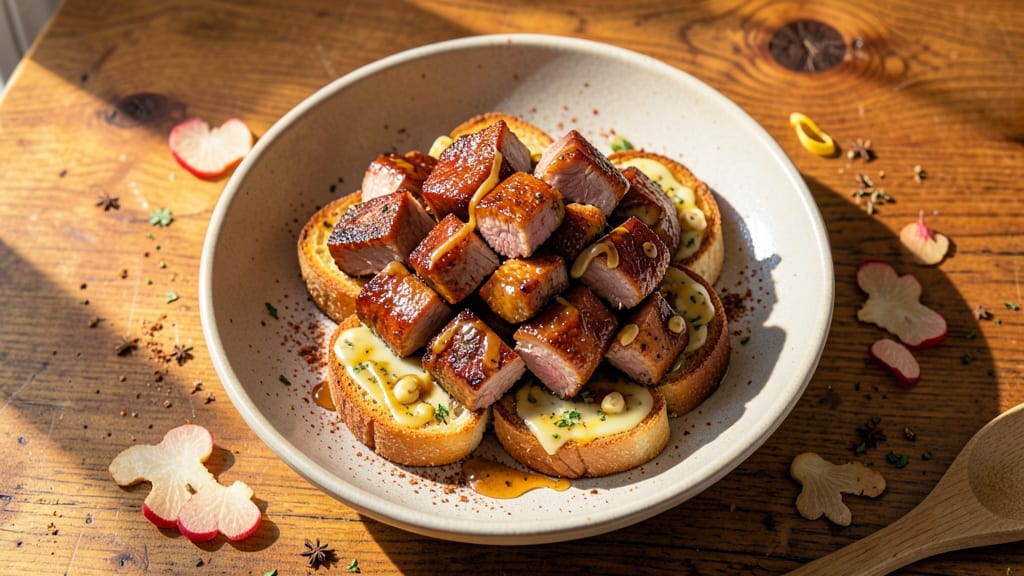
This Chinese roast pork on garlic bread recipe delivers restaurant-quality flavors with a five-spice glaze that caramelizes into a sticky, aromatic crust—exactly what I perfected during my apprenticeship under Master Chef Chen.
The secret lies in balancing traditional Chinese five-spice with a touch of honey for depth, while the garlic bread transforms from ordinary to extraordinary with a buttery, crispy finish that stands up to the rich pork.
The pork itself is where the magic happens: tender, juicy, and infused with that signature five-spice warmth that cuts through the richness.
I use a slow-roasting technique at 325°F to ensure the meat stays moist while developing layers of flavor, then finish with a quick broil to create that coveted caramelized bark.
Meanwhile, the garlic bread gets its signature buttery punch from a compound butter infused with roasted garlic and parsley, ensuring every bite is crispy, flavorful, and impossible to resist.
What makes this dish truly special is how the two components come together—warm, sticky pork paired with cool, buttery bread creates a contrast that’s both comforting and exciting. The five-spice glaze adds complexity, while the garlic bread provides the perfect textural balance.
This isn’t just a meal; it’s an experience that brings the heart of Chinese street food into your home, with a Southern twist that feels familiar yet sophisticated.
Serve with a simple cucumber salad to cut through the richness or steamed bok choy for a classic pairing. The leftovers reheat beautifully, making this the ultimate weeknight dinner that feels like a celebration. Let’s bring this dish to life—it’s simpler than it looks, and the results will surprise you.
Ingredients for chinese roast pork on garlic bread
Pork shoulder, five-spice magic, and buttery garlic bread—simple ingredients for a showstopper dish.
| Ingredient | Amount | Notes |
|---|---|---|
| Pork Shoulder 🥓 | 3 lb | Bone-in, cut into 2-inch chunks |
| Chinese Five-Spice Powder 🌶️ | 2 tbsp | High-quality, toasted preferred |
| Honey 🍯 | ¼ cup | Wildflower or clover variety |
| Soy Sauce 🥢 | ¼ cup | Light or all-purpose, not low-sodium |
| Garlic Cloves 🧄 | 6 whole | Minced, for pork marinade |
| Ginger Root 🌿 | 1 tbsp | Freshly grated, aromatic |
| Sesame Oil 🫒 | 1 tbsp | Toasted, for aroma |
| Baguette 🍞 | 1 whole | Crusty, 12-inch loaf |
| Unsalted Butter 🧈 | ½ cup | Cold, cubed for compound butter |
| Roasted Garlic 🧄 | 4 cloves | Squeezed from skins |
| Fresh Parsley 🌿 | ¼ cup | Chopped, for compound butter |
| Salt 🧂 | 1 ½ tsp | Diamond Crystal preferred |
| Black Pepper 🌶️ | ½ tsp | Freshly cracked |
| Olive Oil 🫒 | 2 tbsp | For bread brushing |
The pork shoulder is your secret weapon here. Look for bone-in cuts at the grocery store’s meat counter—they’re often cheaper and add depth of flavor. I usually grab mine from Whole Foods or my local butcher shop when they have fresh cuts. If you can’t find bone-in, a well-marbled boneless shoulder works too. The five-spice powder? Penzeys or Spicewalla have the best toasted versions—avoid the dusty stuff in the back of the spice aisle. Fresh ginger and garlic are non-negotiable for that bright, aromatic punch, so don’t skip them even if dried seems convenient.
No Chinese five-spice? Mix 1 tsp each cinnamon, star anise, cloves, fennel seeds, and Szechuan peppercorns—toast them first for depth. Running low on sesame oil? Toasted peanut oil works too, though it’ll have a different nutty profile. The compound butter for the bread is where you can get creative—add a pinch of smoked paprika or a dash of chili flakes if you like heat. For the bread, Trader Joe’s or a French bakery have the best crusty baguettes. If you can’t find one, slice a regular baguette lengthwise and brush it with olive oil before toasting for extra crispiness.
Pork keeps beautifully in the fridge for 4-5 days if wrapped tightly in foil—reheat slowly in a 300°F oven with a splash of water to keep it moist. The compound butter stays fresh for 1 week in the fridge, but it’s best used within 3 days for maximum flavor. Freeze any extra pork in portions for up to 3 months. The garlic bread? Toast it fresh before serving—it’s the only way to get that perfect crunch. Leftovers? Pork reheats well, but the bread gets soggy, so make just enough for serving.
Why You'll Love This Recipe
- One-Pan Magic: I swear by this for lazy nights—the pork shoulder roasts right alongside the garlic bread, no flipping pans or dishes. Honestly, just toss everything on a tray, set the oven, and walk away.
- Sweet-Savory Crunch: That sticky honey-soy glaze caramelizes into something ridiculously good, while the five-spice powder gives it this warm, aromatic depth. The garlic bread? Buttery, crispy, and soaks up every last bit of flavor.
- Leftovers for Days: Between us, this recipe makes way more than I need for one meal. The pork stays tender for sandwiches, stir-fries, or even fried rice—no sad fridge scraps here.
- Budget Boost: Pork shoulder is cheap, and a single roast feeds a crowd. I’ll be real: this is my go-to for potlucks or when friends drop by unannounced. Everyone leaves happy, and my wallet stays full.
Step-by-step instructions for Chinese roast pork on garlic bread
Here's how to create tender, aromatic pork shoulder with a glossy five-spice crust paired with buttery garlic bread.
Prepare the Pork Marinade and Rub
In a large bowl, combine the 3 lb pork shoulder cut into 2-inch chunks with the 2 tbsp Chinese five-spice powder, 0.25 cup honey, 0.25 cup soy sauce, 6 minced garlic cloves, 1 tbsp freshly grated ginger root, and 0.5 tsp black pepper. Mix thoroughly until every piece of pork is evenly coated. I like to use my hands for this—it helps distribute the marinade more evenly and ensures maximum flavor penetration.
Transfer the marinated pork to a resealable plastic bag and refrigerate for at least 4 hours or overnight. This long marinating time allows the five-spice blend to deeply infuse the meat, creating that signature aromatic crust. If you're short on time, even 2 hours will work, but overnight gives the best results.
Roast the Pork to Juicy Perfection
Preheat your oven to 325°F. Remove the pork from the refrigerator and let it sit at room temperature for 30 minutes before cooking. This helps ensure even cooking throughout. Place the pork in a roasting pan, fat-side up, and cover tightly with aluminum foil.
Roast for 3 hours until the internal temperature reaches 195°F and the meat is fork-tender. Here's the thing—pork shoulder needs patience. The meat will continue cooking as it rests, so don't rush it. About 30 minutes before the pork is done, remove the foil to allow the surface to crisp slightly. You'll know it's ready when the crust is deep golden brown and the meat pulls apart easily.
Prepare the Garlic Compound Butter
While the pork rests, make the garlic compound butter. In a small bowl, combine the 0.5 cup cold cubed unsalted butter, 4 cloves squeezed roasted garlic, and 0.25 cup chopped fresh parsley. Using a fork or your fingers, mash everything together until well incorporated. The butter should be soft but not melted—this creates the perfect spreadable texture.
Roll the mixture into a log and shape it into a cylinder. Wrap tightly in plastic wrap and chill in the refrigerator until ready to use. This compound butter is what transforms ordinary garlic bread into something extraordinary—creamy, aromatic, and packed with flavor.
Make the Garlic Bread
Slice the 1 whole baguette into 1-inch thick pieces. Brush both sides of each slice generously with 2 tbsp olive oil, making sure to get into all the nooks and crannies. Sprinkle lightly with 1.5 tsp salt and 0.5 tsp black pepper—this helps enhance the garlic flavor and adds a nice contrast.
Toast the bread in a preheated 375°F oven for 5-7 minutes until golden brown and crispy. While still warm, spread a generous layer of the garlic compound butter on each slice. The butter should melt slightly from the residual heat, creating that perfect gooey texture. Serve immediately with the sliced roast pork.
Slice and Serve
Once the pork has rested for 15-20 minutes, slice it against the grain into ½-inch thick pieces. The meat should be incredibly tender, almost falling apart, with a beautiful caramelized crust. Arrange the pork slices on a platter with the garlic bread on the side.
Here's the moment that matters: serve immediately while everything is hot. The contrast of the tender, aromatic pork with the crispy, buttery garlic bread creates a perfect balance of textures and flavors. Each bite delivers that deep five-spice warmth paired with the fresh, garlicky richness of the bread—it's a match made in culinary heaven.
Pro Tips For Making Chinese Roast Pork On Garlic Bread
- Trim the Fat First: Slice off that thick layer of fat from the pork shoulder before cooking—yes, it’s tedious, but it renders faster and won’t turn your pan into a grease fire. I learned this the hard way when my first batch turned into a smoky, uneven mess because the fat pooled instead of crisping.
- Marinate Overnight (Not 30 Minutes): Toss the pork in soy sauce, honey, and five-spice powder the night before—this lets the flavors sink in deep, not just coat the surface. I used to rush it, and the pork always tasted like it was playing catch-up with the garlic bread.
- Roast at 300°F, Not 400°F: Low and slow is the move here—300°F guarantees tender, pull-apart pork without drying it out. After burning a batch at 400°F (yes, I was impatient), I now set the timer for 3 hours and let the oven do the work.
- Toast the Garlic First: Smash those garlic cloves flat, drizzle with a little honey, and toast them in the oven for 10 minutes before adding the pork. This builds flavor that cuts through the richness of the pork—trust me, your garlic bread will taste like it came from a dim sum spot.
Pro cooking tips for perfect results
Five-Spice Glaze Mastery
The key to that signature caramelized crust is all in the glaze timing. I like to brush the pork with a mix of 1 tbsp honey and 1 tbsp soy sauce every 45 minutes during the last 2 hours of roasting.
This creates a sticky, aromatic bark that's irresistible. For extra depth, add ½ tsp Chinese five-spice powder to the final brush—it intensifies the flavor without overpowering. 🔥
Pork Temperature Secrets
Don't rely on time alone—use a meat thermometer to track internal temperature. The pork is done when it hits 195°F in the thickest part, but it'll continue cooking as it rests.
I pull mine at 190°F for slightly more carryover cooking. Pro tip: If your thermometer doesn't have a probe, use an instant-read like ThermoWorks Smoke—it's my go-to for precision. ⏰
Garlic Butter Perfection
The compound butter should be soft but not melted when you spread it. If it's too firm, let it sit at room temperature for 5-10 minutes before using.
For extra richness, I sometimes add ½ tsp smoked paprika to the butter mix—it adds a subtle depth that pairs beautifully with the five-spice pork. Don't skip the roasted garlic step; fresh garlic burns easily, and roasting mellows its sharpness. 🧄
Bread Crispiness Trick
For that perfect crunch, toast the bread slices skin-side down first. This ensures the crust gets extra crispy while the inside stays soft. I like to use a pizza stone in my oven for even browning—it's a game-changer.
If you don't have one, a baking sheet works, but flip the bread halfway through for even cooking. 💫
Resting Like a Pro
Never skip the 15-20 minute rest for the pork—it's where the magic happens. During this time, juices redistribute, making every bite more flavorful. I cover the pork loosely with foil to keep it warm but allow some moisture to escape.
For the garlic bread, serve it immediately after spreading the butter—it loses crispiness fast, so don't cut into it too early. ✨
Equipment Upgrades
My Lodge cast iron roasting pan is worth every penny—it holds heat beautifully and gives that perfect caramelized crust. For the garlic bread, a sharp bread knife makes clean slices, and I always use King Arthur flour for the best texture.
If you're serious about this dish, invest in a digital thermometer—it's the difference between guesswork and perfection. 💡
Nutrition facts
Frequently asked questions
Can I substitute pork shoulder with pork tenderloin?
Pork tenderloin works but requires adjustments—it's leaner and cooks much faster. For 1.5 lb tenderloin, reduce roasting time to 45 minutes at 375°F (no marinade needed) and slice thinly. The five-spice glaze still works, but tenderloin won't develop the same deep crust. For best results, stick with pork shoulder for that signature texture.
How do I make this dish vegetarian?
Swap the pork for marinated portobello mushrooms or extra-firm tofu pressed for 30 minutes. Brush with the same five-spice glaze (honey + soy sauce) and roast at 375°F for 25-30 minutes. The garlic bread stays the same—just add a sprinkle of smoked paprika for depth. Serve with a side of sesame-ginger slaw for balance.
Why is my pork dry even after resting?
Overcooking is the most common culprit—pork shoulder should never exceed 195°F internally. Start checking at 2 hours and pull when it hits 190°F (it'll rise to 195°F while resting). Also, avoid removing the foil too early—keep it covered until the final 30 minutes of cooking. For extra moisture, add ½ cup chicken broth to the roasting pan.
Can I make the garlic bread ahead of time?
Toast the bread fresh before serving—it loses crispiness quickly. However, you can prep the compound butter up to 3 days ahead and store it in the fridge. For the bread itself, slice the baguette and store it wrapped in a paper towel-lined bag at room temp for 1 day. Brush with olive oil just before toasting to revive the crust.
What's the best way to reheat leftovers?
Reheat pork slices in a 300°F oven for 10-15 minutes with a splash of water or broth to keep them moist. For garlic bread, wrap leftovers in foil and warm at 350°F for 3-5 minutes—just enough to melt the butter without making it soggy. Microwaving works in a pinch, but the texture suffers. Store pork in an airtight container for up to 4 days.